Co-Ed Season 1 Review: A Warm, Surprising Gem That Won My Heart

Co-Ed Prime Season 1 Poster

It is by chance that I stumbled on the Co-Ed series on Amazon MX Player. The algorithm showed the trailer to me and I thought I would give it a try. I wasn’t expecting much but I was in for a surprise.

Co-Ed looks like a simple school drama at first, but it quickly turns into a lively mix of humour, friendship, and small twists that keep you curious. The writing feels fresh, and the young cast brings an energy that makes every episode, lasting around 20-30 minutes, easy to watch. I found myself hitting the next episode button without even thinking.

What’s It About?

Two twins step into a new chapter when their all-boys and all-girls schools merge to form a co-ed campus. The boy is nervous about sharing space with girls for the first time, while his sister walks in with full confidence. As they try to adjust to this sudden shift, their parents are also dealing with their own set of challenges at home. The mix of teenage chaos and family moments gives the series a relatable, everyday charm that keeps you curious about what happens next.

Thoughts

Co-Ed Season 1 took me by surprise. I didn’t expect to enjoy it this much.

Every actor in the series delivers a heartfelt performance. Honestly, they outshone many big names I watched this year. That says a lot. You slip into the world of the characters so easily that their joys and troubles feel like your own. You laugh with them and you end up tearing up with them too.

The parents in the story add another layer of emotion. Their struggles feel raw and real. I could sense the mother’s pain as she tries to hold everything together while staying proud of her small business. The question is, does her family see the same value in it? On the outside, the parents look like the perfect couple who split chores and support each other. But life is rarely that simple. It is often the quiet moments, the unsaid thoughts and the tiny frustrations that shape a home. Co-Ed captures all of this with surprising depth.

Rajeshwari Sachdev, Varun Badola, Adrija Sinha, Vedant Sinha, and Stuti Sahijwani are impressive in their respective roles. They complemented each other perfectly.

Shows like Co-Ed deserve a lot more attention. Viewers who enjoy warm, slice-of-life stories often find these gems by luck, not because they are promoted by popular reviewers.

For me, this one is a must-watch. You can stream it for free with ads on Amazon MX Player.

Dating as a Divorced Woman

I recently watched Jovita George’s “Dating After Divorce” video on YouTube. First of all, kudos to her for creating such a video. This kind of content is still not very common, and many women, especially in the Malayalee community, hesitate to talk openly about their divorce stories. So seeing Jovita share her experience really impressed me. It has also motivated me to talk about my own journey with relationships (and also friendships) after divorce. So here goes.

Lessons and Red Flags

I will start not with relationships, but with the judgments you face as a divorced woman.

This may not be everyone’s experience, but after my divorce, I often sensed a certain judgment from people around me, not always from my male friends, but from the women in their lives.

For example, a male friend’s wife suddenly became suspicious of me, as if divorced women are seen as people who “prey” on married men. No one says it openly, but the distrust in their eyes makes it obvious. This was especially frustrating because I have always been careful around married men, even those who were flirtatious. I never encouraged them as I was always mindful of what their wife would feel. Yet society is quick to judge a woman the moment a man interacts with her.

It also became clear that many men, both married and unmarried, see a divorced woman as “easy.” They approach you often for casual fun. “Friends with Benefits.” Because you are deemed as someone who’s not serious about relationships, because you chose to “throw away” a marriage. It feels sad, but it happens.

This stereotype gets even stronger because of how movies and dramas show divorced women. They’re often portrayed as someone trying to break another woman’s marriage — the evil, overly glamorous vamp who cares only about herself. You hardly ever see a divorced woman on screen who’s just like anyone else, someone who wants warmth, kindness, and love.

So a divorced woman who wants something serious needs to stay alert and filter out these shallow bonds.

Finding Love Again After Divorce

I eventually got into a long, serious relationship. We met through mutual friends, and at first it felt promising. But it soon went downhill. I realised he was never truly serious. And the reason was my divorce status. That hit hard. It felt like he was embarrassed by who I was.

That’s something divorced women should watch out for — a man can say he’s serious, but you only know the truth when his actions match his words.

The gaslighting made it even worse. He made me think I shouldn’t feel the way I did, even when I felt disrespected. It was mentally draining, yet I held on because I wanted the relationship to work. His anger and verbal jabs made me anxious, and over time, they chipped away at my confidence.

When that relationship ended, I was shattered. I had loved him despite all the red flags. But the truth was hard to face — I don’t think he even saw me as a friend. There was no warmth, no respect. It’s tough to process that after all the compromises you make.

That experience changed me. It made me far more cautious about getting into a relationship again.

Slow and Steady

After that, I met someone by chance. A divorced man, part of my school group. He’s someone just as cautious as I am, so we take things slow. Both of us carry scars from our past. Probably why we’re kind to each other. Even when we fight, we stay respectful. That matters a lot to me, considering my past hasn’t been so kind. He feels like home because he is steady and respectful. Still, after what I went through, a part of me wonders how long it will last, even though we’ve been together for years now.

We’re not chasing marriage. We just want respect and companionship. How long this will last, I really don’t know. When you’ve seen bad relationships, there’s always that little voice saying good times don’t last. He could be the one, or maybe not. Time will decide.

So this is what dating after divorce has been like for me.

And here’s a reminder for divorced women — other people’s judgments only hurt when you believe them yourself. Don’t bring yourself down just to fit their expectations.

***

Photo by Rina Mayer

Movie Review: Param Sundari

Param Sundari Movie Poster

When my mother heard Janhvi Kapoor speak Malayalam in Param Sundari, she said, “That’s how Tamilians in Kerala speak.” So I’m guessing Janhvi’s character in Param Sundari is meant to be Tamilian. She does say a line in Tamil at the beginning, which might be the clue.

Still, it’s odd that her ammavan (Renji Panicker) speaks flawless Malayalam, while his son Venu, who grew up in Kerala, speaks Malayalam with a Tamilian accent. Not exactly consistent. Maybe he picked it up from his best friend, Janhvi’s character?

You will have to make similar conclusions and cook up your own stories to stay at peace with several things in the movie.

What’s It About?

Param, a wealthy start-up enthusiast, heads to Kerala to prove to his father that his newly funded dating app is worth the investment. At a resort there, he meets Sundari, and a love story quietly begins to unfold.

Thoughts

If you ignore the stereotypes, the sardar friend’s racist jokes, and the painfully bad Malayalam, it’s actually not such a bad movie. The first word that catches you off guard is when they pronounce Alappuzha as “Aalapozi.” I’m not sure if it was intentional. But yeah, leave behind your brain while watching this one.

The real star, of course, is Kerala. My state has been beautifully captured from start to finish. So, kudos to the filmmakers for that.

Janhvi looks lovely and delivers a stronger performance than Sidharth Malhotra. He also looks way older than her in the movie.

Param Sundari is streaming on Amazon Prime Video.

Short Film Spotlight: Anuja

Anuja Short Film Poster

I was craving to watch a slice-of-life drama. Something simple, not too heavy or filled with dread. I honestly thought Anuja would be intense, given how the synopsis sounded. Plus, it’s a Hindi short film that was an Academy Award nominee.

Now, why would I mention the Academy Award nomination like it’s a bad thing? I have my reasons.

To be honest, Oscar nominees have rarely worked for me. In Malayalam, we call such films “award padam.” The kind that feels too abstract or complex for ordinary viewers (like yours truly). There was a time in my life, long ago, when I pretended to enjoy such films just to seem intellectual in front of my then-partner. But I couldn’t keep up the act, and that image fell apart the moment that relationship ended. Now, it seems I’m making up for that lost time. All I want to watch are feel-good films.

So when I saw that Anuja was an Oscar nominee, it didn’t excite me enough to hit play right away. It actually made me hesitate. After all, the Oscars have a reputation for picking Indian films that focus on pain and poverty, what many call “poverty porn,” which does not fully represent what India is today.

Still, I decided to give it a chance.

What’s It About?

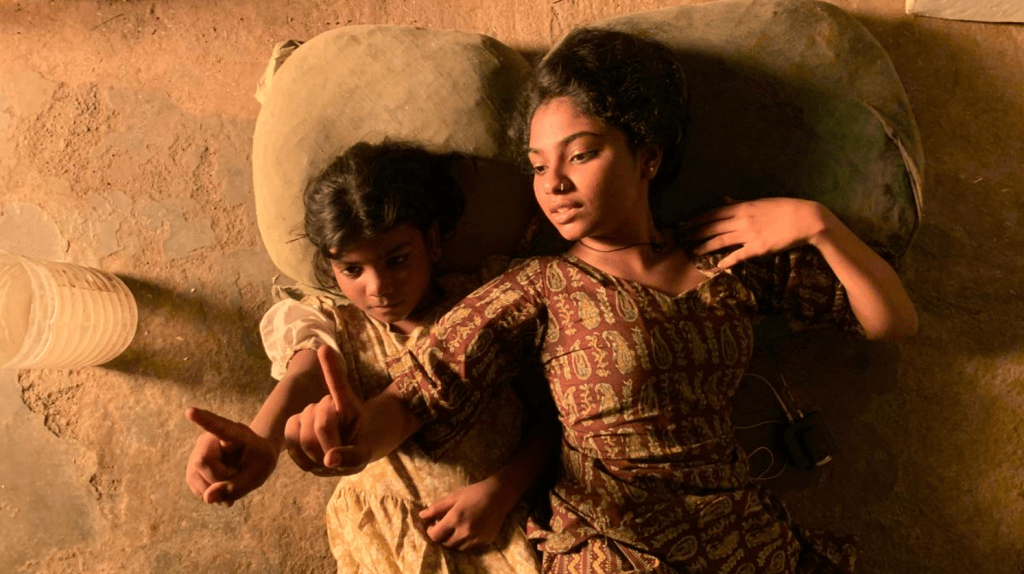
A 9-year-old girl works with her sister in a garment factory in India. Despite being naturally bright and curious, she doesn’t attend school because of financial struggles. And, truthfully, she doesn’t want to either. Her elder sister, however, recognizes her potential and dreams of giving her the education she deserves.

Thoughts

The film was a pleasant surprise. I loved it. It was just 22 minutes, but packed with emotions.

It tells the story of child labourers. They are presented not as helpless victims, but as resilient children who find joy even in hardship. The truth is, we often see others through our own lens and may view them as “helpless.” But for them, this is simply life. They know no other kind of life, and they’re doing their best with what they have. That’s what the movie captures so beautifully — life as they see it, not as we do.

It’s a social hierarchy. Someone wealthier might be looking at me with pity, thinking I’m suffering. Yet I’m making the most of what I have, because that’s the life I know. We suffer mostly when we lose something we once had, when we can compare the before and after, and we truly miss the before.

I’ve often felt that those not well-off often make the best of what little they have, which is why they find happiness in the smallest things, like a bag of jalebi, for instance. Anuja captures that spirit beautifully: “The present may not be bright, but we can strive for a better tomorrow.

The film avoids moral preaching or lecturing. It’s simply about two sisters supporting each other in a harsh world.

The most moving part of the film is that Sajda Pathan, who plays Anuja, was once a child labourer in Delhi before being rescued by the Salaam Baalak Trust (SBT). She now lives at the NGO’s Day Care Center, founded in 1988 by filmmaker Mira Nair, who, interestingly, is also the mother of New York’s new Mayor, Zohran Mamdani.

Ananya Shanbhag also delivers an excellent performance as the elder sister, Palak.

I would definitely recommend the short film. Anuja is streaming on Netflix.

Netflix Movie Spotlight: Greater Kalesh

Greater Kalesh Poster

It’s Diwali season. This time of year always puts me in the mood for something cozy and family-friendly to watch. But honestly, we just don’t get those kinds of movies anymore. The ones you can enjoy with everyone at home.

Remember the golden ’90s? We’d all sit together and watch Jo Jeeta Wohi Sikandar, Hum Hain Rahi Pyar Ke, or Dilwale Dulhania Le Jayenge without a single dull moment. Okay, not exactly in my family, as I was the only one truly into Bollywood, while the rest were more drawn to Malayalam movies. But I imagine these were the kind of movies that one would typically watch with their families. Nowadays, to relax, I tune into psychological thrillers because family movies do not feel family-oriented anymore.

That’s why I was keen to watch Greater Kalesh when it dropped on Netflix. It’s perfect for people like me who just want to unwind with something light and heartwarming. At under an hour, it’s an easy, breezy watch before jumping right back into Diwali celebrations.

What’s It About?

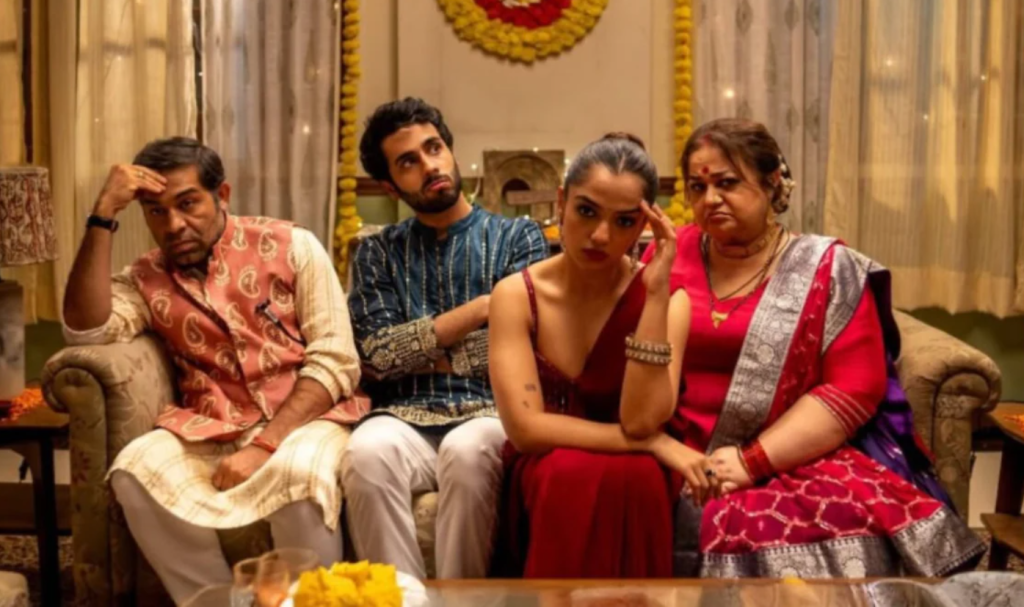
A young career woman returns home after a long time to celebrate Diwali with her family. She’s excited for a warm, cheerful reunion, but the moment she steps inside, she’s greeted not by laughter, but by chaos. Her family members are in the middle of a heated argument, and she can’t quite figure out what started it.

Thoughts

Greater Kalesh is short, simple, and surprisingly sweet. It doesn’t have high-stakes drama or a strong, twisting storyline. But that’s exactly what makes it refreshing for me. Sometimes you just want something light, easy, and comforting, and this little film delivers that perfectly. It might not be everyone’s cup of tea, especially if you seek something more cerebral or non-woke, but to me it felt like peeking into the everyday life of a next-door family and watching them sort things out in their own warm, relatable way.

Ahsaas Channa and Supriya Shukla truly shine here. Their mother-daughter bond feels real and layered. The kind that might make you think of your own mom with a smile.

It’s definitely worth a quick watch. Greater Kalesh is now streaming on Netflix.

Interracial Romance and the Indian Mindset

Interracial Romance in Indian Families

I recently watched a thoughtful discussion by Zarna Garg on interracial romance, featuring her own family. Based in the US, their candid conversation offers a refreshing glimpse into how Indian-American families are navigating such topics. It was heartening to see everyone, parents and kids, engage so openly. In many Indian households, these conversations either happen too late or not at all, often wrapped in hesitation or silence. But here was a family talking honestly about dating, identity, and interracial relationships. A big shoutout to them for their openness and clarity. It’s these dialogues that make a real difference.

Watch the video below:

Thoughts

I’ve spent most of my life abroad before choosing to return to India. Yet even while living overseas, I always knew my relationships would be with Indian men. Perhaps it’s because I studied in an Indian school and mostly socialized within the Indian community, even outside the country. I look Indian, dress Indian, and speak with an Indian accent. So it was natural to feel more comfortable with Indian men.

However, in today’s globalized world, with increasing interracial mingling, millennials like me must come to terms with the fact that more non-Indians are likely to become part of our families. Someone recently remarked how the world is blending in such a way that you can no longer easily tell someone’s ethnicity. Even appearances are getting “globalized.” It was an eye-opener. I’ve come to realize this holds especially true in the Indian context. Today’s new-generation kids often no longer look or sound traditionally Indian, especially the kids in Indian metros. Their accents, fashion, and even body language reflect a more global identity.

A few months ago, a relative married a Spanish man, the first white partner in our family. Surprisingly, everyone, including the older generation, was welcoming. No drama. No resistance. That in itself feels like progress. Our extended family no longer fusses over caste or religion in love marriages. Marrying someone from a “lower caste” has become normal (though I personally reject terms like “lower” and “upper” caste, which are inherently divisive). Only a few super-senior relatives seem to hold on to rigid views, but even that seems to be fading.

I wonder if this shift is due to the older generation’s growing access to YouTube and social media. Many now watch global discussions on love, identity, and acceptance. One moment really stood out: a senior aunt watched Kaathal, a Malayalam film about same-sex love, and casually remarked, “Being gay or lesbian is fine. It’s not a disease.” That kind of acceptance would’ve been unthinkable even a decade ago. But it’s happening now, and that matters.

More recently, one of my nieces fell in love with a white guy. It’s a bit more delicate because it hits closer to home. While I’m happy she found someone, I can’t help but feel a bit anxious. Our cultures are worlds apart, and it’s not just the couple that has to adjust, but the families too. At this age, do I or her parents have the patience? I’m unsure. On second thought, it doesn’t concern me or her family, as the relationship is hers to navigate. Still, as Zarna Garg wisely said in her family discussion, any relationship can thrive if the core values align: education, family, career, loyalty, and health. Everything else is secondary and can be worked around.

One comment from Zarna’s husband lingered with me. He mentioned that their eldest daughter has only dated white men, and he took it personally. He had read somewhere that girls whose fathers aren’t ideal husbands are more likely to do this. That struck a chord. My niece also has a pattern of dating white men, and to be honest, her father isn’t exactly the perfect partner either. Could there be a subconscious link? I wouldn’t dare bring it up now, especially since she lives abroad, but maybe someday in person.

There’s so much our generation is still figuring out. As millennials in our 40s, we stand between tradition and transition. We want to be open-minded and inclusive, but also grounded. At times, it worries us to see the younger generation drifting away from tradition. There’s a quiet fear: will our culture someday fade into oblivion? But these are changing times, and change demands a degree of acceptance. We may not always agree, but we must learn to adapt. I also see a growing trend among young parents today: trying too hard to be politically correct, often avoiding difficult conversations just to stay in their children’s good books. This might be a measure to ensure they don’t repeat their parents’ mistakes of being too restrictive. But experience teaches us that hard truths, spoken with love, are just as necessary today as it was yesterday.

Some of the advice I dismissed in my 20s now makes perfect sense. You only begin to understand your parents once you reach their age. That’s how life unfolds. You gain clarity with time. Until then, all we can do is trust, adapt, and hope it all works out in the end.

***

Photo by Bhavitya Indora