The Introvert-Extrovert Chat Paradox

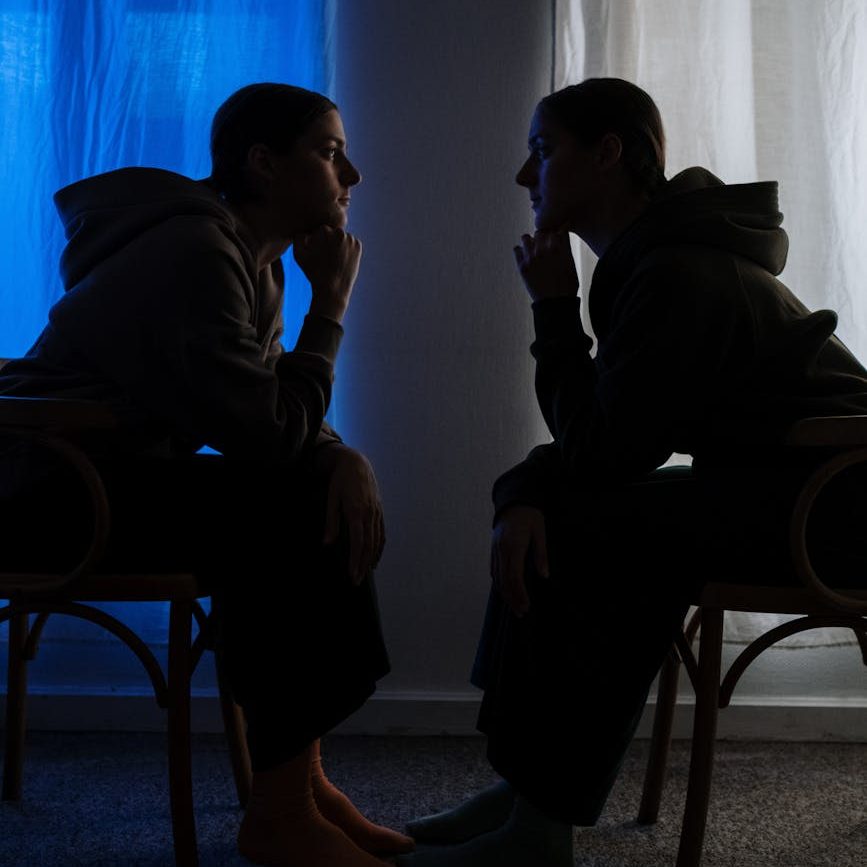
Picture of two people looking at each other, depicting introversion and extroversion

Something that has caught my eye often over the years is the difference between how introverts and extroverts communicate in real life and online. I wonder if you’ve noticed it too.

I’m an introvert who loves writing and blogging. But I’m someone with a fairly extroverted chatting personality.

On the other hand, many extroverts I know are surprisingly quiet on chat. Some even come across as shy. Meanwhile, introverts like me can appear far more outgoing and expressive online.

This is where things get interesting.

Imagine a friendship that begins through real-life interactions. Someone gets to know your actual personality, and then later comes across your online personality or chat personality. What if they don’t like that version of you as much? The opposite can happen too. Someone may enjoy your confident, talkative online presence but struggle to connect with the quieter, more reserved version of you in real life.

I think this is where many misunderstandings and personality clashes happen today.

This post is simply an observation. It’s just something I’ve noticed while navigating friendship and online conversations.

As someone in my 40s, I didn’t grow up with this confusion because there was no online personality to manage. The people around you knew only one version of you.

I did start blogging during my college days. Over time, I developed an online personality that was more outgoing and expressive. The internet felt like a safe space where I could communicate freely. As someone who was studious and never benefited from what people call “pretty privilege,” writing online allowed me to share my thoughts without feeling judged.

My appearance may have changed over the years, but my introverted nature never really did. The internet continues to be a comfortable space where I could express my feelings and connect with others in a way that felt natural to me.

Today, we live in a digital age where friendships and even relationships are shaped by multiple versions of ourselves. Real-life conversations, text messages, social media interactions, blogs, and online communities collectively play a role in how others judge us.

Maybe that’s why getting to know someone has become both easier and more complicated than ever before.

***

Photo by cottonbro studio

An Ode to Introversion and Quietude

Photo by Min An

In a world where extroverts are admired and introverts are judged, a book like Quiet by Susan Cain can prove transformative. It might be because Susan Cain herself is an introvert. No one can truly understand an introvert better than another introvert. Extroverts who have taken the time to introspect and reflect on an introverted loved one’s personality trait might also understand and respect introversion. However, they are few and far between.

For most of my life, I was told to talk more, be more extroverted, or “smart”. My introversion was considered a defect, more like a disease I needed to be cured of. I believed it to be true as no one told me otherwise. It wasn’t until I discovered the internet that I realized there are others like me. I was relieved to find people who shared the characteristics that I thought were unique to me. It provided much-needed validation. I started understanding introversion. I started understanding myself from the lens of a new unacknowledged world.

Introverted kids often feel like a misfit because of the constant judgment. Is it any surprise that they often grow up to become shy and underconfident? Nothing undermines someone’s self-confidence more than being repeatedly told they are not okay the way they are.

People find it hard to accept that I’m an introvert now that I’m an adult. I play my part well. Or rather, I have trained myself to play the extroverted part well. I have learned over the years to create this impressionable extroverted façade to gain acceptance into this world of Extrovert Ideals, all for the sake of attaining “normality”. However, I can keep up the act only for a few hours before I feel this mad urge to rush back home to re-energize – in short, to slip into my pajamas and dive into the comfort of books.

Susan Cain covers this façade (of extroversion) and more in her book. The case studies covering different aspects of introversion are a revelation. In the real world, extroversion still gets the upper hand at school, work, and every phase of life. Your competency is determined based on how extroverted you are. The book explores why a teacher, parent, or employer needs to understand the quantifiable benefits introversion brings to the table. The author explains how to reach out to the hidden treasures buried among the buzz and commotion. The solution is pretty simple: the world only needs to stop talking for a little while, introspect a bit, and try listening instead.