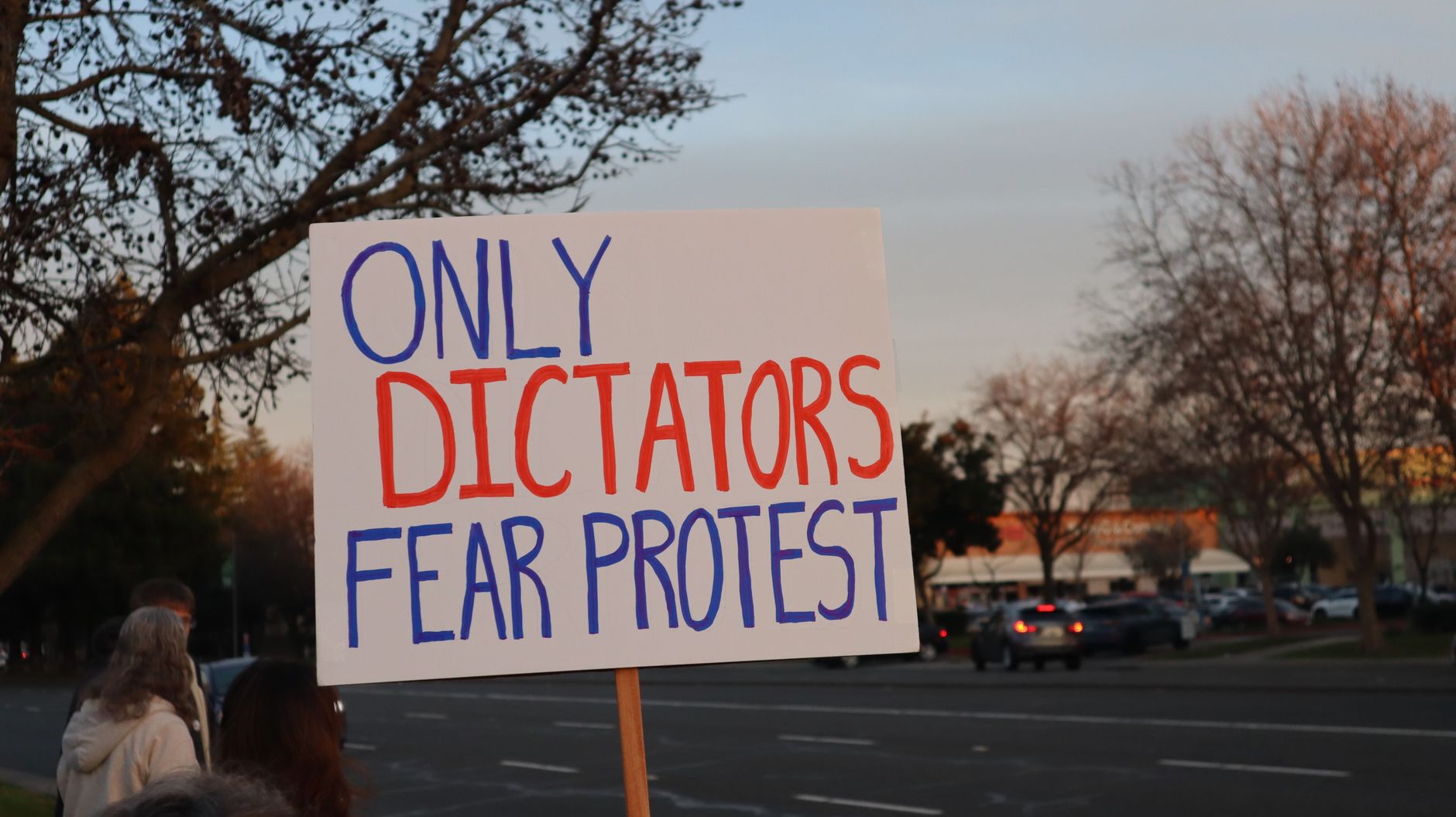
Whenever I see people throwing around the word “dictator” during protests, I often wonder how I would behave if I were a dictator in India. Yes, I spend time thinking about the most ridiculous things. Creating imaginary scenarios is something I genuinely enjoy. And let’s face it, we all have some dictatorship/authoritative qualities waiting to see the light of day.
So, what laws would I, as an Indian dictator, introduce in India? What everyday problems would I finally fix? And how much power would go to my head?
Well, here’s what my dictatorship would look like. Don’t worry, this is all hypothetical.
Ban vehicles for journeys under 2 km. You will have to walk unless you’re going to a hospital. Pollution? Reduced. Traffic? Reduced. Public health? Improved. I don’t care what people who love driving think. I’m a dictator, after all.
5 years in prison for not stopping at pedestrian crossings. Pedestrians shouldn’t have to risk their lives just to cross a road.
CCTVs everywhere. Anyone caught littering, spitting paan, or urinating in public gets 15 years in prison. Let’s see how clean our streets can get when everyone knows they’re being watched.
30 years in prison for deliberately destroying public infrastructure. If someone damages public property on purpose, they should face serious consequences. Why should the rest of us pay for someone else’s stupidity?
Four “no-men” nights to begin with. Women should be able to roam around freely without constantly worrying about their safety. I’d introduce four nights when women could reclaim public spaces without the usual fear and restrictions. Every time a rape occurs, I’d add another night. Four nights could become weeks, months, and eventually years.
2 years in prison for never celebrating anything INDIAN. I’m talking about celebrating India as a whole, not just Kerala, not just Bengal, and not just any one state or region. INDIAN. I’d like to see more people take pride in the country as a whole.
Ban the word “dictator” before anyone can use it against me. Obviously, I can’t have people questioning my authority. What kind of dictator would I be otherwise?
There you have it. My grand plan for running India if I ever became a dictator. I shared this with my friends, and they argue it’s not very dictator-like. But remember, there will be absolutely no freedom to contest any of these rules.
Would the country become cleaner, safer, and less chaotic? Maybe.
Would I become increasingly authoritarian along the way? Absolutely.
If you were a dictator for a day, what laws would you introduce? Laws that no one can say no to.
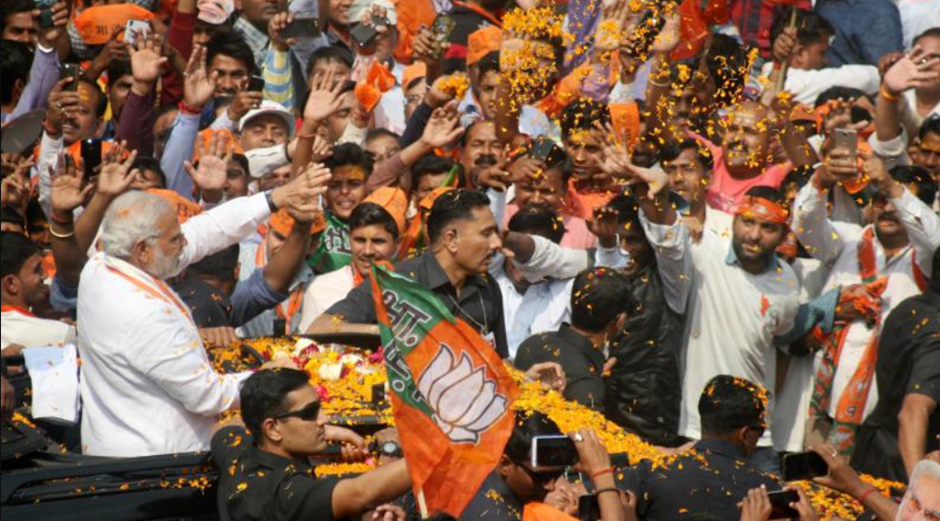
It’s the election season again in India, the largest democracy in the world. Politicians are tirelessly running hither and thither promoting their campaigns, often resorting to divisive tactics to seal their votes. As a layman, you find yourself wondering during these times whether the political parties’ agenda is to divide citizens rather than win elections.
Over the past ten years, there’s been a steady rise in discomfort over the rising popularity of the right wing. Most minorities and leftists want the BJP to be voted out this year. There’s a sense of dread about what would happen if the BJP takes control for the third consecutive term. You see and read incidents of Christians and Muslims in rural areas crying, “Hindus will kill us if they come into power. Please don’t vote for the BJP.” This cry for help is alarming. Minorities do face discrimination in India, but to make it sound like a genocide is far-fetched. Most people live in harmony with each other, while some tyrants across communities try to create problems. However, the negative stories are most prominently highlighted making it look like the norm. It is not a systematic persecution, as seen in neighboring countries.
Who is spreading this hate narrative? Who is inflicting this unfound fear on everyone? Politicians and the media are to blame—both the right and left. One makes controversial statements, and the other spreads hate and discord by amplifying them out of context. The reasons are purely agenda-driven. I say this with confidence because of the ease with which they seem to overlook their own preferred party’s faults, irrespective of the severity. The bias is crystal clear.
Someone like me, who is engrossed in reading both left and right narratives day in and out, can now finally figure out when a party/media/journalist is playing games to drive their agenda. I have acquired a sense of indifference to polarizing or pseudo-secularist words. But an apolitical person, which many are, might not understand the game and fall prey to the hate narrative set by both sides. Ultimately, the narrative with the most media outreach wins: the right-wing within India and the left wing globally.
The opposition parties in India are going all out to convince everyone why democracy is in trouble in the country, resorting to fearmongering tactics, such as drilling down the point that there won’t be an election next time if BJP wins. The Western media is also trying to help the opposition by pushing the narratives of the leftist ecosystem to the world at large. An outsider might have already read several articles slamming the situation in India on popular portals like the BBC, Al Jazeera, and CNN. Rarely do you see a right-wing viewpoint, probably because the right wing is, by default, considered problematic. So, you never know precisely why the right wing has gained popularity in any country. You only get to see the uncomfortable outcomes of it.
A satire post from @the_fauxy
Is BJP a Far-Right Party?
Let’s get this straight: BJP being a “far-right” party is highly debated and contradicted by the actual far-right in India. They feel Modi is “soft,” so they label him “center-right.” According to them, he hasn’t yet reclaimed all the lost temple properties or got the temples out of government control; his party suspended Nupur Sharma when she made blasphemous comments in response to an equally blasphemous comment by a guest panelist, and the party hasn’t restricted welfare benefits to Muslims. For the hardliners, a legit far-right politician is someone like Geert Wilders.
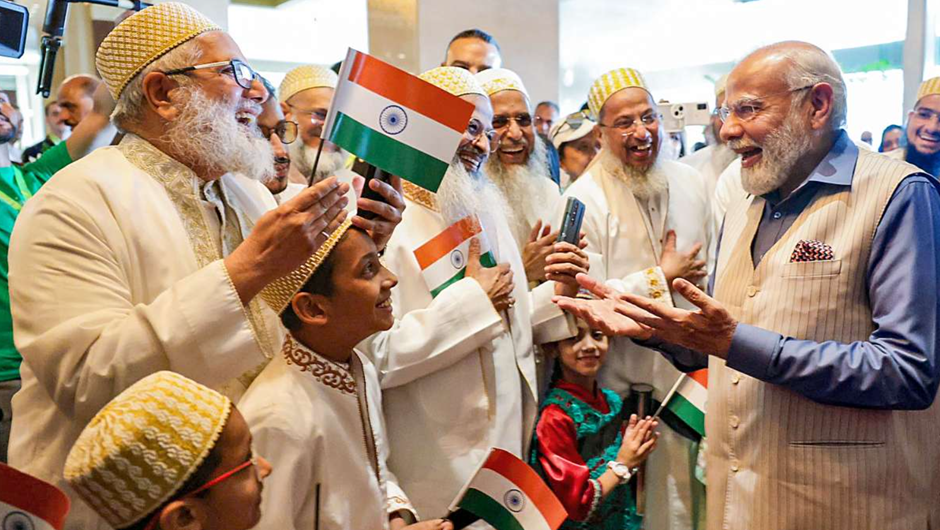
You often see Modi making problematic statements to woo his far-right fan base and keep them happy. But his words don’t usually translate into actions. Muslims remain the biggest beneficiaries of welfare schemes under the BJP rule, Muslim businesses in Gujarat have prospered, Shias are now able to practice their religious rituals in Kashmir openly, and oppressive rules like the Triple Talaq have been banned, earning him a small but dedicated Muslim fan following in the country who have started to realize that Modi isn’t all that bad as he’s made out to be. In Kashmir, a Muslim-majority state, the Ayushman Bharat scheme is available to all citizens irrespective of social and economic status, a privilege not extended to other states in the country.
Narendra Modi with Bohra Muslims
These examples defy the popular notion that Modi is anti-Muslim. Some rightists jokingly call him “Moulana Modi” for the help he has extended to Muslims, especially the Pasmanda community, who had been ignored by other political parties to date in favor of the more prosperous Muslim elites.
Yes, Modi is serious about reclaiming revered temple properties lost during the Mughal rule, the ones that are highly deemed by the Hindu community, but he is offering an alternative, more spacious land for the construction of a new mosque as compensation to the Muslims. This is a trait characteristic of a practicing religious Hindu but not an Islamophobe who would not have offered, without doubt, any land as compensation.
However, the party doesn’t do much to contradict such claims of it being an anti-Muslim party. They don’t openly highlight the good they have done for the Muslim community. It appears as if they want this “anti-Islam” label to prevail. Probably because it pleases their far-right voters. A large number of individuals vote for Modi with the belief that he prioritizes Hinduism. Why would he want to tarnish that image? This is a primary con of democracy – you support narratives, even misleading ones, to consolidate a win by hook or crook. The focus is on power, not the people. The result is this: you end up winning by dividing the people further. The essence of “One India” becomes fainter as each election campaign ends.
Reasons for Rising Support
The reasons why the majority in India prefer Modi are multifold. It is not as straightforward as outsiders like to believe. There are primarily three types of BJP supporters:
Centrists: They dislike BJP’s communal politics but admire the party’s pro-development approach, solid implementation of social schemes, zero tolerance for terrorist activities/groups, no appeasement politics, increase in FDI, improved relationships with foreign countries that can prove beneficial to India, improved economic rankings, etc.
Anti-Opposition: They support the BJP primarily because they think the opposition is incompetent and not strong enough to take the country forward. They vehemently dislike the opposition’s weakness when it comes to tackling radical groups (something we are increasingly seeing in Western countries nowadays). The opposition was unable to control Kashmir’s terrorist activities or ban anti-national groups like PFI while they were in power. If given a better choice, the “Anti-Opposition” clan would gladly opt out of BJP. Currently, there are none.
Far Right: They like BJP’s communal politics and their pro-Hindu, capitalistic approach. They were highly unsatisfied with the opposition’s appeasement politics in the previous years. They felt their needs were unmet or unanswered when the opposition was in power, such as getting the temples out of government control. BJP gives them hope.
BJP rose to fame because of these three main target groups whose grievances were left unresolved by the opposition parties. For them, BJP is the only viable option. To defeat the BJP, the opposition parties should first seriously address the concerns of these groups. As long as they keep denying their negatives and gaslighting the concerns of voters, the right-wing will continue to reign supreme.
Conclusion
It is a trend we are seeing worldwide. Far-right parties are winning in Europe and are finding support in the US. This could be attributed mainly to the incompetency of the leftist ecosystems to curb extremism and violence, pushing people to support the right. When the issues are addressed and resolved, voters will likely shift their support towards a centrist political party. Till then, we await more concrete actions from the left to prove they can protect the country and its social fabric as reliably as the right.




You must be logged in to post a comment.