Redefining What Success Means

Success Go Get It Image

I came across the following post online:

I think a lot about how we as a culture have turned “forever” into the only acceptable definition of success. Like… if you open a coffee shop and run it for a while and it makes you happy but then stuff gets too expensive and stressful and you want to do something else so you close it, it’s a “failed” business. If you write a book or two, then decide that you don’t actually want to keep doing that, you’re a “failed” writer. If you marry someone, and that marriage is good for a while, and then stops working and you get divorced, it’s a “failed” marriage.

The only acceptable “win condition” is “you keep doing that thing forever”. A friendship that lasts for a few years but then its time is done and you move on is considered less valuable or not a “real” friendship. A hobby that you do for a while and then are done with is a “phase” – or, alternatively, a “pity” that you don’t do that thing any more. A fandom is “dying” because people have had a lot of fun with it but are now moving on to other things.

I just think that something can be good, and also end, and that thing was still good. And it’s okay to be sad that it ended, too. But the idea that anything that ends is automatically less than this hypothetical eternal state of success… I don’t think that’s doing us any good at all.

It’s never “the person successfully got out of a bad marriage or bad friendship,” which, in my opinion, is one of the toughest things to do, at least in India. There are always a hundred people telling you to save the marriage or friendship, even if it sucks your soul. They go all out to make you feel guilty. When you do manage to get out of it eventually, it’s labelled a “failed” relationship.

Have we got our definition of success all wrong? The way it stands today, it often makes us cling to things that are no longer healthy, just for the sake of appearances. We try to make them work, even when we know they’re a lost cause, because society’s approval depends on it. We want people to look at us from afar and say, “Yes, they’re doing well in life.” This happened to me when I was trying to get out of my bad marriage. Society did not see my anguish; they simply wanted me to save the marriage.

Over time, I’ve grown less dependent on that kind of validation. Experience teaches you that to find true happiness, you need to first understand what happiness is to you, not others. I no longer feel the need to prove anything to anyone. There’s a calmness that comes with stepping out of the race. But it does not come without effort. In a world that constantly pushes you to do more, choosing to stay still and steady is often misunderstood. Living a life that balances financial independence (not luxury) with peace of mind rarely gets branded as “success.” However, luxury and fame without peace of mind are often labelled as the ultimate life.

Success takes on different meanings, even outside personal or professional life. Take politics, for instance. Many Indians see Modi’s stance against Trump’s tariffs and his refusal to bow down to demands (such as where India should purchase their oil from) as a mark of success. Others, however, view it as a diplomatic setback for India. And then there are those who believe it was actually a diplomatic failure for the U.S., considering India is among the fastest-growing economies in the world.

Of course, success looks different for everyone. We judge others by our own yardsticks. But clarity comes when you start asking yourself:

  • What do I actually want? Do I want wealth in heaps, or do I want balance?
  • What are the trade-offs, and am I okay with them?
  • How long am I willing to sacrifice? Am I truly passionate enough to give up other things I hold dear for this one pursuit?

When you have that honest conversation with yourself, defining success on your own terms rather than society’s, life feels lighter. And you stop depending on others for validation and how you should live your life. This does not apply to kids and young adults, though, who still need guidance on how to navigate life. A child cannot simply say, “Screw studies, it makes me upset,” and get away with it in the name of freedom of choice.

Effort is important, but so is knowing when to hold on and when to let go. True freedom comes only after achieving some level of financial independence. So that should be the first pursuit, regardless of gender.

***

Photo by Gerd Altmann

Breaking the Cycle of Extremism in India

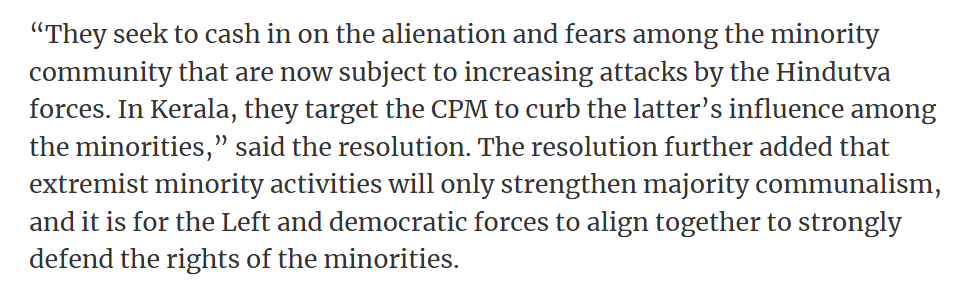
Today, I came across a news report from Kerala in The New Indian Express:

Source: newindianexpress.com/states/kerala/2025/Feb/04/cpm-admits-to-weakness-in-countering-bjps-growth-in-kerala

CPM mentions this about Islamist groups in the draft resolution:

Hindu extremists are using radical Muslim groups as fodder to fuel hatred between communities. But the reverse is also true—radical Muslim groups exploit the political climate to spread their own agenda. They feed off each other.

One side claims, “If Islamists stop, Hindu extremism will die down.”
The other side counters, “If Hindu extremists stop, Islamists will weaken.”

There’s no middle ground. How do we break this cycle? Who should compromise? The answer is—both.

The only way forward is to call out radical elements within your own community—those who discourage interfaith interactions, prevent you from celebrating others’ festivals, and push you away from the secular fabric of the country. Peaceful coexistence is the only solution.

However, I mostly see this self-criticism coming from the Hindu community. Not everyone supports right-wing politics, a Hindu Rashtra, or extremist activities, and many Hindus actively speak out against radicalism within their own circles. But the same level of criticism isn’t visible in other communities. At least 95% of the Muslims I know have never condemned extremism within their own community, but they are very vocal about Hindu extremism. If only one side is willing to challenge its radicals, how can we truly achieve peaceful coexistence in a secular, democratic nation like India?

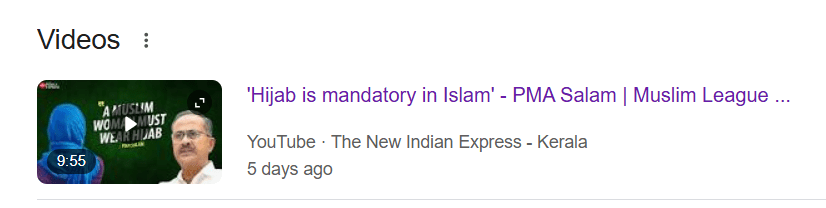
I feel this silence comes from fear—fear of being ostracized by their own community. In Kerala, the Muslim League openly stated that the hijab is not a choice for Muslim women; it is mandatory. When a journalist asked, “What if someone doesn’t want to wear it?” the leader reaffirmed, “If she’s a Muslim, we advise her to wear it.” There was no room for choice. Yet, despite often advocating for personal freedom, there was no backlash from within the Muslim community against this statement. This silence is unsettling. It makes people wonder—“If they won’t even speak up for their own freedom of choice, how can we expect them to stand up for ours?”

India is a secular nation, and preserving this secularism requires protecting religious freedom. When prominent leaders impose strict regulations on women, silence is not an option—it is a time to question them and hold them accountable. If not now, then when? Waiting until things spiral out of control will only make it harder to reclaim lost freedoms.

Why Dhruv Rathee’s Anti-BJP Videos Won’t Make a Significant Impact

India and Democracy

Dhruv Rathee’s recent videos have garnered much interest. Whenever he posts an anti-BJP or anti-Modi video, it trends on X. However, despite the popularity of his videos, here’s why these videos won’t have a significant impact.

Echo Chamber

The people who religiously watch Dhruv Rathee need no convincing on why the BJP is, in his words, a “danger to democracy.” They already wholeheartedly believe in this narrative. It must be acknowledged that Dhruv Rathee’s videos primarily cater to the anti-BJP audience. His videos might not have a significant impact outside this zone. Probably, he also means to reach out to fresh, impressionable minds. However, it remains to be seen how many Indian citizens are without political bias, considering the country is already significantly polarized.

Many people in India are Modi supporters, as evidenced by his victory in the last two elections. To overturn this support and for videos like Rathee’s to make an impact, the same set of Modi supporters responsible for his victory must be willing to consider viewing things from a different perspective, i.e., “the other side.” Asking right-wingers to go through leftist channels, including Dhruv Rathee’s videos, hoping to transform them, is like asking left-wingers to subscribe to right-wing media. It’s a lost cause. People who support the left call the right-wing press “Godi media” or “Sanghi media” and dismiss them. They refuse to even listen to a right-wing narrative. The same thing happens with the right-wing supporters. They dismiss videos from Dhruv Rathee and other left-leaning journalists.

So, who will these videos educate and reform? Takers are little.

Selective Activism

The main reason why even the center-right refuses to take Dhruv Rathee seriously is because of his selective news reporting. CPM’s rule in Kerala, the state I am from, is showing all signs of fascism, where freedom of speech and expression are routinely suppressed by the SFI activists (the youth wing of CPM), as seen recently in Sidharthan’s case. Still, Dhruv Rathee and several other left-leaning journalists hardly ever comment on this. It makes you question their agenda. More right-wing supporters would have taken him seriously if he had a more balanced approach to news reporting. In this matter, he fails.

Unquestioning Loyalty

As per surveys, Narendra Modi is the most popular leader globally. It’s a kind of hero worship that makes his supporters often ignore or justify his wrongs. But you usually see this with CPM and Congress supporters as well in Kerala. A kind of blind devotion engulfs them. Regardless of several corruption cases or scandals, party supporters refuse to waver. It is not easy to make someone shift their strong loyalties. This kind of worship is not just limited to politics. You see it with movie stars, singers, religious leaders, etc. People refuse to hear anything negative about a person they admire.

Recently, I came across a video on YouTube where a man was conversing with a couple in Kerala who earned their livelihood by selling tea near a beach. The conversation went something like this:

“How has it been for you the last five years? Has your life improved?”

“No, we are struggling financially. No changes have been made to the district. We continue to suffer.”

“So that means you are seeking a change?”

“Yes, we need a change for sure.”

“Who will you vote for then?”

“LDF! We have been staunch LDF supporters for years. No change in that.”

So basically, people are well aware of the problems they face and how things haven’t changed under the ruling party’s leadership, yet they refuse to stop their support. They might criticize the party but will not think about voting for another.

So, no matter how many videos Dhruv Rathee comes out with or how viral they become, the truth remains that he won’t be able to change the perspective of citizens who are already Modi fans. The videos will, however, solidify and intensify an anti-BJP person’s existing hatred towards the party.

For issues to be taken seriously, someone more nuanced, balanced, or unbiased needs to cover them. When people are convinced that the person reporting the news has no bias, the trust factor will naturally increase. However, this is a farfetched dream. In a world where biases are prevalent, only a newly created AI journalist might be capable of offering a completely neutral perspective. Unfortunately, even this AI journalist may develop biases over time, making it another unreliable source for obtaining news.

***

Photo by Studio Art Smile

What Every Indian Voter Should Do Before Lok Sabha Elections 2024

Lok Sabha Elections 2024 Analysis

The Lok Sabha Election is around the corner. As with any other election, it is of prime importance that an Indian citizen makes informed decisions before casting their vote. By “informed decision,” I do not mean it should be based on what the media shows you. Or what your relative or friend tells you. It should be based on your own independent research. It is a prerequisite because almost every individual and media house is biased nowadays. They are responsible for spreading a particular narrative without looking at both sides.

We often look at a political party and vote. I believe voting for a party without considering their achievements and contributions could lead them to take us for a ride and get away with misusing our tax money. Instead, we should scrutinize performances. Real data. If we wish our country to prosper, we must be more vigilant and not blindly trust any political party, journalist, or media.

The most foolproof way to assess a party’s performance is by observing the changes in your immediate surroundings. Take a moment to observe—your neighborhood, people in your locality, infrastructure, law and order, and security. What aspects do you appreciate? What do you dislike? Who is responsible for this change that you like or dislike? The state or center? Consider creating a checklist. Form your opinion based on this checklist, not what a person from another district, state, or country tells you. If someone says the country isn’t peaceful because of selective news, but your own experience is positive, it’s best to rely on what you know firsthand to form a judgment. Because this is the most credible piece of news there is – it’s coming straight from your eyes.

Online research

During these times filled with agendas, it’s crucial to conduct independent online research. Google should be your best friend!

Keep in mind that most sources push specific narratives that suit their agenda, with left-leaning channels often criticizing the government and right-leaning ones rarely finding fault. If a source only focuses on one narrative, it’s likely biased. Avoid blindly trusting your favorite party, politician, or journalist. Instead, gather data from both left and right-leaning portals to get a more balanced picture. For this to effectively happen, you must keep your biases at bay.

I use Media Fact Check Bias to determine whether an online news portal is left or right-leaning. This information is helpful as it will give us a hint into what kind of bias to expect. The website also shows whether the portal is credible based on whether they have given proper credit, passed fact checks, etc.

An essential research doc to refer to is the RBI docs, such as the State Finances: A Study of Budgets of 2023-24. They provide insights into how your state government is managing your money. Look into their spending on infrastructure, education, research, wages, and salaries, how debt-ridden they are, etc. RBI is a neutral entity, so it’s the best place to get the most authentic information for your research. The doc also provides insightful information on how the states manage their funds.

To understand complex terms and sentences, AI chatbots like those found in Bing, ChatGPT, and Bard are a godsend. They simplify information, making it extremely helpful for research and learning. We’re fortunate to have these tools available to help us, making this an excellent time for conducting research and expanding our knowledge. Don’t know what “Revenue Deficit” is? Go on and ask a chatbot, “What is Revenue Deficit? Explain in simple language,” and watch the magic unfold.

What should I add to my checklist?

Here are some items to add to your checklist. Your answers, I repeat, should be based on your own personal experiences and individual research, not someone else’s.

Improvements in your locality

Do you see improvements in your locality?

If yes, who is responsible? The center or state?

Note down each improvement on an Excel sheet. Google to find out who is responsible for the achievement.

I recently did this for my state (Kerala). I was surprised that many developments were not due to my state government.  

I wish journalists or media provided this information, but unfortunately, you won’t find a single website with all the details. You’ll have to gather the information yourself.

2019 manifesto

Have you looked into the current government’s 2019 manifesto? Have they fulfilled all their promises? Research and find out. Even if you do not like the party, you should keep your biases aside and look into the data. If you are too tired to look into it, I recommend Think School’s YouTube video. It is a balanced “BJP Report Card” that looks into each item in the manifesto and provides results based on facts.

Safety and security

Is your locality mostly peaceful? Do you feel safe and secure?

How are extremist groups (across all religions/political affiliations) dealt with in your state?

Would you consider your leaders (state and center) as terror sympathizers? Are they strong enough to proactively take action against terrorists?

A diverse country like India cannot be harmonious 365 days a year. Conflicts may arise from time to time, which is normal. The media often exaggerates, making every issue seem urgent.

However, the external and internal security of the country should not be ignored or taken lightly by any government or citizen. In today’s world, safety and security are paramount for every country, given the increasing threat of extremism globally. A capable leader must possess the strength and determination to proactively address such challenges.

Communal politics?

Now, this is tricky. India has always been polarized. Religion is what tore India and Pakistan apart. Communal conflicts have been a part of our history, often at a higher intensity than what we observe today. It would be naive to consider polarization as a recent development. The rise of social media over the past decade has simply made us more aware of these issues.

Politicians have played us like puppets since time immemorial by using religion as a string for votes. It is a tool that politicians can easily use to manipulate us. Therefore, I think voters shouldn’t give them that power. We should look at the broader picture and put the political parties to the test based on their achievements, not the petty politics they play.

Personally, I prefer not to look into the communal angle because I have seen both the left and right trying to agitate people in the name of religion. In India, the right is considered pro-Hindu, whereas the left is considered pro-Muslim, and they select and spread news according to that bias. This, in my opinion, creates more polarization. As long as religion exists in India, communalism will exist. When we cease to give it importance, the politicians will stop playing this game.

Conclusion

The checkpoints listed above are my personal guidelines. When each of us works on a checklist that reflects our country’s priorities, we empower ourselves to make informed decisions, ultimately contributing to a brighter future for India. As individuals sharing the same homeland, it’s incumbent upon us to support our nation’s prosperity by voting for strong leaders who align with its progress.

Let’s work together for a better future. Jai Hind!

***

Photo by Darshak Pandya