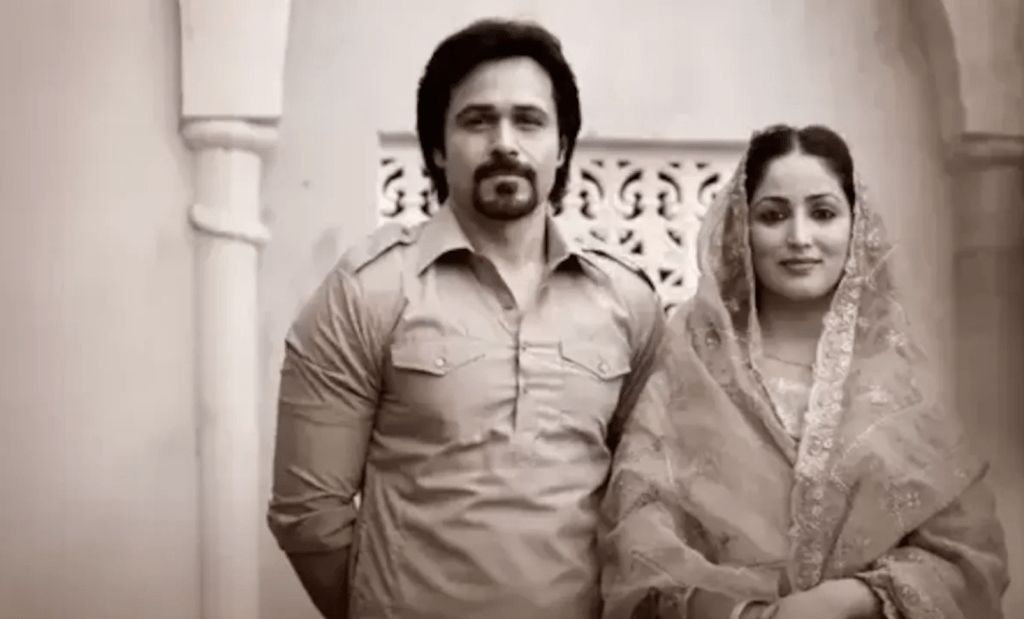
I watched The Girlfriend because most of my married (girl) friends praised it. After seeing it, I understood why. The story includes the classic “evil mother-in-law” angle, which many of them may relate to on some level.
What’s It About?
A psycho (but beautiful) real estate agent meets her boyfriend’s equally psycho (but rich) mother, which kickstarts a gruelling, intense face-off between two psychos.
Thoughts
I found the series average, probably because I’ve watched so many psychological thrillers in my 40+ years that nothing feels new anymore. But women in my age group seemed to love it.
I suspect it’s because the show portrays the partner’s mother as nauseatingly interfering, exactly how many wives and girlfriends see that figure in their lives – an overbearing presence who threatens their relationship.
To me, both sides, my female friends and their mothers-in-law, seem equally psycho, so watching that dynamic as an outsider feels different. And the guy is just there, unable to take sides. If you’re not in that sort of relationship, the series may not hook you as much. But for someone who’s personally caught in that kind of power struggle, the series would definitely hit harder.
I found the personality arcs of Cherry and Laura interesting. They keep going after each other, yet in many ways, they are alike. When you look at it more closely, it feels as if they are really battling a version of themselves.
The Girlfriend is now streaming on Amazon Prime Video. The series has six episodes, with each one running for about 50 minutes.
A lot of love stories released lately haven’t worked for me. I tried Saiyaara, but it felt more Gen Z-oriented. While they cried, I yawned. As a 40+ year-old, I am not quite sure if that yawn stemmed from a vitamin deficiency or because I was genuinely bored. It’s a tricky age group.
Then, I gave Metro In Dino a shot, only to find every character cheating on their partner… while singing songs, of course, because that’s how it is in Bollywood. Your loved one could have died, but you still end up singing a romantic song for your partner. Remember Suraj Hua Maddham?
While I was on this quest for a good love story, I realized there’s no chance of my stumbling upon a feel-good romcom that meets my dreamy requirements. So I thought, why not pick an old movie that already matches my soul? That’s how I ended up choosing this dark, unsettling Black Mirror-type romance, The One I Love.
What’s It About?
A couple struggling with marital issues goes on a retreat to a remote resort. This place, recommended by their therapist, is where many of his former patients have found healing. The home is warm and spacious, disconnected from the outside world, seemingly perfect for reconciliation. But soon, strange and unexpected events happen, which draw out very different responses from each partner.
Thoughts
I enjoyed the movie. It was gripping and featured some excellent performances.
I felt that even though the movie was released in 2014, it resonates with today’s AI age, where many people turn to artificial means to fulfill emotional needs their partners can’t always meet. The filmmaker probably foresaw a future where this would take shape in some shape or form.
I especially felt for the female lead, who genuinely seemed happy with the new experience. She was finally getting what she had always craved, even if it couldn’t last. It leaves you wondering what you might have done in her place. If you’re emotionally craving for a deeper bond, and you accidentally stumble upon it after years of acceptance that you would never experience it in your lifetime, how would you react?
You look at the character, see her face light up with a happiness that was missing in the previous scenes, and you can’t help but wish she could experience that bliss a bit longer. Routine has a way of dulling your emotions. You do not wish to take things for granted, but it happens anyway. These relatable human emotions make you empathize as well as get annoyed with Sophie (played by the talented Elisabeth Moss).
I would say The One I Love was a good watch. It’s currently available for free (not on rent in India, thankfully) on Amazon Prime.
I’ll start by saying I’m in my 40s, so I’m not exactly the target audience for this film. Still, I enjoyed seeing fresh faces on screen. Actors who look natural, expressive, and free from the usual heavy Botox work.
What’s It About?
Saiyaara opens with the female lead at the registrar’s office, ready to formalize her marriage. She’s a dreamer and a poet, someone who finds inspiration in life’s fleeting moments. Even in the office, she pulls out her diary to capture the beauty of what she believes is the start of a new chapter. But life takes an unexpected turn.
She soon crosses paths with the male lead, an angst-ridden singer determined to make it big. The film traces their love story and the way they navigate the highs and lows of their relationship.
Thoughts
The story felt like a mix of Aashiqui2 and Rockstar. As I’m not drawn to melancholy, tragic romances, it didn’t resonate with me as much as I’d hoped. That said, it was refreshing to see young, expressive talent on screen.
Director Mohit Suri specifically sought an actress without cosmetic enhancements (a “botox-free beauty”), and I think that was a brilliant choice. As an audience member, I’ve found lip jobs and other obvious procedures very distracting, so the natural look was a welcome change.
The lead actress (Aneet Padda) is adorable, and the actor (Ahaan Panday) is quite charming, too. Their chemistry was lovely. Personally, I would have loved to watch this pair in a light-hearted romcom instead. Hopefully soon. We need more youthful, happy, meet-cute romantic stories in Bollywood.
I recently watched a thoughtful discussion by Zarna Garg on interracial romance, featuring her own family. Based in the US, their candid conversation offers a refreshing glimpse into how Indian-American families are navigating such topics. It was heartening to see everyone, parents and kids, engage so openly. In many Indian households, these conversations either happen too late or not at all, often wrapped in hesitation or silence. But here was a family talking honestly about dating, identity, and interracial relationships. A big shoutout to them for their openness and clarity. It’s these dialogues that make a real difference.
Watch the video below:
Thoughts
I’ve spent most of my life abroad before choosing to return to India. Yet even while living overseas, I always knew my relationships would be with Indian men. Perhaps it’s because I studied in an Indian school and mostly socialized within the Indian community, even outside the country. I look Indian, dress Indian, and speak with an Indian accent. So it was natural to feel more comfortable with Indian men.
However, in today’s globalized world, with increasing interracial mingling, millennials like me must come to terms with the fact that more non-Indians are likely to become part of our families. Someone recently remarked how the world is blending in such a way that you can no longer easily tell someone’s ethnicity. Even appearances are getting “globalized.” It was an eye-opener. I’ve come to realize this holds especially true in the Indian context. Today’s new-generation kids often no longer look or sound traditionally Indian, especially the kids in Indian metros. Their accents, fashion, and even body language reflect a more global identity.
A few months ago, a relative married a Spanish man, the first white partner in our family. Surprisingly, everyone, including the older generation, was welcoming. No drama. No resistance. That in itself feels like progress. Our extended family no longer fusses over caste or religion in love marriages. Marrying someone from a “lower caste” has become normal (though I personally reject terms like “lower” and “upper” caste, which are inherently divisive). Only a few super-senior relatives seem to hold on to rigid views, but even that seems to be fading.
I wonder if this shift is due to the older generation’s growing access to YouTube and social media. Many now watch global discussions on love, identity, and acceptance. One moment really stood out: a senior aunt watched Kaathal, a Malayalam film about same-sex love, and casually remarked, “Being gay or lesbian is fine. It’s not a disease.” That kind of acceptance would’ve been unthinkable even a decade ago. But it’s happening now, and that matters.
More recently, one of my nieces fell in love with a white guy. It’s a bit more delicate because it hits closer to home. While I’m happy she found someone, I can’t help but feel a bit anxious. Our cultures are worlds apart, and it’s not just the couple that has to adjust, but the families too. At this age, do I or her parents have the patience? I’m unsure. On second thought, it doesn’t concern me or her family, as the relationship is hers to navigate. Still, as Zarna Garg wisely said in her family discussion, any relationship can thrive if the core values align: education, family, career, loyalty, and health. Everything else is secondary and can be worked around.
One comment from Zarna’s husband lingered with me. He mentioned that their eldest daughter has only dated white men, and he took it personally. He had read somewhere that girls whose fathers aren’t ideal husbands are more likely to do this. That struck a chord. My niece also has a pattern of dating white men, and to be honest, her father isn’t exactly the perfect partner either. Could there be a subconscious link? I wouldn’t dare bring it up now, especially since she lives abroad, but maybe someday in person.
There’s so much our generation is still figuring out. As millennials in our 40s, we stand between tradition and transition. We want to be open-minded and inclusive, but also grounded. At times, it worries us to see the younger generation drifting away from tradition. There’s a quiet fear: will our culture someday fade into oblivion? But these are changing times, and change demands a degree of acceptance. We may not always agree, but we must learn to adapt. I also see a growing trend among young parents today: trying too hard to be politically correct, often avoiding difficult conversations just to stay in their children’s good books. This might be a measure to ensure they don’t repeat their parents’ mistakes of being too restrictive. But experience teaches us that hard truths, spoken with love, are just as necessary today as it was yesterday.
Some of the advice I dismissed in my 20s now makes perfect sense. You only begin to understand your parents once you reach their age. That’s how life unfolds. You gain clarity with time. Until then, all we can do is trust, adapt, and hope it all works out in the end.
You must be logged in to post a comment.