Why Indian Parents Should Watch Adolescence

Adolescence Netflix

The Netflix series Adolescence is a wake-up call. It shook me to the core and shed light on the stark realities the new generation faces.

I grew up in a time when online influence was non-existent, and our worldview was shaped by the people around us. Today, that has changed. Algorithms dictate perspectives, feeding you opinions from across the world. Knowledge is no longer derived from just parents, teachers, or elders. This is a positive thing, but it has also resulted in an information overload.

There are several social media accounts trying to dump different perspectives on you. For every argument supporting point A, there’s another endorsing point B. Ultimately, it depends on which perspective you resonate with the most. Once you decide, the algorithm ensures you see more of it, reinforcing your beliefs. Sometimes, without you even realizing it. This can be dangerous. What if a child interacts with harmful content? The algorithm ensures they see more of it, shaping their beliefs in a troubling direction. We risk raising a generation programmed by these echo chambers. It’s a challenge we can’t ignore.

**Spoilers Ahead**

Every plus comes with a downside. Today, we have information at our fingertips, but this convenience comes at a cost. This is a reality that Adolescent portrays with unsettling accuracy. Jamie retreats to his room as soon as he gets home, immersing himself in his online world. His parents remain unaware of what he consumes, assuming, like many modern parents, that giving him complete freedom is the right approach. However, this unchecked digital exposure can shape young minds in ways they don’t anticipate, often with troubling consequences. It’s a new-age problem.

The series also introduced me to terms like Manosphere, Red Pill, and the 80-20 rule, making me realize how rapidly digital ideologies evolve. Figures like Andrew Tate are shaping young men’s perceptions of masculinity, often promoting the idea that being “alpha” means suppressing emotions. He preaches that men are providers and should be respected without being “given a headache.” This mindset isn’t foreign to India. I’ve noticed how men in my household particularly often express fewer emotions. When I was hospitalized recently, only the women in my family directly checked on me, while the men relied on them for updates. The burden of emotions lies on the women, whereas men are expected to be mere providers. Ironically, when men fall ill, women are expected to inquire directly. This emotional divide is ingrained in my household. I am unsure of other households. However, male-to-male interactions may differ. A “bro” might feel more comfortable checking in on a fellow “bro”.

I believe Adolescence should be screened in Indian classrooms with regional language dubbing. Andrew Tate-inspired accounts are emerging in India, pushing narratives that degrade women. If we don’t educate our youth about the dangers of such ideologies, we risk fostering a generation of men who lack empathy for women’s concerns, some of whom may even resort to violence to assert their views. The time to act is now.

The social message aside, this was Owen’s debut performance, yet he delivered with astonishing depth. It made me wonder how much the Indian film industry could thrive if it prioritized raw talent over nepotism, giving opportunities to newcomers who truly have the skill.

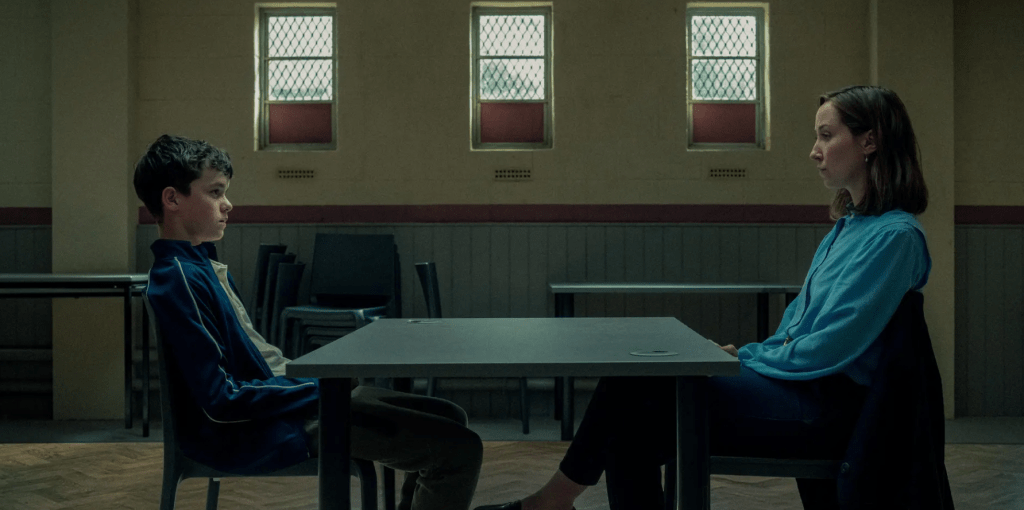
One of the most unsettling moments for me was Jamie’s chilling question to Briony with a steely, mocking gaze: “Are you afraid of a 13-year-old?” Owen Cooper’s portrayal was so disturbingly real that it made even a viewer like me uncomfortable. That’s the power of natural acting. His transformation, from an innocent boy insisting he has done nothing wrong, to someone consumed by uncontrollable rage, is nothing short of remarkable. It’s a performance that leaves a lasting impact.

Quick Bytes: Why are Indian Leaders Encouraging Women to Have More Children?

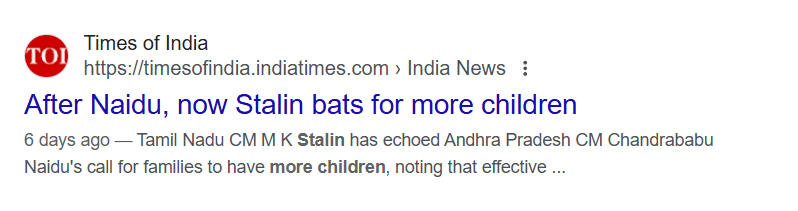
Why are South Indian leaders, like Stalin and Chandrababu Naidu, all of a sudden, pushing women to have more children? It’s not to combat the aging population as they make it seem. It’s all politics!

In India, there’s something called Delimitation. It’s a process of redrawing the boundaries of constituencies based on population. States with more population will get more constituencies, whereas those with low populations, like southern states, will get fewer seats. Basically, the exercise is to ensure each constituency has an equal number of people.

Since South India’s population growth is decreasing, plus migration, it won’t need as many constituencies. The total number of constituencies in Lok Sabha has been frozen since the 70s and is in place until 2026. 2026 is almost here! This is why politicians in South India are worried about women not having enough children. They don’t want to lose their seats.

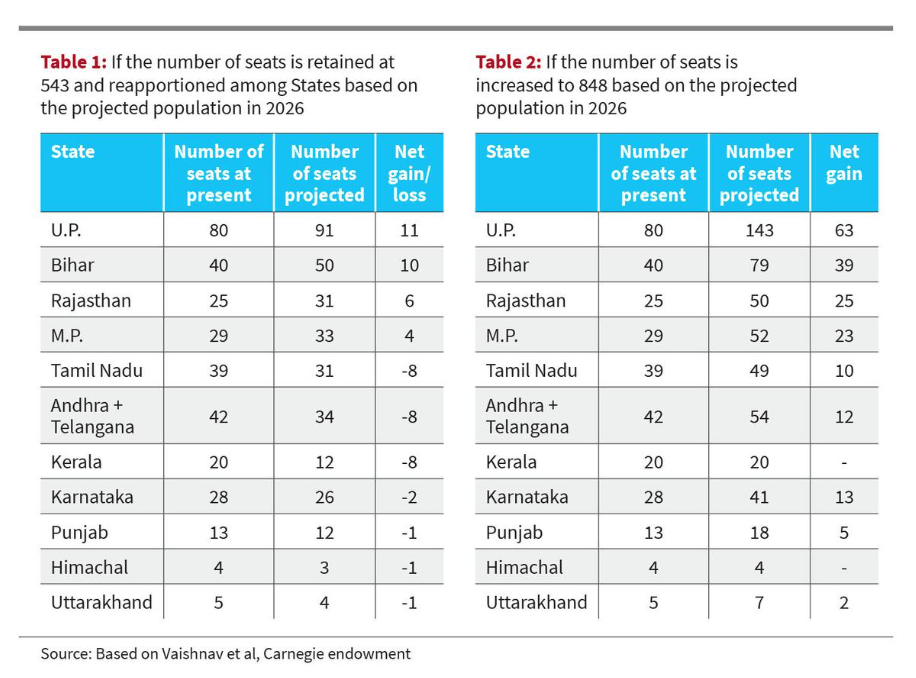
As per The Hindu newspaper, Kerala, Tamil Nadu, Andhra + Telangana, all of which are South Indian states, stand to lose 8 seats each, if the current number of seats in Lok Sabha (543) is maintained.

We can expect Pinarayi Vijayan, the CM of Kerala, to make a similar statement next.

An Ode to Being Selfishly Independent

Photo by Jaxson Bryden on Pexels.com

“Why don’t you get married? It will make your parents happy. It is selfish not to think about them.”

“If not now, then when?”

“Your biological clock is ticking. We need to see our grandchildren before we die.”

These are some dialogues, I and many, have heard at least once in our lifetime.

Now if we marry someone outside our religion or caste, the society chimes in with:

“The poor parents. Their child married someone from a different religion. Why don’t kids understand the sacrifices parents make?”

Your happiness gets the least precedence.

We are almost always emotionally blackmailed into following the norms set up by society. The questions and self-doubts then arise in our mind – “Why am I so weird? Why don’t I feel happy following what others are following” You think – “If so many people are saying the same thing, it must be right,” – when the truth is something else.

It took some unlearning for me to realize, there are no fixed protocols to be followed to live a happy, fulfilling life. No researcher has written a book saying “this is how everyone should behave or else the world would crumble in a day” Rules are formed because they make life less confusing, but they do not necessarily make life more fulfilling.

The blueprint of life is out there – study, study some more, get a job, get married, have children, work until you die. There are examples to follow, whereas, for someone who is single, there is no chart as such – you work, and then what? This lack of clarity, makes many shy away from choosing a different life. People want stability, and following the rules makes them believe they have certainty in their life, irrespective of whether they are mentally at peace or not.

After studies are done, an adult should have the freedom to chart his own blueprint. Conditions apply, of course. If the adult wants to be a terrorist, having his own blueprint would be a disaster.

I am saddened that society made me doubt myself for so long (I’m in my 30s) by indoctrinating me with the feeling that I, on my own, am not good enough. I need a partner, followed by kids, to be termed complete. We see so many celebrating their wedding, engagement anniversaries but have we seen anyone say “Yay! I have been happily single for a year now!” Obviously not, because we have been conditioned to believe, being single and happy is not something to celebrate.

Time and again, I have seen many friends being forced by their parents into marriage, jobs, religious practices, and then living an unhappy life afterward. And the irony is, they haven’t learned from this. The tradition will continue to the next generation from what I have deciphered from their talks. Because society has taught them this is the norm, this is the way it should be, and they should follow it, no questions asked.

It is all so subjective, this happiness. But more often than not, we have to mold them as per societal constructs, even if it is not what we are ready for at the moment. Forcing can make an individual follow the path you want, but the gratification you hope they would achieve through this process can likely be lost. The whole exercise (be it anything) loses its meaning if it has to be drilled down and is not coming from the heart.

Why are we following everything to a tee, to make others happy, when we ourselves get only one chance to live the way we want?

Why aren’t we giving enough freedom for our kids to think, to choose?

Why aren’t we giving enough importance to our happiness? If not in this life, then when?

Isn’t it selfish to demand your loved ones, who are now adults, to unquestioningly follow the rules you have set or the dreams you have selfishly conjured up in your mind for them?

I have stopped falling into this trap. I am no saint and I don’t aim to be. And I hope everyone gets a chance to be selfishly independent too – to realize how insanely happy and beautiful this life can be, just the way it should be.