
Mollywood Times: Can You Really Write Your Own Destiny?

Mollywood Times Image Grab

How many times have we been told to “write our own destiny”? It sounds great in motivational speeches, LinkedIn posts, and social media captions. But I’m someone who has always believed that no matter how hard you try to shape your own future, life doesn’t always turn out the way you imagined. There is another factor that rarely gets enough credit: luck.

Think about it. You can fight against all odds, convince your parents, and marry the love of your life. That’s definitely an example of writing your own destiny. But whether that marriage turns out to be happy and fulfilling depends on many things that are completely outside your control. Sometimes, despite your best efforts, a toxic relationship simply cannot be fixed. It’s not always because you didn’t try hard enough. Sometimes, circumstances, timing, or plain luck have different plans.

The same applies to almost every part of life. Whether it’s your career, passion, business, or even a hobby, you can put in your heart and soul and still not get the outcome you hoped for. Success often depends on external factors that you simply cannot control. Effort matters, but so do timing, opportunity, and luck.

That’s exactly why Mollywood Times stood out to me. This Malayalam movie explores a similar idea, showing how life can take unexpected turns despite the choices we make. It’s built around a thought-provoking premise that feels relatable, and I was surprised that it didn’t receive the attention it deserved. In my opinion, it’s one of those underrated Malayalam movies that deserved much more recognition.

Naslen delivers another brilliant performance, and the supporting cast does a great job as well. The film also has a dark sense of humour that really worked for me. It balances serious themes with clever comedy without making either feel forced.

While browsing Reddit after watching the film, I noticed that many viewers believe the story is inspired by real-life events and have been trying to guess the filmmakers involved. That could very well be true, but we’ll never really know what happened behind closed doors.

Overall, Mollywood Times is an engaging Malayalam film that’s well worth watching at least once. It’s currently streaming on JioHotstar.

The Sad Part of Travel No One Warns You About

Travel Photo

Most people say travel is rejuvenating, but no one really talks about what happens after the trip ends. This feels especially true for people with desk jobs, regular 9-to-5 schedules, or the kind of overtime-heavy work culture that has become common in India.

Once you return from travelling, you are often left with an unsettling feeling. You begin to realise how much of your life is spent restricted to a desk, tied to routines and responsibilities, while there is an entire world outside waiting to be explored. New cities, different cultures, mountain roads, local food, conversations with strangers, and experiences that make life feel bigger than your daily routine. Travel has a strange way of making ordinary life suddenly feel very small.

The truth is that most of our lives are spent working. We spend decades chasing stability, salaries, deadlines, and financial security. Only after retirement do many people finally get the chance to explore the world properly, spend more time on meaningful things, or simply move through life at a slower pace without constantly watching the clock.

After my recent trip, I finally understood why many people choose to limit travelling to retirement. Because when you travel while still working, the months that follow are spent thinking about retirement itself. You start questioning the structure of life in a way you probably never did before.

I think most people are not really craving luxury nowadays. They want peace. A chance to step away from competition, pressure, expectations, and the endless cycle of productivity. But financial responsibilities keep most of us attached to the lives we currently live. And if you think about it, it really is a sad state of affairs. So much of life passes without us truly knowing the world outside our routines. We spend our healthiest years working, saving, and postponing experiences for “someday.” Then, when we finally have enough time and freedom to explore, our physical health may no longer allow us to travel the way we once dreamed of.

Sometimes it genuinely feels like a trap. That is just how modern life is designed. The very rich can afford to live slowly, travel often, and experience the world freely, while the rest of us remain tied to jobs so we can eventually retire with enough money to live comfortably later in life. Until then, most people continue surviving between deadlines, stress, and short vacations that end far too quickly.

It has now been two months since my trip ended, and the feeling of missing the mountains still has not faded. I miss the slow life and mental peace I experienced there deeply. Returning has brought a quiet sadness that has stayed with me ever since. During those ten days of travelling, I experienced bliss as I consciously stayed away from the internet and social media. Honestly, it felt like a relief. When you are travelling, you do not really need distractions because the world around you becomes interesting enough on its own. Every moment feels fuller and more present.

Back home, though, life goes back to screens, schedules, and desk work. And sometimes the internet becomes the only way to explore the world when your real life feels limited to routines.

So now I sit with these thoughts quite often. There is a sombre feeling attached to them. I acknowledge these emotions and quietly hope that one day I return to the version of myself that existed before the trip, when I did not constantly think about whether I was missing out on life, the world, new people, or new experiences. Back then, work and everyday routines felt enough. I was content simply engaging daily with the people I already knew and focusing on responsibilities without questioning life too much.

But travel changes something inside you. That is the difficult part about it. It is both beautiful and cruel at the same time. It opens your eyes to how much more life has to offer, while also reminding you how little time most people actually get to experience it. As the euphoria of the trip fades, the ache lingers.

***

Photo by George Pak

Accused (Netflix): A Promising Queer Romance That Loses Steam

Konkona Sen Sharma and Pratibha Ranta in Accused Image

I knew I would be watching Accused on Netflix the moment I saw the lead pair: Konkona Sen Sharma and Pratibha Ranta. I have always liked both actors, so that alone was reason enough to hit the play button. But what really caught my attention was the theme of queer romance. In Indian cinema, stories about same-sex relationships are still relatively rare, which makes films like this especially interesting.

Over the past few years, India has slowly begun opening up to conversations about LGBTQ+ relationships. What once felt shocking to mainstream audiences is gradually becoming part of everyday discussion. That change did not happen overnight. It is the result of efforts from many sides: legal changes like the decriminalization of homosexuality in India, activists who have spent years spreading awareness, and filmmakers who are willing to tell stories about queer love on screen. Because of that collective push, movies exploring same-sex romance are finding space in Indian cinema.

I still remember when the Malayalam movie Kaathal: The Core was released. It remains one of the Malayalam films I feel proud of. I saw its impact firsthand at a family event we attended around that time. Some of my elderly relatives actually began discussing the theme of the film. It was clear they were still a bit uncomfortable talking about homosexuality, but the conversation itself was a big step. What surprised me most was that a few of them were able to acknowledge that homosexuality is real and not something a person can simply control or change. And the reason they were willing to even consider that perspective was simple: Mammootty was part of the film. Seeing an actor from their own generation portray such a character helped normalize the topic for them.

That moment reminded me of the real impact cinema can have. Movies are not just entertainment. Sometimes, they quietly open the door to conversations that people would otherwise avoid.

Getting back to the movie in question, Accused begins on a fast-paced note. The opening pulls you in immediately, and there is enough intrigue to keep you watching as the story unfolds. For a while, the film manages to hold that tension well. Unfortunately, the narrative loses some of its strength towards the end, and the impact is not quite as powerful as the beginning promised.

That said, the performances are a big highlight. Konkona Sen Sharma and Pratibha Ranta are both wonderful to watch. Pratibha, in particular, looked great throughout the film. I even found myself noticing her earrings more than once. She has mostly been seen in village girl roles so far, so it was refreshing to see her play a modern, city girl in this Netflix film. I am definitely looking forward to seeing more stories featuring her.

Konkona, as expected, delivers a strong performance. Her character is aggressive, ambitious, and very clear about what she wants. She does not soften her words to make others comfortable, and that confidence makes her come across as a true “boss girl” personality. At the same time, the film also shows how women like her often end up being judged or disliked for the same qualities that would be admired in men.

Overall, Accused starts off as a gripping Netflix drama with an interesting queer romance angle and strong performances. Even though the ending feels a bit underwhelming, the film is still worth watching for its lead actors and the way it brings conversations about same-sex relationships in India to a wider audience.

My Yali Capkini Journey: Rage, Romance and Baklava Cravings

Yali Capkini Poster Image

I started watching the Turkish drama Yali Capkini (Golden Boy) on Amazon Prime (MX Player) for a very simple reason. The lead pair looked good. I honestly assumed I would drop it after a few episodes because good looks alone rarely keep me hooked. Chemistry matters. A solid storyline matters. Surprisingly, Yali Capkini seems to tick every box so far.

This is the first time I am watching a Turkish series, and it gave me a small window into how Turkish Muslims live. It feels very different from what we usually see in Indian society, where things tend to be more conservative. Turkish culture comes across as more liberal, and a lot of that credit goes to Atatürk’s reforms, which pushed women’s rights forward. The show reflects that beautifully. Women face no criticism for dressing modernly, can speak up for themselves, and aren’t afraid to assert their rights. At the same time, the drama also shows conservative families who believe women should stay home and raise children. One scene shows a father accusing his daughter of being a disbeliever just because she drew a Christmas tree. In Pakistani dramas, the word “kafir” gets thrown around easily, but from what I’ve seen here, it isn’t normalised in Turkish shows. In fact, later, you see characters happily celebrating Christmas trees and decor.

If you plan to watch Yali Capkini, keep a box of Baklava ready. There are so many references to the sweet that you will start craving it instantly. I highly recommend trying Swaadesi Baklava, which should be available in most local Indian stores and also online. In the show, coffee and Baklava feel like supporting characters. They show up during happy moments and sad ones. Just like how many of us enjoy a cup of chai on a rainy day, the characters in this drama keep turning to their coffee and Baklava at any time of the day.

Now, coming to the main characters. Ferit, played by Mert Ramazan Demir, has to be one of the most toxic characters I have ever seen in a drama or movie. Since Yali Capkini’s story is written by a psychiatrist, the male character’s behaviour feels layered and too realistic at times. He is the kind of partner who says “So what?” when you tell him he hurt you, yet he reacts strongly if you give him the same treatment. His emotional manipulation, hot and cold behaviour, and constant lying create a type of rage that builds up inside you. His words sting more than any physical act. Anyone who has ever dealt with a toxic partner would relate, and this applies to both women and men who have experienced suffocating or manipulative relationships. The way most female characters in the drama react to disrespect is infuriating, but it is still close to reality. We all know someone who tells women to “adjust” or “compromise” to keep the relationship going.

The female lead, Seyran, played by Afra Saraçoğlu, is stunning, with eyes that instantly remind you of Aishwarya Rai. She is fiery, refuses to accept injustice, and that naturally irritates Ferit and his family, who are used to submissive women. She is easily the best performer in the show and delivers every scene with perfection.

There are very less feel-good scenes here. The series feels like pure rage bait. Still, it keeps you hooked. I haven’t completed it yet because Season 1 alone has more than 100 episodes. Then there is Season 2 and 3. I am not sure I will finish everything if the constant toxicity gets too irritating, but for now, I still have the motivation to continue.

Yali Capkini is available in both Turkish and Hindi on Amazon and MX Player. The English subtitles aren’t perfect, and sometimes don’t make any sense, but I still recommend watching it with subtitles rather than switching to the Hindi dub. The Hindi audio uses overly respectful language even when characters talk to someone younger, and it takes away from the natural flow of the scenes. That was my only issue.

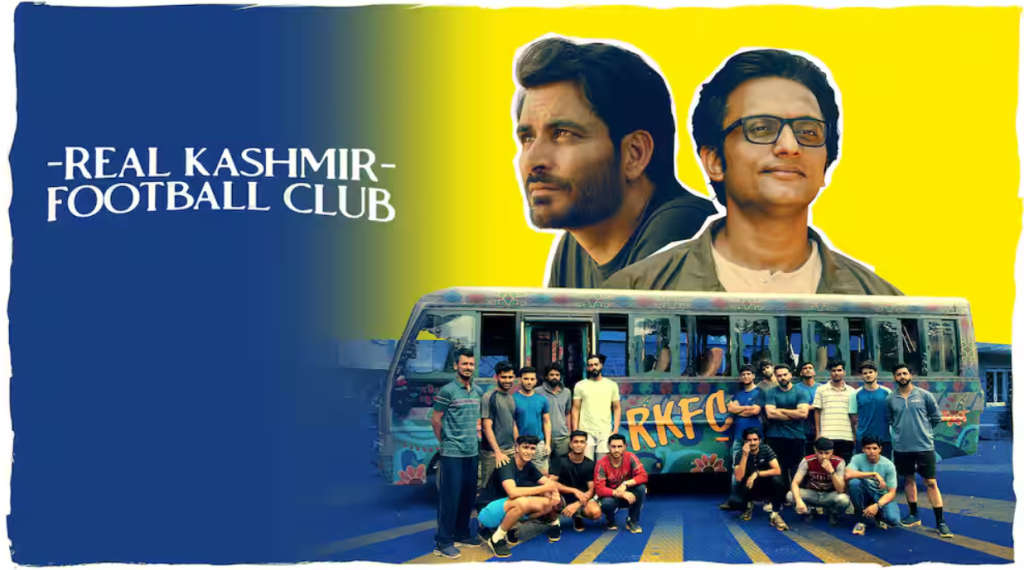
Real Kashmir Football Club on Sony Liv Shows the Power of Football and Hope

Real Kashmir Football Club Series Photo

I wanted to watch the Real Kashmir Football Club series on Sony Liv the moment the teaser dropped. It felt positive and full of hope. The story promised a future built on progress, peace, and development through football. That feeling stayed with me through the series. I was not disappointed.

Real-Life Inspiration

While most stories about Kashmir focus on pain and instability, this one chooses a different path. It highlights the positive side of the region in a quiet, honest way. The story is not entirely fictional. It is inspired by a real football club in Kashmir, started by a Kashmiri Hindu and a Muslim.

To quote Wikipedia:

Real Kashmir Football Club is an Indian professional football club based in Srinagar, Jammu and Kashmir. Incorporated in 2016, the club currently competes in I-League, the second tier of the Indian football league system. Real Kashmir with its reserve side also participates in the Jammu & Kashmir Premier Football League regionally.

Nicknamed “Sheeni Seh” (transl. Snow Leopards), Real Kashmir is the first club from Jammu and Kashmir to earn promotion in any top flight football league of the country. They also won the IFA Shield title in 2022. Club’s futsal section has been competing in the state league, as well as AIFF Futsal Club Championship, the highest division in the country.

The origin of Real Kashmir FC date to 2014 after devastating floods swept through the region causing massive loss of life and property. To keep the youth, who had lost much during the floods—engaged, Shamim Meraj, editor of a local newspaper named “Kashmir Monitor”, and Sandeep Chattoo, a local businessman, came together to arrange footballers.

What began as a community outreach programme garnered support from the local populace and it soon started evolving into something more. Real Kashmir FC as a club, formalised in 2016, and affiliated with Jammu & Kashmir Football Association (JKFA) under the tireless efforts by Chattoo. Founded in 2016, Real Kashmir FC emerged as the first ever top flight professional football club in Jammu and Kashmir.

Back to the Series…

The goal of the series is simple and meaningful. It is all about guiding the youth toward something productive through football.

The star of the show is Mohd Zeeshan Ayub, who plays the Muslim founder. He delivers a strong performance, his expressions changing effortlessly as the situation shifts. He’s a natural and perfectly suited for the role of the calm, steady, and rarely perturbed founder. Manav Kaul, meanwhile, plays the Kashmiri Hindu founder who’s quiet yet exhibits all the traits of an effective entrepreneur. He has a vision, and he wants it achieved. Together, they form the heart of the series.

Beyond the two main characters, Abhishant Rana stands out as the Kashmiri youngster searching for direction. His character is mischievous and witty, but he’s also a youngster without goals. Watching him find hope just when his life could have taken a darker turn was heartwarming.

I would easily call it a must-watch series. It is uplifting, relevant, and rooted in reality. The story leaves you with a sense of calm and optimism. It is a good watch for anyone looking for a positive story set in Kashmir.

If you enjoy meaningful sports dramas, this one fits well. The series is currently streaming on Sony Liv.

An Ode to 9 Thought-Provoking Life Quotes from Bonnie Garmus’s Lessons in Chemistry

Chemistry Experiment Image

I recently came to know that there is an Apple TV series based on Bonnie Garmus’s Lessons in Chemistry. Still, like many book lovers who believe the original story is always better than any adaptation, I chose to read the book first. And I am glad I did.

Lessons in Chemistry is warm, quirky, and emotional. It begins at a quick pace and later slows down to let the reader focus on how the characters are feeling. The fictional novel explores women empowerment, career, ambition, love, grief, and self discovery.

The story is about two unconventional scientists who view the world through logic. Their relationship feels unusual to others because their conversations revolve around research, experiments, and what most people would call nerdy banter. But the connection they feel with each other is real. They believe they are soulmates.

The female scientist eventually steps into an unexpected phase of her life and has to leave her career only to soon become the host of a cooking show. The show goes on to gain popularity dude to her unique, scientific approach towards food. She treats every recipe like a science experiment. She explains why each ingredient matters and the chemical composition that affects taste and cooking. This fresh perspective inspires her audience and transforms the way they think about cooking.

If you enjoy fiction that blends romance, feminism, science, and character driven storytelling, Lessons in Chemistry is worth adding to your reading list.

I also want to list some of my favourite thought-provoking quotes from the book. Hope you enjoy them as much as I did.

One thing I’ve learned, Calvin: people will always yearn for a simple solution to their complicated problems.

It’s a lot easier to have faith in something you can’t see, can’t touch, can’t explain, and can’t change, rather than to have faith in something you actually can.

From his own lessons, he knew repetition was important. The key was not to overdo the repetition—not to make it so tiresome that it actually had an inverse result and caused the student to forget. That was called boredom. According to Elizabeth, boredom was what was wrong with education today.

No wonder people didn’t understand animals. They could barely understand each other.

Having a baby, Elizabeth realized, was a little like living with a visitor from a distant planet. There was a certain amount of give and take as the visitor learned your ways and you learned theirs, but gradually their ways faded and your ways stuck. Which she found regrettable. Because unlike adults, her visitor never tired of even the smallest discovery; always saw the magic in the ordinary.

“What I find interesting about rowing,” Dr. Mason was saying, “is that it’s always done backwards. It’s almost as if the sport itself is trying to teach us not to get ahead of ourselves.” He opened his car door. “Actually, when you think about it, rowing is almost exactly like raising kids. Both require patience, endurance, strength, and commitment. And neither allow us to see where we’re going—only where we’ve been. I find that very reassuring, don’t you? Except for the flip-outs—of course. I could really do with fewer flip-outs.”

But as she read, she’d found herself wondering—did the artist ever get distracted? Ink an asp instead of a goat? And if so, did he have to let it stand? Probably. On the other hand, wasn’t that the very definition of life? Constant adaptations brought about by a series of never-ending mistakes?

“I don’t have hopes,” Mad explained, studying the address. “I have faith.”
He looked at her in surprise. “Well, that’s a funny word to hear coming from you.”
“How come?”
“Because,” he said, “well, you know. Religion is based on faith.”
“But you realize,” she said carefully, as if not to embarrass him further, “that faith isn’t based on religion. Right?”

“Whenever you start doubting yourself,” she said, turning back to the audience, “whenever you feel afraid, just remember. Courage is the root of change—and change is what we’re chemically designed to do. So when you wake up tomorrow, make this pledge. No more holding yourself back. No more subscribing to others’ opinions of what you can and cannot achieve. And no more allowing anyone to pigeonhole you into useless categories of sex, race, economic status, and religion. Do not allow your talents to lie dormant, ladies. Design your own future.

When you go home today, ask yourself what you will change. And then get started.”

***

Photo by Ron Lach