How Online Interactions Improved My Social Behavior

I was a timid youngster. Shy and introverted. You can say even socially anxious. When guests arrived, I would run and lock myself up in my bedroom. I was not interested in common courtesy or formalities. Many mistook it for arrogance or rudeness. Looking back at it, I feel this behavior stemmed from insecurity. I was not confident with the way I looked.

Till my pre-adolescent days, I was a cute kid. I was pampered, received compliments, and always got attention. This changed once I became a teenager. I had the thickest prescription glasses, and my complexion changed from white (coveted by most Indians) to a dusky brown. I also lost my cute chubbiness along the way because my appetite had died, making me a lanky young woman. Not the kind that got attention or compliments, but the kind who was frequently mocked.

The people around me also ensured I knew I wasn’t as eye-pleasing as before. I got comments like, “She was so cute as a kid,” making it evident that they were dissatisfied with my current imagery. I was given medications to increase my appetite, so I could restore some of my lost glory. I despised the medicines and eventually stopped taking them.

I was continuously told to become more outgoing like my sibling, a far more attractive personality. How could I when I did not have the confidence? From a bubbly kid, I became more withdrawn, lost in my own world, finding solace in books and songs. I thought if I stayed away from people, I wouldn’t disappoint them, and they wouldn’t hurt me either.

It was during my late teenage years that I stumbled upon the online world. I had just gotten access to the internet at home. I was mesmerized by the sea of opportunities that opened up to me. The plus being I could hide behind a screen and avoid being judged for my looks or my introversion. It felt like a less judgemental world. Back then, it was. Social media platforms did not exist, and people were not spewing hatred at each other.

One fine day, I happened to chance upon a public chat platform for youngsters. Word was going around in school that it was a fun group. I jumped on the bandwagon, curious to know what it was like. It was where I finally found my voice.

I am not sure if it was the comfort of facelessness or the fact that there was no pretty privilege involved that did the trick of helping me get out of my shell. In the online world, only your persona is seen. Your thoughts, your emotions become the highlights. That’s what I put forth in my chats with random strangers. All messages were posted publicly, and people could tag you and respond to them. It was safe and secure since it was a closed group where creeps were promptly banned or blocked. Due vigilance is required when you chat with strangers, and the group moderators ensured it was a safe space for everyone.

Talking in the group was like having a big group discussion. And for the first time in my life, I felt I was a part of something. People were engaging with my words. They found me interesting. They laughed at my jokes. I was the center of attention. Something I thought I would never be again.

The interactions were a stepping stone in my life and contributed to my change in attitude. It gave me confidence that even if my looks are against me, I have what it takes to engage someone. It was a slow but sure climb from then on.

The universe works in a funny way. As soon as I gained confidence, I started making friends. I even started to look better. I was and will always be introverted and never be the party starter or the energetic go-getter, but I learned how to deal with people. I am at my most confident at the moment, but it has been a long, steady ride to get there.

The impact of online interactions has been anything but inconsequential in my life. It helped me realize I was much more than what people offline gave me credit for.

Korean Movie Spotlight: A Man and a Woman

Detouring a bit from the usual saccharine sweet K-dramas, I decided to give this Korean movie named “A Man and a Woman” a try.

A Man and a Woman

Disclaimer: This post shouldn’t be treated as a review because I am far from qualified to give an objective and professional take on cinema. It should be treated as a subjective viewpoint of a cinephile who loves to watch movies and dramas purely for entertainment. I have only one criterion – I shouldn’t get bored. The film will be judged on that factor alone.

What’s It About?

“A Man and a Woman” is an emotional story of Sang-min (played by Jeon Do-yeon) and Ki-hong (played by Gong Yoo), two individuals who meet by chance and form a deep connection. They embark on a passionate but bittersweet extramarital affair amid their complicated personal lives.

Thoughts

The movie starts at a leisurely pace. I am generally not a fan of slow films, so I wasn’t sure whether I would like it. But I realized this pacing was essential to build the melancholy rhythm of the extramarital affair and to make us invested in their whole journey. It is a tumultuous relationship that is delicate and emotional, kind yet painful.

You end up rooting for the cheaters, something I have never done before. Two people quietly enduring the drudgery of everyday issues with a dry smile, eventually finding some warmth in each other’s arms. It’s tough to chide them. You know they are doing something morally wrong, but you want them to be together forever.

The credit goes to the makers and the actors for making us feel emotions out of the norm. We should be offended, angry, and betrayed seeing two people cheating on their spouses. But weirdly, we are not. That’s the effect of good creative storytelling. They make you feel what they want you to feel.

I would recommend the movie to serious cinema watchers, regardless of your take on extramarital affairs. Both the actors are brilliant. There is nothing as emotionally wrecking as the final few scenes. It is also an ugly reminder of how some of us, unfortunately, get the raw part of the deal, no matter how sincere we are. It’s just how life is, and the makers of “A Man and a Woman” have managed to capture this aspect brilliantly on camera.

An Ode to Park Seo-joon’s Best K-dramas

Park Seo Joon

I have been missing Bollywood romantic movies so much lately that I have delved deep into the world of K-drama. Korean dramas have everything I was missing in Bollywood movies – the feel-good, wholesome, and emotion-heavy element.

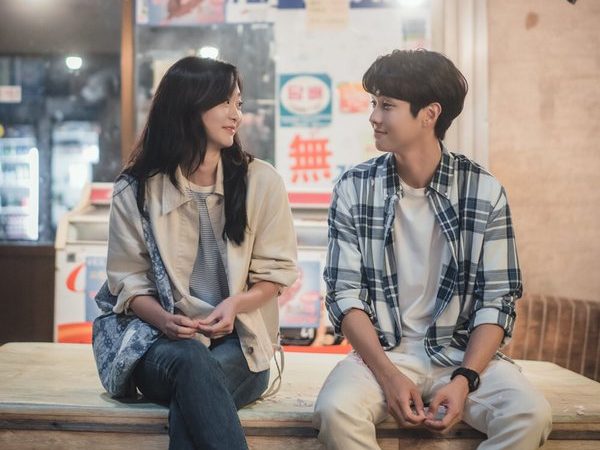
One of the actors I have come to admire is Park Seo-joon. He has sharp, expressive eyes that convey the world. It is always a delight to watch him, especially in romantic comedies. He grows on you, making an impact each time he appears on the screen.

If you are new to K-dramas, here are some Park Seo-joon gems you should check out:

What’s Wrong With Secretary Kim

What's Wrong With Secretary Kim

Park Seo-joon plays a narcissistic boss. His secretary, Kim, who has been with him through thick and thin, surprises him by expressing her wish to resign. He tries his best to keep her employed in his company. Emotions clash, and we also get subjected to a dark, mysterious past that has been haunting the leads forever. Park Seo-joon’s comic timing in the series is impeccable. Don’t miss out on his “aura.”

Fight For My Way

Fight For My Way

This is inarguably one of the best K-dramas I have seen. The lead pair is charming and one of the cutest I have ever witnessed. The series follows two friends with a very platonic relationship until the inevitable happens – their feelings get involved. Their protectiveness towards each other, constant bickering, support, and humor makes you crave such a deep friendship. Park Seo-joon plays an MMA (Mixed Martial Arts) fighter, and the irresistibly cute Kim Ji-won plays a wannabe anchor who is proficient with her words. Both are fighting hard to find their way in a world that makes it difficult for earnest people to survive.

A Witch’s Love / A Witch’s Romance

A Witch's Romance / A Witch's Love

This series has quite a controversial subject, but I enjoyed it nonetheless. A 25-year-old falls for a 39-year-old career woman who is considered a witch by her colleagues because of her ambitious, no-nonsense work ethic. Both characters are dealing with their own past heartbreaks – she was left on the altar by her beloved, and he’s emotionally scarred by a lover who died in an accident. Considering their age gap, Ban Ji-yeon (played by the charming Uhm Jung-hwa) finds it hard to reciprocate Yoon Dong-ha’s feelings. How they traverse this complicated situation forms the crux of the story.

This is one of Park Seo-joon’s earliest works, but there is no trace of inexperience. He handles the role with confidence, suave, and the boyish charm the role demands.

She Was Pretty

She Was Pretty

Ji Sung-joon (played by Park Seo-Joon) and Kim Hye-Jin (played by Hwang Jung-eum) were childhood buddies. They were each other’s first love. Then due to some twisted fate, they part ways. Years later, Ji Sung-joon reaches out to Hwang Jung-eum online via email and insists on meeting up. She hesitates. The issue – she is not as pretty as before. Her underconfidence and lack of self-esteem make her do childish things that snowball into a more significant problem. The story is engaging, and you will end up rooting for the two.

I like how the series emphasized embracing one’s true self and owning everything that makes us unique.

Don’t miss out on these K-dramas! They are like medicine for the soul.

An Ode to Staying Still in a Fast-Paced World

Children enjoying a leisurely stroll in the sprawling fields, basking in the simple joys of nature's embrace

I have been working the same job, staying at the same place, with the same people around me for ages – an anomaly in this fast-paced world where people are constantly on the move. Yet, I feel at ease, holding no grudges, feeling no pain or regret.

Most people around me are competitive, having quantifiable goals. Everyone seems to be in a rush, in a hurry to move continents and prove their value to the world. Occasionally, I feel insecure looking at them. Not because I want what they have but because I am expected to dream the same dreams. It would have made life easier to conform to the unwritten rules set by society. There would be less friction. If you get joy from a lifestyle that, per society, shouldn’t bring you joy, you start questioning your likes and dislikes.

Still, here I am, my dreams centered around the place I am in currently, with its familiar faces and landscapes. I enjoy the serenity of my non-happening town, surrounded by greenery instead of skyscrapers, with more aging people than youngsters who require my help in some form or the other. I am their in-house technician, IT support, problem solver, fraud protector, teacher, confidante, and more.

I enjoy the comfort that my people bring. I want to sing in the same language, embrace the same festivals, eat familiar food, and walk through the same lanes. I want to be in a place where I have the same rights as anyone else because it’s my country as much as anyone else’s. I feel like I belong here. My roots have nestled way too deep to be uprooted now. I like the familiarity, the dreaded “comfort zone,” so to speak. I want to stay still, even if it means giving up on urban luxuries.

There aren’t any motivational or romanticized posts for people like me. Sometimes, a film like Little Forest (Korean Movie) or a K-drama like Hometown Cha-Cha-Cha comes along, and you are swept by a wave of emotions, a kind of happiness that at least some people get your feelings. In the real world, you are expected to be money-minded and earn more than the next person. You should have an endless abyss of wants. It makes someone like me flawed and imperfect in the eyes of the world. We get less respect than the ones who constantly want more. But the thing with reaching your 40s is you subconsciously stop letting others dictate how you feel about living your life. It doesn’t matter anymore. Aging is a beautiful thing for this very reason.

We often take the road built by others hoping it will lead us to happiness. If that were the case, everyone who followed norms perfectly would have been happy. What if happiness is in the place you are? The fact that I am happy is a lesson to myself that I need not trail everything the world celebrates. Sometimes you end up paving your own unique path in the process of living a life that feels the most authentic to you. When you acknowledge that it’s okay to define your own version of joy, what others say ceases to make an impression.

***

Photo by Drift Shutterbug

An Ode to Canceling the Cancel Culture

Everything is canceled image

Some terminologies have been rightfully canceled. Words that do more harm than good. To use phrases like “I have OCD” when the person has not been medically diagnosed, or to call anyone “retarded” as a form of insult, is being inconsiderate toward people who are experiencing distress or discomfort from such conditions.

This post is not about the usage of problematic terms. It is about everything getting canceled nowadays based on subjective viewpoints. Social media encourages you to cancel someone if you disagree with them. The internet is so vast that you will always find someone who can cancel the same things along with you.

For example, nowadays, I see people calling someone “woke” if they don’t agree with the person. I have seen two sets of people use “woke” in two different contexts. One set calls feminists, activists, and anyone who smashes conventional norms as woke. The other set (which includes feminists) uses it for argumentative and politically correct people. The article “What Woke Means to Liberals and Conservatives” explains how the left and right decode the term.

Now imagine these two sets of people in the same room. They most probably would cancel each other out.

The cancel culture is mainly restricted to the online world. In the real world, people often exhibit greater acceptance and forgiveness. Rather than canceling, they are open to engaging in conversations and are willing to let go if someone holds a different perspective. They understand it is impossible to convince everyone to feel the way they do.

If you think about it, there are many concerns regarding endorsing this cancel culture: How much canceling is too much canceling? Where is the middle ground? Are we at risk of gradually negating each other’s voices to the point where our words become flavorless and self-righteous? Are we on the verge of losing the art of engaging and captivating conversations? Will the fear of offense diminish the essence of comedy, which often relies on pushing boundaries and challenging norms?

When we cancel people and force them to act our way, we unknowingly create a robotic world filled with yes-men. When this happens, we enter an emotional comfort zone devoid of growth. By avoiding conversations and explanations with individuals whose thoughts differ significantly from ours, we miss out on opportunities to engage in meaningful dialogue and expand each other’s perspectives. It is through such discussions that we can foster understanding, empathy, and potentially find common ground, even amidst differing opinions.

Change does not happen overnight, especially regarding principles and beliefs that have been drilled into us since childhood. It is only through increased exposure, experiences, and open-minded discussions that people can gradually become more receptive. Our willingness to engage with them, along with the assistance of others who share similar viewpoints, can play a role in encouraging them to take that important first step toward embracing different perspectives, if not now then later.

The beauty of life lies in the fact that there are many different personalities around us. If everyone acted the same way, how would we learn the art of acknowledging differences? If we don’t acknowledge differences, how do we stay sane? How do we practise empathy and kindness? The cancel culture makes people more intolerant, angry, polarized, and destructive. In my article, To Speak or Not To Speak, I voiced my concerns about the same.

It’s always better to leave room for disagreements, understand why someone feels a certain way (fear being almost always the root cause), and try to give your take on things using non-violent communication without any expectations. The result of such a discussion might not always be fruitful, but if the conversation is done right, you can expect your tolerance levels to improve and your mind to be more empathetic to people with a social conditioning that is different from yours. If each person felt this way, we could probably bring about the desired change more effectively without emotions playing a spoilsport.

***

Photo by Jeffrey Czum

An Ode to the Things That Make Me Smile

Happy Bubble Bath Smiles

Recently, I came across an article that said Japan has forgotten how to smile. The culprit being COVID-19 masking. When you wear a mask, you can forego formalities and skip smiling. Apparently, the Japanese continued this habit even after masking rules were relaxed.

As Japan gradually lifts its mask mandate, the nation grapples with the aftermath of prolonged mask usage. In response, “smile practice seminars” have surfaced nationwide to address the reported loss of smiles among the population.

indiatimes.com

While reading this article, something struck me out of the blue. I opened my phone gallery and scrolled through the pictures. I realized my recent photos did not show me smiling. I kept staring at them, livid that I had overlooked this obvious change. I had a poker-faced expression in almost all images, which wasn’t the case pre-covid.

I now have to consciously make it a point to smile for photos. It takes effort.

However, some things seem to instantly light my soul up, irrespective of whether it shows up on my face:

  • When someone remembers something I said ages ago
  • Warm smiles from strangers while shopping
  • Words with the power to tug heartstrings
  • Watching an uplifting movie on Friday night after a long, tiring week
  • Enjoying a good book in my bed on a Sunday afternoon
  • Immersing in music at night, lights off, with no distractions
  • Wandering outdoors aimlessly with an ice cream in hand
  • Comfortable silences
  • Peace
  • Warm bubble baths
  • Being around animals
  • Conversations that flow
  • Showing and receiving gratitude
  • Warm hugs and forehead kisses
  • Empathy and kindness

I am sure there are more.

It’s when you note down the small joys in life do you realize most of life’s prized gifts are things that cannot be bought with money. Things that rejuvenate and keep you sane. When I am down, I know I can rely on these items on my feel-good list to bring my mood back up.

Life happens, with all its challenges and unpredictability. Still, we should never let go or overlook things that light our souls up. Those bytes of sunshine might just be our medicine, the sure-shot solution that can help us regain a smile lost in the rubble of uncertainty that life often throws our way.

***

Photo by cottonbro studio