What Every Indian Voter Should Do Before Lok Sabha Elections 2024

Lok Sabha Elections 2024 Analysis

The Lok Sabha Election is around the corner. As with any other election, it is of prime importance that an Indian citizen makes informed decisions before casting their vote. By “informed decision,” I do not mean it should be based on what the media shows you. Or what your relative or friend tells you. It should be based on your own independent research. It is a prerequisite because almost every individual and media house is biased nowadays. They are responsible for spreading a particular narrative without looking at both sides.

We often look at a political party and vote. I believe voting for a party without considering their achievements and contributions could lead them to take us for a ride and get away with misusing our tax money. Instead, we should scrutinize performances. Real data. If we wish our country to prosper, we must be more vigilant and not blindly trust any political party, journalist, or media.

The most foolproof way to assess a party’s performance is by observing the changes in your immediate surroundings. Take a moment to observe—your neighborhood, people in your locality, infrastructure, law and order, and security. What aspects do you appreciate? What do you dislike? Who is responsible for this change that you like or dislike? The state or center? Consider creating a checklist. Form your opinion based on this checklist, not what a person from another district, state, or country tells you. If someone says the country isn’t peaceful because of selective news, but your own experience is positive, it’s best to rely on what you know firsthand to form a judgment. Because this is the most credible piece of news there is – it’s coming straight from your eyes.

Online research

During these times filled with agendas, it’s crucial to conduct independent online research. Google should be your best friend!

Keep in mind that most sources push specific narratives that suit their agenda, with left-leaning channels often criticizing the government and right-leaning ones rarely finding fault. If a source only focuses on one narrative, it’s likely biased. Avoid blindly trusting your favorite party, politician, or journalist. Instead, gather data from both left and right-leaning portals to get a more balanced picture. For this to effectively happen, you must keep your biases at bay.

I use Media Fact Check Bias to determine whether an online news portal is left or right-leaning. This information is helpful as it will give us a hint into what kind of bias to expect. The website also shows whether the portal is credible based on whether they have given proper credit, passed fact checks, etc.

An essential research doc to refer to is the RBI docs, such as the State Finances: A Study of Budgets of 2023-24. They provide insights into how your state government is managing your money. Look into their spending on infrastructure, education, research, wages, and salaries, how debt-ridden they are, etc. RBI is a neutral entity, so it’s the best place to get the most authentic information for your research. The doc also provides insightful information on how the states manage their funds.

To understand complex terms and sentences, AI chatbots like those found in Bing, ChatGPT, and Bard are a godsend. They simplify information, making it extremely helpful for research and learning. We’re fortunate to have these tools available to help us, making this an excellent time for conducting research and expanding our knowledge. Don’t know what “Revenue Deficit” is? Go on and ask a chatbot, “What is Revenue Deficit? Explain in simple language,” and watch the magic unfold.

What should I add to my checklist?

Here are some items to add to your checklist. Your answers, I repeat, should be based on your own personal experiences and individual research, not someone else’s.

Improvements in your locality

Do you see improvements in your locality?

If yes, who is responsible? The center or state?

Note down each improvement on an Excel sheet. Google to find out who is responsible for the achievement.

I recently did this for my state (Kerala). I was surprised that many developments were not due to my state government.  

I wish journalists or media provided this information, but unfortunately, you won’t find a single website with all the details. You’ll have to gather the information yourself.

2019 manifesto

Have you looked into the current government’s 2019 manifesto? Have they fulfilled all their promises? Research and find out. Even if you do not like the party, you should keep your biases aside and look into the data. If you are too tired to look into it, I recommend Think School’s YouTube video. It is a balanced “BJP Report Card” that looks into each item in the manifesto and provides results based on facts.

Safety and security

Is your locality mostly peaceful? Do you feel safe and secure?

How are extremist groups (across all religions/political affiliations) dealt with in your state?

Would you consider your leaders (state and center) as terror sympathizers? Are they strong enough to proactively take action against terrorists?

A diverse country like India cannot be harmonious 365 days a year. Conflicts may arise from time to time, which is normal. The media often exaggerates, making every issue seem urgent.

However, the external and internal security of the country should not be ignored or taken lightly by any government or citizen. In today’s world, safety and security are paramount for every country, given the increasing threat of extremism globally. A capable leader must possess the strength and determination to proactively address such challenges.

Communal politics?

Now, this is tricky. India has always been polarized. Religion is what tore India and Pakistan apart. Communal conflicts have been a part of our history, often at a higher intensity than what we observe today. It would be naive to consider polarization as a recent development. The rise of social media over the past decade has simply made us more aware of these issues.

Politicians have played us like puppets since time immemorial by using religion as a string for votes. It is a tool that politicians can easily use to manipulate us. Therefore, I think voters shouldn’t give them that power. We should look at the broader picture and put the political parties to the test based on their achievements, not the petty politics they play.

Personally, I prefer not to look into the communal angle because I have seen both the left and right trying to agitate people in the name of religion. In India, the right is considered pro-Hindu, whereas the left is considered pro-Muslim, and they select and spread news according to that bias. This, in my opinion, creates more polarization. As long as religion exists in India, communalism will exist. When we cease to give it importance, the politicians will stop playing this game.

Conclusion

The checkpoints listed above are my personal guidelines. When each of us works on a checklist that reflects our country’s priorities, we empower ourselves to make informed decisions, ultimately contributing to a brighter future for India. As individuals sharing the same homeland, it’s incumbent upon us to support our nation’s prosperity by voting for strong leaders who align with its progress.

Let’s work together for a better future. Jai Hind!

***

Photo by Darshak Pandya

To My Dear Indian Brothers and Sisters

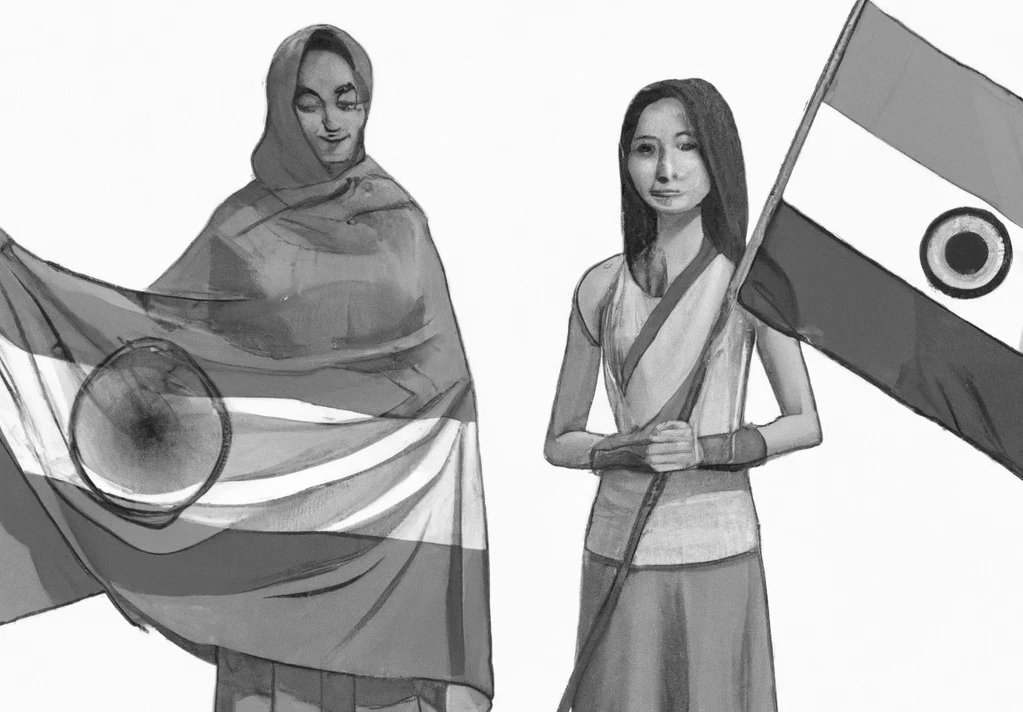
Indian Lady Waving Flag - To My Dear Indian Brothers and Sisters

When will we start looking at each other, not as left or right wing, but as Indians again? We lost ourselves somewhere along the way and fell into the muck head-first that political parties and fanatics laid out for us. They wanted to divide us on the basis of religion and politics. We can safely say now that they have succeeded.

We are more divided than ever before. We look at each other as villains, not citizens of the same soil.

Can we go back to the stage where we all felt like one? Did that phase ever exist? We were probably always this polarized, but the lack of social media helped cover it up.  

I have only one dream – that we put our country first, above everything, including religion, caste, ideologies, political leanings, etc. It’s a huge ask. It’s definitely more challenging than spreading hatred. However, it is the need of the hour so our country can progress further.

For India to develop, we should work together. Politicians will not do it, so it’s up to us, the civilians, to make the effort. I hope to see India as a developed and prosperous country before I bid goodbye to this world. One can dream for one’s country, no matter how improbable. However, such dreams can materialize only if we come together as one, forgetting our differences and working towards the common goal, with nothing else to distract us.

When someone tries to separate us, we should look at each other with empathy and understanding. Instead of harboring a victim mentality, we should grow together. We should think, will the country prosper from our hatred and animosity? Is enmity worth it in the long run?

Elections are coming soon. We can expect more divisive politics. Be mindful of the games people play.

Judge not on the basis of what social media algorithms propagate or even what the newspapers or journalists report. Everyone seems biased at the moment. Judge on the basis of your own quality of life, personal experiences, and surroundings. Judge on the basis of your own contributions to the country – did you help in any way? Even maintaining peace and decorum during heights of conflict is a worthy contribution.

Truth be told, there were times I wished there was a law that banned religion-based talks on social media and news channels. If we stopped talking about religion, if we considered each other as humans first, there would undoubtedly be more empathy. But political parties thrive on identity politics. They can win only if religion is mentioned. So, a ban is out of the question. This is true for all major parties in India: BJP (considered pro-Hindu) and Congress (considered pro-Muslim). Everyone has a game to play based on religion, and we foolishly fall for it, fostering hate for one another.

When a religion or caste is constantly criticized, people affiliated with that religion or caste become more polarized. It’s the sad truth of life. Things don’t dramatically reform. It takes understanding, empathy, and kindness to one another to bring about change. Hate, abuse, and shaming do nothing other than deteriorate matters further.

Since childhood, we have been made to recite, “All Indians are our brothers and sisters,” and we have never questioned those words. I hope we return to that state someday, where we can see each other as one, part of the same soil.

Photo by Shakeb Tawheed

11 Controversial Quotes by the Son of Hamas

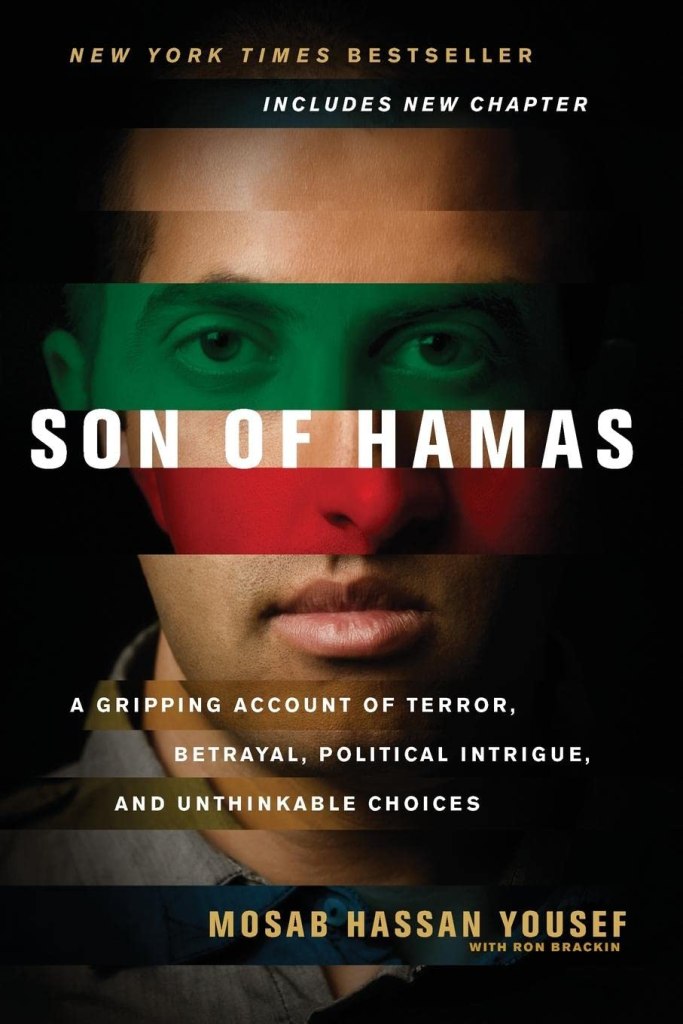
An acquaintance recommended “Son of Hamas” to me. As the title clearly gives away, it is a book by the son of a Hamas founding member named Mosab Hassan Yousef, nicknamed the “Green Prince.”

Son of Hamas is a controversial book in that it has Mosab openly criticizing Hamas. He started off as a radicalized youngster, ready to kill Israeli troops for revenge, but soon, his experience over the years with Hamas ended up being an eye-opener. Many Hamas sympathizers consider him a traitor to the Palestinian cause, but he has his reasons. I would suggest getting the book for further details.

Mosab does not in any way undermine the struggle of the Palestinian people. He, in fact, starts the book by narrating the oppression his people face on a day-to-day basis. Your heart aches for the Palestinians after reading his account. He wanted only the best for them, so over time, he started resenting the questionable morality of the extremist group he was affiliated with.

Mosab has been giving several interviews on news channels these days, vociferously lashing out at Hamas. You might find a couple of them on YouTube. His youngest brother, too, left the group recently.

Before I begin, I would like to make my stance clear. I am pro-civilian. I condemn the horrible October 7 attacks that took place in Israel, and I equally condemn the death of innocent civilians in Gaza. Several things can be true at once. I feel incredibly sorry for everyone involved in this mess. A lot of pain, fear, anger, and hatred spanning several years has led everyone to this moment. However, I will not use any excuses to justify the deaths from either side. No one deserves to die in such a cruel way. Personally, I feel any rationalizations and reasonings belittle the suffering of the people going through a loss.

I am also anti-Hamas. I am against their charter that calls for the complete annihilation of Israel. After watching several interviews featuring Hamas leaders, I have come to the conclusion that Gazans deserve better—a life that is peaceful, sustainable, and prosperous, things that Hamas cannot give them.

Disclaimer: If you are pro-Hamas, this page may not be for you. Instead of putting yourself in a sensitive spot, I request you stop reading right here. The quotes on this page are for those who are curious about why Mosab thinks Hamas is neither good for Palestinians nor Israelis. If you have already made up your mind that Hamas is a freedom fighter or resistance movement, I humbly request you to exit this page.

So, let’s get started.

Here are some of the controversial quotes from the book:

Truth and forgiveness are the only solution for the Middle East. The challenge, especially between Israelis and Palestinians, is not to find the solution. The challenge is to be the first courageous enough to embrace it.

Peaceful coexistence would mean the end of Hamas. From their perspective, the organization could not thrive in a peaceful atmosphere. Other resistance groups also had a stake in the continuation of conflict. It’s hard to achieve peace in a place where so many have different goals and interests.

And it would be many painful years before they would begin to understand that Hamas was not an organization as most people understood organizations, with rules and a hierarchy. It was a ghost. An idea. You can’t destroy an idea; you can only stimulate it. Hamas was like a flatworm. Cut off its head, and it just grew another.

Even as a young boy, I saw the PLO as corrupt and self-serving. Its leaders sent people, many of whom were just teenagers, to carry out one or two high-profile terrorist attacks a year in order to justify fund-raising for the struggle against Israel. The young feda’iyeen were little more than fuel to stoke the fires of anger and hatred and to keep the donations flowing into the personal bank accounts of PLO leaders.

I understood that we all share the same common enemies: greed, pride, and all the bad ideas and the darkness of the devil that live inside us.

I asked myself what Palestinians would do if Israel disappeared—if everything not only went back to the way it was before 1948 but if all the Jewish people abandoned the Holy Land and were scattered again. And for the first time, I knew the answer. We would still fight. Over nothing. Over a girl without a head scarf. Over who was toughest and most important. Over who would make the rules and who would get the best seat.

Tit for tat, the reciprocal killing continued. An eye for an eye—and there was no shortage of eyes.

My father didn’t care if Hamas fielded candidates. He just didn’t want to fill the ticket with high-profile leaders like himself who were loved and admired by the people. If that happened, he feared, Hamas would win. And he knew a Hamas victory could prove to be a disaster for the people. Events proved him right.

As I sat on the plane, I thought about what I had just left behind, both good and bad—my family and friends as well as the endless bloodshed, waste, and futility. It took a while to get used to the idea of being really free—free to be myself, free of clandestine meetings and Israeli prisons, free from always looking over my shoulder. It was weird. And wonderful.

As long as we continue to search for enemies anywhere but inside ourselves, there will always be a Middle East problem. Religion is not the solution. Freedom from oppression will not resolve things either. It is a cliché, but it’s still true: hurt people, unless they are healed, hurt people.

The events of this last year have shown me again that friendship and love are stronger than agency, policy, and tradition. No matter what happens, I will continue to speak out with firm conviction that unconditional love for the “other” side and forgiveness for those who have hurt us are the only principles that will lead to healing and a better way for us all.

Why Blaming Modi Won’t Make India a Better Place for Indian Muslims

Hindu Muslim Unity in India

It’s a trend seen worldwide – to blame the Indian Prime Minister and the country for its alleged mistreatment of Indian Muslims. I say “alleged” because certain journalists present the scenario as such – that all Muslims are being targeted and attacked. This is absurd for someone like me, who stays in the country. I have had NRIs ask me if there are attacks happening 24/7. I had to explain that, no, you won’t see bodies strewn around like in actual war-torn places.

The journalists should stop portraying the situation as such and misleading our diaspora worldwide into believing we are a nation that is constantly rioting.

Yes, some Hindu extremists are attacking Muslims, but then some Muslim extremists are attacking Hindus as well. There is bound to be some form of extremism and violence where there is religion. This is true for all countries. Not everything is Islamophobia. Not everything is Hinduphobia. We should stop flashing our victim cards and start focusing on finding practical solutions to the actual problem India is facing – our disunity.

In India, we have seen religious polarization increasing over the years. Blaming Modi has not made the situation better for Indian Muslims. In fact, the divide has increased. A major culprit is social media. It is now for everyone to see that pointing fingers is not improving the situation. In fact, it ends up agitating the ones who are big supporters of the Prime Minister and may even lead them to become more hostile toward Indian Muslims. These are the people you need to pacify and not agitate further. Similarly, viewing controversial content like the BBC documentary can upset the ones who are not Modi supporters. They will most likely feel more bitterness towards Modi, even if they have never faced discrimination. This, in turn, would make them feel more polarized, distancing themselves further away from fellow citizens who support him. Totally counterproductive. So why are channels like the BBC working so hard to increase this polarization?

Follow Peace, Not Hatred

Modi has been reaching out to Muslim communities to bridge the divide. This is what the country currently needs. All communities should work towards creating a better India. We should hold talks, discussions, and campaigns and use social media to propagate peace, not hatred. We are one, and we should start behaving as one.

Hatemongers on social media are not looking for resolutions, only drama. They use language that is provocative, unfriendly, angry, and violent. Such people are rarely peaceful or solution-oriented. The first thing citizens need to do is unfollow such accounts on social media. Do not share their accusatory content on your feed, either, even if they support your own community. The more hatred you see on your feed and the more you engage with such posts, the more polarized you will feel over time.

Using Nonviolent Communication (NVC)

In my previous post, I talked about Nonviolent Communication (NVC). Wouldn’t the world be better if countries and communities just sat together, lay down their resources, focused on needs, and came to an amicable resolution? But in real life, we resort to violent and judgmental communication like blaming and pointing fingers. No one has become better with violent, critical language. In fact, people become more defensive and non-receptive to what you are saying when you use an accusatory tone.

Focusing on Needs

So, what “needs” should people focus on during conflict resolution? The main thing to understand here is that people who conflict are operating from a place of fear and not anger. People attached to their religion are afraid their community will face discrimination or violence from “others.” When we think about it this way, things make more sense. Fear evokes empathy as opposed to anger. So why not concentrate on talking about that fear and request ways to make each other feel safe? What does the other party want to hear? Listen and give them that assurance. This assurance should be given by authoritative figures. Someone their community will listen to and follow.

How better would the situation be if each warring nation and community acknowledged each other’s fears, empathized, and comforted each other? “You have nothing to fear from us. We treat you as our own.” This phrase can calm the agitated and anxious, provided all communities sincerely work towards it, finding ways to gain each other’s trust.

Avoiding “Us” Vs. “Others” Mentality

It is always “us” vs. “others” instead of “Indians.” This is where the problem lies. To shift our focus outside of the community and to focus on nationality is proving difficult.

If we continue to have this “us” vs. “others” mentality, we will not be able to address our disparities efficiently. For any kind of conflict to be resolved, that feeling of “one” should be inculcated first. Maybe the communities in India should go through counseling sessions like how couples do when they face marital issues. Therapy is the need of the hour. But here, each individual will need to take on the therapist’s role and advise their near and dear ones.

Am I glad the BBC documentary is banned in India? Absolutely. We do not need more agitations or religion-based violence here. We need our people to unite and make India a peaceful place. This cannot be done with hurtful words and allegations from ourselves or the (actual) “others.” We require our communities to actively connect as one. Only then can we work towards building a better India.

The Unseen, The Unheard

Anthem
Photo by Jatin Baghel

An anthem that exudes unity,

Of being one,

Brothers and sisters of the same soil.

But the words are empty,

As meaningless as a liar’s embrace.

As hurtful as a kin’s animosity.

As rancid as a forgotten fruit.

The unseen, the unheard,

Took over humanity,

Over love, compassion, empathy,

Burning them to dust.

Any wonder why hope is lost each day?

Why hearts break so easily?

Why fires light up hastily?

Why words tremble feebly?

We see more harm than good,

More violence than peace,

More hatred than love,

More you than ours.

More “you” than “ours.”

Eyes burn with hope,

Waiting wistfully for the day,

Humanity wins,

Love wins,

We win.

Over the unseen, unheard.

Some Questions to Ask Next Time You See a Controversial Outburst in India

Photo by Navneet Shanu

India is increasingly getting polarized. We have a pro-government clan and an anti-government clan. Both are equally stubborn in their own thoughts and action, believing with all their heart that the other is up to no good.

It has become impossible to be objective without offending someone. I hesitate before sharing a piece of good news about the country because the anti-government clan will attack me. It’s the same when you criticize the country because the pro-government clan will get offended.

As Indians, we have sadly lost the ability to differentiate between politics and the well-being of the nation. We are unable to take an objective stance or take a step back to consider ourselves as “one” instead of separate entities and are instead getting into petty fights and finger-pointing. Our national anthem talks beautifully of unity but the truth is we are increasingly becoming divided as the years go by. For a free thinker who cares only for the well-being of the country and not any political party, for someone who wants to see her nation prosper and become a global powerhouse in all aspects, the manner in which India is behaving currently is a huge disappointment.

The riots, hate, and division hardly boost the growth of the country. These elements throw us back financially and emotionally if at all they do something. So why are poeple engaging in them? Where is this polarization coming from? There are a few culprits here:

  1. News Channels: No, I am not talking about only some channels. All are equally biased.
  2. Social Media: The Modi clan supports the leader loyally; the non-Modi clan trolls the leader loyally. There is no middle ground.
  3. Social Messengers: The WhatsApp University is relatively well-known. I need not elaborate on that.

When you subject yourself to a continuous flow of negative news from all three sources listed above, the frustration is imminent. The ground reality might be something else. Internet might be flooded with news of riots, outbursts, hysteria, and violence. However, in real life, you might be sitting in the comfort of your home, enjoying the peaceful surroundings, having a cordial relationship with your neighbors from all communities celebrating each other’s festivals with equal fervor. I have had people ask me if there’s an ongoing war in India, with people rioting 24×7. The fact is the media tends to highlight only the bad, not the good. So a person watching Indian news channels from abroad will end up thinking the country is a perpetual war zone with people getting beaten up or murdered every other second. This is quite extreme from reality. But it is an extreme that cannot be stopped. I happened to read this today in the Open magazine and I can’t agree more.

“The Noise Is Not The Conversation”

What can a citizen do in such situations? Each time you see a piece of polarizing news blasted across media, ask yourself a few questions:

  • Why do some incidents make it to the news, whereas others, like the Assam floods, do not get much coverage?
  • Why do we get only one-sided POVs from some social activists? They tend to hide the other side. What’s their agenda?  
  • Why do we have debates on sensitive topics? And why are panelists who are well-known for making polarizing comments invited to such debates?

Always search for the other side, and not blindly follow what the media shows you. This mantra should be mainly applied when they are highlighting hatred or negativity. When you ask “why” to everything that’s happening, you will realize it’s all a game. A game where we are being played around like puppets. A game to spread hatred and disharmony, to cause division. Why? There might be political and personal reasons behind it. The motivation can also be business-oriented – negative news sells. We can never be 100% sure of the intention behind something, but that shouldn’t stop us from doubting and questioning someone’s agenda behind highlighting hatred – even if it’s coming from our favorite social activist or news channel.

The next step a citizen can take is to stop sharing hatred-inducing posts. We get tempted to share such posts because of the shock factor. I know I certainly do. But I had to step back and think, “Am I improving the situation by sharing this?” When we share polarizing news akin to “look what this person said about Islam/Hinduism” we are not promoting peace. We unknowingly encourage agitation and unrest as no person reads such posts with compassionate eyes.

I picture hatred as this greedy monster kept alive by our own dedicated, unwavering attention. We keep feeding this monster and recharging it with our own infinite supply of hatred. It then turns into an uncontainable being beyond our control. Maybe the only way to tame this monster is by ignoring it. We have given the monster so much attention till now, and it hasn’t worked. So maybe it’s time to do the opposite – ignore when someone is trying to divide us with hateful news or posts. Ignore when someone is trying to agitate you with spiteful comments. It is a long stretch because, as Indians, we are sensitive to a lot of things. But ignorance, sometimes, indeed can be bliss. If we learn to ignore the hatred and don’t give it enough attention, who knows, the greedy monster, with its excessive anger and polarization, might eventually die a slow, painful death.