An Ode to Calming My Monkey Mind Through Meditation

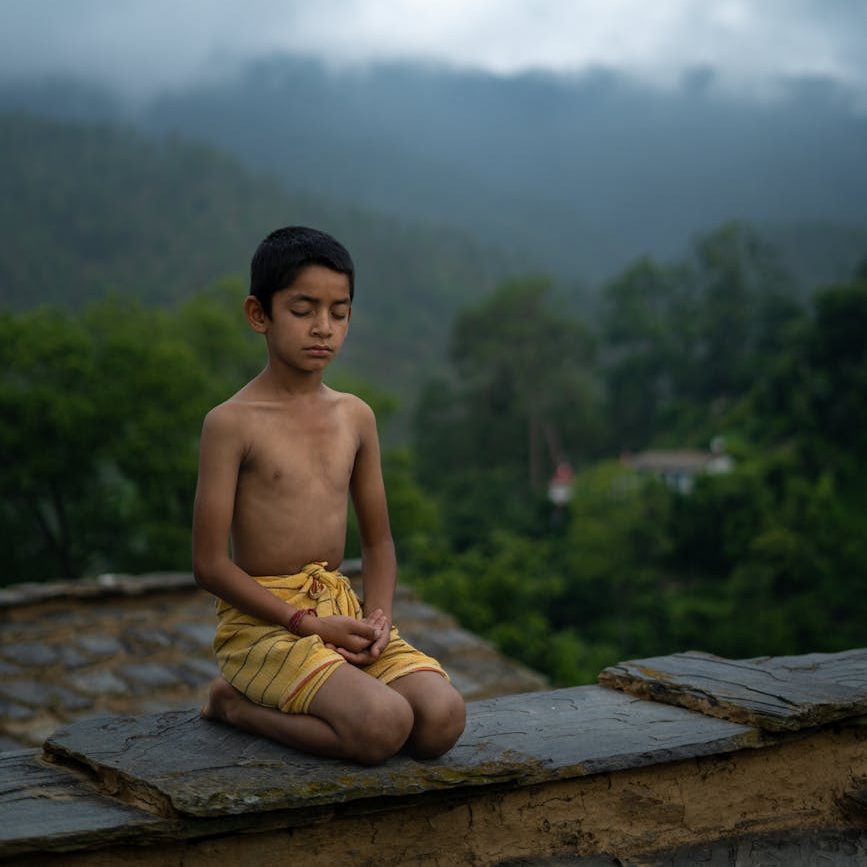
Indian Boy Meditating

There’s so much bad news everywhere. Wars, riots, terror attacks, persecution, and discrimination. I don’t know about you, but I’ve started to feel helpless, knowing I hold no power to fix these problems. As individuals, there’s only so much we can do. What is in our control is how we express our views, calmly and with clarity. But even that becomes difficult when those around us try to silence any perspective that doesn’t match their own. They get aggressive. We get perplexed. It becomes a vicious cycle. One that’s hard to escape. It drains our time, disturbs our emotional balance, and pushes away those who genuinely want to understand us.

In the midst of all this, I recently attended an online yoga session on International Yoga Day. We meditated together as a group, and it turned out to be one of the most peaceful and calming experiences I’ve had in a while. The meditation lasted only 7 minutes, but it had a noticeable, immediate impact. I felt centred. It helped me go about the rest of my day with a calm focus, even while handling everyday chores or reading the news. This is new for me. For the past few years, my mind has been troubled by witnessing the coldness with which society operates. There was a lingering sense of doom that had become hard to manage. So when meditation helped soften that heaviness, even slightly, it came as a welcome relief. I allowed myself to sit with that emotion and savour it.

The guide assured us that the control over our minds would improve even further with consistent practice. He said that even just 7 minutes of daily meditation can make a noticeable difference over time. I’m still new to the practice, so it’s too early for me to say how lasting the effects are. But one thing I can say for sure: you feel noticeably better after just the first session.

What made those few minutes so calming was the simple act of focusing only on the breath and the space between the eyebrows. In that short span, there were no screens, no distractions. Just stillness. It felt like a small step toward making peace with myself. This is what I experienced in my first few days of meditation. I’m not sure yet if I can commit to doing it every single day, but it’s something I genuinely want to try.

I’m not the body, I’m not the mind

As we meditated, this chant of “I’m not the body, I’m not the mind” by Sadhguru played in the background, accompanied by soothing flute music. It felt like an invitation to disconnect from the body and mind, to simply let yourself be. You don’t have to react to everything. You can observe your experiences as an outsider, from a third-person perspective. Feel your emotions, acknowledge them, but don’t let them consume you beyond control so that you lose sight of logic.

If you’re interested in trying the same meditation, you can do it at home by downloading the “Miracle of Mind by Sadhguru” app on your phone. The session includes the same calming chant and ends with a short 1-minute video from Sadhguru, offering simple insights on daily practice.

Now, I understand some may have reservations about Sadhguru due to political or personal views, or unverified claims. But I’d encourage you to look past that and focus instead on what this practice can offer you personally.

I’ve tried other meditation apps too, but they often felt too Western in their approach. This one, however, feels grounded in Indian sensibilities, with gentle flute music and guided instructions that actually help you stay focused. In a culture where complete silence isn’t always easy to adapt to, this format works well. It’s thoughtfully designed for an Indian audience, making meditation more accessible and less intimidating.

***

Photo by Yogendra Singh

An Ode to Lessons Learned in 2024

As the year comes to a close, it’s time to reflect on the lessons learned this year. I have the utmost gratitude for those who showered me with love, kindness, and patience. However, I also felt discomfort knowing that not everyone who greets me with gifts, smiles, and sweet words considers me as someone worth their time.

Small things that irked me this year:

  • A relative who never supported my writing ventures expected me to support her new Instagram page.
  • People being frighteningly okay with one kind of death over another based on religion, beliefs, and ideologies.
  • When people whom I consider dear went to events without informing me.

The lessons I learned from each of these:

  • You need not feel guilt for treating people like they treat you. You are not a holy saint but a living, breathing, ordinary human being who harbors a myriad of emotions. Having expectations from people you care about is healthy so that boundaries aren’t crossed. Consistent compromises can affect your mental health and even bring down your self-esteem.
  • People are inherently biased. This fact is uncomfortable and dark but true. The way we look at anything is colored by our upbringing, our own experiences, and our way of life. So, for example, when you see someone advocating for human rights, you need to be wary of their agenda – is it genuine? Do they advocate for the rights of all humans or only a select few?
  • We have to accept that we are not everyone’s cup of tea. This holds more true for someone like me, an unmarried woman who says the most unorthodox things and is a social hermit by nature. When you live a life that is the most authentic to you, you will not gain many friends, as you are largely unrelatable. This self-realization will help reduce unnecessary expectations from people who genuinely require something else from the people around them, not what you have to offer.

Instead of blaming people, the solution often lies within. It’s impossible to change everyone and everything to your liking. The answer sometimes is to accept the reality and move on. Maybe in this quest, you will find your tribe that understands and accepts the person that you are, and things will feel less forced and more genuine.

For me, it’s often not the acts, like seasonal gift-giving, that show someone’s true nature, but in the little things – remembering you and asking you to tag along to events they know you would enjoy, uninhibited support to passions that mean a lot to you, and not finding you weird when you show your vulnerable side. It’s also the acknowledgment of the fact that you expected something more and them making an effort to meet that expectation the next time around. Touch wood, I have a select few who understand me the way I want to be understood. But being a hypersensitive individual could mean you get disturbed when people you expected to cheer you take a step back and treat you and the things you love with indifference.

But such is life. Every year, you learn new lessons and new aspects of people around you that you never observed before. You communicate your grievances. But if the subpar treatment continues, you accept, adapt, and move on. It’s the only way to live. The disappointment may linger for some time, but then the lessons merge and become a part of you, and eventually, you start embracing the new normal. That is until you learn your next lesson.

P.S.: This would be my last post for the month and year. Holidays beckon. I wish you and your family a happy, joyous new year!

***

Photo by Madison Inouye

How to Know if the Unmarried Life is Right for You

How to Know if the Unmarried Life is Right for You

As a woman in my 40s, I am living an unconventional life in India, a conservative country that believes a woman’s life is incomplete if unmarried. I have experienced the ups and downs of living this kind of life while exploring new territories and learning from my experiences along the way. None of my family members or friends have chosen to live this way, so I don’t have anyone to look to for guidance. Is it daunting? Of course. But would I have it any different? Definitely not.

It’s amusing that many people who warn about the drawbacks of being single are usually married. They haven’t experienced living alone for a significant amount of time, so they may not be the best advisors on “the other side” of the single life. These wellwishers often point to that one person they know who is feeling lonely in their 40s to push you to get married. Is it a genuine concern for your well-being, or is it a way for them to reaffirm their own choices? It’s hard to say for sure. In my view, only someone who has lived alone for 10+ years is truly qualified to answer whether the single life is as daunting as it’s made out to be.

Some advocates of marriage believe it to be the solution to all problems, especially for women in India. Feeling bored? Get married. Want to travel to foreign countries? Get married. Want to party at a club? Get married. Getting married is an all-in-one solution.

I got married in my 20s due to pressure. It was an arranged marriage. Unfortunately, it did not end well, as we were incompatible. Our culture and beliefs clashed from day one. We knew we were poles apart before we got married, but we fell for the usual narrative that marriage is the solution to all problems, even compatibility issues. No one was sensible enough to advise us that basic compatibility is required for a marriage to work. In fact, both sides of the family were desperate for us to get married as we were quickly crossing the ideal age for marriage.

My marriage eventually ended. It’s been 15+ years since my divorce, and I haven’t still tied the knot. I have no plan to. A year after my divorce, relatives started telling me how marriage is important and that I should consider getting married again. They told me to think of how my life would be in my 40s without a husband. In their eyes, it would be torture. But now that I am in my 40s and still unmarried, I will tell you a little secret. I have never felt freer and happier.

Someone now might say, “Wait till you are in your 50s“. I am ready to accept that challenge too. No one knows me better than I do. And I am sure it’s the case with you too. However, if you are in your early 20s and wondering if marriage is for you, here are some points to consider.

Get married if you are a social butterfly

If you are naturally extroverted and love being around people, chances are you would crave companionship at some point in your life. I am an introvert, bordering on being a loner. For me, solitude is a way of life.

As you age, you will find yourself spending a lot of time by yourself because everyone in your age group will be busy with life. You might get together once in a while, but meeting up every day would be unfeasible. Picture yourself in such a scenario. Would you crave constant companionship? Or would you be fine without it? As per my experience, most extroverts are not comfortable with stillness, silence, and calm. They need some human presence around them to feel energetic.

Find out the actual reason for your disinterest in marriage

I have seen that those who wish to get married but cannot find a partner end up choosing to live alone out of frustration or tiredness that emanates from constant disappointment. There is a chance such people might end up feeling lonely in their 40s. They have that “if only” in the back of their minds. Genuinely ask yourself if you are choosing to stay unmarried because it’s the best lifestyle for you or because you are unable to find a partner. If it’s the latter, you should not give up on the idea of marriage.  

Living alone can be expensive

If you plan to stay single, you will need to save more. A pro of being married is that both of you can contribute to your daily expenses, whereas if you stay single, the onus falls on you alone – to earn well, invest wisely, and save efficiently. Of course, you shouldn’t get married thinking it will be costly to stay alone. Marriage is for companionship. However, this is a point that I found worth mentioning.

Living alone can be frustrating at times

I have been living alone for ages now, but there are times when I feel, “If only I could share this chore with someone.” But wanting a person to delegate my chores to isn’t a good enough reason for me to get married. I know for a fact that this need would be fulfilled if I hired some help. Alas, I am someone who wants to do it all by myself. This often leads to me being overwhelmed. But I take each experience as a lesson. If I were married, I wouldn’t have learned many things I know today. I would have been overly dependent on my husband to handle everything – from finances to decision-making. But yes, be prepared to be overwhelmed while you navigate through stressful times on your own.

Staying unmarried doesn’t mean saying no to love

You can be in love and still choose to remain unmarried. This is not widely understood. Many people assume that being unmarried means rejecting love. I have been in a committed relationship for many years, and I have no plans to marry because the traditional Indian married life is not what either of us wants.

What about the future?

Many people in favor of marriage often pose the question, “What about the future? What will happen when you’re 70 or 80?” It’s a valid question but not a compelling reason to get married. Your spouse may pass away, and if you don’t have children, you may find yourself alone. In Indian culture, parents often view their children as a safety net for their old age. However, many elderly parents in India find themselves alone as their children are settled abroad and only visit occasionally.

I have a few options to consider for my future living arrangements. I could stay in a good retirement home or move in with a friend or relative who is living alone and could use some companionship. It’s important to me that I don’t become a burden to the people I care about because of my health issues. There are many potential paths to choose from, and the decisions I make will depend on the trajectory of my life. I simply want to be financially independent and not rely on anyone else.

Having the confidence that I can thrive regardless of what life brings my way means I don’t have to fear being unmarried.

***
Photo by Mihman Duu011fanlu0131

How Does It Feel to Lose a Parent?

How Does It Feel to Lose a Parent

Losses are an unavoidable part of life. You win over some people while you lose others. However, some losses, especially the death of a parent, are permanent and leave an aching scar. Nothing can truly prepare you for this. The experience is uniquely profound in the sense that we often take our parents for granted, assuming they will always be there. When death eventually rears its ugly head, it comes as a rude shock.

I lost my father several years ago. I still vividly remember the days leading to his death. He had started losing his memory and was facing hallucinations. The doctors we consulted were unable to treat his issue effectively. As someone who has seen her father as a proactive and energetic man most of her life, this transition was unbearable. The pain and suffering of my loved ones always scared me. You feel helpless, knowing nothing you do can make them feel better. You also feel helpless witnessing their own struggle to comfort themselves.

Distance ends up helping your mental health in such circumstances, but it also brings with it a terrible amount of guilt. Some children go abroad and feel guilty for not spending enough time with their parents. I stayed near my parents, yet the guilt remained. How can you perfectly cater to your own mental health, essential for managing daily work life, while caring for an ailing loved one? It is not easy. This is the most difficult stage for any family member acting as a caregiver. We simply do not know how to navigate the situation.

My father quietly passed away one day while we were in the midst of hiring professional help for his care. It had become emotionally taxing for my mother to take care of him alone, so we needed the extra support. I guess his leaving us was his way of saying, “Don’t worry too much about me. I’m going to a better place where all my needs will be taken care of.

People often say that time heals the pain of losing a loved one. As someone who has lived with grief for several years, I can tell you it’s a lie. You never heal from a loved one’s death; you simply make peace with it. The sadness becomes a part of you, often camouflaging itself well within the depths of your soul, but it sometimes surfaces unexpectedly. When it does, you embrace it, sit with it until the moment passes, and then carry on with your life.

The sadness travels with you like a silent, understanding companion. It doesn’t demand your attention all the time, but it never leaves you. You don’t wish for it to leave you alone, either. In this digital, robotic world, when circumstances make me feel like I am devoid of sentiments, all I have to do is think of my father. As my eyes well up, I feel relieved knowing my soul still aches from his memory. It serves as a gentle reminder that I am still a living, breathing being, capable of experiencing deep, intense emotions.

***

Picture Courtesy: Matthias Zomer

The Worries of a Lover with a History of Heartbreak

The worries of a lover with a history of heartbreak

Relationships have never been a smooth sail for me. The kind of love glorified in movies and online platforms always felt like a distant dream. Agreed that cinema and social media do not always portray the complete picture. Yet, I envy people with uncomplicated relationships – they meet, like each other, and live happily ever after. Simple as that. For me, it has always been – we meet, we like each other, things fizzle out, distance, heartbreak, and increased caution.

I can cite many reasons for my past relationships not ending as I wanted them to. By this, I do not mean marriage, as that is not my end goal. I have been married once, and it was enough to make me realize that a traditional marriage, with its many rules and regulations, is not meant for someone unorthodox like me. It also wouldn’t be fair to impose my eccentric perspective on a family that adheres strictly to traditional marriage norms. In India, let’s face it, most families do want a marriage that sticks with the conventional route. Anyway, that’s a topic for another day.

What I seek is a long-lasting, peaceful, healthy, uncomplicated companionship rooted in friendship. The type that doesn’t make you stand on your toes or feel a sense of dread. The kind that doesn’t try to control or abuse. It is free-flowing and natural. A type of love that is as comforting as a warm cup of chai.

This post is not about my past relationships. It does not seek to give any motivational, positive advice. The thing I want to focus on is my feelings. There is always a fear lingering, no thanks to previous experiences.

I am currently in a relationship with the most caring man I have ever met. Someone who makes me feel at ease. I am at my most authentic self in his presence. However, sometimes, I look at his kindness with skepticism.

When you have had people playing with your feelings in the past, you eye even the sincere ones with suspicion. It’s a survival mechanism. You want to protect yourself from any impending heartbreak. You do that by asking yourself tough questions. You put yourself in a spot. You wonder if there will ever come a point when they, too, will start acting distant. Would the person, over time, forget that you two shared meaningful moments together, and end up talking in a manner devoid of any warmth or friendship as if you are a complete stranger wasting their time? Do you have it in you to deal with one more heartbreak, one more connection that transitions towards indifference?

These dark emotions are exclusive to us, the lovers with a broken track record.

It’s a terrible game your mind plays. Even your heart. You find yourself saying, “Be careful. Keep a safe distance always. It helps.” However, it is easier said than done. Gaining control over matters of the heart is not easy. It almost sounds robotic to do so. Humans often default to trust, hoping they’ve made the right choice and leaving the rest to fate. If events are destined, they’ll unfold regardless. Obsessing over control only brings suffocation and regret.

Life has this uncanny ability to unravel answers to your most pressing questions over time. That’s the one pro of aging – you gain this awareness that the answer will indeed arrive, if not now, then at a later stage. The sane thing to do would be to wait patiently instead of torturing yourself with questions that no one, even yourself, would be able to answer at the moment.

***

Photo by Hassan OUAJBIR

An Ode to Surviving 2023

Survival 2023

As the year comes to a close, it’s time for introspection on goals achieved, comfort zones demolished, and new skills acquired. I don’t have much to report, except that I survived.

It was not an easy year. Most of my holidays were spent doing something I intensely dislike – hospital visits. They induce a great deal of stress in me, more mental than physical. For the uninitiated, my parent was diagnosed with a heart condition, which took several days of hospitalization, tests, and treatments. It is difficult for a child to see their parent falter as age catches up on them. This year was that kind of year for me, riddled with lessons.

What doesn’t break you makes you stronger

Time keeps on proving the legibility of this quote. I am a divorcee in India, so I am no stranger to struggles. However, 2023 went a tad extra by making my loved one suffer. Initially, I didn’t know how to deal with the situation, cried helpless tears, and dramatically kept asking, “Why me?” But then the universe kindly shows you a way.

At first, you feel a sort of resistance. You are not ready to accept this new phase in life. You’re breaking out of the comfort zone of all the struggles you have known till now. This is a new struggle, one that you need time to adapt. It becomes easier over time. You get stronger. Not because the concern is any less but because your system learns to handle it better.

I survived a difficult phase this year.

Not everyone will be by your side when you need them

I am grateful for everyone who graced me with their love and support. Their kindness knows no bounds. Some supported me by being present, some through their words, and some with quiet perseverance.

But sometimes, the people you expect the most support from fail to meet your expectations. This could be friends, family, or relatives. It comes as a bolt out of the blue because you realize you probably don’t mean as much to them. It’s a difficult pill to digest. However, I am taking it in my stride, marking it as a lesson that may come in handy in the future.

I survived the absence of (a few) loved ones.

Different ideologies shouldn’t spoil your friendship

I may not have a mainstream view on many issues, but that has never motivated me to lash out at someone with opposing views. This year, I learned to be more accommodating of contradictory views, both religious and political. Sometimes, it is difficult, especially when people use accusatory tones. Still, for the most part, I have been cordial, respectful, and unintimidating.

I survived the danger of fostering a different ideology.

Conclusion

If all you did this year was survive, I want to tell you from personal experience that it’s not something that should be casually dismissed with the notion that it is of less importance. It is a life-changing struggle, dealing with every fiber of your being not working as per protocol and finally making peace with it at some level. It takes courage and patience.

During this holiday season, feeling a sense of failure is natural when you see people around you list all their accomplishments. However, know that dealing with issues that life throws your way, no matter how big or small, is a significant accomplishment in itself. Survival is a beautiful thing. We should celebrate it more.

***

Photo by Suzy Hazelwood on Pexels.com