My Perception of Money Has Changed Over The Years

I decided to go through an experiment to see if it would add any value to my life. I have had heard of minimalism and seen a couple of videos. Though I was not ready to sacrifice every bit of materialistic pleasure in my life, I was willing to start small to see what it would do. It became an epiphany of sorts.
Photo by Karolina Grabowska on Pexels

I remember feeling ecstatic whenever I bought an expensive dress.

I remember feeling accomplished after buying an expensive laptop.

I remember feeling disappointed when my fiancé gifted me inexpensive jewelry.

My happiness was derived from things. I was money-minded. And quite disgustingly so.

For me, happiness was directly correlated to the brand and the cost of the product. If someone didn’t gift me something extravagant and expensive, it meant the person didn’t love me enough.

That was me in my 20s.

Now I am in my late 30s, and things have shifted. I am no longer the person I used to be. People change over the years as they come across new life-changing experiences, perspectives, and emotions. It is practically impossible to stay the same throughout your life. I would even consider a comment like “You haven’t changed at all” an insult because that would mean I haven’t evolved with the times.

Over the years, I understood that expensive things only brought me happiness for a while. After that, I was on the lookout again for my next purchase, thinking it would bring me everlasting happiness. When I figured out what was happening, a lightbulb went off.

I decided to go through a self-initiated experiment to see if it would add any value to my life. I had heard of minimalism and seen a couple of videos. Though I was not ready to sacrifice every bit of materialistic pleasure in my life, I was willing to start small to see where it would go. I started cutting back on my purchases, not looking at shopping sites, seeking solace in the simple pleasures of life – like reading a book, going for a walk outdoors, engaging with nature, and enjoying fresh, clean air.

It was an epiphany of sorts.

I never knew so much of happiness could be derived from so little – from things that cost so little.

The little things in life that do not cost much, yet have the power to bring pure happiness. Why hadn’t I indulged in life before? Why did I only indulge in things? If I had not deliberately cut back on my purchases, seeking elsewhere for my joy, I might not have discovered the inexpensive side of happiness.

I second guess all my purchases now – I look for things that are bang for my buck. I compare prices and choose products that are the most cost-effective. I ask myself a couple of questions before spending my money on anything – “Am I buying this for myself? Or to show someone else that I can buy it?“, “Do I see myself using this product 2-3 months from now, or is it just a fad?” “Do I really need this product right now? Will my life become easier with this product?” If the answers are positive, I go ahead with the purchase without hesitation.

Life has a way of grounding you. It teaches you ultimately how important it is to save or invest and not spend unnecessarily.

With minimalism came the change in thought process. I do not wish for anyone to gift me anything expensive anymore. I instead wish people gifted me something handmade. I realize now that the most valuable thing anyone can gift you is their time. And what better than a handmade gift to beautifully represent time – the time that the giver graciously spent on making the gift for you. Time is beautifully unique. Each second of your time is a part of your life that you will not get back. It becomes even more exclusive when a person dedicates it solely to you. When someone’s time is spent on you, with you, or making something for you – that undoubtedly becomes the best one-of-a-kind personalized gift that anyone could offer.

This realization about handmade gifts made me recommend the same to others. To my surprise, I found little takers for handmade gifts. This lack of enthusiasm might be because it is not easy to gift someone your time. I am a sucker for handmade gifts, though. I get misty-eyed each time I get one – this precious time wrapped with a bow.

I came to recognize boredom as an enemy to my wallet. Retail therapy happened whenever I got bored. To get rid of this habit, I began learning new, interesting things. I learned from books, classes, online videos  – again, stuff that did not cost much money.

Human beings are adaptive creatures – so adaptive that our desires can expand manifold if there is enough space to accommodate them. Consider a room with furniture and décor filled up in each and every corner. The room would tend to look stuffy and closed. The room is your breathing space. The furniture – your desires. The more furniture in the room, the more stuffy it gets, the more difficult it is to navigate without tripping over something. This room is magical and will try to expand itself to bring in more breathing space, but we tactlessly keep stuffing it with more inessential things to fill the space up.

How to unstuff a stuffy room? Very simple. Remove some of the furniture. In other words, reduce your desires.

Desires can be trimmed by steering clear of things you are most likely to splurge on. For example, if you tend to spend a lot of money on shopping sites, the simple remedy is to stop browsing shopping sites. If brands tempt you, stop visiting the stores that display those brands. It might seem difficult at first, but over time, you will master the skill of avoiding materialistic temptations. Delayed gratification will become second nature. You will become a pro in saying “no” to things that you are not ready for or do not add any value or meaning to your life.

This strategy worked well for me. I can now be happy with little. I have no intention of going back to my old self. If happiness is so cheap, why even bother looking elsewhere?

This behavior is not akin to being a miser. It is about finding a way that is more sustainable. A route to happiness that anyone and everyone, of any income level, can attain without emptying their pockets.

An Ode to Self Driving Cars – Because, Let’s Face It, Some Of Us Hate Driving

Photo by riciardus on Pexels

I can’t wait for driverless cars.

I know it might not happen while I am still alive, but that doesn’t stop me from dreaming.

I hate driving, especially in traffic. I have given up on driving altogether in the city I live in – because the place is not exactly a driver’s paradise with its bumper-to-bumper traffic and the lack of parking space.

My location is equipped with good public transportation – I am able to catch an Uber or an autorickshaw the moment I step out of my house. So at the most, I take my car out maybe once every month.

I would like a driverless car for the following reasons though:

  • I can let my car take all the headache (or should I say bumperache?) of finding a parking slot. Or I can order it to go right back home, if there are no parking slots available anywhere.
  • Heck, I wouldn’t even need to own a car if there are driverless robocabs hovering nearby. This is what Zoox has in mind – not to sell robo cars but to offer them as taxis.
  • My elderly mom could go on a solo trip without depending on anyone.
  • People with disabilities would be able to travel on their own.
  • People who hate driving can avoid driving! Whaaaat? You thought everyone liked driving? Tsk tsk.

Change is difficult, I know. And scary. History is a key witness to such skepticism and cynicism evoked by changing circumstances. Every new discovery or invention is met with stubborn resistance. For example, the automatic elevator. Did you know elevators used to be manually lifted before? When the automatic elevators were invented, many were adamant about not using those strange machines. Too dangerous, they said. Sounds familiar? Now we know how that story ended. 

It is the story of many automated machines. Some still face flak even if they are widely in use.

Let’s take the case of automatic transmission cars. They are everywhere now. Many prefer to drive an automatic instead of a manual – it makes life easier. No stress of shifting gears, you just need to concentrate on the road. Yet, there was, and still is, a lot of resistance towards teaching new drivers how to drive using an automatic car. I know many new drivers who would prefer to learn in an automatic because they have no intention of driving a manual transmission car in the future. Once you start driving an automatic, there’s no going back. For two reasons – 1) You become accustomed to driving an automatic. 2) You end up forgetting how to drive a manual. So what was the need of teaching such drivers how to drive a manual, anyway? Many learn driving with only one intention – that of traveling from Point A to Point B; not to learn the intricacies and technicalities involved with changing gears. But as mentioned before, change is difficult. When there are alternative automated solutions, we still tend to prefer the conventional methods.

Human beings in general are terrible drivers, even if most believe otherwise. It is impossible to get a 360-degree view of our surroundings, something a machine can do effortlessly, so we cannot really blame ourselves for our mishaps. We end up speeding when we are not supposed to, we drink and drive when we are not supposed to, we get distracted easily by the smallest of things, we make clumsy mistakes that can cost lives, and yet… we have trouble trusting machines.

Self driving cars have a long way to go before they become available to the public. Preparations are in full swing – like in the case of Waymo (Google’s self driving car), which was recently tested on urban terrains.

If driverless cars are approved, I would be first in line – provided it is affordable. Did I say affordable? If only wishes were horses. Till then, I will make do with ogling small, cute cars.

An Ode to Learning from Other People’s Mistakes

The cheapest way to learn is by analyzing other people’s mistakes.

True, sometimes you need to make your own mistakes. It is only then that the lesson sticks to you. But that can get quite expensive, in terms of time and capital. This is why I feel, more than success stories, you need to observe and learn from other people’s failures. They teach you a lot, with no damages incurred.

I love going through Quora and Reddit. Back in the day, we used to have Yahoo! Answers. You get to learn from the insightful answers given by users who truly want to help you out without any monetary gain.

I happened to stumble upon a Reddit thread today. It was titled “What common thing screams “I make poor financial choices?”

I am attaching screenshots below with some personal finance mistakes to ponder upon. Some of the replies are witty. I am including them just for smiles!

Getting another pet when you are not financially ready

Poor Financial Choices #1
Personal Finance Blunders #1

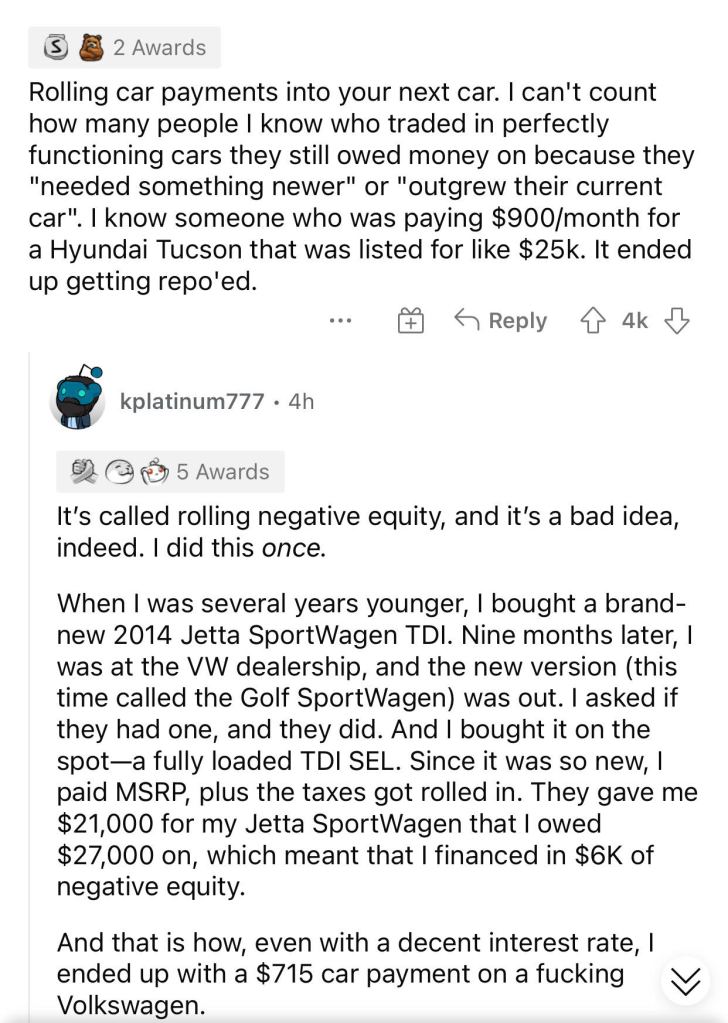
Rolling car payments into your next car

Personal Finance Blunders #2

Buying expensive infant/baby/toddler clothes

Poor Financial Choices #1
Personal Finance Blunders #3

Not living within your means

Poor Financial Choices #4
Personal Finance Blunders #4

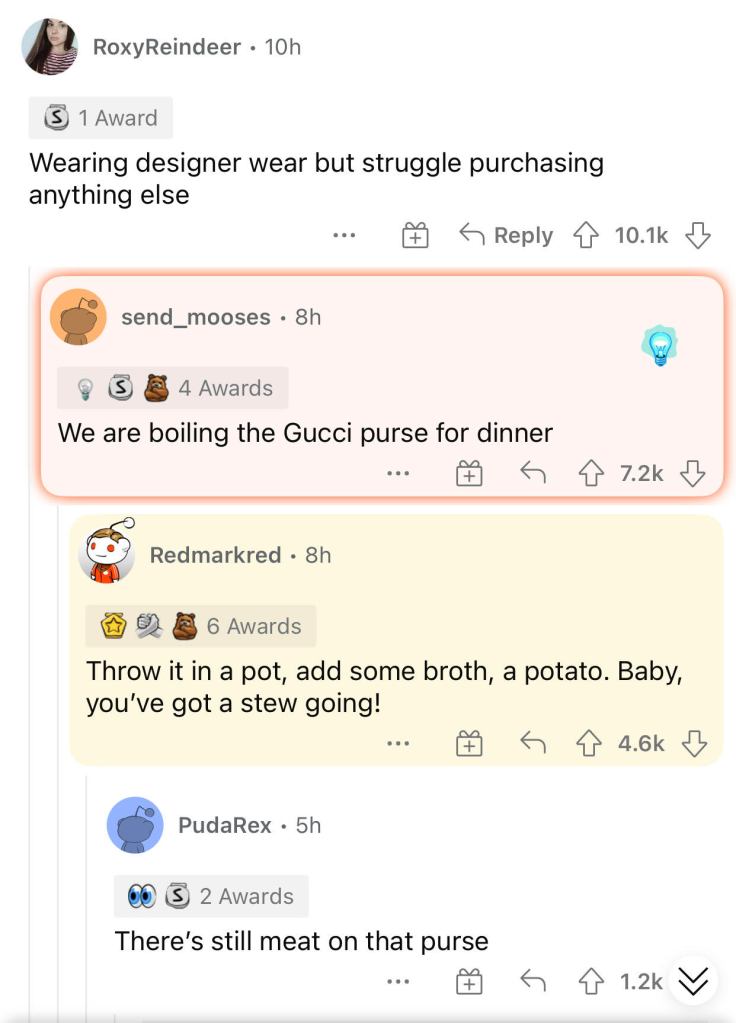
Wearing/Owning designer brands but struggling to purchase anything else

Poor Financial Choices #5
Personal Finance Blunders #5
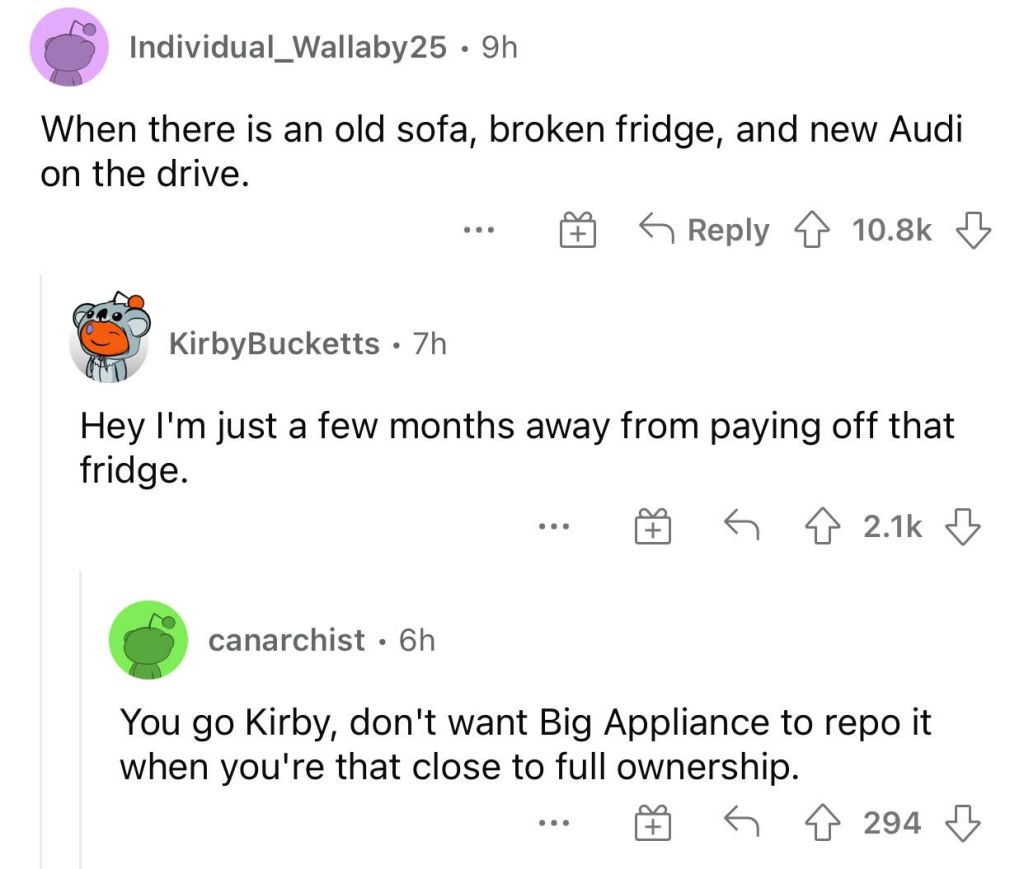
Personal Finance Repairs
A lot of car-related answers!

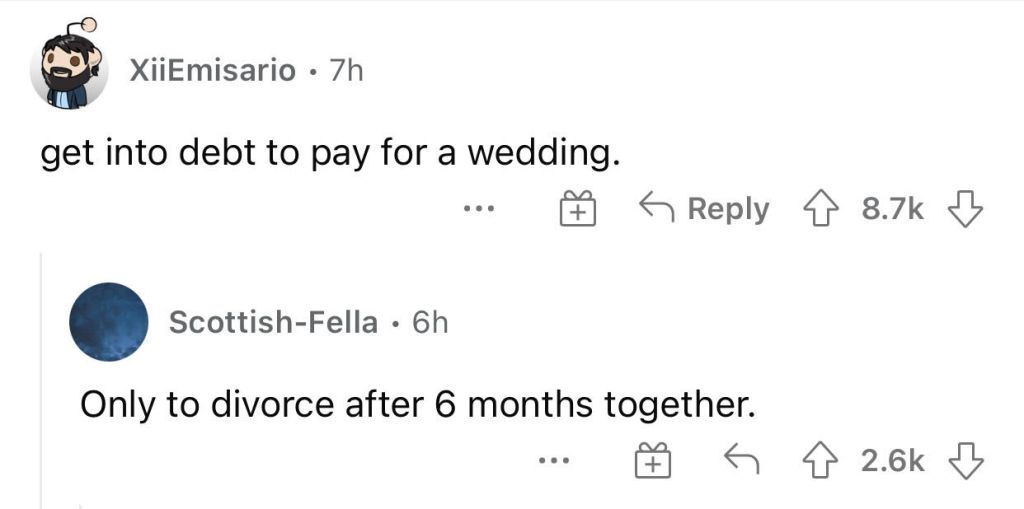
Getting into debt to pay for a wedding

Poor Financial Choices #6
Personal Finance Blunders #6

Expecting too much? 🙂

Poor Financial Choices #7
Personal Finance Blunders #7

An Ode to Naval Ravikant’s Quotable Quotes

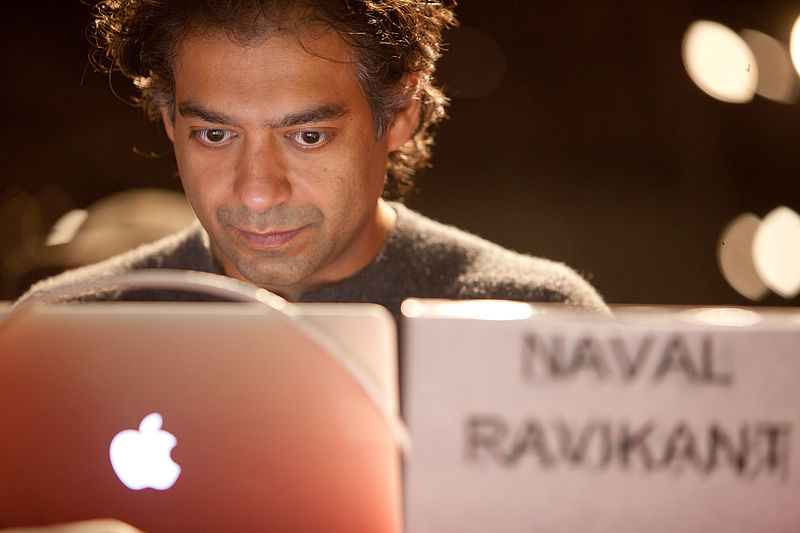
Naval Ravikant. Image Courtesy: Wikimedia Commons

It is only recently that I came to know about Naval Ravikant.

A popular Indian YouTuber was raving about him in a recent video of his. It led me to this highly popular twitter thread titled “How To Get Rich Without Getting Lucky” and the thought-provoking Joe Rogan episode. I was hooked.

Naval Ravikant is an entrepreneur and angel investor. He had invested in a number of popular startups in Silicon Valley early-on like Twitter and Uber. What makes him different from other businessmen is his thirst for knowledge beyond investing. He is a deep thinker who is intrigued about human psychology and can passionately discuss topics such as meditation, emotional health, happiness and peace. For him, it is not all about money, but he does not dismiss wealth. He believes in a good mix of both, which is refreshing, because we usually see influencers either scorning wealth or being too into it.

Naval Ravikant does not want to monetize his knowledge, because a) he’s already rich b) he says it defeats his purpose of altruism. This makes you want to trust him.

After going through many tweets of his (he is quite popular on Twitter), and the Joe Rogan video, I ended up downloading the free book called “The Almanack of Naval Ravikant” which is a compilation of his best advice and anecdotes.

Here are a few Naval Ravikant quotes that left a mark on me from the book:

Making money is not a thing you do – it’s a skill you learn.

Specific knowledge is found much more by pursuing your innate talents, your genuine curiosity, and your passion. It is not by going to school for whatever is the hottest job; it is not by going into whatever field investors say is the hottest.

The internet enables any niche interest, as long as you’re the best person at it to scale out. And the great news is because every human is different, everyone is the best at something – being themselves.

Escape people through authenticity. Basically, when you are competing with people, it is because you’re copying them. It is because you are trying to do the same thing. But every human being is different. Don’t copy.

The most important skill for getting rich is becoming a perpetual learner. You have to know how to learn anything you want to learn.

Compound interest also happens in your reputation. If you have a sterling reputation and you keep building it for decades upon decades, people will notice. Your reputation will literally end up being thousands or tens of thousands of times more valuable than somebody else who was very talented but is not keeping the compound interest in reputation going.

Knowledge only you know or only a small set of people knows is going to come out of your passions and your hobbies, oddly enough. If you have hobbies around your intellectual curiosity, you’re more likely to develop these passions.

We waste our time with short-term thinking and busywork. Warren Buffett spends a year deciding and a day acting. That act lasts decades.

Value your time at an hourly rate, and ruthlessly spend to save time at that rate. You will never be worth more than you think you’re worth.

Literally, being anti-wealth will prevent you from becoming wealthy, because you will not have the right mindset for it, you won’t have the right spirit, and you won’t be dealing with people on the right level.

The problem is, to win at a status game, you have to put somebody else down. That’s why you should avoid status games in your life—they make you into an angry, combative person. You’re always fighting to put other people down, to put yourself and the people you like up.

Retirement is when you stop sacrificing today for an imaginary tomorrow. When today is complete, in and of itself, you’re retired.

Money is not the root of all evil; there’s nothing evil about it. But the lust for money is bad. The lust for money is not bad in a social sense. It’s not bad in the sense of “you’re a bad person for lusting for money.” It’s bad for you. Lusting for money is bad for us because it is a bottomless pit. It will always occupy your mind. If you love money, and you make it, there’s never enough.

To the extent money buys freedom, it’s great. But to the extent it makes me less free, which it definitely does at some level as well, I don’t like it.

The most common bad advice I hear is: “You’re too young.” Most of history was built by young people. They just got credit when they were older. The only way to truly learn something is by doing it. Yes, listen to guidance. But don’t wait.

Let’s get you rich first. I’m very practical about it because, you know, Buddha was a prince. He started off really rich, then he got to go off in the woods.

It’s only after you’re bored you have the great ideas. It’s never going to be when you’re stressed, or busy, running around or rushed. Make the time.

The smaller the company, the more everyone feels like a principal. The less you feel like an agent, the better the job you’re going to do. The more closely you can tie someone’s compensation to the exact value they’re creating, the more you turn them into a principal, and the less you turn them into an agent.