19 Inspirational Quotes from James Clear’s Atomic Habits

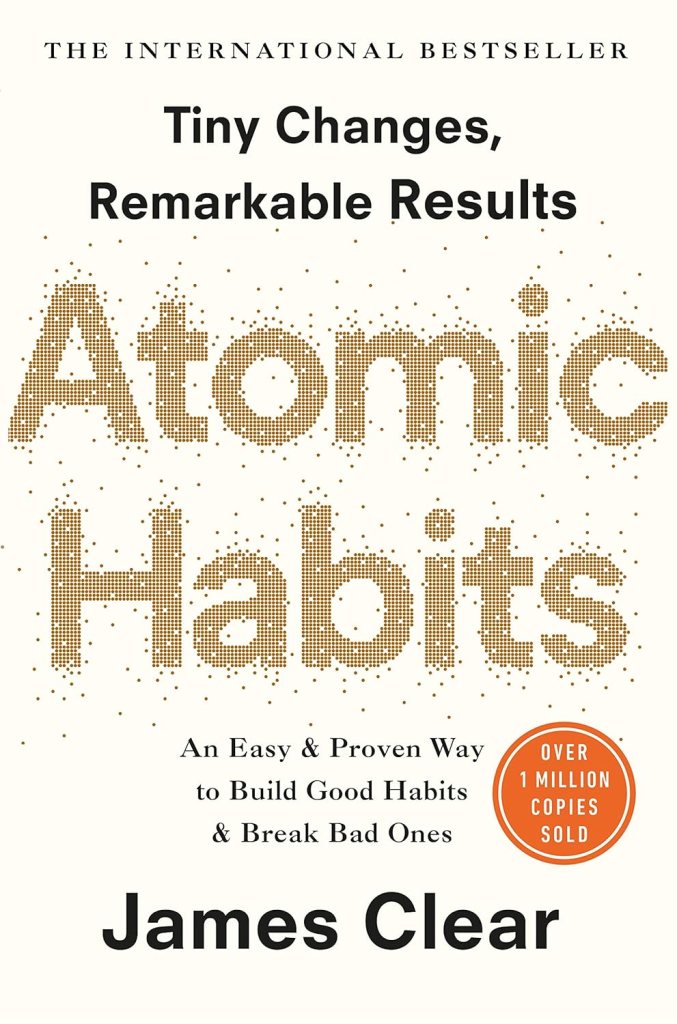
Atomic Habits by James Clear

I always gravitate towards non-fiction books hoping to learn something new. However, self-help books often contain repetitive information already covered by other authors. If you read a new non-fiction book on a certain topic, subsequent books on the same topic often contain similar tips and suggestions beneath different covers. There is always a déjà vu feeling lingering in the background, “This tip seems familiar,” or “Have I read this quote somewhere?

Atomic Habits does not fall into the I-Feel-I-Have-Read-It-Before category. A lot of it felt new. The author’s thought process was refreshing, and I was introduced to new perspectives and ideas that beautifully emphasize the power of small habits. James Clear has a knack for writing engagingly using clear (pun intended) and concise language. I would even go so far as to say that Atomic Habits was the best non-fiction book I read this year.

I will list some of the quotes from the book that left an impression on me. Hope you like them as much as I did.

Changes that seem small and unimportant at first will compound into remarkable results if you’re willing to stick with them for years.

Time magnifies the margin between success and failure. It will multiply whatever you feed it. Good habits make time your ally. Bad habits make time your enemy.

The San Antonio Spurs, one of the most successful teams in NBA history, have a quote from social reformer Jacob Riis hanging in their locker room: “When nothing seems to help, I go and look at a stonecutter hammering away at his rock, perhaps a hundred times without as much as a crack showing in it. Yet at the hundred and first blow it will split in two, and I know it was not that last blow that did it—but all that had gone before.”

If you want better results, then forget about setting goals. Focus on your system instead. The purpose of setting goals is to win the game. The purpose of building systems is to continue playing the game.

Small changes often appear to make no difference until you cross a critical threshold. The most powerful outcomes of any compounding process are delayed. You need to be patient.

The ultimate form of intrinsic motivation is when a habit becomes part of your identity. It’s one thing to say I’m the type of person who wants this. It’s something very different to say I’m the type of person who is this.

As the psychologist Carl Jung said, “Until you make the unconscious conscious, it will direct your life and you will call it fate.”

When and where you choose to insert a habit into your daily routine can make a big difference. If you’re trying to add meditation into your morning routine but mornings are chaotic and your kids keep running into the room, then that may be the wrong place and time. Consider when you are most likely to be successful. Don’t ask yourself to do a habit when you’re likely to be occupied with something else.

When scientists analyze people who appear to have tremendous self-control, it turns out those individuals aren’t all that different from those who are struggling. Instead, “disciplined” people are better at structuring their lives in a way that does not require heroic willpower and self-control. In other words, they spend less time in tempting situations.

I once heard a story about a man who uses a wheelchair. When asked if it was difficult being confined, he responded, “I’m not confined to my wheelchair—I am liberated by it. If it wasn’t for my wheelchair, I would be bed-bound and never able to leave my house.” This shift in perspective completely transformed how he lived each day. Reframing your habits to highlight their benefits rather than their drawbacks is a fast and lightweight way to reprogram your mind and make a habit seem more attractive.

The most effective form of learning is practice, not planning.

Habits are easier to build when they fit into the flow of your life. You are more likely to go to the gym if it is on your way to work because stopping doesn’t add much friction to your lifestyle. By comparison, if the gym is off the path of your normal commute—even by just a few blocks—now you’re going “out of your way” to get there.

The truth is, a habit must be established before it can be improved. If you can’t learn the basic skill of showing up, then you have little hope of mastering the finer details.

Even when you know you should start small, it’s easy to start too big. When you dream about making a change, excitement inevitably takes over and you end up trying to do too much too soon. The most effective way I know to counteract this tendency is to use the Two-Minute Rule, which states, “When you start a new habit, it should take less than two minutes to do.”

The takeaway is that you should build habits that work for your personality. People can get ripped working out like a bodybuilder, but if you prefer rock climbing or cycling or rowing, then shape your exercise habit around your interests. If your friend follows a low-carb diet but you find that low-fat works for you, then more power to you. If you want to read more, don’t be embarrassed if you prefer steamy romance novels over nonfiction. Read whatever fascinates you. You don’t have to build the habits everyone tells you to build. Choose the habit that best suits you, not the one that is most popular.

The Goldilocks Rule states that humans experience peak motivation when working on tasks that are right on the edge of their current abilities. Not too hard. Not too easy. Just right.

When a habit is truly important to you, you have to be willing to stick to it in any mood. Professionals take action even when the mood isn’t right. They might not enjoy it, but they find a way to put the reps in.

The only way to become excellent is to be endlessly fascinated by doing the same thing over and over. You have to fall in love with boredom.

The upside of habits is that we can do things without thinking. The downside is that we stop paying attention to little errors.

11 Controversial Quotes by the Son of Hamas

An acquaintance recommended “Son of Hamas” to me. As the title clearly gives away, it is a book by the son of a Hamas founding member named Mosab Hassan Yousef, nicknamed the “Green Prince.”

Son of Hamas is a controversial book in that it has Mosab openly criticizing Hamas. He started off as a radicalized youngster, ready to kill Israeli troops for revenge, but soon, his experience over the years with Hamas ended up being an eye-opener. Many Hamas sympathizers consider him a traitor to the Palestinian cause, but he has his reasons. I would suggest getting the book for further details.

Mosab does not in any way undermine the struggle of the Palestinian people. He, in fact, starts the book by narrating the oppression his people face on a day-to-day basis. Your heart aches for the Palestinians after reading his account. He wanted only the best for them, so over time, he started resenting the questionable morality of the extremist group he was affiliated with.

Mosab has been giving several interviews on news channels these days, vociferously lashing out at Hamas. You might find a couple of them on YouTube. His youngest brother, too, left the group recently.

Before I begin, I would like to make my stance clear. I am pro-civilian. I condemn the horrible October 7 attacks that took place in Israel, and I equally condemn the death of innocent civilians in Gaza. Several things can be true at once. I feel incredibly sorry for everyone involved in this mess. A lot of pain, fear, anger, and hatred spanning several years has led everyone to this moment. However, I will not use any excuses to justify the deaths from either side. No one deserves to die in such a cruel way. Personally, I feel any rationalizations and reasonings belittle the suffering of the people going through a loss.

I am also anti-Hamas. I am against their charter that calls for the complete annihilation of Israel. After watching several interviews featuring Hamas leaders, I have come to the conclusion that Gazans deserve better—a life that is peaceful, sustainable, and prosperous, things that Hamas cannot give them.

Disclaimer: If you are pro-Hamas, this page may not be for you. Instead of putting yourself in a sensitive spot, I request you stop reading right here. The quotes on this page are for those who are curious about why Mosab thinks Hamas is neither good for Palestinians nor Israelis. If you have already made up your mind that Hamas is a freedom fighter or resistance movement, I humbly request you to exit this page.

So, let’s get started.

Here are some of the controversial quotes from the book:

Truth and forgiveness are the only solution for the Middle East. The challenge, especially between Israelis and Palestinians, is not to find the solution. The challenge is to be the first courageous enough to embrace it.

Peaceful coexistence would mean the end of Hamas. From their perspective, the organization could not thrive in a peaceful atmosphere. Other resistance groups also had a stake in the continuation of conflict. It’s hard to achieve peace in a place where so many have different goals and interests.

And it would be many painful years before they would begin to understand that Hamas was not an organization as most people understood organizations, with rules and a hierarchy. It was a ghost. An idea. You can’t destroy an idea; you can only stimulate it. Hamas was like a flatworm. Cut off its head, and it just grew another.

Even as a young boy, I saw the PLO as corrupt and self-serving. Its leaders sent people, many of whom were just teenagers, to carry out one or two high-profile terrorist attacks a year in order to justify fund-raising for the struggle against Israel. The young feda’iyeen were little more than fuel to stoke the fires of anger and hatred and to keep the donations flowing into the personal bank accounts of PLO leaders.

I understood that we all share the same common enemies: greed, pride, and all the bad ideas and the darkness of the devil that live inside us.

I asked myself what Palestinians would do if Israel disappeared—if everything not only went back to the way it was before 1948 but if all the Jewish people abandoned the Holy Land and were scattered again. And for the first time, I knew the answer. We would still fight. Over nothing. Over a girl without a head scarf. Over who was toughest and most important. Over who would make the rules and who would get the best seat.

Tit for tat, the reciprocal killing continued. An eye for an eye—and there was no shortage of eyes.

My father didn’t care if Hamas fielded candidates. He just didn’t want to fill the ticket with high-profile leaders like himself who were loved and admired by the people. If that happened, he feared, Hamas would win. And he knew a Hamas victory could prove to be a disaster for the people. Events proved him right.

As I sat on the plane, I thought about what I had just left behind, both good and bad—my family and friends as well as the endless bloodshed, waste, and futility. It took a while to get used to the idea of being really free—free to be myself, free of clandestine meetings and Israeli prisons, free from always looking over my shoulder. It was weird. And wonderful.

As long as we continue to search for enemies anywhere but inside ourselves, there will always be a Middle East problem. Religion is not the solution. Freedom from oppression will not resolve things either. It is a cliché, but it’s still true: hurt people, unless they are healed, hurt people.

The events of this last year have shown me again that friendship and love are stronger than agency, policy, and tradition. No matter what happens, I will continue to speak out with firm conviction that unconditional love for the “other” side and forgiveness for those who have hurt us are the only principles that will lead to healing and a better way for us all.

How It Feels To Be a 100% Introvert

I recently retook the MBTI test after a few years to see if my personality had changed. I noticed that some of my friends went from being introverted to extroverted, or the other way around, due to their life experiences. This made me curious about my own metamorphosis.

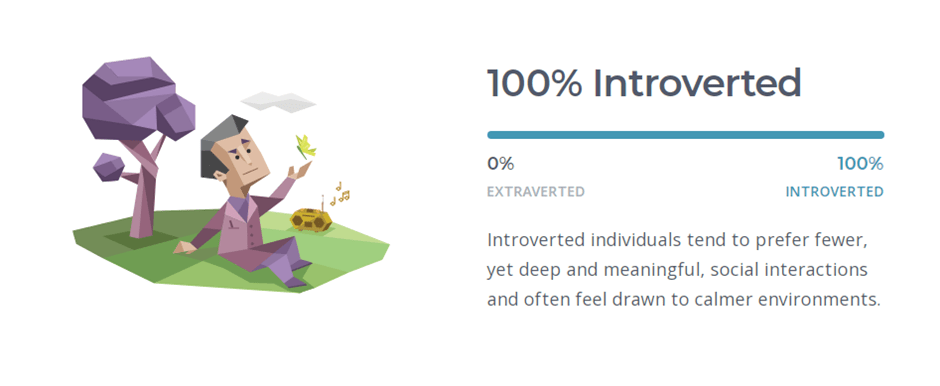
The test didn’t have anything new to offer for me. I am still as introverted as ever. Even though these results are not to be taken to heart, I agree with my assessment of being a 100% introvert. I am yet to see someone who is as introverted (not shy) as I am. Or maybe I have not met one because they are as reclusive as me.

So, what does it mean to be a 100% introvert? I can only talk from personal experience. Here’s what makes me one:

  • Social interactions tend to drain me, even with my close ones. If I put on a fake extroverted persona for an extended period, I feel exhausted by the end of the day, and I have to overcome that fatigue by sleeping a lot. This phony outgoing persona is a survival mechanism that introverts often adopt to function in this society that only rewards extroversion.
  • I can survive without talking to anyone for hours. But that doesn’t stop my monkey mind from blabbering non-stop. Hence, this blog.
  • I absolutely detest phone calls. But I am slowly making peace with it because many things are better discussed through calls. It’s faster, but that doesn’t stop me from trying to get an answer through text first.
  • I explain things better through text. I get more clarity while I write.
  • I used to be a chat person, but not any longer. In short, I am not much of a phone person!
  • I prefer one-on-one interactions because I find them more insightful. A group setting is the best for fun conversations, though.
  • I get absolute joy from canceled plans. I have big-time JOMO.
  • I can stay indoors for days without feeling bored, sad, or lonely.
  • I’m a single woman in my 40s. I prefer not to get married because I crave too much personal space.
  • New situations disorient me. I take time to adjust to them.
  • I tend to have an emotional meltdown if I have several new things bombarding me simultaneously. To avoid any sensory overload, I consciously focus on one new thing at a time. Of course, this is not always possible. However, if given a choice, I go step-by-step and sort of soothe myself into the new scenario.
  • I am hypersensitive to sound, so I like to avoid “happening” places. Yes, I am boring.

If you want to try the test, you can do it for free at 16Personalities. However, this is not a professionally accredited test.

***Note: As I write this, my thoughts are scattered. I’m thinking of those facing unsettling times, displaced and disoriented in volatile regions, many of whom have lost loved ones. If you’ve read this far, I’d like to request a moment of contemplation. Let’s hope for peace to prevail. Let’s control our anger and emotions during these testing times and treat each other with empathy and respect. There’s enough hate in this world. Let us be mindful not to add to it.

My Heart Feels Heavy

My heart feels heavy

I have been grieving over what happened in the last few weeks.

Sometimes, I wish I could be blissfully ignorant of global affairs, so I could avoid the tyranny of empathy. It would have done me a lot of good if my line of thinking was, “There are enough issues in India. Why should I focus on other countries?

However, that’s not the case.

I am witnessing an ugly side of humanity, something I never observed in close quarters before. Innocent civilian deaths are being condemned based on race, community, history, and other factors. A lot of analysis is done before deciding whether to mourn the departed.

No one seems to see the civilians as people with their own set of traumas and fears. Each one is trying to prove why the deaths of “others” are justified. I saw similar arguments happening between friends. It just broke my heart.

I can feel something in me shifting. I think it’s grief from broken expectations. Pain changes you. It molds you into someone who is more prepared to deal with similar mind-numbing events in the future. Your mount of delusions slowly starts cracking, the same ones that had previously shielded you from the truth and kept you blissfully happy. I feel vulnerable in this new revelation. Everything feels like a daze, and my sleep is disturbed. It feels like a raw wound that will take time to recover from. At the same time, I am grieving the departure of my older version. The one that was relatively more optimistic about the goodness in people.

I am at a stage where I have to repeatedly comfort myself, saying it’s okay to let go of things I cannot control. I hope I find it in myself to forgive people who participated in selective empathy.

I want a peaceful tomorrow. But it looks like a distant dream now.

I am craving more than ever for a rational group that condemns the cruelty of innocent civilians, regardless of religion, race, or political affiliations. A group where humanity is the sole focus.

***

Photo by paul voie

Korean Drama Spotlight: The Second Husband

The Second Husband Kdrama Review

I stumbled upon “The Second Husband” by chance. The show was being aired on an Indian television channel called “Atrangi” and was dubbed in Hindi. It was then that I realized that Korean dramas have truly made their mark in India.

Disclaimer: This post shouldn’t be treated as a review because I am far from qualified to give an objective and professional take on cinema. It should be treated as a subjective viewpoint of a cinephile who loves to watch movies and dramas purely for entertainment. I have only one criterion – I shouldn’t get bored. The film will be judged on that factor alone.

What’s It About?

A committed woman finds herself entangled in a web of lies and deceit. Her fiancé cheats on her with a wealthy, money-hungry businesswoman. An apt companion for the man, who himself is blinded by greed. They are ready to forsake everything for money – their integrity, conscience, and love.

Thoughts

The Second Husband is a story that focuses on power-hungry people and their never-ending thirst for wealth. Everyone holds a secret that the others should not know.

I recommend the series to people who like dramatic, frustrating, Indian-serial-type stories. It has the bad guys winning more than 90% of the time. Not pleasant to watch. However, it keeps your interest and is quite engaging. You will keep moving to the next episode, even after the mental turmoil.

All the actors gave a superlative performance. The main lead, Cha Seo Won, is adorable, charming, and playful. I am sure whoever watches the drama will fall for his charisma. Hopefully, after his military stint is over, we will get to see him in more dramas.

The villain, enacted by Oh Seung Ah, is top-notch. She’s as evil as evil can get, and brilliantly depicts the character’s anxiety and eccentricity without appearing caricaturish.

The drama is 150 episodes long, each lasting around 20-30 minutes.

Give it a go if you are in the mood for Indian-styled kdramas.

3 Reasons Why Moving Abroad Doesn’t Make Sense to Someone Like Me

The number of people migrating from India to other countries is increasing every year. The foreign dream does not seem impossible anymore. Parents are willing to help in any way they can just so their children can live a life they could not. If there are monetary issues, loans are taken, or assets are sold.

It feels like a “do or die” situation nowadays, with everyone seemingly hurrying to escape India. Despite all this, I am deeply rooted in home, holding on to this land and its people with a tight grasp, refusing to let go.

Being Close to Family

There are many reasons why I never considered leaving. The primary one being, I want to be near my parents. I absolutely understand people who want to move to a place far away to maintain some distance from their parents (or in-laws). It is a subjective choice. But, I have always been someone extremely attached to my family. I cannot bear to be apart from them.

Home is where my family is. It has always been. My parents would have been more than happy if I had left the place. But I know where my happiness lies. It’s with them. In this limited time that I will spend on this planet, I want to spend it with the people I love the most. It’s my only dream.

Familiarity

I am in my 40s, so I am at a stage where I am less flexible to change. This mass migration to other countries is a recent development. When I was in my teens, everyone planned to stay back in India for further studies. A select few, the economically well-off ones, went abroad.

When you get older, you want familiar evils around you. I wanted to navigate the tried and tested, the known, not the unfamiliar territories with their own issues. I wanted the same people around me. I wanted peace and stability. I know for a fact that if I landed in a place that looked like heaven, it still wouldn’t have had the same effect as home.

Homebody

I am a homebody. When not with my close ones, I like to stay indoors, lost in my own world. My home is my happy place, my sanctuary. I introspect, read, write, exercise, dance, sing, and do more to entertain myself in this small space I call mine.

I have always been a borderline loner. It wasn’t something that happened overnight because of some trauma or incident. This personality was engrained in me since day one. Though I have learned the art of faking an extroverted personality for work and social activities, it does not change the fact that, at my core, I am a true-blue introvert whose energy gets drained by prolonged exposure to people.

I know that if I were to move to a foreign country, my personality is not going to magically change. I would still be a homebody. Due to my nature, moving continents just to stay at home does not make sense. For an individual like me, India can be a dream place. The country is so digitalized right now that I can buy, order, or book anything I want without leaving my house – medicines, groceries, food, taxis, medical tests, bills, and more. It is a homebody’s dream!

Ultimately, it depends on one’s personal choice. I know many who want to escape India purely because of their in-laws’ or relatives’ taunts. They find migration the best solution. Such reasons are entirely valid. Live in a place that gives you joy. It does not have to be India. However, my point is, never fall for what’s popular or in trend right now without considering your own needs. Ask yourself, “Is this what you really want and why? Or do you want it only because everyone else does?”

***

Photo by Darshak Pandya