Today, I came across a news report from Kerala in The New Indian Express:

Source: newindianexpress.com/states/kerala/2025/Feb/04/cpm-admits-to-weakness-in-countering-bjps-growth-in-kerala
CPM mentions this about Islamist groups in the draft resolution:
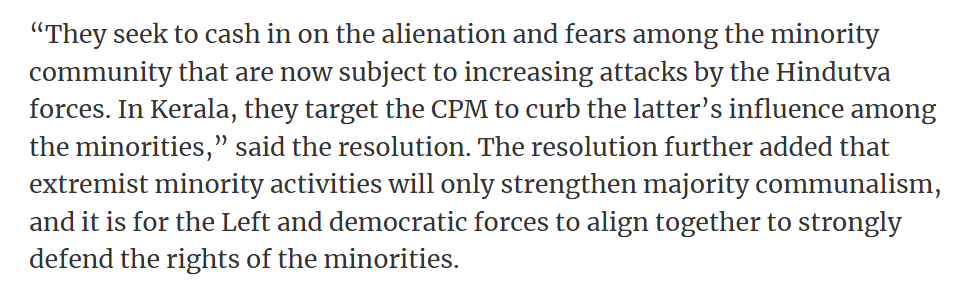
Hindu extremists are using radical Muslim groups as fodder to fuel hatred between communities. But the reverse is also true—radical Muslim groups exploit the political climate to spread their own agenda. They feed off each other.
One side claims, “If Islamists stop, Hindu extremism will die down.”
The other side counters, “If Hindu extremists stop, Islamists will weaken.”
There’s no middle ground. How do we break this cycle? Who should compromise? The answer is—both.
The only way forward is to call out radical elements within your own community—those who discourage interfaith interactions, prevent you from celebrating others’ festivals, and push you away from the secular fabric of the country. Peaceful coexistence is the only solution.
However, I mostly see this self-criticism coming from the Hindu community. Not everyone supports right-wing politics, a Hindu Rashtra, or extremist activities, and many Hindus actively speak out against radicalism within their own circles. But the same level of criticism isn’t visible in other communities. At least 95% of the Muslims I know have never condemned extremism within their own community, but they are very vocal about Hindu extremism. If only one side is willing to challenge its radicals, how can we truly achieve peaceful coexistence in a secular, democratic nation like India?
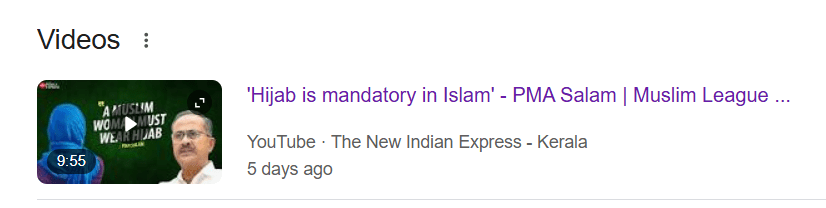
I feel this silence comes from fear—fear of being ostracized by their own community. In Kerala, the Muslim League openly stated that the hijab is not a choice for Muslim women; it is mandatory. When a journalist asked, “What if someone doesn’t want to wear it?” the leader reaffirmed, “If she’s a Muslim, we advise her to wear it.” There was no room for choice. Yet, despite often advocating for personal freedom, there was no backlash from within the Muslim community against this statement. This silence is unsettling. It makes people wonder—“If they won’t even speak up for their own freedom of choice, how can we expect them to stand up for ours?”
India is a secular nation, and preserving this secularism requires protecting religious freedom. When prominent leaders impose strict regulations on women, silence is not an option—it is a time to question them and hold them accountable. If not now, then when? Waiting until things spiral out of control will only make it harder to reclaim lost freedoms.

 The Monkey Dilemma
You must be logged in to post a comment.