A ceasefire and hostage deal is close to being reached, with plans to start on Monday. However, some people on both sides want the situation to stay the same.
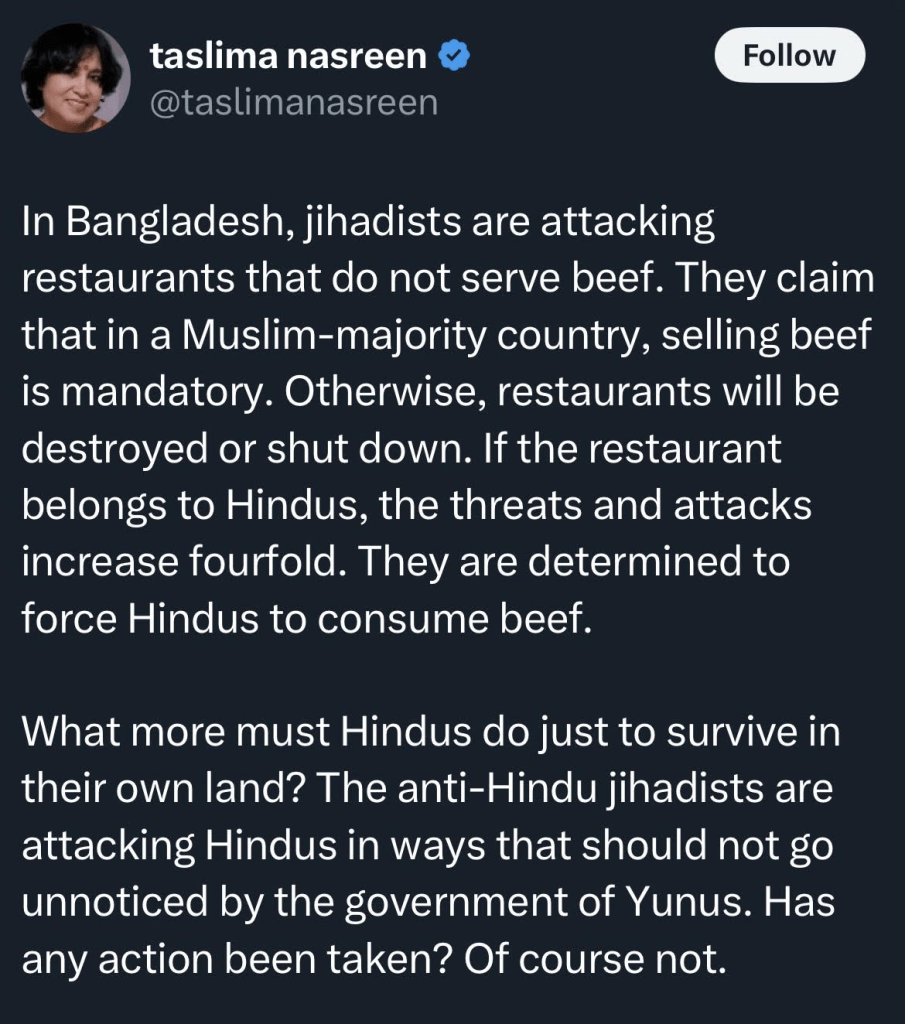
The ceasefire has not yet started and a journalist from Gaza is already talking about destroying Israel.
Source: x.com/bayanpalestine
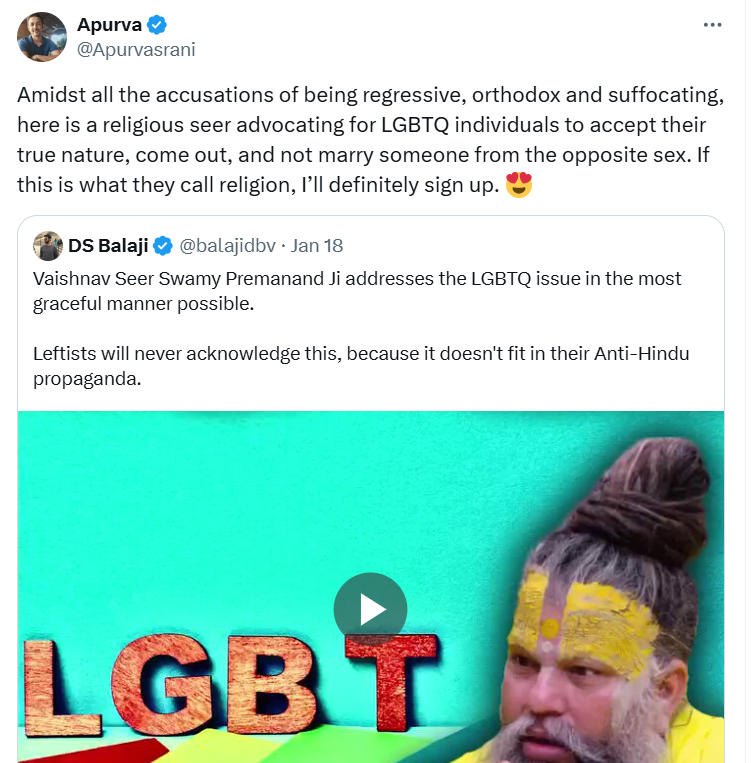
Meanwhile, a far-right Israeli politician wants the Gaza war to continue.
Source: The Times of Israel
How long can this hate continue?
One thing is clear: things cannot go on as they are. Israel must implement the two-state solution right away and remove illegal settlements. This doesn’t mean Israel should give up its land, but rather stick to the established boundaries.
If Gaza wants peace, they must abandon the idea of revenge. Israelis are unlikely to give up their land without a fight. They would rather use extreme measures, including nuclear weapons, to destroy their land themselves than give it up. They are driven by strong nationalist sentiments.
Many countries have lost land due to disputes. India lost territory to Pakistan, and Pakistan lost land to Bangladesh. The Kashmiri Pandits were displaced from their homes. Now, imagine if these countries and communities harbored the same revenge mentality and resorted to violence to reclaim their lost land. It would lead to chaos worldwide, including in Muslim countries, with countless lives lost. At some point, peace with reality must be made and the past let go. Constantly planning the next bombing or uprising only results in more innocent lives being lost.
The only way forward is peace. A two-state solution should be established, and both countries must learn to coexist. The benefits are clear: Gaza could leverage Israel’s expertise to develop infrastructure and technology that could improve life for its people. Israel, in turn, could benefit from employing Gazan workers, as it did before October 7. Left to its own devices, Gaza would likely be under Hamas, whose focus is primarily on warfare rather than development.
Supporters worldwide, rather than calling for constant war, should recognize the importance of peace and coexistence.
Yet, all this seems like a distant dream.
If serious measures are not implemented to change the status quo, both Israel and Gaza will continue to live without peace. It’s easy for us to sit in our comfortable armchairs in distant countries, encouraging war and violence on social media, while those living in the conflict zones become the true casualties.
We support violence, only to condemn it later. It’s a vicious cycle that repeats, leading to the loss of many lives, yet we fail to learn from our mistakes.
As the year comes to a close, it’s time to reflect on the lessons learned this year. I have the utmost gratitude for those who showered me with love, kindness, and patience. However, I also felt discomfort knowing that not everyone who greets me with gifts, smiles, and sweet words considers me as someone worth their time.
Small things that irked me this year:
A relative who never supported my writing ventures expected me to support her new Instagram page.
People being frighteningly okay with one kind of death over another based on religion, beliefs, and ideologies.
When people whom I consider dear went to events without informing me.
The lessons I learned from each of these:
You need not feel guilt for treating people like they treat you. You are not a holy saint but a living, breathing, ordinary human being who harbors a myriad of emotions. Having expectations from people you care about is healthy so that boundaries aren’t crossed. Consistent compromises can affect your mental health and even bring down your self-esteem.
People are inherently biased. This fact is uncomfortable and dark but true. The way we look at anything is colored by our upbringing, our own experiences, and our way of life. So, for example, when you see someone advocating for human rights, you need to be wary of their agenda – is it genuine? Do they advocate for the rights of all humans or only a select few?
We have to accept that we are not everyone’s cup of tea. This holds more true for someone like me, an unmarried woman who says the most unorthodox things and is a social hermit by nature. When you live a life that is the most authentic to you, you will not gain many friends, as you are largely unrelatable. This self-realization will help reduce unnecessary expectations from people who genuinely require something else from the people around them, not what you have to offer.
Instead of blaming people, the solution often lies within. It’s impossible to change everyone and everything to your liking. The answer sometimes is to accept the reality and move on. Maybe in this quest, you will find your tribe that understands and accepts the person that you are, and things will feel less forced and more genuine.
For me, it’s often not the acts, like seasonal gift-giving, that show someone’s true nature, but in the little things – remembering you and asking you to tag along to events they know you would enjoy, uninhibited support to passions that mean a lot to you, and not finding you weird when you show your vulnerable side. It’s also the acknowledgment of the fact that you expected something more and them making an effort to meet that expectation the next time around. Touch wood, I have a select few who understand me the way I want to be understood. But being a hypersensitive individual could mean you get disturbed when people you expected to cheer you take a step back and treat you and the things you love with indifference.
But such is life. Every year, you learn new lessons and new aspects of people around you that you never observed before. You communicate your grievances. But if the subpar treatment continues, you accept, adapt, and move on. It’s the only way to live. The disappointment may linger for some time, but then the lessons merge and become a part of you, and eventually, you start embracing the new normal. That is until you learn your next lesson.
P.S.: This would be my last post for the month and year. Holidays beckon. I wish you and your family a happy, joyous new year!
I purchased A Thousand Cuts because I wanted to know Professor T.J. Joseph’s side of the story. Those who don’t closely follow news from South India might not have heard of him. I will offer an introduction before moving on to the quotes from his book.
Who is Professor TJ Joseph?
Professor T.J. Joseph is a retired college professor from Kerala, India. He gained significant attention after he became a victim of religious extremism. The tragedy that occurred in 2010 shook Kerala to the core and impacted the communal harmony of the state. Never had Kerala witnessed such a radical act in modern history. How and why did this happen?
The Tragic 2010 Incident
In 2010, while working as a Malayalam professor at Newman College in Kerala, Professor Joseph set up a question paper for an exam. One of the questions unexpectedly became viral due to its controversial nature. Professor T.J. Joseph did not mean any harm when he drafted the question. He had simply taken influence from a book that he had read. But alas, many misunderstood the actual intention behind the question and accused the Professor of blasphemy.
Despite offering an apology, communal tensions refused to die down. The religious were angry. Fearing for his life, and feeling utterly unsafe in his surroundings, he ran away from home. After moving from one district to another, he finally decided there was no point in hiding, especially when he had done no wrong. He returned home, only to be eventually attacked by PFI members. He was mercilessly beaten up, and his right hand, which the extremists accused of writing the “dreaded” question, was severed in front of his family, neighbors, and other village folk who stood shellshocked, too scared to intervene. It took multiple complex surgical procedures to re-attach his hand.
Kerala is a state that is renowned for its communal harmony. But it is also known for its appeasement politics. The state government, politicians, and media did little to help Professor TJ Joseph. His Church abandoned him out of fear and ego. The Professor ended up losing his job in the college on the grounds of misconduct, although he was later reinstated after public outcry and intervention by authorities. He was the sole breadwinner in his family, and his wife and children had to endure many hardships due to his job loss. His wife, Salomi, slowly went into depression and died by suicide. The chapter on his wife is the only chapter without a title. It’s as if words aren’t enough to encapsulate the depth of his grief.
I bought his book because I had only heard the media’s version of his story till now. We all know by now how the media often tries to cover up facts based on their own biases. The present state of mainstream media made me purchase the book. I am glad I did it. The details are chilling. The points I am giving are only a summary of the things that happened. When you read the book, you are transported into Professor Joseph’s world of art, cinema, poetry, desperation, fear, courage, and resolve. He explains every little incident in vibrant detail. You can’t help but shed a few tears. I feel Kerala collectively failed him. Yet, his optimism and his dry sense of humor prevail and serve as a source of inspiration. Here’s a teacher who is teaching everyone in his own unique way how to combat the extremes that life throws at you.
Professor T.J. Joseph’s case remains one of the most shocking cases of religiously motivated violence in Kerala. The incident sparked widespread anger and discussions about freedom of expression and religious intolerance. The PFI members involved were later arrested and convicted. But, sadly, as a society, we still remain religiously intolerant. If you take a peek at the comments under any of his videos or news articles, you will know what I mean.
Quotes from Professor TJ Joseph’s Book
In an apology of a democracy, the interests of the mob got weightage over anything else, even if those interests were born out of ignorance, against truth and flagrantly unethical. Vote banks comprise such mobs. They shoulder the chair of power.
Marital life is a kind of war. An extraordinary war that lasts a lifetime. In a normal war, the one who defeats the opponent wins the war. In a marriage, the one who defeats the other will also lose. Therefore, marriage is a war where one must win without defeating the significant other.
My rationale was that as I had taught thousands of students, a large number of whom were Muslims, even if some misguided elements wanted to harm me, wouldn’t they first ask my students, and wouldn’t my students stand up for me and disabuse them of their wrong notions about me?
The mind of a student of literature must be dispassionate. Only in a place where there is no entrenched emotion can all emotion enter. Only in spaces where no one belief has nested itself can enlightenment enter and soar.
As I lay there accepting gifts and graces, I thought I must not merely forgive my attackers but thank them as well. For until then, I had never received so much love and care.
The attack on me was condemned even by Muslim organizations. The Church authorities alone remained silent.
I have been told that the gang that attacked me was made up of active members of an organization called Popular Front of India (PFI) and its political wing known as the Social Democratic Party of India (SDPI). All the members of the attack gang were then sent to various safe houses and shifted from one to another frequently with the help of many sympathizers.
The fish seller in our area in Muvattupuzha was a Muslim. Earlier, if we asked for half a kilo, we would receive exactly half a kilo. That has changed since: when we ask for half a kilo, we get at least three-fourths of a kilo. Only when I threatened to stop buying his fish if he didn’t accept payment did he, very reluctantly, start to accept money from me again.
Pinarayi Vijayan said that the whole of Kerala was on my side and that there was no difference between the extremists from PFI who had chopped off my hand and the church diocese that owned and managed the college.
At one time, having run out of funds, when I was at the end of my tether, Yukthivadi Sanghatana (Rationalists Organization) turned up with the money they had collected for me. I asked myself, why would they need other gods when they are themselves playing the role of God?
After I was attacked and maimed, I appealed to the state chief minister and home minister to withdraw the blasphemy case filed by the police against me of their own accord. The government had no will or courage to withdraw a case they had got instituted for communal appeasement.
The view that the suicide was caused by the unjust and immoral ways of the Newman College authorities predominated. One thing is certain, a dead Salomi is more powerful than a live Salomi. Because what she couldn’t achieve while alive, she could, by dying—bring the management to change their mind.
I decided to watch “Nobody Wants This”, starring Adam Brody and Kristen Bell, after reading positive reviews by friends and acquaintances on social media. The synopsis on Netflix initially failed to interest me, so it never made it to my watchlist. However, after going through reviews, I decided to give it a try. “I could always stop if I didn’t enjoy it,” I reasoned. Thankfully, I found the romcom drama refreshing.
I enjoyed the side characters more than the main leads, especially the Jewish family members. They were quirky, hilarious, and surprisingly felt close to home. My country, India, is not exactly the most open when it comes to interfaith relationships. Sure, it is happening more than ever, but some questions persist.
“How will the two adjust to different religious beliefs?”
“Whose religion would the kids inherit?”
“Would we lose our child to another religion?”
These are some common questions that arise in the minds of many Hindu families when their child’s interfaith relationship progresses to the marriage stage.
Netflix’s ‘Nobody Wants This’ interestingly tackles a subject that not many interfaith romcoms have done before – conversion. Should you convert if your partner from another faith insists on it, claiming (or emotionally blackmailing) marriage is impossible otherwise? I will be honest. I do not think one has to sacrifice their identity in love. Requiring conversion as a condition for marriage feels manipulative and unfair. If your partner truly loves you, why would they expect you to change your identity?
I wouldn’t have hesitated to convert for love in my younger days. Back then, love mattered more to me than anything else, even religion. However, as I matured and understood life better, I realized you can follow your heart without leaving your brain behind. You don’t have to bend over backward in love. That’s the beauty of aging – you realize that sacrificing your identity is never an option. Your partner has to accept the way you are.
Yet, some people, unable to disappoint their parents, push their partners to take this extreme step. If they can’t disagree with their parents over an important issue such as the partner’s identity, how will they ever be able to support the partner when issues involving parents over less important matters pop up in the future? Once you let go of your identity, more demands pour in – you are expected to raise your children following only one belief and break off all ties with your “old” religion. It is an overwhelming decision no one should be subjected to, especially on the people you love. One sacrifice is often followed by umpteen other sacrifices.
I am glad this aversion to conversion is gaining traction in India, with many refusing to convert for marriage. In fact, some people are even choosing to end their relationships over it. Why convert when our legal system allows couples from different faiths to marry in court?
The romcom touches on this sensitive topic of conversion and the ideological differences between the two communities. One is liberal, the other conservative. How to tackle differing opinions? The main characters aspire to provide you with an answer.
‘Nobody Wants This’ is streaming on Netflix. It has a total of 10 episodes, with each lasting around 30 minutes.
Gyeongseong Creature captivates you with every frame. The intricate storytelling, excellent performances, and impeccable cinematography hook you from the start.
I completed Season 1 the day it was released on Netflix. I did not leave a review on this website even if I enjoyed it as laziness got the better of me. When Season 2 was released, I knew I had to watch it, but I thought of taking it a bit slow and spread it over the course of a week so I would not spend too much time glued to my couch. However, once I started, I couldn’t stop, and I binge-watched it in a day. This, in short, gives you an idea of how I felt about the series.
What’s It About?
Gyeongseong Creature, as the name gives away, is a creature born in the labs of power-hungry monsters. Their sinister motive makes them more repulsive and horrifying than the Najin they created. The first season, which starts in 1945 during the late stages of the Japanese occupation of Korea, explores this origin story in detail. The second season takes place in a free Korea, where the evil elements are still at play.
Thoughts
Season 2 isn’t as perfect as Season 1, but it still has much to offer. Park Seo Jun and Han So Hee shine in both seasons. Special mention to Claudia Kim, who played Lady Maeda. She portrayed the character with such finesse that you cannot help but admire and loathe her at the same time. I also liked the new character in Season 2, Seung-Jo. Like Lady Maeda, Seung-Jo is a complicated character with many layers. His angelic looks contrast his duality.
Once I compeleted the series, I couldn’t help but relate it to the current world. We aren’t even remotely close to what is shown in the drama. Yet, you can’t help but consider the possibility of this absurdity getting executed in a smaller, intangible capacity in the wrong hands. In their pursuit of power, some leaders may be willing to sacrifice lives to achieve their goals. If a time comes when leaders cease to distinguish between right and wrong, how will ordinary civilians cope? Gyeongseong Creature offers a thought-provoking message in that sense.
Gyeongseong Creature is streaming on Netflix. The first season has ten episodes, and the second has seven. Each episode lasts roughly an hour.
Hania Aamir plays the character of Sharjeena in Kabhi Main Kabhi Tum
I came to know about the Pakistani drama Kabhi Main Kabhi Tum from YouTube recommendations. This was one of those times when YouTube got its algorithm right.
I wasn’t initially sure whether I would like the drama, but once I started, I was hooked. It is no surprise that Kabhi Main Kabhi Tum has gained popularity in India. The reasons are plenty.
Focus on Relationships
The story focuses on everyday relationships. It does not aim to convey any profound social message. The drama is not entirely progressive, but as the audience, the onus lies on us to accept the fictional world of those characters.
We are at an age where we look into political correctness in every movie or drama. This mentality somehow has ruined the movie-watching experience for people like me who prefer rawness over perfection. Indian filmmakers have become too cautious and afraid to offend, which is understandable considering the polarized times we live in. However, they can still develop unique story ideas that are family-oriented.
Most Indian movies and dramas getting appreciated nowadays are dark. If, by chance, a love story gets released, people are quick to dismiss it as cringe, misogynistic, or fake. Box office numbers also reveal that romantic movies have lost their appeal in India. Or maybe it’s because we are not coming up with a captivating love story. Due to this, many filmmakers stay away from making out-and-out romantic, feel-good movies.
So, considering the lack of romantic content, it’s understandable why many Indians are drifting towards Korean and Pakistani dramas like Kabhi Main Kabhi Tum that keep the old-world romance and family-centered stories alive.
The primary takers of romance are women. Most of us understand that the romance shown in movies is make-believe and not realistic, yet we crave a world that we can deep-dive into when we are stressed. Unfortunately, there are not enough choices for us nowadays. This is why dramas like Kabhi Main Kabhi Tum come as a refresher.
Clean Love Story
Kabhi Main Kabhi Tum meets the bill of sweet, clean love stories that we used to enjoy in the past. No one is making out the moment they meet; no one has an “I am cooler than you” attitude. The chemistry is there for your eyes to see. They look lovingly at each other with slight smiles, enjoy quiet dinners sitting on their bedroom floor, and mesh into each other’s lifestyles even if they are poles apart. Small things that make a significant impact.
Beautiful and Relatable Styling
I absolutely love Sharjeena’s free-flowing Pakistani outfits. The styling gives you a feeling that you, too, can pull off the outfit. The hair is not overstyled; the fit is comfortable and suitable for all body sizes, and there is a feeling of relatability when you see it. Nothing seems out of reach for the regular person.
No Realism Fatigue
I personally do not wish to experience realism fatigue while watching a movie or drama, so a good balance of relatability and aesthetics is ideal. To clarify, you might have seen several scenes in Indian dramas/movies shot in the bathroom where the main character is shown answering nature’s calls. They are realistic but not aesthetic. So, in my opinion, such scenes are better avoided in a make-believe world. We don’t need to know if the character peed or pooped or has a runny nose or sweaty face. Some things are better left for the real world.
Conclusion
I believe Indian filmmakers should take note of the popularity of Korean and Pakistani dramas in India. They should recognize that there is a market for such content, which they are currently neglecting to cater to. To create such wholesome dramas or movies, first and foremost, we need better storytellers. Korean dramas are written by female writers, which brings a unique female perspective to the stories. Perhaps Indian filmmakers should consider hiring female writers to bring back the charm of feel-good content in our films.
You must be logged in to post a comment.