
It’s Okay to Not Be Okay: Moon Gang-tae Has Officially Ruined Men for Women Everywhere

It's Okay to Not Be Okay Poster

I kept delaying watching It’s Okay to Not Be Okay because I have a bit of an aversion to hospital dramas. Several friends had recommended this popular Korean drama to me, but I kept putting it off. I was judging the series by its title, and honestly, I wasn’t in the mood for what I assumed would be an intense emotional rollercoaster.

I finally took the plunge a couple of weeks ago.

It took me some time to finish the series because each episode runs for over an hour, and there are 16 episodes in total. I am also not much of a binge-watcher, especially when a series deals with serious or emotionally heavy topics. So yes, completing It’s Okay to Not Be Okay took me a while.

But the time I took to finish it doesn’t take away from the fact that It’s Okay to Not Be Okay is an entertaining, thoughtful and beautifully layered K-drama.

Let’s talk about the male lead first.

Moon Gang-tae, played by the enigmatic Kim Soo-hyun, is such a major green flag that he might just make pursuing relationships in the real world a tad more difficult for women. Because honestly, who can even compete with this kind of surreal charm, patience and thoughtfulness?

He is calm, sorted, emotionally aware and dependable. He is the person you would want beside you when things get difficult. He handles uncomfortable situations with a level of maturity and emotional intelligence that makes you think, “Yes, this is exactly how my partner should behave.”

Basically, Moon Gang-tae is the ultimate go-to guy.

Go Moon-young, played by Seo Yea-ji, is completely different.

She is volatile, unpredictable and unapologetically herself. But beneath all that intensity, she also shows moments of compassion when the situation calls for it. She has a magnetic personality. What makes her even more interesting is that she knows exactly how powerful her presence can be and the effect she has on people.

She is not the easiest character to understand, but she is definitely difficult to ignore.

For me, though, the real star of It’s Okay to Not Be Okay was Oh Jung-se. He plays Moon Sang-tae, the autistic older brother of the male lead, and his performance was so convincing that there were moments when I genuinely wondered whether he was autistic in real life. Yes, I actually Googled him. That, in itself, says a lot about how convincing his portrayal was.

His performance was heartfelt, nuanced and incredibly believable. In my opinion, he absolutely deserved every award and recognition that came his way for this role.

At its core, It’s Okay to Not Be Okay is a serious drama that explores mental well-being, emotional healing, trauma, relationships and the process of learning to accept oneself.

But despite its heavier subjects, the series doesn’t feel emotionally exhausting all the time. I enjoyed the little moments of humour scattered throughout the episodes. They provide some much-needed lightness and make the story feel more balanced.

And the BTS scenes towards the end were absolutely adorable. Seeing the camaraderie between the cast members behind the scenes was a lovely bonus after spending so much time with these characters.

Overall, I found It’s Okay to Not Be Okay to be an entertaining and thoughtful Korean drama. It took me a while to finish, but by the end of it, I was glad I finally gave this much-recommended series a chance.

It’s Okay to Not Be Okay is currently streaming on Netflix.

Musafir Cafe: For The Ones We Loved and Lost

Musafir Cafe Poster

If you’ve ever loved and lost, you’ll probably relate to Musafir Cafe.

The yearning, confusion, helplessness, and desperate search for closure all felt incredibly real. It is one of those rare romance dramas that understands that moving on isn’t as simple as people make it seem.

Love is rarely a straight road, yet many Bollywood romance films still portray it that way. Boy meets girl, they fall in love, and the conflicts are usually external, whether it’s parents, caste, or society.

While those issues absolutely continue to exist today, many modern relationships fall apart for entirely different reasons. Ego clashes, incompatibility, poor communication, bad timing, emotional baggage, and countless other factors play a role.

Relationships are layered and complicated, so why are we still confined to the typical boy-meets-girl stories?

That is where Musafir Cafe stands out. Instead of polishing relationships into something easy to consume, it embraces the messiness of love. The emotions feel raw, honest, and deeply human.

Even when the characters move forward with their lives, the past never completely disappears. And that’s exactly how real life works. We all carry pieces of our past relationships with us. They shape who we become. Some people turn them into lessons, while others carry the bitterness into every relationship that follows.

I haven’t read the book that Musafir Cafe is based on, and I actually think that worked in my favor. Once you’ve read the original book, comparisons are almost impossible to avoid. Going into the Netflix series without those expectations allowed me to experience the story exactly as it unfolded, without constantly measuring it against the source material.

The standout performance for me was Vedika Pinto as Sudha. A very close second was Mahima Makwana as Preeti, only because she wasn’t given enough screen time. But the moment she broke down in sheer helplessness, I found myself tearing up too. That fear of losing everything precious to you felt painfully relatable.

What resonated with me even more was her attempt to handle the situation with maturity despite the emotional turmoil. That part felt deeply personal because I’m exactly the same when it comes to matters of love. I don’t create a scene. I create space for the other person to process their emotions, even when it hurts.

Another refreshing aspect of Musafir Cafe was how natural everyone looked on screen. No obvious lip fillers or overly polished appearances. It reminded me of the 90s, when actors looked more relatable and expressive.

It was also nice to see small black bindis, black kajal, long earrings, and flowy Indian outfits take center stage again. These were once iconic Bollywood fashion staples but have become less common with the rise of minimalist beauty trends. Whether you prefer minimalism or not, there’s no denying that these little details add a certain charm and charisma to female characters.

Personally, I’ve always felt that black kajal has a depth that brown kajal simply doesn’t. It frames the eyes in a way that’s hypnotic. It’s probably one of the reasons people on Reddit still bring up Alia Bhatt’s looks in films like 2 States and Badrinath Ki Dulhania. Her bold black kajal became such a defining part of those looks.

If you’re looking for a heartwarming yet emotionally honest Netflix series, I’d definitely recommend giving Musafir Cafe a watch. It has around 8 episodes, making it an easy binge.

This Netflix Romance Took Me Back to the 90s

Voicemails for Isabelle Image

As a fan of 90s romance movies, I often feel that many modern love stories just don’t have the same warmth. They tend to focus more on physical attraction and glamour, while the emotional connection takes a back seat. After watching many newer English romantic movies, I usually find myself switching back to a Korean drama because that’s where I still find storytelling that caters to my old soul.

It’s exactly why I was skeptical before starting Voicemails for Isabelle on Netflix. I wasn’t sure if I would connect with the characters or the story. Thankfully, the movie proved me wrong within the first 15 minutes.

Watching it felt like stepping back into the 90s. The story unfolded naturally, the emotional moments felt genuine, and the chemistry between the characters never seemed forced. My favourite part was the relationship between the siblings. It reminded me so much of my own elder sister and the bond we share.

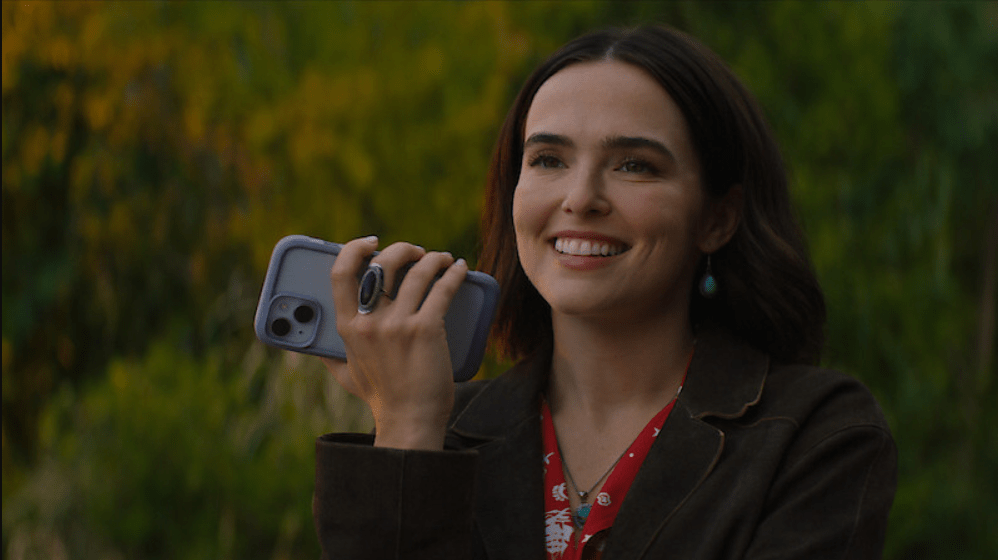
Zoey Deutch shines as Jill and easily becomes the heart of the film. Nick Robinson also delivers a wonderful performance as Wes. Together, they share the kind of chemistry that makes you forget you’re watching actors on screen.

If you’ve been searching for a heartwarming romantic movie that captures the charm of 90s love stories, Voicemails for Isabelle is well worth watching. It’s emotional, sincere, and beautifully acted. Don’t be surprised if you find yourself tearing up more than once (but in a good way).

Voicemails for Isabelle is currently streaming on Netflix.

Do Deewane Seher Mein: Simple Love, Real Insecurities

Do Deewane Seher Main Poster

I recently watched Do Deewane Seher Mein on Netflix. Since it’s backed by Sanjay Leela Bhansali, I was naturally curious. We hardly get old-school romantic movies anymore, the kind where love feels simple, and tradition is not mocked. That’s also what pushed me to check out Bada Naam Karenge on Sony Liv, created by Sooraj Barjatya.

If you’ve grown up watching Barjatya and Bhansali films, both these productions will feel familiar in a comforting way. At a time when romance on screen often leans heavily into physicality, these stories bring back themes like family, matchmaking, and mutual respect. They are the kind of feel-good watches you’d pick for a relaxed weekend.

Coming back to Do Deewane Seher Mein, the story revolves around two individuals dealing with their own insecurities and how those insecurities affect their relationship. The female lead struggles with her appearance, shaped by years of comments and comparisons, especially with her sister. That part felt very real to me. Growing up, I was the “ugly duckling” in my family too. I had thick glasses, was painfully shy, and very thin. It was only in my 20s that I began to fit into what society considers “good-looking.” Even now, compliments feel a bit superficial to me. That’s what constant criticism during your formative years can do. So I completely understood her emotional journey.

The male lead’s insecurity is also relatable, but I wish the film had spent more time building these emotional layers. The foundation is there, but the depth feels slightly underdeveloped. Because of that, when the characters reach their breaking point, it doesn’t hit as hard as it could have. The story had strong potential but seemed to lose momentum along the way.

That said, both Siddhant Chaturvedi and Mrunal Thakur deliver solid performances and do justice to their roles.

Overall, Do Deewane Seher Mein is a decent one-time watch, especially if you enjoy classic-style romantic storytelling. It’s currently streaming on Netflix.

Ithiri Neram: When Old Love Returns Years Later

Ithiri Neram Movie Poster with Roshan Mathew and Zarin Shihab

I picked the Malayalam movie Ithiri Neram randomly last weekend. I usually choose movies based purely on my mood. Because of that, I often ignore films or dramas that are trending or getting a lot of attention. Sometimes I simply may not be in the mood for that genre.

Ithiri Neram had been sitting in my watchlist for quite some time. After my North East trip, I suddenly felt like watching something slow-paced and centered on human interactions. I wanted a quiet Malayalam film that focuses more on emotions than plot twists. Ithiri Neram seemed perfect for that kind of weekend watch.

The story deals with a slightly controversial theme. It follows a married man who reconnects with his college flame. In a way, it reminded me of the Tamil movie 96, but almost in reverse.

Because the story revolves around a married man who still carries unresolved feelings for his ex, the film creates an unusual emotional conflict for the viewer. You enjoy the crackling chemistry (a type of chemistry that conveys a lot through eye contact) between the lead pair, yet at the same time you feel a sense of guilt. You cannot help but think about the wife, who has no idea what her husband really feels about their marriage. According to him, that “special feeling” is missing in the marriage. This aspect of the story also became a point of debate among viewers. Some felt that the movie glorified an extramarital emotional connection. But I don’t think movies always need to function as a vehicle for social messaging. Cinema is also a space to tell stories about human emotions, even the uncomfortable ones.

And the truth is, the idea that someone may still carry feelings for an old love is not unrealistic. It may not be something people openly admit, especially after marriage. But it is a very human experience that exists quietly in many lives.

The chemistry between the two leads is undeniable. Their conversations and silences pull you in emotionally. At times it feels like the film quietly pushes the audience into rooting for something that is not right.

Once you reach your 40s, you also start realizing something uncomfortable. Chemistry is rare. You may settle down with someone you deeply respect and care for. The relationship can be stable and supportive. Yet, like Anish in the film, you might sometimes feel that something extra is missing. That “extra” could be a kind of chemistry you once experienced in the past and have been searching for ever since.

Over time, many people choose stability over chemistry. And in many ways, that decision makes sense. Life cannot run on chemistry alone. Intense chemistry can also bring strong emotions that are hard to manage, and that intensity can sometimes destabilize relationships.

Roshan Mathew and Zarin Shihab deliver beautiful and natural performances. Their screen presence carries the emotional weight of the story very well. The comedy relief also works nicely and matches my kind of humor. I genuinely enjoyed those lighter moments.

The supporting cast adds good balance to the film. Performances by Nandu and Anand Manmadhan help keep the story light so that the emotional tension never becomes overwhelming.

If you enjoy slow movies that focus on relationships, nostalgia, and complicated emotions, Ithiri Neram might be worth adding to your watchlist.

Ithiri Neram is currently streaming on Prime Video.

My Yali Capkini Journey: Rage, Romance and Baklava Cravings

Yali Capkini Poster Image

I started watching the Turkish drama Yali Capkini (Golden Boy) on Amazon Prime (MX Player) for a very simple reason. The lead pair looked good. I honestly assumed I would drop it after a few episodes because good looks alone rarely keep me hooked. Chemistry matters. A solid storyline matters. Surprisingly, Yali Capkini seems to tick every box so far.

This is the first time I am watching a Turkish series, and it gave me a small window into how Turkish Muslims live. It feels very different from what we usually see in Indian society, where things tend to be more conservative. Turkish culture comes across as more liberal, and a lot of that credit goes to Atatürk’s reforms, which pushed women’s rights forward. The show reflects that beautifully. Women face no criticism for dressing modernly, can speak up for themselves, and aren’t afraid to assert their rights. At the same time, the drama also shows conservative families who believe women should stay home and raise children. One scene shows a father accusing his daughter of being a disbeliever just because she drew a Christmas tree. In Pakistani dramas, the word “kafir” gets thrown around easily, but from what I’ve seen here, it isn’t normalised in Turkish shows. In fact, later, you see characters happily celebrating Christmas trees and decor.

If you plan to watch Yali Capkini, keep a box of Baklava ready. There are so many references to the sweet that you will start craving it instantly. I highly recommend trying Swaadesi Baklava, which should be available in most local Indian stores and also online. In the show, coffee and Baklava feel like supporting characters. They show up during happy moments and sad ones. Just like how many of us enjoy a cup of chai on a rainy day, the characters in this drama keep turning to their coffee and Baklava at any time of the day.

Now, coming to the main characters. Ferit, played by Mert Ramazan Demir, has to be one of the most toxic characters I have ever seen in a drama or movie. Since Yali Capkini’s story is written by a psychiatrist, the male character’s behaviour feels layered and too realistic at times. He is the kind of partner who says “So what?” when you tell him he hurt you, yet he reacts strongly if you give him the same treatment. His emotional manipulation, hot and cold behaviour, and constant lying create a type of rage that builds up inside you. His words sting more than any physical act. Anyone who has ever dealt with a toxic partner would relate, and this applies to both women and men who have experienced suffocating or manipulative relationships. The way most female characters in the drama react to disrespect is infuriating, but it is still close to reality. We all know someone who tells women to “adjust” or “compromise” to keep the relationship going.

The female lead, Seyran, played by Afra Saraçoğlu, is stunning, with eyes that instantly remind you of Aishwarya Rai. She is fiery, refuses to accept injustice, and that naturally irritates Ferit and his family, who are used to submissive women. She is easily the best performer in the show and delivers every scene with perfection.

There are very less feel-good scenes here. The series feels like pure rage bait. Still, it keeps you hooked. I haven’t completed it yet because Season 1 alone has more than 100 episodes. Then there is Season 2 and 3. I am not sure I will finish everything if the constant toxicity gets too irritating, but for now, I still have the motivation to continue.

Yali Capkini is available in both Turkish and Hindi on Amazon and MX Player. The English subtitles aren’t perfect, and sometimes don’t make any sense, but I still recommend watching it with subtitles rather than switching to the Hindi dub. The Hindi audio uses overly respectful language even when characters talk to someone younger, and it takes away from the natural flow of the scenes. That was my only issue.