I was in the mood for something light and funny. Since I’m a bit under the weather, my brain just can’t deal with anything too serious right now. I needed some humour to melt the moodiness away. The sticky Kerala humidity, returning after a long bout of pleasant rainy weather, hasn’t helped either. So when I read the synopsis of Inspector Zende, I thought, yup, this is exactly what I need to watch.
What’s It About?
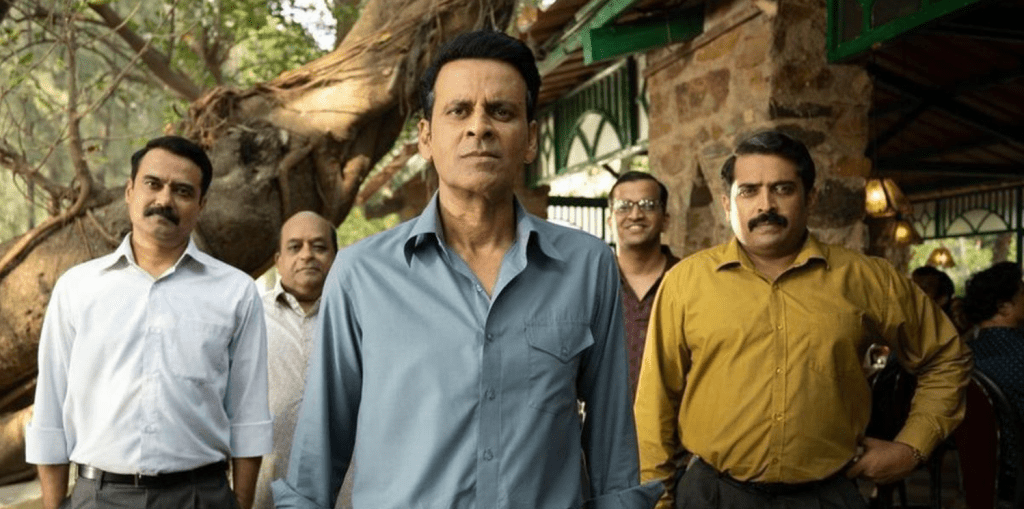
Inspector Zende is inspired by the real-life story of the officer who caught Charles Sobhraj not once, but twice. In the film, the criminal goes by the name Carl Bhojraj, and the plot follows the inspector’s relentless pursuit to nab him a second time.
Thoughts
I really enjoyed the way the movie was narrated. It was light-hearted and fun. Sure, it drags a little in the middle, but overall, I loved how they kept the tone humorous from start to finish. Given the serious subject, they could easily have gone for a heavy treatment, but thankfully, they didn’t. This is exactly the kind of film I’d like to see more of.
Manoj Bajpayee was brilliant as Inspector Zende. We’ve seen him excel in intense police roles before, but here he shines just as much in a lighter, comic avatar. And honestly, I can’t think of anyone other than Jim Sarbh who could have pulled off Carl Bhojraj so well.
If you’re in the mood for something breezy, I’d definitely recommend Inspector Zende on Netflix.
I came across a review of Dept. Q on Instagram Reels, which is how it ended up on my watchlist. Honestly, before watching, I was doubtful whether I would finish it. Lately, many “thriller” series have failed to truly thrill me. But I’m glad I gave this one a chance and stuck with it.
What’s It About?
An arrogant detective, Carl Morck, returns to work after being injured in a shooting and is assigned to a new department in a dingy basement to investigate unsolved cases. He is soon joined by Akram, a former Syrian policeman now working as a civilian employee, and Rose, a young and spirited constable. Akram ends up selecting a case for Carl to pursue, one involving the sudden disappearance of a lawyer after she is assaulted by her non-verbal brother on a ferry.
Thoughts
Even though the series drags at times, I found myself wanting to know what happens next. This curiosity kept me watching. My rule of thumb for thrillers is simple: Am I interested in finding out the truth? If yes, I continue. If no, I skip. This series made me stay. I genuinely wanted to know what happened. The final episode was the standout of the season, stirring a range of emotions in me: anger, fear, thrill, affection, and warmth.
The performances were strong across the board, but my favourite character was Akram, played by Alexej Manvelov, a mature presence, always in control, in contrast to the more unruly Carl Morck.
I would recommend Dept. Q. It’s streaming on Netflix, with a total of 9 episodes, each roughly an hour long.
I had put off watching Black Mirror Season 7 for a long time, as Season 6 had failed to impress me. But on a friend’s recommendation, I decided to give it a shot. I’m happy to report that most of the episodes, except the last one, lived up to my expectations.
What’s It About?
Story 1 – Common People: A devoted husband, unwilling to lose his terminally ill wife, uses a high-end new technology to keep her alive. At first, it seems like a miracle. But as with most modern tech, things soon spiral out of control. The couple is forced to confront the harsh reality of love, loss, and the consequences of clinging to the impossible.
Story 2 – Bête Noire: An ambitious professional’s life is thrown into disarray when a former schoolmate unexpectedly joins her workplace. What begins as unease quickly escalates as unusual events unfold around her, sending her mental state into a downward spiral.
Story 3 – Hotel Reverie: A popular actress, bored of dull roles, signs on to a high-tech film project that aims to recreate a classic movie using immersive technology. She steps into a world where she must play out scenes with virtual versions of the original cast. But the line between fiction and reality begins to fade, and the production eventually takes a dark and unexpected turn.
Story 4 – Plaything: A socially isolated man is arrested for murder. During interrogation, he reveals his obsession with a computer game involving digital creatures. The more he cares for these forms, the more they grow. And the more they demand from him.
Story 5 – Eulogy: A man is tasked with writing a eulogy for an old lover with the help of a photo-based immersive memory technology that lets him relive past shared moments with her. Some are joyful, others painful, and some reveal truths he wasn’t prepared to face.
Story 6 – USS Callister: Into Infinity: A stranded crew battles for survival in an endless virtual universe. They are trapped in a multiplayer simulation, and they must outsmart other players to escape the loop and find freedom.
Thoughts
Though I enjoyed every episode in Black Mirror Season 7, my favourite was Plaything. The technology shown in the story is both fascinating and disturbing. The sing-song tune of the little digital forms adds just the right touch of eeriness. The lead actor delivers a convincing performance as the eccentric character ready to go above and beyond for his virtual friends.
The season as a whole highlights how technology can go wrong in unexpected ways. It drives home the point that in the pursuit of something “better,” we often overlook the risks that come with it.
I didn’t find the final episode particularly interesting. Probably because outer space-themed plots don’t usually appeal to me.
Overall, I would say Black Mirror Season 7 is worth a watch. All six episodes, each about an hour long, are streaming on Netflix.
I think it’s safe to say I’m seriously craving a good comedy film. The genre seems to be fading in Indian cinema. I’m not enjoying that shift one bit. Remember the Andaz Apna Apna era? Pure classic. Even Malayalam cinema had its fair share of timeless comedies that still hold up today. That comedy void is exactly what led me to subscribe to Zee5, just to watch the Malayalam film Prince and Family.
To be honest, I’ve become quite disconnected from new movie releases. Life in your 40s tends to be more news-oriented and less in touch with the entertainment world. And to make it worse, the kind of feel-good content I enjoy seems to be rare these days. I was brought up in the era of Yash Chopra and Karan Johar movies. So it’s natural that I miss the soft aesthetics of good ol’ Bollywood romance and the comedy movies of Malayalee actors like Mohanlal and Sreenivasan.
Considering my disconnect, I actually discovered Prince and Family through Instagram Reels. It was the viral dance entry of Chinju Rani that caught my eye and motivated me to subscribe to Zee5.
What’s It About?
Prince and Family tells the story of Prince Chakkalakkal, a well-known fashion designer in his 40s working in Kerala. He carries the weight of his entire family, including his two unemployed brothers and their families, on his shoulders. Despite his success, Prince remains unmarried, struggling to find the right partner.
Enter Chinju Rani. A hyper-energetic woman in her 20s and a popular social media influencer. Their match is arranged through an online matrimonial site.
Chinju Rani lives for the ‘likes.’ Every decision she makes is filtered through the lens of her followers. So much so that on her wedding night, she’s busy editing and posting her wedding video, while her husband waits and eventually falls asleep.
Can two people from such different worlds build a happy marriage? That’s the heart of Prince and Family.
Thoughts
I enjoyed Prince and Family overall. It had a promising comic tone at the start. I only wish they had stuck with that all the way through. While I understand the film’s intention, that is to highlight the dangers of living through social media at the cost of real-life connections, the shift to a more serious tone felt a bit abrupt. Honestly, the world of influencers offers plenty of material for comedy, and the film could have explored that further in a subtle manner without losing its message.
Some of the emotional scenes felt exaggerated. But not to the point of losing interest. The film kept its entertainment quotient intact throughout.
Dileep’s character is particularly interesting. He’s choosy about marriage proposals, with one preference that seems to be clearly dominant over all others even though it’s not explicitly stated: he wants a young, unmarried, attractive woman. Despite being in his 40s, this mindset makes him dismiss proposals from women his own age with a certain disdain. It’s old-school thinking, but it mirrors real-life attitudes in India that still persist. This is why we see 50-year-old Indian male actors romancing 20-year-olds on-screen, while actresses of the same age group play their mothers.
The real star of the movie, though, is Raniya Raanaa. Some might say she’s overacting, but I think she nails the hyper energy of a social media influencer who lives for the camera. Her performance is full of life, and she handles emotional scenes with ease. Siddique and Bindu Panicker are excellent in their supporting roles as well.
All in all, Prince and Family is worth a watch. Just don’t expect too much logic or nuance. It’s streaming now on Zee5.
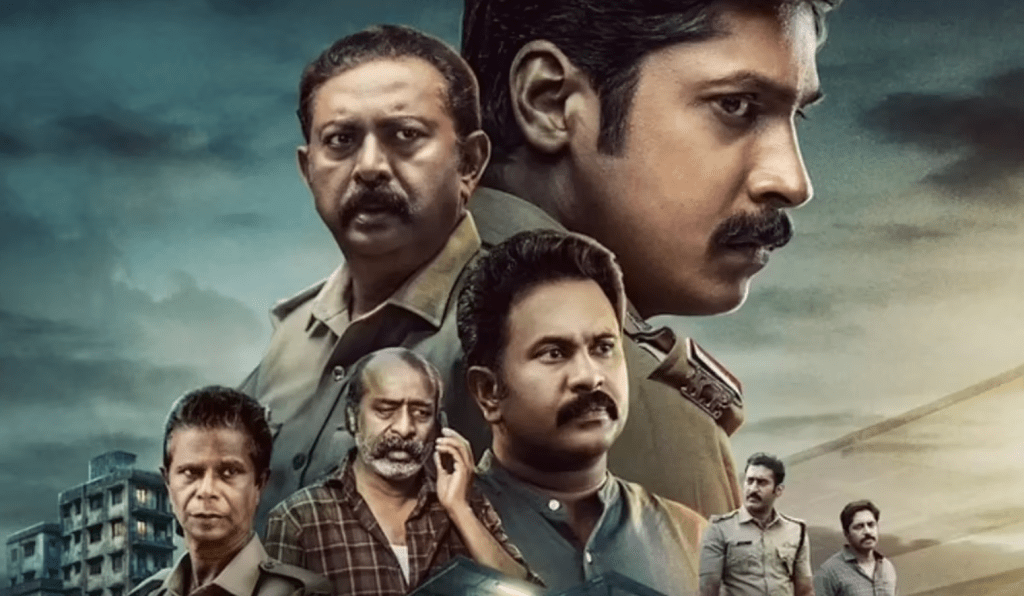
If you haven’t yet watched Kerala Crime Files on JioHotstar, I would recommend doing it now. It’s a Malayalam-language Indian crime series set in Kerala, and it delivers on every front: gripping treatment that matches international standards, solid performances, and fresh storylines. I binged both seasons back-to-back over the weekend and thoroughly enjoyed them.
What’s It About?
Season 1 of Kerala Crime Files revolves around the murder of a sex worker found in a dingy lodge. The police, initially indifferent due to the victim’s profession, treat it as just another case. In one telling scene, a woman asks her police officer husband, “So there’s discrimination in cases too?” What begins as apathy turns into an ego-driven pursuit. The officers are frustrated by their inability to crack the case quickly. Though the victim is a sex worker and the case is treated casually at first, their bruised egos and the complicated nature of the case push them to dig deeper.
The heart and soul of Kerala Crime Files Season 2 are the dogs. They are present from the very first frame to the last. Set in a quiet town in Kerala, the story begins with a police officer going missing. As the investigation unfolds, the plot thickens with unexpected twists. What sets this season apart is its demand for viewer engagement. You need to connect the dots yourself. There’s no spoon feeding. I’ll admit, I had to rely on Reddit to fully piece things together, since I usually go into passive mode while watching fiction. The performances are exceptional, especially Indrans and Harisree Ashokan. Known for comedy, they prove their mettle in intense, dramatic roles too.
Kerala Crime Files is streaming on JioHotstar. Both seasons have just 6 short episodes, each around 20–30 minutes. You can easily finish them in one sitting. In a time when attention spans are shrinking and many shows drag episodes beyond an hour, this crisp format is a welcome change. I hope to see more dramas adopting this format.
A socially awkward 42-year-old Sanskrit professor from Jamshedpur meets a free-spirited 32-year-old Bengali French teacher through an arranged marriage setup. He’s orthodox, she’s liberal. This description may feel like the movie is based on a war of languages (keeping up with the trend). But it’s not. At its core, Aap Jaisa Koi delves into the multifaceted nature of relationships. It brings a fresh and nuanced take on modern love, tradition, and society’s double standards.
I’ve often wondered why our romantic cinema sticks to the same old formulas when dynamics within relationships and individuals involved are far more complex. Our movie industry usually focuses on the stereotypical boy-meets-girl story, where the characters fall in love, and then external forces play the villain. There are no other angles to the story. In real life, the friction often lies within the relationship itself – compatibility issues, cultural/morality issues, and more. Such issues are often subtle at first but end up being harder to fix. They aren’t dramatic but quietly playing in the background and are dismissed as unimportant. But each day, it chips away at a part of your soul. Some deal with it openly, whereas others act ignorant to maintain harmony in the household.
There are a lot of relationship angles left unexplored in Indian cinema. Someday, I’d love to see a romantic story about two divorcees giving love a second chance. That dynamic carries a quiet vulnerability: the fear of repeating past pain, the hesitation of stepping into something that once broke you. It’s raw, real, and deeply human. However, just like how society stigmatizes divorcees, I think our Indian cinema stigmatizes them too. India is not a country devoid of divorcees, yet they are rarely shown in cinema.
Unlike many Indian films, K-dramas explore these internal dynamics with depth and nuance. That’s why Aap Jaisa Koi felt refreshing. It brings a romance that’s familiar in setting but different in treatment. It spends extra time focusing on emotions and character development. The dialogues are so warm and real, they might just bring tears to your eyes. A few lines had that effect on me. Not because they were sad, but because they were crafted with such thoughtfulness. It felt like poetry. If you’re a non-Indian reader who enjoys K-dramas for their focus on emotions, give this one a shot. I think you’ll genuinely enjoy it.
Aside from the crackling chemistry, the movie has some dreamy music. Mila Tujhe is my favourite of the lot. In a romantic drama, music plays a crucial role. It should be tender, laced with hope, longing, and desire, not melancholy, to heighten emotions and pull you in completely. That’s exactly what the Aap Jaisa Koi soundtrack does. The couple’s chemistry draws you in, and the music wraps around it, making the experience all the more immersive.
Fatima Sana Shaikh is an actress I’d love to see more of. Whether she’s playing a traditional hijabi in Modern Love: Mumbai or a fiery Bengali in Aap Jaisa Koi, she brings authenticity to every role. There’s so much untapped potential in her, and it’s time filmmakers gave her the space she truly deserves. Her character in Aap Jaisa Koi is a feminist, yet deeply rooted in tradition. She looks ethereal in beautiful, traditional sarees. In Bollywood, modern women are often stereotyped as party-goers in Western clothes, but this film takes a different route. It reminds us that modernity is a mindset, not a dress code. You can be progressive and still stay connected to your culture. Meanwhile, many who dress trendy are found to be regressive in their thoughts. Clothes are not a true indicator of someone’s personality. To know a person, you need to know their thoughts.
Madhavan, as always, does full justice to a role that’s equal parts comical and endearing. His comic timing is spot on, and he effortlessly switches expressions, reminding us once again of his natural screen presence.
Aap Jaisa Koi is a feel-good romance that stays with you. I enjoyed it. The movie is streaming on Netflix.





 The Monkey Dilemma
You must be logged in to post a comment.