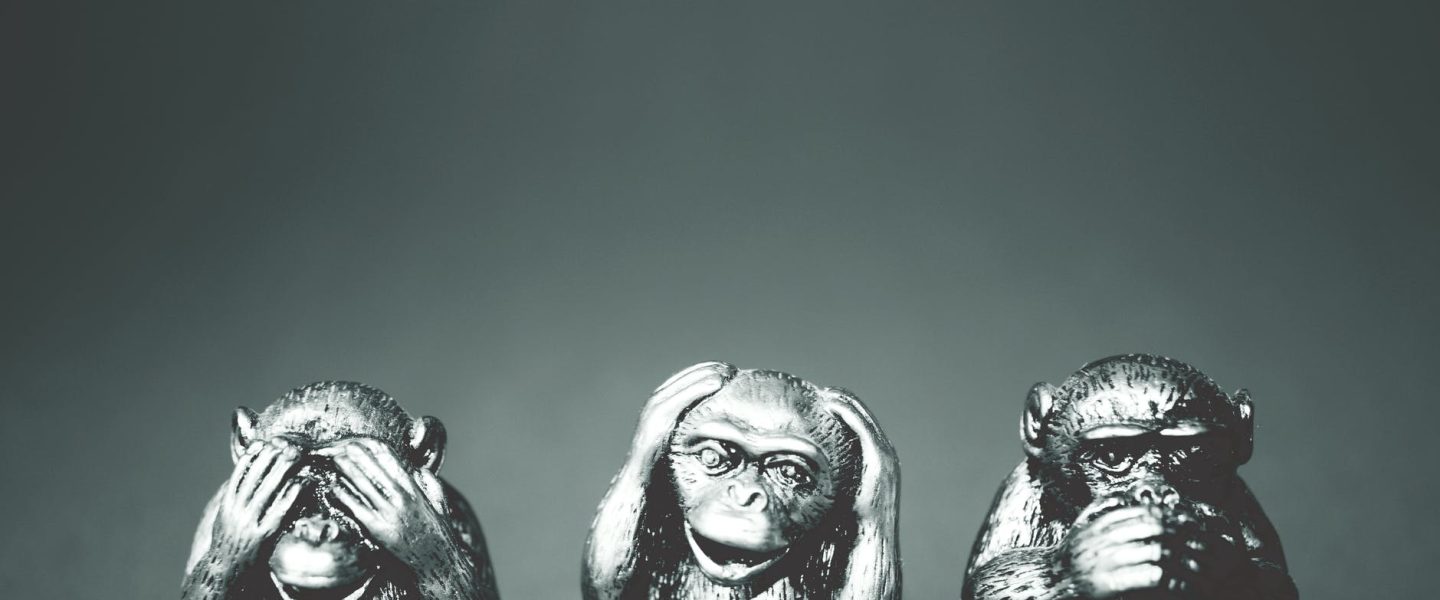
Why are our Indian journalists so lazy? They refurbish stuff from news agencies like Reuters, hold some debates, and consider their job done. After a year or two, they forget what they reported in the past and make contradictory claims. Most are not well informed. They stick to one viewpoint. In the process, their viewers, i.e., us, suffer as we do not get a well-rounded perspective of current events, only a biased one.
When will we get a journalist who actually wants to help us understand the complete picture? At the moment, we have to resort to using multiple news sources for left, right, and centrist views. We are in dire need of a journalist who is pro-India in the sense they do not conduct any irresponsible journalism through hatemongering that can affect the social fabric of the country. Someone who gives us a side-by-side comparison of the rightist and leftist viewpoints and lets us, the viewer, decide what is right and wrong instead of feeding it to us in the form of polarizing “opinions”?
It’s almost election time, and no journalist or news media outlet has yet come out with a detailed study on what the parties have done for each state and its districts over the past five years. Where are the pros and cons? How many items in manifestos have been fulfilled so far?
We have so many journalists in this country. Yet, no one has made a detailed, well-researched, balanced list of achievements and criticisms of the various parties in the country. We get to see only the plain ol’ (but easy) hatemongering. They leave it upon us to do the hurdlesome, yet important, research.
I wish Indian journalists spent less time on debates and more time studying and providing citizens with material to help us, the voters, understand the actual work done by our politicians. By that, I mean a balanced take. Not a biased communal one. A tabled list of all the infra projects, health care, education facilities, and other tangible developments in the country, along with promises that weren’t fulfilled.
In recent years, I’ve shifted towards reading more non-fiction books. I’m not entirely sure why. There was a time when I exclusively indulged in fiction, but maybe as one grows older, there’s a desire for substance over escapism.
Currently, my topic of interest is my own country, India. For 40 years, I was mostly indifferent and satisfied with my understanding of India’s history. However, over the past few years, I’ve developed a strong desire to learn more. I’ve become curious about the psyche of our people, especially those who had to endure several seasons of conflict and unrest. I wish to understand our country’s past. What did our people go through during centuries of colonial rule? How did it mold our perspectives? What were the hurdles we faced before and after independence? As a nation, we have experienced true freedom only since 1947, which is less than a century. Considering this relatively short period, what valuable lessons should we absorb from our recent history as we navigate the present? At any point in history, did we feel a sense of unity? I am seeking hints because the present does not seem to offer any positive answers.
History often repeats itself. By navigating the pages of Ambedkar’s book, you see glimpses of the present reflected in the past.
Some of his thought-provoking quotes include:
I measure the progress of a community by the degree of progress which women have achieved.
Cultivation of mind should be the ultimate aim of human existence.
History shows that where ethics and economics come in conflict, victory is always with economics. Vested interests have never been known to have willingly divested themselves unless there was sufficient force to compel them.
Religion must mainly be a matter of principles only. It cannot be a matter of rules. The moment it degenerates into rules, it ceases to be a religion, as it kills responsibility which is an essence of the true religious act.
I like the religion that teaches liberty, equality, and fraternity.
Law and order are the medicine of the body politic and when the body politic gets sick, medicine must be administered.
Life should be great rather than long.
Unlike a drop of water which loses its identity when it joins the ocean, man does not lose his being in the society in which he lives. Man’s life is independent. He is born not for the development of the society alone, but for the development of his self.
Dr. Ambedkar’s books offer numerous insights. I highly recommend Volume 8 to all Indians for a comprehensive analysis of the thoughts of Hindus and Muslims regarding the Partition of India. It deep-dives into arguments of each. Dr. Ambedkar fearlessly acknowledges and criticizes the cases from both communities while offering candid and constructive feedback. Ultimately, he leaves it up to you, the reader, to derive a conclusion.
For those interested in Dr. Ambedkar’s books, did you know that the MEA website allows you to download all volumes of his “Thoughts & Speeches” for free?
The Lok Sabha Election is around the corner. As with any other election, it is of prime importance that an Indian citizen makes informed decisions before casting their vote. By “informed decision,” I do not mean it should be based on what the media shows you. Or what your relative or friend tells you. It should be based on your own independent research. It is a prerequisite because almost every individual and media house is biased nowadays. They are responsible for spreading a particular narrative without looking at both sides.
We often look at a political party and vote. I believe voting for a party without considering their achievements and contributions could lead them to take us for a ride and get away with misusing our tax money. Instead, we should scrutinize performances. Real data. If we wish our country to prosper, we must be more vigilant and not blindly trust any political party, journalist, or media.
The most foolproof way to assess a party’s performance is by observing the changes in your immediate surroundings. Take a moment to observe—your neighborhood, people in your locality, infrastructure, law and order, and security. What aspects do you appreciate? What do you dislike? Who is responsible for this change that you like or dislike? The state or center? Consider creating a checklist. Form your opinion based on this checklist, not what a person from another district, state, or country tells you. If someone says the country isn’t peaceful because of selective news, but your own experience is positive, it’s best to rely on what you know firsthand to form a judgment. Because this is the most credible piece of news there is – it’s coming straight from your eyes.
Online research
During these times filled with agendas, it’s crucial to conduct independent online research. Google should be your best friend!
Keep in mind that most sources push specific narratives that suit their agenda, with left-leaning channels often criticizing the government and right-leaning ones rarely finding fault. If a source only focuses on one narrative, it’s likely biased. Avoid blindly trusting your favorite party, politician, or journalist. Instead, gather data from both left and right-leaning portals to get a more balanced picture. For this to effectively happen, you must keep your biases at bay.
I use Media Fact Check Bias to determine whether an online news portal is left or right-leaning. This information is helpful as it will give us a hint into what kind of bias to expect. The website also shows whether the portal is credible based on whether they have given proper credit, passed fact checks, etc.
An essential research doc to refer to is the RBI docs, such as the State Finances: A Study of Budgets of 2023-24. They provide insights into how your state government is managing your money. Look into their spending on infrastructure, education, research, wages, and salaries, how debt-ridden they are, etc. RBI is a neutral entity, so it’s the best place to get the most authentic information for your research. The doc also provides insightful information on how the states manage their funds.
To understand complex terms and sentences, AI chatbots like those found in Bing, ChatGPT, and Bard are a godsend. They simplify information, making it extremely helpful for research and learning. We’re fortunate to have these tools available to help us, making this an excellent time for conducting research and expanding our knowledge. Don’t know what “Revenue Deficit” is? Go on and ask a chatbot, “What is Revenue Deficit? Explain in simple language,” and watch the magic unfold.
What should I add to my checklist?
Here are some items to add to your checklist. Your answers, I repeat, should be based on your own personal experiences and individual research, not someone else’s.
Improvements in your locality
Do you see improvements in your locality?
If yes, who is responsible? The center or state?
Note down each improvement on an Excel sheet. Google to find out who is responsible for the achievement.
I recently did this for my state (Kerala). I was surprised that many developments were not due to my state government.
I wish journalists or media provided this information, but unfortunately, you won’t find a single website with all the details. You’ll have to gather the information yourself.
2019 manifesto
Have you looked into the current government’s 2019 manifesto? Have they fulfilled all their promises? Research and find out. Even if you do not like the party, you should keep your biases aside and look into the data. If you are too tired to look into it, I recommend Think School’s YouTube video. It is a balanced “BJP Report Card” that looks into each item in the manifesto and provides results based on facts.
Safety and security
Is your locality mostly peaceful? Do you feel safe and secure?
How are extremist groups (across all religions/political affiliations) dealt with in your state?
Would you consider your leaders (state and center) as terror sympathizers? Are they strong enough to proactively take action against terrorists?
A diverse country like India cannot be harmonious 365 days a year. Conflicts may arise from time to time, which is normal. The media often exaggerates, making every issue seem urgent.
However, the external and internal security of the country should not be ignored or taken lightly by any government or citizen. In today’s world, safety and security are paramount for every country, given the increasing threat of extremism globally. A capable leader must possess the strength and determination to proactively address such challenges.
Communal politics?
Now, this is tricky. India has always been polarized. Religion is what tore India and Pakistan apart. Communal conflicts have been a part of our history, often at a higher intensity than what we observe today. It would be naive to consider polarization as a recent development. The rise of social media over the past decade has simply made us more aware of these issues.
Politicians have played us like puppets since time immemorial by using religion as a string for votes. It is a tool that politicians can easily use to manipulate us. Therefore, I think voters shouldn’t give them that power. We should look at the broader picture and put the political parties to the test based on their achievements, not the petty politics they play.
Personally, I prefer not to look into the communal angle because I have seen both the left and right trying to agitate people in the name of religion. In India, the right is considered pro-Hindu, whereas the left is considered pro-Muslim, and they select and spread news according to that bias. This, in my opinion, creates more polarization. As long as religion exists in India, communalism will exist. When we cease to give it importance, the politicians will stop playing this game.
Conclusion
The checkpoints listed above are my personal guidelines. When each of us works on a checklist that reflects our country’s priorities, we empower ourselves to make informed decisions, ultimately contributing to a brighter future for India. As individuals sharing the same homeland, it’s incumbent upon us to support our nation’s prosperity by voting for strong leaders who align with its progress.
Let’s work together for a better future. Jai Hind!
I have been increasingly questioning my biases lately.
Social Media Bias
How my opinions are largely formed by what the media is showing me. Sometimes, never bothering to look at the “other side.” A kind of blind faith that the news portals will show me only the truth and nothing but the absolute truth.
This belief was shaken up quite a bit when I understood that a lot of times, the media chooses to pick a side and highlight only that part of the story. We never get to know why “the other side” acted the way they did, said the things they did. It is well hidden. We never get to know the full picture. There are times I have made that extra effort to know more.. and have been amazed at how well the media hides bits and pieces of relevant information. The kind of information that wouldn’t have agitated the people so much if it were to be revealed alongside the flustering headline (or at least at the top of the news article). Add to that the social media’s personal opinions, which again, most often than not, do not give the complete picture.
With all this excessive one-sided information, a person who used to feel concerned about the issue in a healthy way before is left extremely agitated, angry and restless in a matter of minutes. The issue won’t leave your head. It stays with you when you sleep, it is the first thing you think of when you wake up. You snap at the drop of a hat, refusing to see any other angles. This keeps happening each time a new issue pops up. Imagine the stress your body has to go through, taking the world’s collective burden on your shoulders. In short, it just messes up your mental health.
I have had to log out of my social media accounts multiple times in the last one year just to calm myself down and to dissociate from all the noise. During such moments I often think, is social media a boon or a bane?
Information Bias
A large number of social media influencers (the ones who review movies) are largely influenced by critics and the media. If the critics say it is a good movie, they will say it is a good movie. If the critics thrash a movie, they will say it is the worst movie of the decade. I was so caught up in this information bias, that I was afraid of saying that I liked a movie that the majority hated. I was also afraid of saying I did not enjoy a movie that the majority liked. Because then, the movie shaming begins. Your taste in movies is questioned.
It is the case with almost anything, not just movies. If the general review of a product is positive or negative, you are expected to have the exact same view. Herd mentality in such cases is encouraged. If you step out of the box, you are questioned.
That was until I got out of that zone and said to myself “You know, I laughed watching this movie. It is funny. It worked for me. Why should I ashamed of something that kept me entertained throughout?” I started being open about liking the movies I really liked (even if they weren’t critically acclaimed) and not liking the movies that I truly did not (even if they were liked by the majority). I was being true to myself and that felt good.
I realized there were more people like me out there, shying away from voicing their true likes/dislikes, when I started getting messages (in private) that they liked/hated the same thing too.
Halo Effect
When you admire a person (it could also be a celebrity, politician or government), you tend to believe that everything the person does is justified – whether good or evil. We refuse to believe they are human after all – prone to mistakes. We forgive and forget. This is a bias I am trying to overcome as well. Trying consciously to notice and acknowledge those errors even if I like the entity very much. To hold them accountable if feelings were hurt, and not to give them the status of a superior being who is incapable of mistakes.
I have been reading up on biases and media bias is something that struck me the most. When you seek more information about something, weirdly enough, you start noticing these little things that you used to ignore before. You become aware of the biases that are now part and parcel of your daily life.
It is a scary thought to reflect on, that you can be manipulated into believing something that is constantly thrown in your face, as if there is no other truth.
Truth be told, every single “no” was painful to hear.
Circumstances force us to dislike even the humane, the innocents, people who have nothing to do with the terror attacks. It becomes difficult to separate a person from his religious identity.
In the videos, it doesn’t seem to matter if the invited person is of good character. An invite is extended based on religion alone, on a generalization that “If one person of a community is like this, then all of them might be similar.”
I couldn’t help placing myself in such a situation – someone denying me an invite looking at my race, color, religion, caste and the actions taken by a group. It wouldn’t matter if I had raised my voice for the oppressed. At that moment, it only matters whether I am from “the other side”
It is not just restricted to Israel-Palestine, you can find similar cases world over.
The suspicions can’t be blamed either because time and again people have breached that trust. Suspicion is a natural form of self-defence. Better be safe than sorry. Yet mistrust can feel heavy when you are not personally to blame.
I pray for a world, where a person is judged by their own character, on humanity alone, and not from some unfair blanket generalization, even if such a hope seems far-fetched at the moment.
You must be logged in to post a comment.