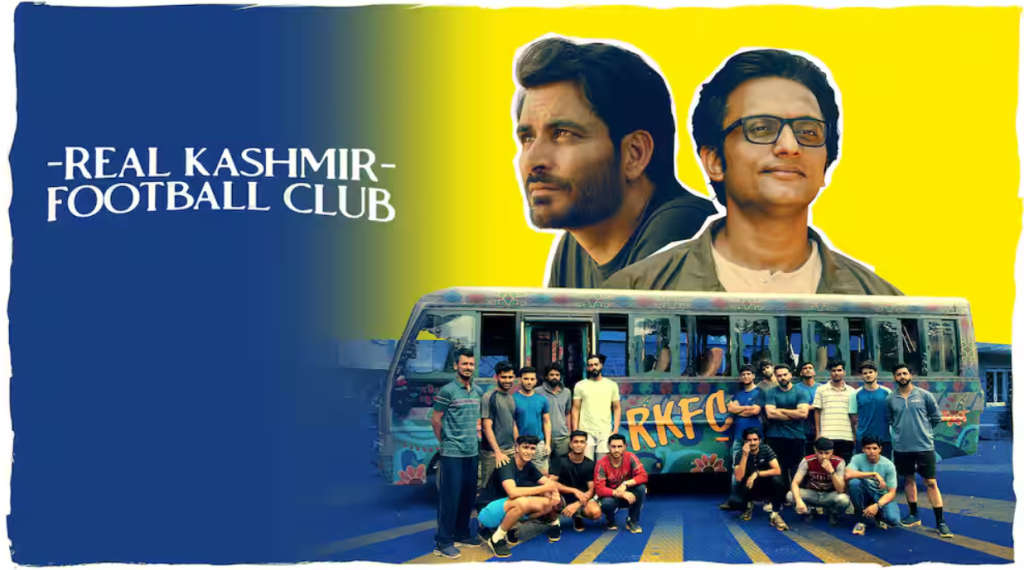
I wanted to watch the Real Kashmir Football Club series on Sony Liv the moment the teaser dropped. It felt positive and full of hope. The story promised a future built on progress, peace, and development through football. That feeling stayed with me through the series. I was not disappointed.
Real-Life Inspiration
While most stories about Kashmir focus on pain and instability, this one chooses a different path. It highlights the positive side of the region in a quiet, honest way. The story is not entirely fictional. It is inspired by a real football club in Kashmir, started by a Kashmiri Hindu and a Muslim.
To quote Wikipedia:
Real Kashmir Football Club is an Indian professional football club based in Srinagar, Jammu and Kashmir. Incorporated in 2016, the club currently competes in I-League, the second tier of the Indian football league system. Real Kashmir with its reserve side also participates in the Jammu & Kashmir Premier Football League regionally.
Nicknamed “Sheeni Seh” (transl. Snow Leopards), Real Kashmir is the first club from Jammu and Kashmir to earn promotion in any top flight football league of the country. They also won the IFA Shield title in 2022. Club’s futsal section has been competing in the state league, as well as AIFF Futsal Club Championship, the highest division in the country.
The origin of Real Kashmir FC date to 2014 after devastating floods swept through the region causing massive loss of life and property. To keep the youth, who had lost much during the floods—engaged, Shamim Meraj, editor of a local newspaper named “Kashmir Monitor”, and Sandeep Chattoo, a local businessman, came together to arrange footballers.
What began as a community outreach programme garnered support from the local populace and it soon started evolving into something more. Real Kashmir FC as a club, formalised in 2016, and affiliated with Jammu & Kashmir Football Association (JKFA) under the tireless efforts by Chattoo. Founded in 2016, Real Kashmir FC emerged as the first ever top flight professional football club in Jammu and Kashmir.
Back to the Series…
The goal of the series is simple and meaningful. It is all about guiding the youth toward something productive through football.
The star of the show is Mohd Zeeshan Ayub, who plays the Muslim founder. He delivers a strong performance, his expressions changing effortlessly as the situation shifts. He’s a natural and perfectly suited for the role of the calm, steady, and rarely perturbed founder. Manav Kaul, meanwhile, plays the Kashmiri Hindu founder who’s quiet yet exhibits all the traits of an effective entrepreneur. He has a vision, and he wants it achieved. Together, they form the heart of the series.
Beyond the two main characters, Abhishant Rana stands out as the Kashmiri youngster searching for direction. His character is mischievous and witty, but he’s also a youngster without goals. Watching him find hope just when his life could have taken a darker turn was heartwarming.
I would easily call it a must-watch series. It is uplifting, relevant, and rooted in reality. The story leaves you with a sense of calm and optimism. It is a good watch for anyone looking for a positive story set in Kashmir.
If you enjoy meaningful sports dramas, this one fits well. The series is currently streaming on Sony Liv.
Personal observation: In almost every war, there’s always someone who doesn’t want it to end.
In the India–Pakistan war, many in India didn’t want the fighting to stop because they felt Pakistan hadn’t learned its lesson yet. Some even wanted the government to reclaim PoK (Pakistan-occupied Kashmir) during this time (which I strongly oppose).
When Israel attacked Iran’s nuclear sites, many anti-regime Iranians wanted the war to continue because they hoped the regime would fall.
The Israel–Gaza conflict is even more unusual. Many who kept calling for a ceasefire suddenly went quiet or were openly against it when finally announced. Maybe they had expected Israel to be driven out and a new Palestinian state to rise “from the river to the sea.” But that idea is unrealistic and only calls for more violence. Just like India will never give up Kashmir, Israel will never give up its land. Both countries get a lot of criticism for putting their own interests first. But, over the years, Jews and Indians have learned an important lesson: if they want their interests protected, they can’t rely on anyone else. When Indians get murdered in America, there’s next to no backlash. It’s the same case with Jews. History is also proof that when Hindus face persecution or genocide (Kashmiri Pandits, Sandeshkhali, Bangladeshi, and Pakistani Hindus), the world stays silent. In a world shaped by selective activism, these two communities have gradually learned to shed their passivity and docile nature, standing up for themselves without guilt. Indians, in my view, are still learning. Our tendency to stay silent runs deep. But since 2014, that’s starting to change, much to the annoyance of some. Apparently, a “good” Indian is still largely expected to be a silent one in the face of persecution and bigotry.
Anyway, the point is that in any war, there’s always duality. Those who push for the conflict to continue aren’t always on the “far-right.” Sometimes, they are far-left or far-right figures from other communities, disguised as leftist liberals. Take, for example, the India-Pakistan war. Many leftists in India wanted it to end and for peace to prevail. Yet recently, some of those same voices wanted Hamas to reject the peace deal, even at the cost of many lives.
I’ve often felt that the far-left and far-right are just two sides of the same coin. The recent wars and reactions to them over the years only validate this claim.
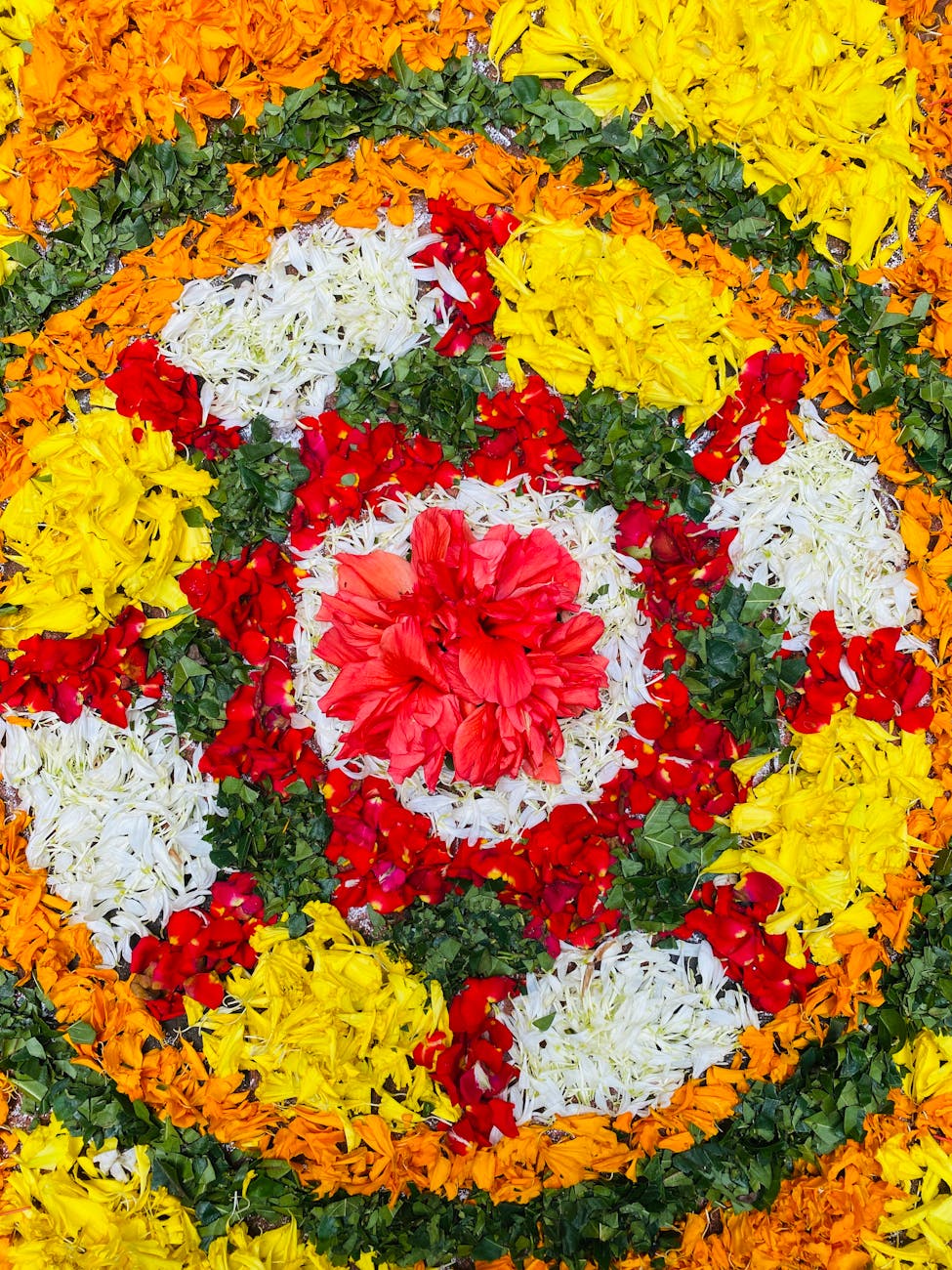
After celebrating Onam and engaging in numerous social activities, my introvert battery hit rock bottom. I needed a desperate recharge. So what do I do? Naturally, I retreated to every introvert’s most favourite new-gen comfort zone: scrolling endless Instagram reels. Nothing says “I’ve had enough of people” quite like being a couch potato, locked up in your house, while going through everyone else’s social lives.
As I scrolled through the multiple Onam-related posts, I couldn’t help but appreciate the inclusivity in Kerala. Malayalees across religions, whether they are Hindus, Christians, or Muslims, celebrated Onam with equal enthusiasm. Everyone welcomed Mahabali with open arms. A few voices did try to stop their communities, saying Onam is a “Hindu festival,” but not many paid attention. That’s a good sign. People are choosing to step out of religious bubbles to celebrate together.
Still, Kerala, often praised as a secular state, has been showing sporadic worrying signs of exclusion. Just before Onam, a teacher told students not to participate in the festival because “our religion doesn’t allow it.” The outrage led to her suspension, but this mindset isn’t limited to one person. How widespread is the thought? No one can quantify. It’s impossible to analyze each and every Indian’s thought. However, there is an increasing number of cases that advocate for exclusionary behaviour. You are penalized for celebrating other festivals, or for respecting someone else’s god, or for chanting something as simple as “Bharat Mata ki Jai.”
India guarantees freedom of religion for all communities. But if we use that freedom only to exclude ourselves from others, we risk creating deeper divides. True communal harmony comes from participation: joining in festivals, enjoying each other’s food, and refusing to see other faiths as “untouchable.”
For India to stay secular, this effort has to come from all of us. We’ve come far since independence, but there’s still a long way to go. It’s up to us to ensure religion doesn’t become a wall, but a bridge.
Even if India agrees to peace talks with Pakistan, who exactly are we supposed to talk to?
The Pakistan Army? The army chief, Asim Munir, has called Kashmir their “jugular vein” – they aren’t letting go. He raked up anti-Hindu, anti-India sentiments before the Pahalgam attacks. He stated, “Our forefathers believed that we were different from Hindus in every possible aspect of life,” and urged parents to instill this bigoted narrative in their children to preserve Pakistan’s identity.
The Pakistani Prime Minister? Just a puppet with no real power over the military. Funerals of designated Lashkar-e-Taiba (LeT) terrorists have been attended by members of the Pakistani Army, further reinforcing allegations of state complicity. Such actions raise serious concerns about the Pakistan government’s commitment to counterterrorism, especially when these individuals are recognized as terrorists by the international community.
Pakistani celebrities? They won’t even whisper a word against state-backed terrorism. They rarely acknowledge well-documented facts, such as Osama bin Laden having found safe haven within Pakistan’s borders. They speak about “having a voice” in Pakistan. Yet, none have dared to criticize Asim Munir for his communal, anti-Hindu remarks, despite knowing that Hindus are living within their own country as well.
The civilians? The majority views India as the villain and often denies the existence of terrorists within their own borders. This raises an important question: Do they not consider figures like Osama bin Laden, Hafiz Saeed, and Masood Azhar as terrorists? Are they seen merely as ordinary civilians? When they refer to “terrorists,” is it only groups like the Balochistan Liberation Army (BLA) and other factions causing unrest within Pakistan that they have in mind?
So really. Whom should we sit across the table with to discuss peace? There are no viable options.
Attacks Initiated by Pakistan
In all the following attacks initiated by Pakistan, India has demonstrated extreme restraint:
Attack
Year
Fatalities
Bombay Blasts
1993
257
Lajpat Nagar Blast
1996
13
J&K Assembly Blast
2001
38
Parliament Attack
2001
9
Raghunath Temple Attack
2002
12
Kurnool Train Crash
2002
20
Akshardham Attack
2002
33
Mumbai Bombings
2003
52
Delhi Blasts
2005
62
Varanasi Blasts
2006
28
Mumbai Train Blasts
2006
189
Samjhauta Express Blast
2007
68
Hyderabad Blasts
2007
42
Jaipur Blasts
2008
63
Ahmedabad Blasts
2008
56
Mumbai Attacks (26/11)
2008
166
Patna Bombings
2013
6
Pathankot Attack
2016
7
Uri Attack
2016
19
Pulwama Attack
2019
40
Pahalgam Attack
2025
26
India’s restraint in the face of repeated cross-border terrorism is often seen by Pakistan as a weakness. The ongoing attacks have led many Indians to believe that simply maintaining the status quo won’t bring lasting peace.
India’s Efforts Towards Peace Have Gone Unnoticed
India has made several efforts in the past to reach out and promote peace. We have celebrated Pakistani singers, actors, cricketers, and artists, and defended them when the Indian government initiated a ban against them.
Nusrat Fateh Ali Khan was revered, even after singing a controversial song with the line “Muslims should not allow kafirs (non-Muslims) in their homes.” Mahira Khan and Hania Aamir were regulars in Bollywood fashion pages, and Indian women admired Fawad Khan.
Yet, none of these figures had the courage to denounce the terror networks in their own backyard or question Asim Munir’s communal statements.
We extended every olive branch, but it was met with betrayal, silence, and violence. It’s time to stop romanticizing those who wear a false pro-India mask while harboring hatred.
Pakistan’s Blatant Radicalism
In the current war, the Indian Army has focused on precision strikes targeting terrorist camps and military assets, with considerable efforts to avoid civilian harm. The death of any innocent civilians in terrorist camps is deeply unfortunate, but could have been avoided by Pakistan. Why were civilians present in known terrorist camps? Were they placed there deliberately to attract international sympathy and deflect blame?
In contrast, Pakistan’s use of drones in civilian zones has drawn comparisons to Hamas-style tactics against Israel. If not for the advanced air defence systems in both India and Israel, the death toll could have been far higher.
Pakistan has often revealed its radical side openly. To cite a few examples:
In a recent interview with Sky News journalist Yalda Hakim, Pakistan’s Defence Minister Khawaja Asif acknowledged his country’s historical support for terrorist organizations. He stated, “We have been doing this dirty work for the United States for about three decades… and the West, including Britain.”
Khawaja Asif, while addressing a session of the Pakistan National Assembly, said that students in madrassas will serve as the country’s second line of defence in wars, when needed, implying they are disposable.
The former director general of the ISI, Asad Durrani, in an Al Jazeera interview, said the death of 150 APS Peshawar school children was “collateral damage” in pursuit of “broader” national interests.
Mubasher Lucman, founder of the Pakistani television network ARY Digital, during a podcast with journalist Naseem Hanif, stated that if Pakistan were to win a war against India, he would want to claim Indian movie actresses as maal-e-ghanimat—a term historically referring to war spoils, including enslaved women (sex slaves).
During a protest outside the Pakistan High Commission in London on April 25, 2025, following the Pahalgam terrorist attack in Jammu and Kashmir, Colonel Taimur Rahat, Pakistan’s Army and Air Advisor in the UK, made a provocative throat-slitting gesture towards Indian demonstrators. This is perhaps the first time a diplomat of any country has made such a shocking and radical gesture in public. The act not only defies diplomatic conduct but also reflects a deeply irresponsible and provocative mindset, especially in the context of a civilian tragedy.
Former Pakistani cricketer Danish Kaneria, one of the few Hindus to represent Pakistan at the international level, publicly accused former teammate Shahid Afridi of discriminatory behavior during their time together on the national team. Kaneria alleged that Afridi repeatedly pressured him to convert to Islam and excluded him from team activities, including meals.
Shahid Afridi’s cousin, Shaquib Afridi, was a commander of the Islamist terrorist group Harkat-ul-Ansar. He was killed by Indian security forces in Anantnag, Jammu and Kashmir, in 2003. Reports indicate that Shaquib had been active in the region for approximately two years prior to his death.
In an undated video that surfaced online, former Pakistani cricketer Shoaib Akhtar discussed the Islamic prophecy of Ghazwa-e-Hind, which refers to a prophesied battle for the Islamic conquest of India. In the video, Akhtar stated: “Ghazwa-e-Hind is mentioned in our sacred books. We will first capture Kashmir and then invade India from all sides for Ghazwa-e-Hind.“
Pakistani actor Hamza Ali Abbasi has publicly expressed support for Hafiz Saeed, the founder of Lashkar-e-Taiba and the alleged mastermind behind the 2008 Mumbai terror attacks.
In a televised discussion, Waqar Younis praised Pakistani cricketer Mohammad Rizwan for offering Namaz during a match, emphasizing it was done “in front of Hindus,” which he found particularly satisfying.
Zaid Hamid, a Pakistani political commentator, propagated conspiracy theories, claiming that the 2008 Mumbai attacks were orchestrated by “Hindu Zionists.” He has also stated that India will be “trounced and enslaved according to Sharia if Hindus don’t repent and embrace Islam.“
The videos and news articles for each controversy listed above are available online.
If Pakistani diplomats, politicians, cricketers, and celebrities act this way and are left largely uncriticized, what hope do you have from ordinary civilians?
The “Jugular Vein”: Kashmir
Pakistanis and the international community often focus on the “oppression of Kashmiri Muslims” and the call to “free Kashmir,” but they conveniently overlook the genocide of Kashmiri Hindus, a community forcibly displaced from their ancestral land. They are yet to return out of fear.
The genocide of Kashmiri Hindus (whitewashed as an “exodus”) is a tragic chapter in the region’s history. They, as the indigenous people of the land, have every right to return to their homes. Many Kashmiri Muslims are ready to welcome them back, acknowledging the need for healing and reconciliation. However, Pakistani-backed terrorists continue to block this process, instigating violence and creating an atmosphere of fear every time Kashmiri Hindus attempt to settle in Kashmir.
The narrative of “freedom” for Kashmir remains incomplete without acknowledging the rights and voices of the Kashmiri Hindu community. As the original inhabitants of the region, their cultural and historical ties to Kashmir that span thousands of years. Any move to integrate Kashmir into Pakistan would only deepen their marginalization. History bears witness: the Hindu population in Pakistan has sharply declined due to forced conversions, persecution, displacement, and violence. These facts raise serious concerns about the future of Kashmiri Hindus under such a scenario. To safeguard their identity, rights, and survival, it is vital that Kashmir remains an integral part of India.
It is time the international community recognizes this truth and supports the return of Kashmiri Hindus to their land, allowing for genuine reconciliation and the restoration of peace. Until this happens, international human rights activists should shift their focus to the “Free Balochistan” and “Free Iran from Islamic Regime” campaigns. Currently, they are more oppressed than Kashmiris, and their plight requires global attention.
UN Resolution
The United Nations (UN) has addressed the issue of Kashmir through Resolution 47, passed in 1948. The resolution emphasizes the right of the Kashmiri people to self-determination. It proposes that a plebiscite should be held to allow the people of Jammu and Kashmir to decide whether they wish to join India, Pakistan, or remain independent.
However, this resolution also includes conditions for the plebiscite, the most important being the withdrawal of “all Pakistani nationals” and “tribal forces” from the region to create a neutral environment for a fair vote. This is the first requirement in Resolution 47 that needs to be met. However, it does not get stressed enough.
The presence of Pakistani-backed terrorists in the region complicates the situation and directly contradicts the conditions of the UN resolution. Until Pakistan withdraws these forces and halts its support for terrorism, the possibility of implementing the UN resolution’s provisions remains unfulfilled.
I have covered this information in detail in a separate Kashmir Plebiscite blog post.
War or Peace?
Every past peace talk with Pakistan has failed. Not once, but multiple times.
Should India keep repeating the same cycle just to comfort a few people’s idealism? At what cost? More lives, more betrayal, and more denial?
I’m not advocating for war. But let’s be clear. Peace isn’t possible with a neighbour who constantly thirsts for our blood.
In such times, I choose to trust our Indian leaders, intelligence, and armed forces to make the best call for protecting the nation, not some random social media activist who would sell their soul for money.
If my country wants to teach the neighbour a lesson, I would support it. If it says it’s going to withdraw, I would support that too. In other words, the country comes above everything else. Jai Hind.
There was a time when I used to hear “Hindu khatre mein hain” (translation: “Hindus are in danger“) quite often in India. Now, I hear it from other communities – that they are in trouble.
Most of our fears stem from what the media selectively shows us. They put sensationalist headlines, which can scare even the most courageous. However, if you do more research, you realize there is always another side to the story.
Just now, I read a post on social media that minorities are in trouble. A line read, “Time to pack our bags and leave.” Most of us might not have faced any discrimination ourselves, but we will still choose to believe a piece of news we cannot personally verify. Unfortunately, the media is not the best place to get reliable news from nowadays. Everyone is so biased that you cannot know the actual truth unless you’re on the ground to witness everything with your own eyes.
Media often leaves the “before” and “after,” so we cannot always trust it to show the complete picture. Instead of blindly believing every negative news we are subjected to, our default emotion should be skepticism – “Are you telling the truth? Or do you have an agenda?” How do you know if they have an agenda? It is easy. Someone exclusively blaming the left or right, without ever mentioning their plus points, can be considered unreliable. They could be too brainwashed to look at the positives, not the type of people you should be getting the complete picture from.
Please note almost every news platform (and journalist) has an agenda nowadays. They consistently choose the negative news to highlight and then try to manipulate the information in such a way that you end up believing there is no other side to the story.
Election time is nearing. The left will try to project the right as communal, and the right will accuse the left of caste-based divisive politics. It’s up to us, the citizens, to be wary of hatemongering and fearmongering. If we have to choose between fear and peace, choose peace. If we have to pick between empathy or anger, choose empathy. This can only happen if we consider each other as a part of one big family – India – and not as separate entities.
No political party should be allowed to divide us on the basis of religion, caste, region, and other factors. Our aim should be to work towards the development of the country. This can only happen if we are empathetic to each other. We should be strictly against any extremist entities that can disrupt the peace and harmony of our nation and be careful not to spread more hatred or fear.
If we hate a party, we can show our disagreement using the most powerful tool in our possession – our votes. We can also take the legal route. However, resorting to fearmongering online can polarize us further. This is one of the several banes of a world increasingly becoming digital. We are becoming more informed, more than required sometimes, and also becoming increasingly polarized.
Once we accept the fact that “we are one,” political parties and media will stop playing such hatemongering politics. They will realize that every attempt to divide us will only end in failure. We should reach that point one day. For that to happen, a collective, conscious effort toward peace and harmony is needed.
When will we start looking at each other, not as left or right wing, but as Indians again? We lost ourselves somewhere along the way and fell into the muck head-first that political parties and fanatics laid out for us. They wanted to divide us on the basis of religion and politics. We can safely say now that they have succeeded.
We are more divided than ever before. We look at each other as villains, not citizens of the same soil.
Can we go back to the stage where we all felt like one? Did that phase ever exist? We were probably always this polarized, but the lack of social media helped cover it up.
I have only one dream – that we put our country first, above everything, including religion, caste, ideologies, political leanings, etc. It’s a huge ask. It’s definitely more challenging than spreading hatred. However, it is the need of the hour so our country can progress further.
For India to develop, we should work together. Politicians will not do it, so it’s up to us, the civilians, to make the effort. I hope to see India as a developed and prosperous country before I bid goodbye to this world. One can dream for one’s country, no matter how improbable. However, such dreams can materialize only if we come together as one, forgetting our differences and working towards the common goal, with nothing else to distract us.
When someone tries to separate us, we should look at each other with empathy and understanding. Instead of harboring a victim mentality, we should grow together. We should think, will the country prosper from our hatred and animosity? Is enmity worth it in the long run?
Elections are coming soon. We can expect more divisive politics. Be mindful of the games people play.
Judge not on the basis of what social media algorithms propagate or even what the newspapers or journalists report. Everyone seems biased at the moment. Judge on the basis of your own quality of life, personal experiences, and surroundings. Judge on the basis of your own contributions to the country – did you help in any way? Even maintaining peace and decorum during heights of conflict is a worthy contribution.
Truth be told, there were times I wished there was a law that banned religion-based talks on social media and news channels. If we stopped talking about religion, if we considered each other as humans first, there would undoubtedly be more empathy. But political parties thrive on identity politics. They can win only if religion is mentioned. So, a ban is out of the question. This is true for all major parties in India: BJP (considered pro-Hindu) and Congress (considered pro-Muslim). Everyone has a game to play based on religion, and we foolishly fall for it, fostering hate for one another.
When a religion or caste is constantly criticized, people affiliated with that religion or caste become more polarized. It’s the sad truth of life. Things don’t dramatically reform. It takes understanding, empathy, and kindness to one another to bring about change. Hate, abuse, and shaming do nothing other than deteriorate matters further.
Since childhood, we have been made to recite, “All Indians are our brothers and sisters,” and we have never questioned those words. I hope we return to that state someday, where we can see each other as one, part of the same soil.



 The Monkey Dilemma
You must be logged in to post a comment.