

It’s Okay to Not Be Okay: Moon Gang-tae Has Officially Ruined Men for Women Everywhere

It's Okay to Not Be Okay Poster

I kept delaying watching It’s Okay to Not Be Okay because I have a bit of an aversion to hospital dramas. Several friends had recommended this popular Korean drama to me, but I kept putting it off. I was judging the series by its title, and honestly, I wasn’t in the mood for what I assumed would be an intense emotional rollercoaster.

I finally took the plunge a couple of weeks ago.

It took me some time to finish the series because each episode runs for over an hour, and there are 16 episodes in total. I am also not much of a binge-watcher, especially when a series deals with serious or emotionally heavy topics. So yes, completing It’s Okay to Not Be Okay took me a while.

But the time I took to finish it doesn’t take away from the fact that It’s Okay to Not Be Okay is an entertaining, thoughtful and beautifully layered K-drama.

Let’s talk about the male lead first.

Moon Gang-tae, played by the enigmatic Kim Soo-hyun, is such a major green flag that he might just make pursuing relationships in the real world a tad more difficult for women. Because honestly, who can even compete with this kind of surreal charm, patience and thoughtfulness?

He is calm, sorted, emotionally aware and dependable. He is the person you would want beside you when things get difficult. He handles uncomfortable situations with a level of maturity and emotional intelligence that makes you think, “Yes, this is exactly how my partner should behave.”

Basically, Moon Gang-tae is the ultimate go-to guy.

Go Moon-young, played by Seo Yea-ji, is completely different.

She is volatile, unpredictable and unapologetically herself. But beneath all that intensity, she also shows moments of compassion when the situation calls for it. She has a magnetic personality. What makes her even more interesting is that she knows exactly how powerful her presence can be and the effect she has on people.

She is not the easiest character to understand, but she is definitely difficult to ignore.

For me, though, the real star of It’s Okay to Not Be Okay was Oh Jung-se. He plays Moon Sang-tae, the autistic older brother of the male lead, and his performance was so convincing that there were moments when I genuinely wondered whether he was autistic in real life. Yes, I actually Googled him. That, in itself, says a lot about how convincing his portrayal was.

His performance was heartfelt, nuanced and incredibly believable. In my opinion, he absolutely deserved every award and recognition that came his way for this role.

At its core, It’s Okay to Not Be Okay is a serious drama that explores mental well-being, emotional healing, trauma, relationships and the process of learning to accept oneself.

But despite its heavier subjects, the series doesn’t feel emotionally exhausting all the time. I enjoyed the little moments of humour scattered throughout the episodes. They provide some much-needed lightness and make the story feel more balanced.

And the BTS scenes towards the end were absolutely adorable. Seeing the camaraderie between the cast members behind the scenes was a lovely bonus after spending so much time with these characters.

Overall, I found It’s Okay to Not Be Okay to be an entertaining and thoughtful Korean drama. It took me a while to finish, but by the end of it, I was glad I finally gave this much-recommended series a chance.

It’s Okay to Not Be Okay is currently streaming on Netflix.
Netflix Thriller Spotlight: Wayward

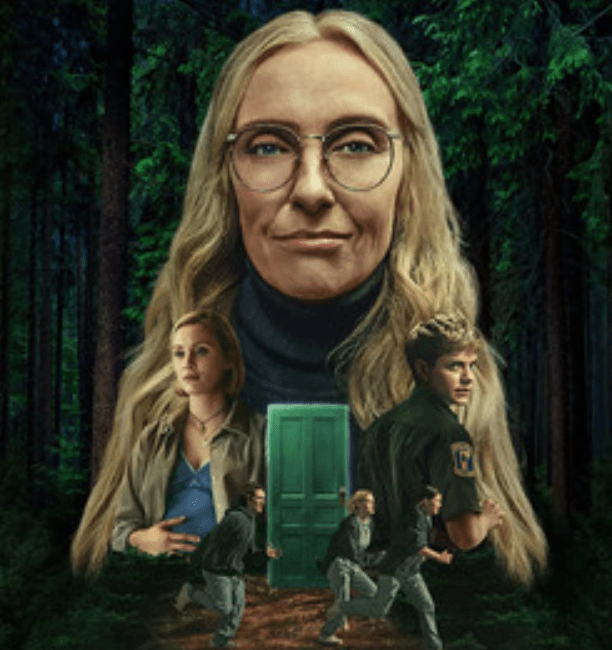
Wayward Netflix Poster

Do you ever pick a series solely based on its synopsis? That’s exactly how I do it. I tend to avoid Netflix teasers and trailers as they are way too detailed, giving away too much, and ruining the element of surprise for me. I prefer diving straight into a story with minimal hints, letting the plot unfold organically. It keeps the narrative fresh and exciting. This could also be because I prefer reading over visuals.

That’s how I ended up choosing Wayward. Just a quick read of the synopsis (which felt interesting), and I was in.

What’s It About?

Wayward is set in a school called Tall Pines. It looks like a regular school at first (just kidding!). But trust me, you’d never want your kid saying their school is anything like this one. It’s an academy where parents send troubled, rebellious teens hoping they’ll be “fixed.” But beneath the surface, something darker seems to be going on. There’s a creepy, almost sinister vibe that makes you question what’s really happening behind those closed doors.

Thoughts

I really enjoyed Wayward. Normally, I take ages to finish a series. Not because I’m swamped with work, but because my attention span has been wrecked by endless Instagram reel scrolling. I just can’t deal with shows that drag on forever. And let’s be honest, a lot of series tend to do exactly that. One-hour episodes stuffed with fillers that barely move the story forward.

But Wayward was refreshingly different. Just 8 episodes, and not once did I feel the urge to check my phone or zone out. I also have a soft spot for women-led storylines, so that probably helped keep me hooked.

The rebellious best friends were a bit much for someone like me. I’m naturally more disciplined. But aside from their chaotic energy, nothing really irked my nerves.

The acting was top-notch. Mae Martin as Alex, the transgender young police officer, and Toni Collette as Evelyn, the head teacher of Tall Pines academy, were perfect in their respective roles. The most layered character, I felt, was that of Laura, played by Sarah Gadon. Alyvia Alyn Lind and Sydney Topliffe as Leila and Abbie were convincing as the troubled teens. The ending could’ve been stronger, sure, but I’m not complaining.

Wayward is streaming on Netflix, with each episode running for about 45 minutes.

Netflix Thriller Review: Dept. Q

Dept Q Netflix Series Image

I came across a review of Dept. Q on Instagram Reels, which is how it ended up on my watchlist. Honestly, before watching, I was doubtful whether I would finish it. Lately, many “thriller” series have failed to truly thrill me. But I’m glad I gave this one a chance and stuck with it.

What’s It About?

An arrogant detective, Carl Morck, returns to work after being injured in a shooting and is assigned to a new department in a dingy basement to investigate unsolved cases. He is soon joined by Akram, a former Syrian policeman now working as a civilian employee, and Rose, a young and spirited constable. Akram ends up selecting a case for Carl to pursue, one involving the sudden disappearance of a lawyer after she is assaulted by her non-verbal brother on a ferry.

Thoughts

Even though the series drags at times, I found myself wanting to know what happens next. This curiosity kept me watching. My rule of thumb for thrillers is simple: Am I interested in finding out the truth? If yes, I continue. If no, I skip. This series made me stay. I genuinely wanted to know what happened. The final episode was the standout of the season, stirring a range of emotions in me: anger, fear, thrill, affection, and warmth.

The performances were strong across the board, but my favourite character was Akram, played by Alexej Manvelov, a mature presence, always in control, in contrast to the more unruly Carl Morck.

I would recommend Dept. Q. It’s streaming on Netflix, with a total of 9 episodes, each roughly an hour long.