
Relationships have never been a smooth sail for me. The kind of love glorified in movies and online platforms always felt like a distant dream. Agreed that cinema and social media do not always portray the complete picture. Yet, I envy people with uncomplicated relationships – they meet, like each other, and live happily ever after. Simple as that. For me, it has always been – we meet, we like each other, things fizzle out, distance, heartbreak, and increased caution.
I can cite many reasons for my past relationships not ending as I wanted them to. By this, I do not mean marriage, as that is not my end goal. I have been married once, and it was enough to make me realize that a traditional marriage, with its many rules and regulations, is not meant for someone unorthodox like me. It also wouldn’t be fair to impose my eccentric perspective on a family that adheres strictly to traditional marriage norms. In India, let’s face it, most families do want a marriage that sticks with the conventional route. Anyway, that’s a topic for another day.
What I seek is a long-lasting, peaceful, healthy, uncomplicated companionship rooted in friendship. The type that doesn’t make you stand on your toes or feel a sense of dread. The kind that doesn’t try to control or abuse. It is free-flowing and natural. A type of love that is as comforting as a warm cup of chai.
This post is not about my past relationships. It does not seek to give any motivational, positive advice. The thing I want to focus on is my feelings. There is always a fear lingering, no thanks to previous experiences.
I am currently in a relationship with the most caring man I have ever met. Someone who makes me feel at ease. I am at my most authentic self in his presence. However, sometimes, I look at his kindness with skepticism.
When you have had people playing with your feelings in the past, you eye even the sincere ones with suspicion. It’s a survival mechanism. You want to protect yourself from any impending heartbreak. You do that by asking yourself tough questions. You put yourself in a spot. You wonder if there will ever come a point when they, too, will start acting distant. Would the person, over time, forget that you two shared meaningful moments together, and end up talking in a manner devoid of any warmth or friendship as if you are a complete stranger wasting their time? Do you have it in you to deal with one more heartbreak, one more connection that transitions towards indifference?
These dark emotions are exclusive to us, the lovers with a broken track record.
It’s a terrible game your mind plays. Even your heart. You find yourself saying, “Be careful. Keep a safe distance always. It helps.” However, it is easier said than done. Gaining control over matters of the heart is not easy. It almost sounds robotic to do so. Humans often default to trust, hoping they’ve made the right choice and leaving the rest to fate. If events are destined, they’ll unfold regardless. Obsessing over control only brings suffocation and regret.
Life has this uncanny ability to unravel answers to your most pressing questions over time. That’s the one pro of aging – you gain this awareness that the answer will indeed arrive, if not now, then at a later stage. The sane thing to do would be to wait patiently instead of torturing yourself with questions that no one, even yourself, would be able to answer at the moment.
“What does love feel like?” asked a member of a community I am a part of. She had never experienced romantic love before and was genuinely curious about what to expect when she eventually falls in love – Is love easy? Is it kind? Is it everything movies and books make it out to be?
In my 20s, my answer would have been, “Love means you are willing to do anything for the person.” It meant no inhibitions, forgiving all mistakes, and smiling positively through the storms. There is no sense of self. You are engulfed by passion and intimacy to the point your brain cells cease to function.
The way we look at love in our 20s might be derived from various sources – movies, shows, books, music videos, social media, interviews, etc. The love depicted in public is often dreamy, romantic, and glossy. The type that makes our hearts sing. We expect our partners to follow the same route – always say and do the right things at the right time. However, it is not as simple. One must undergo real experiences to truly understand and form our own definition of love.
My perception of love changed considerably in my 40s.
Love no longer means giving up everything to make a relationship work, especially your self-respect. Love means being at ease with your partner, not walking on your toes, and being anxious about their reaction. Love is comfort, like a tight hug after a tiring day, like a cup of coffee embracing you with its warmth. An emotion that is balanced, not agitating and swinging back and forth between extremes of love and hate.
I have experienced bad relationships and am thankful I overcame them unscathed. Back then, blinded by love, I would find excuses to justify any form of disrespect I got. I would tell myself, “They must have had a bad day.” “Maybe they didn’t mean what they said.” But over time, you learn not everything is done unintentionally. If a mistake happens more than once, it is not a mistake, it’s a habit, a conscious decision. But the young me did not understand all this. I was under the impression that the harder I worked in my relationship, the easier it would be for my partner to love me.
Love requires some amount of compromise, for sure. But how much is too much? Only you can answer that yourself. Different people have different levels of tolerance. What might sound disrespectful to me might not be for the other person. However, a general rule of thumb is that I should feel at ease with my partner and be able to communicate freely without fear.
I am curious how my definition of love will change over the next 20 years. Will love be more balanced than it is now, or would it sway? Only time can tell.
Most people are scared of ending up alone. The single ones want to get married, thinking it’s the answer to their loneliness. The married ones do not even want to think of a life where they would be without their partner. Both are justified.
But my problem lies with this – the single life is made the villain here. It has unnecessarily got a bad reputation, something that you need to steer clear of at all costs.
People tend to forget that being alone cannot be avoided. You will be alone at some point in your life, if not now, then later – when a partner passes away, or your children migrate, or due to other unforeseen circumstances.
Rather than being afraid of being alone, learn to embrace it.
Humans cannot do without love or some form of social interaction, but we shouldn’t be left flustered or lost if left on our own.
Picture your kids and your partner on an extended vacation. Maybe a year or more. Are you confident that you can manage things comfortably? I am not talking about emotional dependence. We all are emotionally dependent on the ones we love. But are you relying on others to manage your life for you?
One thing I learned when my father passed away was how dependent my mother was on him. She was left clueless on how to deal with life, financial responsibilities, and day-to-day chores that my father used to handle till then. So I had to take on my dad’s role when he passed away, even though I was just as clueless as my mother was. It was then I realized I wasted many years not learning enough from him, especially crucial matters related to finance.
Also, as someone who was once married and has lived alone for the past 15 years, I would like to say there are things in relationships that I certainly find scarier than being alone.
Being clueless about finance
We all must know how to handle our finances, irrespective of whether we have a partner or not. God forbid, if something happens to our partner, we should learn to navigate the situation.
Times are such that we cannot depend on outsiders to handle our money. We should take small steps to be financially literate.
The first step to awareness is to start learning from the member managing your family’s finances. Have conversations with them, understand what kind of investments they have made and why, and what your responsibilities would be in the future when it comes to managing any assets or liabilities in the future.
Being stuck with someone who can’t understand me
I find this scary because no matter what I do or how deeply I express myself, a partner whose emotional wavelength does not match mine might never be able to understand me.
It’s not the partner’s fault. It’s not yours either.
You both are just wired differently.
So to expect your partner to “get you” when they cannot is scary and unfair.
Wanting different things in life
There is a reason you “fall” in love. You are literally freefalling without any second thought. You ignore all the red flags because you have been blinded by love and are ready to forgive even toxic traits. You miss the blatant differences because they appear tolerable when new to love.
I did not understand this when I was young. However, I later realized that the more commonalities you share, the less turbulent your relationship will be.
Your core values should align, if not anything else, so communicating what is important to you (the dealbreakers) is a must.
Not being able to connect once the honeymoon phase is over
You never get to know someone’s love language unless you spend significant quantifiable time with them.
When you fall in love, your hormones are on overdrive.
You get to know how right you are for each other when things settle down.
Feeling alone in a relationship
This stems from point 2 – being with someone who can’t understand you. The second phase of this issue is usually loneliness, which creeps in when you try to make your partner understand you, but they are unable to.
All our lives, we are looking for someone to fill that void, but when that person themselves is responsible for the void, it is the most dreadful feeling.
Sometimes couples drift apart, and the only thing that remains is the relationship tag. This change cannot be predicted, but when it happens, it is more scary than being alone.
Not having complete control over my life
We fall in love, and we succumb entirely to the other person.
We lose some of our individuality and control over ourselves in the process.
Some amount of compromising is required for any relationship to survive. But how much is too much?
When I was married, I realized I had to let go of many things I enjoyed while I was single – my solitude, freedom to spend and invest my money the way I like, etc. This sudden loss of control was a scary thing for me. It is also a reason why I never remarried.
Conclusion
There are a lot more things that are scarier than being alone.
The purpose of this post is to educate young ones not to make rash decisions based on societal pressure or your own insecurities.
A partnership is to be pursued with full awareness. If you are afraid of being alone, you will never be able to view a relationship in a practical light. Worse, you might end up compromising on all the negatives or the red flags your partner throws at you just so you won’t end up alone.
Embrace solitude; it’s not all bad as society paints it to be.
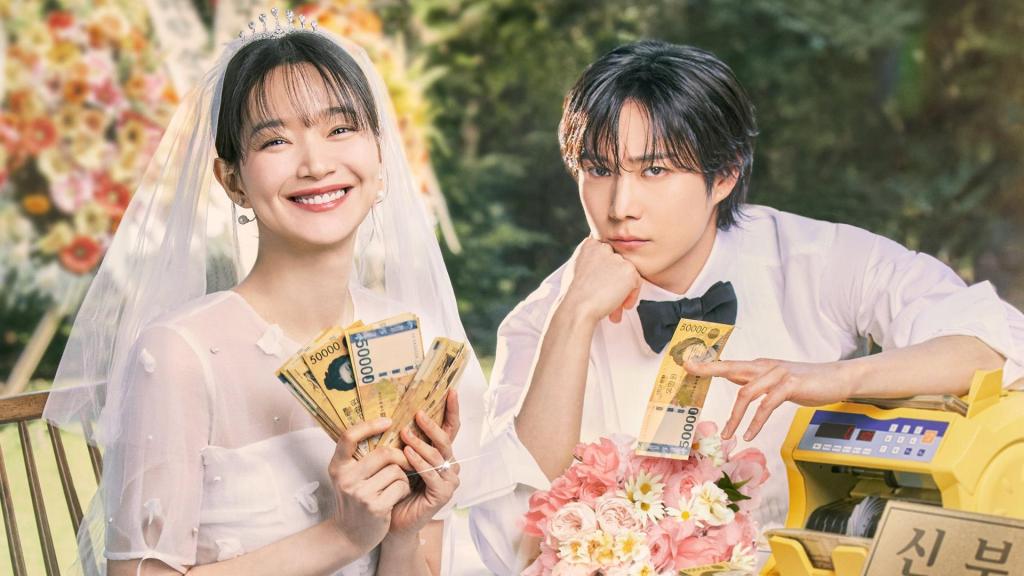
Lately, I have ventured into watching Korean dramas. I have to admit I am completely hooked. I tried to stay away from K-dramas for the longest time, assuming it would be too cheesy for my liking. And honestly, the titles did not help.
But after watching just a few K-dramas over the past few months, I can confidently say – don’t judge a series by its name!
K-drama is anything but corny, cheesy, or cringe. It has well-crafted plots with impeccable, high quality writing. It’s admirable how much importance they place on everyday emotions. I now find it so wholesome, engaging, and fulfilling that I would advise anyone to watch at least one episode every day, especially if you’ve had a particularly draining day. A K-drama episode a day might just keep the doctor away.
The Korean dramas I tend to choose are solely focused on relationships because that is what I am craving at the moment. Over the past decade, I binge-watched several serious, abstract, intellectual, gory, and violent movies. The types that movie critics couldn’t stop raving about. And now I’ve had enough. I have reached a saturation point when it comes to reality-based cinema. Bring on the whimsical, captivating, addictive world of romance! I want to leave my troubles behind, I want to dream of a better world and romanticize about it.
As an Indian, I can’t help but wonder what happened to the quintessential feel-good romantic Yash Raj-esque movies? Why have we stopped making them? They used to perform incredibly well at the box office and are still cherished. DDLJ has been on a running spree for decades in Mumbai, with no end in sight. Which other genre can boast of having a similar impact on the audience? We can’t get enough of the charming Raj or the dreamy-eyed Simran. My friends reminisce about the etherealness of Chandni and the intoxicating love of Veer Zara. Forget Yash Chopra movies. Even a dark project like Dil Se had its share of aesthetically pleasing love-packed moments. Not to forget the playful mischief enacted by the lead actors with full gusto. A quirky Preeti (played by Preity Zinta) asks Amar (portrayed by the king of romance Shah Rukh Khan), “Are you a virgin?” which catches him off-guard, like the rest of us. We loved the dialogue, the crackling chemistry, and the freshness of it all.
Personally, my favorite Bollywood pair is Konkona and Ranbir in Wake Up Sid. The romantic angle was offbeat – a young guy in his 20s falling for an older working woman. You might think this unconventional pairing might not work, but they proved their detractors wrong. The chemistry was bang-on, scenes were memorable, dialogues were fun and thoughtful, and it boasted of the right mix of profoundness and escapism. You fell in love with the characters. It was difficult not to.
Romantic stories used to sell big in Bollywood. So this sudden shift from romance to violence and trauma-inducing reality cinema is unreasonable. The ones that Bollywood does end up making nowadays have no soul and are almost, for the lack of a better word – “cringe.” They lack emotional intensity and nuance. It is difficult to connect with the characters and delve into their world. A sign of a compelling romantic story is when you find yourself developing an emotional connection with the characters. Their love feels like your love. You want to hug them when they are sad, cheer for them when their passion gets reciprocated, or blush when romance is in the air. This holds true whether you are reading a book or watching a movie. If this feeling is missing, the story fails to make a mark.
It is not that India has stopped indulging in romantic stories entirely. We get to witness some well-made series on OTT, such as Mismatched and Little Things. They have done well, proving that there is an audience out there for authentic Hindi romantic sagas.
I thought I would have to resort to books for my kind of romance. Still, lo and behold, I was introduced to the world of K-drama, where everything is just as mushy and glossy as it used to be in Bollywood.
What makes K-drama so different from regular Bollywood movies released nowadays?
Focus is on emotions and feelings
Hometown Cha-Cha-Cha
Those stolen glances, broad smiles, and yearning looks are what makes K-drama so swoon-worthy. While Bollywood has moved to a more lusty “fast food” kind of romance, Korean drama still hangs on to the original slow-cooked YRF magic with a tight leash. Why stop making something that is doing well?
Stories for the soul
Crash Landing On You
We all know romantic movies are a world of make-believe, and we can’t possibly expect all of that sweet idealism to seamlessly transfer into our everyday lives. It’s not practical. But that’s what movies should do, if not regularly, then at least occasionally, offer a form of escapism to its audience from real-life issues.
The cute playfulness, heart-warming dialogues, gestures, and scenes that revolve around emotions are what make K-drama so sinfully good and make anyone forget their worries.
Family-oriented
Twenty Five Twenty One
One thing I dread nowadays is watching a movie or a TV series with family. You never know what kind of provocative scene will jump out of nowhere, leaving you and your family overwhelmed with embarrassment and a sense of existential crisis.
Most of the K-dramas I have seen are family-oriented. You can sit and watch the shows in the open, reassured that nothing awkward will unexpectedly appear on your screen.
Binge-worthy
What’s Wrong with Secretary Kim
Each episode in Korean dramas tends to be lengthy! It can be over an hour long. But since the focus is on everyday relationships, you don’t end up getting bored.
The right amount of playfulness and romance
Love To Hate You
The couples in K-dramas tease each other, have healthy banter, crack jokes, and are playful. Contrary to the common belief held by those who haven’t yet watched K-dramas, the shows are not all about soppy dialogues. The noteworthy part is that it all looks organic, not forced, adding to the authenticity of the experience.
Catchy music
Business Proposal
The music and background score in K-drama blends in with the situations, and in no time, you find yourself humming the tunes while doing your everyday chores. It exudes a gentle yet addictive vibe.
More relatability for 30+-year-olds
While many romantic movies in India cater to a younger audience, I have noticed that most of the K-dramas I have watched feature older and more mature characters. This offers more relatability for people in my age group who want to see people their age romance on-screen as well.
It’s Your Turn Bollywood
In the 80s and 90s, Bollywood films incorporated many of these points I listed above, except maybe featuring characters in their 30s and older. However, the current landscape of Bollywood movies doesn’t provide the same enjoyment as those classic films.
A look into the popularity of K-drama proves that romantic stories still sell. It is well-liked world-over across all nationalities. In India, I am surrounded by K-drama enthusiasts. It’s safe to say there is still a broad audience for the romantic genre in India, but they are forced to venture beyond the confines of the Indian movie industry as there’s a scarcity of feel-good, wholesome cinema here.
Hindi filmmakers should seriously consider creating good ol’ romantic movies again infused with emotions, aesthetics, endearing chemistry, and romantic dialogues. Maybe then, they may witness the box office numbers soar, finally putting an end to complaints about the underperformance of Hindi movies in recent times.
Love, for me, has always been complicated. As a youngster, I always thought my first love would be for keeps. That the first kiss meant the deal was sealed forever, and the relationship was locked in for life. But real life is not a movie. It is definitely not a fairy tale. Different plans were charted out by forces beyond my control. Plans that would, at times, suck the soul out of me.
I have had the privilege of experiencing intense, passionate, illogical romance. The type that makes you forget the world around you and causes you to stutter and act foolish in your partner’s presence. It nudges you to write cheesy poems and bestow embarrassing gifts. You go to great lengths for the person to ensure they understand the value you bring to their life. The type of love where the self merges with the other and all boundaries and individualities diminish. On the flip side, the sort of young, inexperienced affection that cajoles you into tolerating mistreatment or disrespect and threatens you to compromise on your values just so you would stay confined to that perpetual dark zone. Your mind conveniently wants you to romanticize your forgiveness. “These things happen in love,” it protests, and you continue to give your partner the benefit of the doubt.
These love stories of mine never (thankfully) lasted.
An ex once told me it’s better to be in a relationship with someone who loves you more than you love them. It acts as an effective self-preservation mechanism. When you are neck-deep in love, you kind of understand this theory. Minor disagreements tend to hurt, even if your partner is not at fault. Too much love can suffocate you. What else would explain us becoming overwhelmed by our own emotions to the point of no return? But how much is too much love? That’s subjective.
Deep love can often hurt because the level of emotional involvement is more. To step back and think logically is implausible, especially when all you want to do is cling to the person for dear life and unabashedly consume any space that exists between the two of you. It may be why many of us hang on to toxic love because, in a way, we are addicted to the person. Our love-struck system cannot tolerate being apart from the one we adore, even if we know the person is detrimental to our health. We longingly look out for our next “dose.”
Experience teaches you that some level of detachment is required to preserve your self-respect. You cannot merge yourself with your partner so fully that you lose your common sense along the way. “Follow your heart, but take your brain with you” is the new mantra. If you ignore this life hack, you lose.
Love has the power to keep you in a chokehold. All the chemicals in your body work harmoniously to prevent you from escaping this sea of love that, at times, is more adamant about drowning you than keeping you afloat. “You need them,” your mind justifies. “You won’t be able to survive without them.” Sometimes, you wonder why your own system is working against you. Why can’t it produce fewer chemicals and give your brain a chance to defog at least twice a day so you get some leeway to make rational decisions?
Often, some intensity imbalance is required to balance a relationship. Ironical, isn’t it? It’s never 50-50. Fighting for that 50-50 is when the balance goes haywire. Your whole focus is on whether equality is being maintained. A 40-60 is good enough, where each partner is mature enough to take the lower percentage of the deal, depending on the situation. But maturity is scarce, often leading to one partner compromising more than the other, accumulating bitterness in the long run.
I am in a proper healthy relationship at the moment, which feels different. Does he love me more than I love him? I am not sure. It feels equal. But less intense than any of the previous ones. It feels more mature, where things are discussed rationally, and no disrespect or insults are thrown generously into the air. We talk like proper adults with our negative emotions in check. For someone so used to an overflow of feelings, war of words, and flurry of insults, this silent, peaceful lull feels refreshing.
I can’t help but wonder if age and experience have a role to play in how he and I feel. He confided in me that he used to have no control over his words or emotions in his 20s. He used to be an angry young man, possessive, and naive. This contrasts with his current version, a wise man humbled by his own life experiences. It may be why “first love” is unique. Our emotions are intense in our formative years, and age has a way of watering them down. It is not that the love we experience later in life isn’t true. It becomes more guarded because you subconsciously filter your emotions through the lenses of your previous relationships. You learn your lessons, and you get better. But some of the dreamy rawness gets lost in the process.
If you are happily married to your first love, you might not relate to this post. But those who have had some failed passionate relationships would understand this feeling of being “in love” but also knowing the person isn’t right for you. The agony ends up changing you and even your future relationships because nothing molds you more intricately than experience. We are a sum of all the experiences we have been through, and each of us has a different journey that we have carved out on our own. It is understandable, then, why the concept of the “ideal relationship” may vary from person to person and may evolve over time. What I feel about love now is drastically different from my 20s. Earlier, I used to prioritize PDA and gifts. Nowadays, I prefer the subdued kind.
Do I miss the passion and cheesiness of my earlier relationships? Sure. But they have also taught me to step back and feel gratitude for the security and peace that comes with a healthy, respectful one.
Because, like all good things in life, NVC takes effort. And practice. Having just finished the book, I only have an idea of what to say but no practical experience.
Conflict resolution is an interesting topic to me since we have to deal with conflicts in every aspect of our lives. How can we be stern and kind at the same time? How can we get the best out of any situation? Being able to communicate effectively is an art in itself.
I have always taken away something, if not everything, from every book I’ve read – a new kind of awareness. What I took away from this one was to take a moment to step back and focus on needs instead of the more apparent negatives during an argument. It helps with forgiveness. It keeps you calm. So it’s a win-win overall.
What is NVC?
Nonviolent Communication (NVC) is a practice that must be consciously ingrained in our daily interactions to see results. It includes letting go of your judgments and interacting with the other person to focus on each other’s needs instead of playing the blame game. We attribute violence to physical and mental abuse. But here, the author talks about negative communication as violence too. Things like incessant blaming, judging, silent treatment, and mocking all form a part of violent communication.
So here are some of the key takeaways from the book:
Focusing on needs
The four components of NVC include: what we are observing, feeling, and needing, and what we would like to request to enrich our lives. To summarize, the two parts of NVC are 1) expressing honestly 2) receiving empathically.
Connect your feeling with your need: “I feel.. because I need..”
Something you need to keep repeating to yourself whenever you are agitated. What is it that you need? Focus on each other’s primary emotion (need) instead of lashing out at each other.
Avoiding blame and judgment
Why would people want to tell the truth, knowing they will be judged and punished for doing so?
The more people hear blame and judgment, the more defensive and aggressive they become and the less they will care about our needs in the future. So even if our present need is met in the sense that people do what we want, we will pay for it later.
Makes you think, doesn’t it? Why would someone tell you the truth if they knew they would be misunderstood or shouted at? I feel the more we make someone feel uncomfortable and “dirty” for telling us the truth, the more they will hide it the next time.
Being empathic even with people who hurt you
Blaming is easy. People are used to hearing blame; sometimes they agree with it and hate themselves – which doesn’t stop them from behaving the same way – and sometimes they hate us for calling them names – which also doesn’t stop their behavior. If we sense blame entering their mind, we may need to slow down, go back, and hear their pain for a while more.
NVC stresses hearing the other person a while longer and understanding their feelings before we put forward our requests. Such a method lets the other person relax and be in a proper frame of mind to receive and reciprocate.
Conflict Resolution
The more experience I have gained in mediating conflicts over the years and the more I’ve seen what leads families to argue and nations to go to war, the more convinced I am that most schoolchildren could solve these conflicts. If we could just say, “Here are the needs of both sides. Here are the resources. What can be done to meet these needs?,” conflicts would be easily resolved. But instead, our thinking is focused on dehumanizing one another with labels and judgments until even the simplest of conflicts becomes very difficult to solve. NVC helps us avoid that trap, thereby enhancing the chances of reaching a satisfying resolution.
Why can’t warring countries adopt this methodology, sit together, and discuss resolutions in a non-confrontational way? The world would be a more peaceful place to live in.
You must be logged in to post a comment.