I recently came to know that there is an Apple TV series based on Bonnie Garmus’s Lessons in Chemistry. Still, like many book lovers who believe the original story is always better than any adaptation, I chose to read the book first. And I am glad I did.
Lessons in Chemistry is warm, quirky, and emotional. It begins at a quick pace and later slows down to let the reader focus on how the characters are feeling. The fictional novel explores women empowerment, career, ambition, love, grief, and self discovery.
The story is about two unconventional scientists who view the world through logic. Their relationship feels unusual to others because their conversations revolve around research, experiments, and what most people would call nerdy banter. But the connection they feel with each other is real. They believe they are soulmates.
The female scientist eventually steps into an unexpected phase of her life and has to leave her career only to soon become the host of a cooking show. The show goes on to gain popularity dude to her unique, scientific approach towards food. She treats every recipe like a science experiment. She explains why each ingredient matters and the chemical composition that affects taste and cooking. This fresh perspective inspires her audience and transforms the way they think about cooking.
If you enjoy fiction that blends romance, feminism, science, and character driven storytelling, Lessons in Chemistry is worth adding to your reading list.
I also want to list some of my favourite thought-provoking quotes from the book. Hope you enjoy them as much as I did.
One thing I’ve learned, Calvin: people will always yearn for a simple solution to their complicated problems.
It’s a lot easier to have faith in something you can’t see, can’t touch, can’t explain, and can’t change, rather than to have faith in something you actually can.
From his own lessons, he knew repetition was important. The key was not to overdo the repetition—not to make it so tiresome that it actually had an inverse result and caused the student to forget. That was called boredom. According to Elizabeth, boredom was what was wrong with education today.
No wonder people didn’t understand animals. They could barely understand each other.
Having a baby, Elizabeth realized, was a little like living with a visitor from a distant planet. There was a certain amount of give and take as the visitor learned your ways and you learned theirs, but gradually their ways faded and your ways stuck. Which she found regrettable. Because unlike adults, her visitor never tired of even the smallest discovery; always saw the magic in the ordinary.
“What I find interesting about rowing,” Dr. Mason was saying, “is that it’s always done backwards. It’s almost as if the sport itself is trying to teach us not to get ahead of ourselves.” He opened his car door. “Actually, when you think about it, rowing is almost exactly like raising kids. Both require patience, endurance, strength, and commitment. And neither allow us to see where we’re going—only where we’ve been. I find that very reassuring, don’t you? Except for the flip-outs—of course. I could really do with fewer flip-outs.”
But as she read, she’d found herself wondering—did the artist ever get distracted? Ink an asp instead of a goat? And if so, did he have to let it stand? Probably. On the other hand, wasn’t that the very definition of life? Constant adaptations brought about by a series of never-ending mistakes?
“I don’t have hopes,” Mad explained, studying the address. “I have faith.” He looked at her in surprise. “Well, that’s a funny word to hear coming from you.” “How come?” “Because,” he said, “well, you know. Religion is based on faith.” “But you realize,” she said carefully, as if not to embarrass him further, “that faith isn’t based on religion. Right?”
“Whenever you start doubting yourself,” she said, turning back to the audience, “whenever you feel afraid, just remember. Courage is the root of change—and change is what we’re chemically designed to do. So when you wake up tomorrow, make this pledge. No more holding yourself back. No more subscribing to others’ opinions of what you can and cannot achieve. And no more allowing anyone to pigeonhole you into useless categories of sex, race, economic status, and religion. Do not allow your talents to lie dormant, ladies. Design your own future.
When you go home today, ask yourself what you will change. And then get started.”
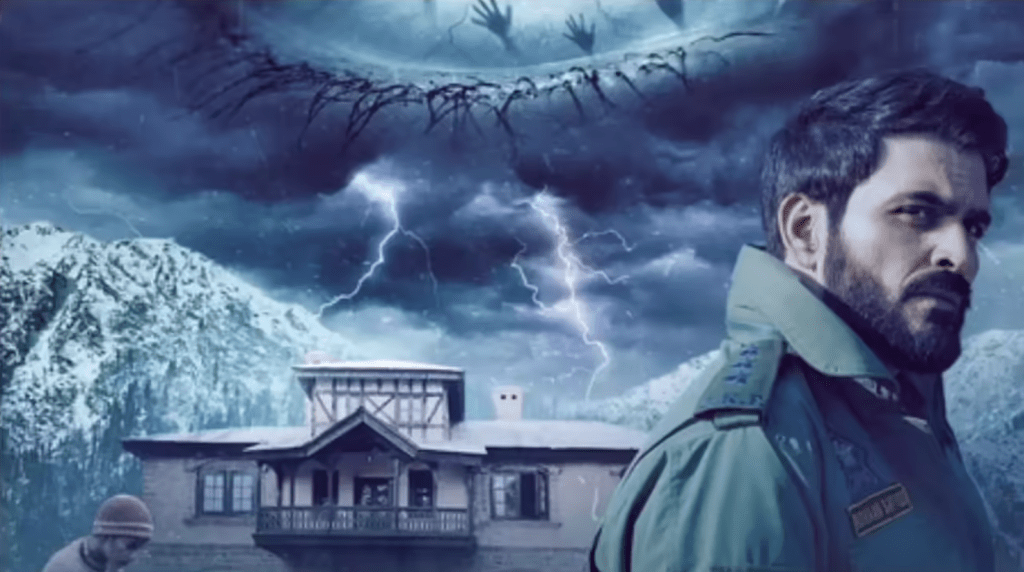
What defines horror? We often think of ghosts, possessed souls, or strange creatures with no clear form. Yet I realized there’s another type of horror that hits harder. The ones that combine these supernatural ideas with the harsh truths of real life. This is a type of blend that creates an impact, which stays with you long after the movie is over. This is where Baramulla is about.
What’s It About?
Baramulla opens with a policeman who moves to Kashmir and stays in an old house filled with secrets. He is there to investigate the disappearance of children in the area. Strange events start to unfold at once. The elder daughter senses a foul, “dog-like” smell in the house, even if there are no dogs. The caretaker carries a plate of food every day to a locked room. What lies behind these mysteries? Why are children vanishing? These questions drive the heart of the story.
Thoughts
I can’t, unfortunately, share everything I felt without giving away the main plot. Since I wanted to share my thoughts in full, I placed them in a separate “Spoilers Ahead” block after this section. You can skip it if you prefer to avoid spoilers.
Baramulla left me with many emotions. I was genuinely amazed by how the team crafted it.
The movie tries something that Indian cinema, to my knowledge, hasn’t attempted before in a horror movie. That is, blending the past and the present into a story that’s rooted in historical events. It reminds you that horror has layers. It’s not only about the unknown, but also the known. The horror of trust turning into betrayal. The horror of being dismissed or gaslit. The horror of violence, both mental and physical. Baramulla captures all of this with sharp clarity.
The performances are strong across the board. Personally, I would say it’s a must-watch.
Baramulla is now streaming on Netflix.
**Spoilers Ahead**
I felt emotional through many scenes. The acting was powerful and honest. The pain never felt exaggerated.
By now, you probably know that the film draws from the suffering Kashmiri Hindus faced in the late ’80s and ’90s. Many cast members are Kashmiri Hindus who had to flee their homes. Manav Kaul is one of them. He left Kashmir when he was in grade 4. He moved on to become a competitive swimmer in his late teenage years and participated in state and national-level championships. He has more than 14 national medals in swimming to his credit.
The end scenes also show Sanjay Suri, which is befitting, since his father was killed by terrorists in Srinagar when Suri was just 19. He moved to Delhi after that and became a known face in the film industry.
The producer and writer, Aditya Dhar, who is also Yami Gautam’s husband, is a Kashmiri Pandit. He has been using his craft to share Kashmir’s story with care and technical prowess.
Some Kashmiri Pandit celebrities, like Kunal Khemu, have chosen not to explore their past, and that is their personal choice. In an interview with Smita Prakash, he said he doesn’t know much about that period, even though his own family lived through it.
I feel it’s important for us to understand our history so we don’t repeat old mistakes. Stories like these should be passed from one generation to the next. My only regret is not asking my grandfather about his experiences—how Kerala felt during the Indian freedom struggle, and what life was like then. Those anecdotes have been lost forever, as he did not pass on the stories to his children as well.
It’s remarkable that so many Kashmiri Hindus who had to flee the valley are using art to express their experiences instead of resorting to violence. Their goal is empathy and understanding, something they were denied for a long time, not provocation. Choosing storytelling over violence is admirable, especially in a world where violence is often justified in the name of resistance.
There are also a few Kashmiri Hindus with left-leaning views who defend problematic groups and take part in “Free Kashmir” sloganeering, similar to how a very small number of non-Zionist Israelis speak in ways that don’t reflect the wider population.
Most Kashmiri Hindus (and some Kashmiri Muslims) have appreciated the movie. However, left-leaning Hindus are also criticizing the movie for “propaganda,” even though the events have been well documented. Films that depict and educate the viewers on crimes against Muslims in India are welcomed, while films showing crimes against Hindus are often dismissed as Islamophobic, nationalist, or propaganda. This imbalance is where many activists struggle. They accept one truth but not the other.
People like me have slowly stepped out of that mindset to face the whole truth.
It may take a while, but I really believe the truth will eventually reach wider acceptance sooner or later. And the stories can’t stop until the pain is finally acknowledged. They need to be told, retold, and carried forward. Only then will they finally find the place they deserve.
Even if India agrees to peace talks with Pakistan, who exactly are we supposed to talk to?
The Pakistan Army? The army chief, Asim Munir, has called Kashmir their “jugular vein” – they aren’t letting go. He raked up anti-Hindu, anti-India sentiments before the Pahalgam attacks. He stated, “Our forefathers believed that we were different from Hindus in every possible aspect of life,” and urged parents to instill this bigoted narrative in their children to preserve Pakistan’s identity.
The Pakistani Prime Minister? Just a puppet with no real power over the military. Funerals of designated Lashkar-e-Taiba (LeT) terrorists have been attended by members of the Pakistani Army, further reinforcing allegations of state complicity. Such actions raise serious concerns about the Pakistan government’s commitment to counterterrorism, especially when these individuals are recognized as terrorists by the international community.
Pakistani celebrities? They won’t even whisper a word against state-backed terrorism. They rarely acknowledge well-documented facts, such as Osama bin Laden having found safe haven within Pakistan’s borders. They speak about “having a voice” in Pakistan. Yet, none have dared to criticize Asim Munir for his communal, anti-Hindu remarks, despite knowing that Hindus are living within their own country as well.
The civilians? The majority views India as the villain and often denies the existence of terrorists within their own borders. This raises an important question: Do they not consider figures like Osama bin Laden, Hafiz Saeed, and Masood Azhar as terrorists? Are they seen merely as ordinary civilians? When they refer to “terrorists,” is it only groups like the Balochistan Liberation Army (BLA) and other factions causing unrest within Pakistan that they have in mind?
So really. Whom should we sit across the table with to discuss peace? There are no viable options.
Attacks Initiated by Pakistan
In all the following attacks initiated by Pakistan, India has demonstrated extreme restraint:
Attack
Year
Fatalities
Bombay Blasts
1993
257
Lajpat Nagar Blast
1996
13
J&K Assembly Blast
2001
38
Parliament Attack
2001
9
Raghunath Temple Attack
2002
12
Kurnool Train Crash
2002
20
Akshardham Attack
2002
33
Mumbai Bombings
2003
52
Delhi Blasts
2005
62
Varanasi Blasts
2006
28
Mumbai Train Blasts
2006
189
Samjhauta Express Blast
2007
68
Hyderabad Blasts
2007
42
Jaipur Blasts
2008
63
Ahmedabad Blasts
2008
56
Mumbai Attacks (26/11)
2008
166
Patna Bombings
2013
6
Pathankot Attack
2016
7
Uri Attack
2016
19
Pulwama Attack
2019
40
Pahalgam Attack
2025
26
India’s restraint in the face of repeated cross-border terrorism is often seen by Pakistan as a weakness. The ongoing attacks have led many Indians to believe that simply maintaining the status quo won’t bring lasting peace.
India’s Efforts Towards Peace Have Gone Unnoticed
India has made several efforts in the past to reach out and promote peace. We have celebrated Pakistani singers, actors, cricketers, and artists, and defended them when the Indian government initiated a ban against them.
Nusrat Fateh Ali Khan was revered, even after singing a controversial song with the line “Muslims should not allow kafirs (non-Muslims) in their homes.” Mahira Khan and Hania Aamir were regulars in Bollywood fashion pages, and Indian women admired Fawad Khan.
Yet, none of these figures had the courage to denounce the terror networks in their own backyard or question Asim Munir’s communal statements.
We extended every olive branch, but it was met with betrayal, silence, and violence. It’s time to stop romanticizing those who wear a false pro-India mask while harboring hatred.
Pakistan’s Blatant Radicalism
In the current war, the Indian Army has focused on precision strikes targeting terrorist camps and military assets, with considerable efforts to avoid civilian harm. The death of any innocent civilians in terrorist camps is deeply unfortunate, but could have been avoided by Pakistan. Why were civilians present in known terrorist camps? Were they placed there deliberately to attract international sympathy and deflect blame?
In contrast, Pakistan’s use of drones in civilian zones has drawn comparisons to Hamas-style tactics against Israel. If not for the advanced air defence systems in both India and Israel, the death toll could have been far higher.
Pakistan has often revealed its radical side openly. To cite a few examples:
In a recent interview with Sky News journalist Yalda Hakim, Pakistan’s Defence Minister Khawaja Asif acknowledged his country’s historical support for terrorist organizations. He stated, “We have been doing this dirty work for the United States for about three decades… and the West, including Britain.”
Khawaja Asif, while addressing a session of the Pakistan National Assembly, said that students in madrassas will serve as the country’s second line of defence in wars, when needed, implying they are disposable.
The former director general of the ISI, Asad Durrani, in an Al Jazeera interview, said the death of 150 APS Peshawar school children was “collateral damage” in pursuit of “broader” national interests.
Mubasher Lucman, founder of the Pakistani television network ARY Digital, during a podcast with journalist Naseem Hanif, stated that if Pakistan were to win a war against India, he would want to claim Indian movie actresses as maal-e-ghanimat—a term historically referring to war spoils, including enslaved women (sex slaves).
During a protest outside the Pakistan High Commission in London on April 25, 2025, following the Pahalgam terrorist attack in Jammu and Kashmir, Colonel Taimur Rahat, Pakistan’s Army and Air Advisor in the UK, made a provocative throat-slitting gesture towards Indian demonstrators. This is perhaps the first time a diplomat of any country has made such a shocking and radical gesture in public. The act not only defies diplomatic conduct but also reflects a deeply irresponsible and provocative mindset, especially in the context of a civilian tragedy.
Former Pakistani cricketer Danish Kaneria, one of the few Hindus to represent Pakistan at the international level, publicly accused former teammate Shahid Afridi of discriminatory behavior during their time together on the national team. Kaneria alleged that Afridi repeatedly pressured him to convert to Islam and excluded him from team activities, including meals.
Shahid Afridi’s cousin, Shaquib Afridi, was a commander of the Islamist terrorist group Harkat-ul-Ansar. He was killed by Indian security forces in Anantnag, Jammu and Kashmir, in 2003. Reports indicate that Shaquib had been active in the region for approximately two years prior to his death.
In an undated video that surfaced online, former Pakistani cricketer Shoaib Akhtar discussed the Islamic prophecy of Ghazwa-e-Hind, which refers to a prophesied battle for the Islamic conquest of India. In the video, Akhtar stated: “Ghazwa-e-Hind is mentioned in our sacred books. We will first capture Kashmir and then invade India from all sides for Ghazwa-e-Hind.“
Pakistani actor Hamza Ali Abbasi has publicly expressed support for Hafiz Saeed, the founder of Lashkar-e-Taiba and the alleged mastermind behind the 2008 Mumbai terror attacks.
In a televised discussion, Waqar Younis praised Pakistani cricketer Mohammad Rizwan for offering Namaz during a match, emphasizing it was done “in front of Hindus,” which he found particularly satisfying.
Zaid Hamid, a Pakistani political commentator, propagated conspiracy theories, claiming that the 2008 Mumbai attacks were orchestrated by “Hindu Zionists.” He has also stated that India will be “trounced and enslaved according to Sharia if Hindus don’t repent and embrace Islam.“
The videos and news articles for each controversy listed above are available online.
If Pakistani diplomats, politicians, cricketers, and celebrities act this way and are left largely uncriticized, what hope do you have from ordinary civilians?
The “Jugular Vein”: Kashmir
Pakistanis and the international community often focus on the “oppression of Kashmiri Muslims” and the call to “free Kashmir,” but they conveniently overlook the genocide of Kashmiri Hindus, a community forcibly displaced from their ancestral land. They are yet to return out of fear.
The genocide of Kashmiri Hindus (whitewashed as an “exodus”) is a tragic chapter in the region’s history. They, as the indigenous people of the land, have every right to return to their homes. Many Kashmiri Muslims are ready to welcome them back, acknowledging the need for healing and reconciliation. However, Pakistani-backed terrorists continue to block this process, instigating violence and creating an atmosphere of fear every time Kashmiri Hindus attempt to settle in Kashmir.
The narrative of “freedom” for Kashmir remains incomplete without acknowledging the rights and voices of the Kashmiri Hindu community. As the original inhabitants of the region, their cultural and historical ties to Kashmir that span thousands of years. Any move to integrate Kashmir into Pakistan would only deepen their marginalization. History bears witness: the Hindu population in Pakistan has sharply declined due to forced conversions, persecution, displacement, and violence. These facts raise serious concerns about the future of Kashmiri Hindus under such a scenario. To safeguard their identity, rights, and survival, it is vital that Kashmir remains an integral part of India.
It is time the international community recognizes this truth and supports the return of Kashmiri Hindus to their land, allowing for genuine reconciliation and the restoration of peace. Until this happens, international human rights activists should shift their focus to the “Free Balochistan” and “Free Iran from Islamic Regime” campaigns. Currently, they are more oppressed than Kashmiris, and their plight requires global attention.
UN Resolution
The United Nations (UN) has addressed the issue of Kashmir through Resolution 47, passed in 1948. The resolution emphasizes the right of the Kashmiri people to self-determination. It proposes that a plebiscite should be held to allow the people of Jammu and Kashmir to decide whether they wish to join India, Pakistan, or remain independent.
However, this resolution also includes conditions for the plebiscite, the most important being the withdrawal of “all Pakistani nationals” and “tribal forces” from the region to create a neutral environment for a fair vote. This is the first requirement in Resolution 47 that needs to be met. However, it does not get stressed enough.
The presence of Pakistani-backed terrorists in the region complicates the situation and directly contradicts the conditions of the UN resolution. Until Pakistan withdraws these forces and halts its support for terrorism, the possibility of implementing the UN resolution’s provisions remains unfulfilled.
I have covered this information in detail in a separate Kashmir Plebiscite blog post.
War or Peace?
Every past peace talk with Pakistan has failed. Not once, but multiple times.
Should India keep repeating the same cycle just to comfort a few people’s idealism? At what cost? More lives, more betrayal, and more denial?
I’m not advocating for war. But let’s be clear. Peace isn’t possible with a neighbour who constantly thirsts for our blood.
In such times, I choose to trust our Indian leaders, intelligence, and armed forces to make the best call for protecting the nation, not some random social media activist who would sell their soul for money.
If my country wants to teach the neighbour a lesson, I would support it. If it says it’s going to withdraw, I would support that too. In other words, the country comes above everything else. Jai Hind.
As the year comes to a close, it’s time to reflect on the lessons learned this year. I have the utmost gratitude for those who showered me with love, kindness, and patience. However, I also felt discomfort knowing that not everyone who greets me with gifts, smiles, and sweet words considers me as someone worth their time.
Small things that irked me this year:
A relative who never supported my writing ventures expected me to support her new Instagram page.
People being frighteningly okay with one kind of death over another based on religion, beliefs, and ideologies.
When people whom I consider dear went to events without informing me.
The lessons I learned from each of these:
You need not feel guilt for treating people like they treat you. You are not a holy saint but a living, breathing, ordinary human being who harbors a myriad of emotions. Having expectations from people you care about is healthy so that boundaries aren’t crossed. Consistent compromises can affect your mental health and even bring down your self-esteem.
People are inherently biased. This fact is uncomfortable and dark but true. The way we look at anything is colored by our upbringing, our own experiences, and our way of life. So, for example, when you see someone advocating for human rights, you need to be wary of their agenda – is it genuine? Do they advocate for the rights of all humans or only a select few?
We have to accept that we are not everyone’s cup of tea. This holds more true for someone like me, an unmarried woman who says the most unorthodox things and is a social hermit by nature. When you live a life that is the most authentic to you, you will not gain many friends, as you are largely unrelatable. This self-realization will help reduce unnecessary expectations from people who genuinely require something else from the people around them, not what you have to offer.
Instead of blaming people, the solution often lies within. It’s impossible to change everyone and everything to your liking. The answer sometimes is to accept the reality and move on. Maybe in this quest, you will find your tribe that understands and accepts the person that you are, and things will feel less forced and more genuine.
For me, it’s often not the acts, like seasonal gift-giving, that show someone’s true nature, but in the little things – remembering you and asking you to tag along to events they know you would enjoy, uninhibited support to passions that mean a lot to you, and not finding you weird when you show your vulnerable side. It’s also the acknowledgment of the fact that you expected something more and them making an effort to meet that expectation the next time around. Touch wood, I have a select few who understand me the way I want to be understood. But being a hypersensitive individual could mean you get disturbed when people you expected to cheer you take a step back and treat you and the things you love with indifference.
But such is life. Every year, you learn new lessons and new aspects of people around you that you never observed before. You communicate your grievances. But if the subpar treatment continues, you accept, adapt, and move on. It’s the only way to live. The disappointment may linger for some time, but then the lessons merge and become a part of you, and eventually, you start embracing the new normal. That is until you learn your next lesson.
P.S.: This would be my last post for the month and year. Holidays beckon. I wish you and your family a happy, joyous new year!
Time and again, we see an article about a well-known person having a controversial history. You hold it against them thinking they must have never learned or risen above it. “So and so said this or that ridiculous thing 10 years back or 20 years back. They are not what they look like!”
People change over time. I can say for myself that my beliefs 10 years back aren’t the same as now. I have evolved and learned from my mistakes. I used to say the weirdest things, which when I look back at now, make me cringe into oblivion. It helped that I had a written version of all these thoughts (one of the few times I would like to thank social media), but since many don’t, you never get to recap on your judgments and think “What all shit did I say back then!” It is not the same for a celebrity though. Every single thing done or said by them is chronicled.
Sometimes I am glad I am not a celebrity. There is no one keeping a record of what I am saying and I have no fear of someone putting it on a big banner and exhibiting it in front of me many years from now when I am trying to progress in life.
Some people don’t learn, but should the default thinking be always pessimistic?
A controversial history could have been a very valuable lesson for the person. But how can they move on if society will not allow them to? At every road and juncture, they are reminded of what they said years ago – back when they didn’t know any better. Imagine that happening to us – someone continually reminding us of our failed relationships or divorce or mistakes.
Instead of judging by their past, analyze them by their current events, behavior, and personality. That will hold more true than outdated facts.




 The Monkey Dilemma
You must be logged in to post a comment.