Munambam Waqf Fight: Will BJP Finally Crack Christian Vote? (Legal Delays Inside)

Munambam Beach

I recently came across a video featuring an interview with Stalin Devan, the activist managing the legal research and paperwork for Munambam. In this interview with Shajan Skariah, Stalin shares that Father Joshy added him to a WhatsApp group with the Munambam residents and said, “Explain one point from the Act every day in simple words.” Over time, Stalin became their legal guide, and his efforts are one of the main reasons the community now understands the law so well.

The interview was informative in many ways. At a time when there is still no clear update from politicians or the media on what is actually delaying the resolution for Munambam, even after the Waqf Amendment Bill was passed, Stalin explains the situation with complete clarity.

Stalin Devan Exclusive on Marunadan
A screenshot of the video

The Three Possible Legal Outcomes for Munambam

According to Stalin, there are three possible solutions for Munambam:

  • The government restores revenue rights immediately.
    This can be done at any time if the Chief Minister approves an administrative order restoring those rights.
  • If the Supreme Court upholds the High Court order declaring the land not Waqf, all cases, tribunal, revenue, and others will automatically end.
  • If the Supreme Court rules otherwise, the next legal step will rely on the amended law using Section 2A.

Why Section 2A Cannot Be Used Yet

Earlier, I assumed that recent positive court developments were on the basis of Section 2A. I later realised that was incorrect. Stalin’s interview clarified it. He said:

“We must wait for the rules to be notified. Only after the rules come into force can we use the amendment. As soon as the rules are published, we will file a new petition before the Waqf Tribunal. Once the new rules take effect, the Waqf Board’s order cannot survive.”

It was only through him that I learned the rules tied to the amendment have not yet been fully implemented (central rules were notified in July 2025, but further steps, such as central and state compliance and the ongoing Supreme Court matter, are still pending). Once implementation of the rules is complete, Munambam will be able to use the amendment (Section 2A) fully to establish its rights.

This is where politics begins to overlap with law.

Where Politics Meets Law

Stalin said:

“When everything is resolved, people should celebrate and then withdraw the protest with dignity. But politics entered the issue, and some withdrew support — not because the problem is unresolved, but because they feared the BJP might gain political mileage.”

This is why I feel that even though BJP is the party that helped Munambam with the establishment of new Waqf amendments that can prove favourable to Munambam residents, the Congress-led alliance (UDF) may still win the election there.

Strategically, it makes sense. Now that they’ve pushed the BJP to change the Waqf rules, Christian voters can continue supporting the party they feel protects their religious interests, especially one that does not interfere with missionary activity.

UDF has traditionally been the preferred choice of many Christian voters in Kerala. However, their position on the Waqf Amendment has not aligned with what Munambam residents expected or hoped for. Even so, Christian voters may still continue supporting UDF, largely because they align with the coalition’s lack of anti-conversion sentiment.

Why Timing Matters to BJP and CPM

Here’s where it gets interesting. What follows is only my analysis, not a confirmed claim:

As mentioned earlier, the amendment becomes fully usable only after the remaining implementation steps (central and state action, portal uploads, surveys, and Supreme Court clarity). That process can take months, sometimes more than a year.

Because of that, the timing is now in the hands of both the Central Government (BJP) and the Kerala Government (CPM). Residents say Rijiju has not been active recently. It is possible that the central leadership is waiting to see how the political situation evolves before re-engaging. The BJP may already understand that, even with the support they are offering, they might still not gain full trust or support from the Munambam Christian community. Religious identity often influences decisions more than political assistance. BJP may choose to wait and see whether their support translates into goodwill before offering more help or speeding up the process. In short, they might be waiting for election results to analyze public sentiment.

Meanwhile, CPM has not yet updated or published Waqf lists in the state gazette or uploaded them to the central portal. This is of utmost importance to implement the waqf amendment. CPM has not given explicit technical reasons for the delay.

Current Status of the Waqf Amendment Process (December 5, 2025)

Central Government (BJP)

The Act itself was published and came into force in April 2025. Rules were notified in July 2025. But implementation is still pending: WAMSI portal digitization is incomplete, nationwide surveys and audits have not been done, and the Supreme Court stay since September blocks key provisions.

The central government’s delay primarily reflects implementation challenges. However, political considerations may also play a role, as governments often pace sensitive rollouts based on election outcomes and political advantage.

Kerala Government (CPM)

CPM has not published Waqf lists in the Kerala state gazette. Nor have they uploaded lists to the central portal (90-day deadline under Section 2A). Waqf Tribunal and Board procedures are not aligned yet.

The Kerala government’s delay appears more political in nature. They seem to be officially resisting the amendment.

My view is that the full rollout (central setup, state compliance, and Supreme Court resolution) will now unfold at a pace influenced by political timing. Legally, the delay should not be indefinite, but in practice, regulations and execution can remain pending for a long time if the government chooses.

Why Munambam’s Leadership Is Remaining Neutral

Politics has made the situation complicated.

Many in the Munambam Land Protection Council do not want the BJP to gain politically, but they appear to be trying to remain neutral as the process is still unfinished. The ball is still in the court of both CPM and BJP. This may also explain why Church leaders reportedly asked Joseph Benny, the head of the Munambam Land Protection Council, to withdraw from the election as a UDF candidate. Any outright political affiliation may prove disadvantageous to Munambam residents at this stage.

***

Photo By നിരക്ഷരൻ at ml.wikipedia, CC BY-SA 3.0

From 26/11 to Delhi Blasts: Why the “False Flag” Narrative Must End in India

What surprises me more than the terror attacks in India is the speed with which some Indians dismiss them as “false flag operations.” For instance, a look at the comments under Faye D’Souza’s Instagram post about the Delhi terror blasts shows several users mocking the incident and blaming the Indian government instead of the perpetrators. Many genuinely seem to believe it’s a political ploy to influence votes rather than an act of terror.

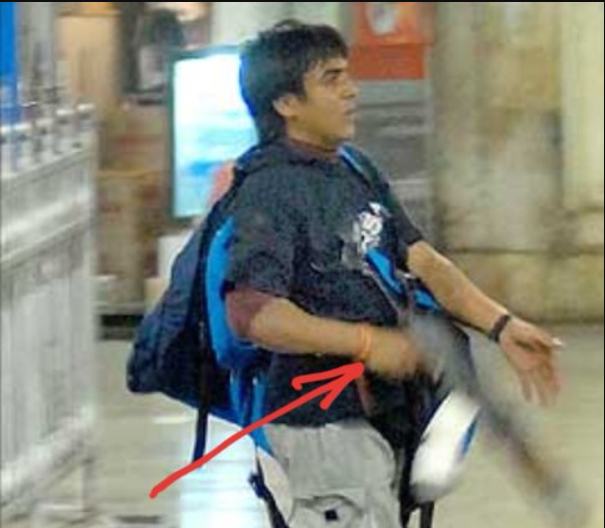
The “false flag” narrative isn’t new. It has surfaced after nearly every major terror attack in India. Even the 26/11 Mumbai attacks were, at first, misrepresented by some as an internal operation. The claim gained attention mainly because Ajmal Kasab, one of the attackers, wore a saffron thread on his wrist. Those spreading the theory strangely assumed such a thread could only belong to members of BJP or RSS. They overlooked the possibility that it might have been deliberately used to mislead investigators.

Ajmal Kasab with Saffron Thread on His Wrist

Kasab’s real plan, as later revealed, was to die appearing as a “Hindu” and thus shift suspicion away from Pakistan-based handlers, reinforcing the myth of “saffron terror.” Thankfully, due to the extraordinary courage and sacrifice of Assistant Sub-Inspector Tukaram Omble, Kasab was captured alive and later confessed to being a Pakistani national trained by terrorists.

Tukaram Omble and Mumbai 26/11 Attacks
Tukaram Omble

By then, however, the false-flag theory had already gained widespread circulation. Well-known public figures even released a book titled 26/11: RSS ki Saazish? that promoted the “false flag” theory surrounding the attacks.

Influential Figures Promoting RSS ki Saazish Book
Influential Indian Figures Promoting “26/11: RSS ki Saazish?” Book

The “false flag” narrative resurfaced after the Pulwama terror attack, when a suicide bomber from Jaish-e-Mohammed (JeM) drove an explosive-laden vehicle into a CRPF convoy in Pulwama, Jammu & Kashmir, killing 40 soldiers. Following the attack, some voices in Pakistan, including senior officials, suggested that India might have staged the incident to influence the upcoming 2019 elections. Commentators in India echoed similar theories online, framing the tragedy as politically motivated rather than acknowledging it as an act of cross-border terrorism.

Then came the recent Pahalgam attacks, where Pakistani media outlets and online commentators claimed that India had staged the incident to divert attention from domestic issues and influence elections. They described it as part of an alleged “Indian playbook” of false-flag operations. Soon after, similar talking points appeared in sections of Indian social media and commentary spaces.

In each case, claims of “false flag operations” lacked credible evidence and were primarily rooted in conspiracy theories first circulated in Pakistan and later amplified by certain opinion groups in India.

The Global “False Flag” Obsession

It’s worrying that many people in India tend to believe external narratives about terror attacks rather than trusting verified investigations at home.

This pattern might have been up for serious debate if it only happened locally, but the deflection from religious extremism appears to be a global trend. To cite a few examples:

  • The 9/11 attacks are still viewed by some as a “false flag” orchestrated by the U.S. or Israel to malign Muslims. This is a theory long disproved but still used by extremist groups to recruit followers. They thrive on anger, convincing vulnerable minds that violence is the only response to perceived oppression. In India, extremist recruiters have similarly exploited stories like the Babri Masjid while dismissing events like the Godhra train burning as conspiracies, weaving grievance into a tool for radicalization.
  • The October 7 attacks in Israel were also met with widespread conspiracy claims, framed as a false flag operation meant to discredit certain groups.
  • Likewise, criticism of regimes such as Iran’s leadership, the Taliban, or Hamas is often dismissed as Western propaganda. This is another form of deflection that prevents honest introspection.

Conspiracies Shield Extremists

It’s time to move past the overused “false flag” narrative.

Each time a terror attack is dismissed as a conspiracy, it insults the victims, weakens trust, and blurs the line between truth and propaganda. These baseless claims don’t protect anyone. They only embolden extremists and deepen divisions.

Real courage and national unity will come from confronting facts, condemning violence without bias, and demanding accountability from those who spread hate, no matter where it comes from.

Ending the false flag obsession is the first step toward restoring integrity in how we respond to terrorism.

From India-Pakistan to Gaza: Exploring the Duality of War

Fire explosion with smoke

Personal observation: In almost every war, there’s always someone who doesn’t want it to end.

In the India–Pakistan war, many in India didn’t want the fighting to stop because they felt Pakistan hadn’t learned its lesson yet. Some even wanted the government to reclaim PoK (Pakistan-occupied Kashmir) during this time (which I strongly oppose).

When Israel attacked Iran’s nuclear sites, many anti-regime Iranians wanted the war to continue because they hoped the regime would fall.

The Israel–Gaza conflict is even more unusual. Many who kept calling for a ceasefire suddenly went quiet or were openly against it when finally announced. Maybe they had expected Israel to be driven out and a new Palestinian state to rise “from the river to the sea.” But that idea is unrealistic and only calls for more violence. Just like India will never give up Kashmir, Israel will never give up its land. Both countries get a lot of criticism for putting their own interests first. But, over the years, Jews and Indians have learned an important lesson: if they want their interests protected, they can’t rely on anyone else. When Indians get murdered in America, there’s next to no backlash. It’s the same case with Jews. History is also proof that when Hindus face persecution or genocide (Kashmiri Pandits, Sandeshkhali, Bangladeshi, and Pakistani Hindus), the world stays silent. In a world shaped by selective activism, these two communities have gradually learned to shed their passivity and docile nature, standing up for themselves without guilt. Indians, in my view, are still learning. Our tendency to stay silent runs deep. But since 2014, that’s starting to change, much to the annoyance of some. Apparently, a “good” Indian is still largely expected to be a silent one in the face of persecution and bigotry.

Anyway, the point is that in any war, there’s always duality. Those who push for the conflict to continue aren’t always on the “far-right.” Sometimes, they are far-left or far-right figures from other communities, disguised as leftist liberals. Take, for example, the India-Pakistan war. Many leftists in India wanted it to end and for peace to prevail. Yet recently, some of those same voices wanted Hamas to reject the peace deal, even at the cost of many lives.

I’ve often felt that the far-left and far-right are just two sides of the same coin. The recent wars and reactions to them over the years only validate this claim.

***

Photo by Pixabay

An Ode to Lok Sabha Elections 2024 (Part 1): Democracy is alive, but not in the way you think

Before I begin talking about this year’s elections, I would like to make my political leanings clear. I started as a staunch leftist, someone who observed politics from the surface level, never digging into details or paying much attention to the nuances. Currently, even though several “know your political leaning” quizzes position me as a centrist, I would describe myself as more center-right. I support infrastructure projects, national development, and improving defense strategies. However, I am not fond of communal politics, nor do I agree with the opposition’s appeasement/fearmongering politics. This puts me in a confusing political space where I am not completely satisfied with any one party.

Now that’s done, let’s get to the main story. As I have a lot to say about the elections, I will be dividing the post into several parts.

Observation #1: Democracy is alive. But not in the way you think.

This election proved that no one is invincible and politicians shouldn’t take the voters for granted.

The alliance performed exceptionally well. However, I would have to disagree with the narrative that “people voted against divisive, communal politics.” This is misleading. If you look at the CSDS-Lokniti Post-Poll data, the BJP got the most votes in urban areas, whereas it lagged in rural areas. People in villages are less influenced by communal politics. Their votes are based on their immediate environment and needs. Are they receiving basic essentials like ration, jobs, housing, and respect? These factors, along with caste-based politics, significantly influence their voting decisions.

A guarantee card was distributed by Congress that promised a 1 lakh salary, guaranteed jobs for freshers, 1 lakh rupees annually for women in economically backward families, etc.

It was never stated that these benefits would only be available if Congress won. If I were not financially well-off, my first choice would have been Congress solely because of these freebies. I wouldn’t care about roads or development. Refusing freebies is a luxury only the privileged can afford. This is where the BJP faltered. They did not offer any freebies for low-income people. While this might be good for the economy, it is detrimental for securing votes.

An interesting thing about this card is that it asks the recipient to jot down the number of voters in the family, booth number, constituency, etc. Was it a way to count the number of confirmed votes for their party? Is this how they knew a significant shift is to be expected in Uttar Pradesh?

BJP, on the other hand, has been accused of taking away land and destroying the houses of families settled around the Ayodhya temple. This may have significantly contributed to their loss of votes. The discontent with the BJP in this context is not rooted in communal politics but rather in the failure to meet basic needs.

Observation #2: EVMs are working

It is amusing that the parties who were hyper-worried about EVMs are now perfectly fine with the machines. No malfunctions were reported whatsoever.

This is one area where both Congress and BJP are happy. Or did the BJP secretly end up firing their EVM hacking unit, as mentioned in this satire post by The Fauxy? We will never know.

*End of Part 1*

Quick Bytes: The New India

The recent controversy surrounding TM Krishna made me ponder: Is there a rise in intolerance in India, or are Hindus simply becoming more vocal about disrespect toward their culture and religion?

Nirmalyam, a Malayalam movie released in 1973, showed a man spitting on the idol of a goddess. There was no controversy back then. Maybe Hindus took offence but they endured the insult. No one can dare imagine releasing a movie with such a scene now. Some might call it the death of art, but is the survival of art dependent on humiliating Hindu religious beliefs? How often do you see an Indian artist scrutinizing other religions? If we’re going to engage in this game, let’s do so fairly. Selective activism is no longer accepted or praised.

Times have changed. Hindus are no longer silent. They are defending their religion. So does this mean Hindus have become intolerant? Or does this mean they have finally found their voice under the leadership of Modi after decades of suppression? It’s a matter of perspective, but one thing is certain: Criticizing Hinduism in India now comes with greater scrutiny and potential consequences. It’s no longer forgiven as easily as before.

***

Tweet courtesy: @dushyanthsridar / X

Quick Bytes: Check Your MP’s Contribution to Your Constituency’s Development

Lok Sabha Elections 2024 - Check MP Contribution

There are two ways to check your MP’s contribution to your constituency in India.

MPLADs

In India, we have something called the Member of Parliament Local Area Development Scheme (MPLADS) funds. These funds are allocated to MPs for development projects in their respective constituencies. By tracking this data, you can check whether your MP’s words match his actions.

To track MPLADs fund utilization, you can go to the MPLADS website and generate MP-wise statements.

Please note there might be a lag in the data presented on the website. This means the data might not be the latest. However, you can get an inkling of how much funds were utilized by the MP for the development of your constituency.

I wish the website also displayed the exact work the MP did. Unfortunately, there is no way to know.

MP’s Performance in Parliament

Another highly useful website to check your MP’s performance in parliament is the PRS Website. You can search for your Lok Sabha or Rajya Sabha MP and analyze his parliamentary activity, attendance, questions raised, etc.

Tip

If you have difficulty understanding any of the terms used in the websites, use an AI bot like ChatGPT or Gemini to explain the terms to you.

Here’s to more informed voting!

If you use any other website to analyze an MP’s performance, let us know in the comments section below.

***

Photo by Markus Spiske