Why ‘The Girlfriend’ Left Me Thinking About Parenting and Love

The Girlfriend Telugu Movie Photo

I started watching the Telugu film The Girlfriend with low expectations. I assumed it would be yet another romantic drama that glorifies toxic relationships and emotional manipulation in the name of love. To my surprise, the movie took a more thoughtful and layered route.

Minor spoilers ahead for context

The Girlfriend doesn’t just explore unhealthy love. It also dives into toxic parenting and how childhood conditioning shapes adult behaviour. The female lead is quiet, agreeable, and used to shrinking herself. The film makes it clear that her personality isn’t random. Her upbringing trained her to feel guilty for wanting space, choices, or independence. So when she picks a controlling partner, it feels strangely familiar to her. She’s not frightened of it at first, but she faces a tinge of uncertainty throughout. She tries to treat her partner’s behaviour towards her as normal because she has spent years adjusting to her father’s controlling behaviour. But deep down, there’s a quiet discomfort she can’t ignore. Something feels off, and her instincts begin to push back. This duality is what makes the character so different. This push and pull that many of us have experienced in our own relations with others who are not right for us.

The male lead, on the other hand, is aggressive, impulsive, and driven by ego. He worships Virat Kohli, maybe because he admires the cricketer’s aggressiveness and his devotion towards his wife, Anushka Sharma. He has a charming personality and enjoys a lot of attention. People around him like him, and he knows it. He’s used to getting what he wants, even in friendships. His behaviour reflects a narcissistic mindset where his needs come first, and empathy barely exists. Yet he remains popular, which feels very realistic. In real life, people like him often get the benefit of the doubt because their confidence and charm make them likable, even when behind closed doors, they’re not. This is why it’s often hard for someone with a narcissistic partner to justify leaving. People around them struggle to believe anything is wrong. The scene where he delivers that long, dramatic monologue in front of everyone when she ends the relationship is unforgettable and true to life. It’s an attempt to stage himself as the victim, even when he himself was the one in the relationship with the problematic dynamic.

When the movie shows the male lead’s mother, the pattern becomes clear. She mirrors the heroine’s personality. Anxious. Passive. Always accommodating. His father dominated the household, and his mother absorbed the behaviour without protest. In his partner, he doesn’t just see love. He sees a repetition of his family dynamic. In his own dysfunctional world, this is the definition of love.

This is what makes the film interesting. Many romantic movies in Indian cinema focus only on the lovers. But The Girlfriend highlights how family culture, parenting style, and generational trauma influence relationships. It reminds you that behaviour has context.

It made me think of my own past. My ex-husband had a similar attitude at home. I remember watching him take all his mother’s freshly washed clothes and throw them outside the house, onto the dirt-filled ground, just because she left them drying near the house’s entrance. She didn’t scold him. She didn’t even react. She simply smiled and picked them up to wash again. She later told me she was once abandoned on the roadside at night by her husband after an argument. She narrated it casually, as if it were normal. That’s when I understood why her son expected unquestioning loyalty and forgiveness from his own partner, me.

Watching the movie felt personal because it portrayed something many Indian families silently live with. Not abuse in the usual cinematic sense, but the subtle cycle of fear, guilt, silence, and acceptance.

I liked The Girlfriend mainly because of how honestly it handled the parenting angle. The performances were solid, especially from Rashmika Mandanna and Dheekshith Shetty. Their chemistry felt natural, and the relationship dynamics never felt exaggerated or forced. The emotional tension, confusion, fear, and hope all felt real. It’s rare to see an Indian movie explore love, trauma, and family influence with this level of subtlety. If you enjoy character-driven cinema with emotionally complex and layered characters, this one is worth watching.

The Girlfriend is streaming on Netflix and runs for 2 hours and 18 minutes.

Short Film Spotlight: Anuja

Anuja Short Film Poster

I was craving to watch a slice-of-life drama. Something simple, not too heavy or filled with dread. I honestly thought Anuja would be intense, given how the synopsis sounded. Plus, it’s a Hindi short film that was an Academy Award nominee.

Now, why would I mention the Academy Award nomination like it’s a bad thing? I have my reasons.

To be honest, Oscar nominees have rarely worked for me. In Malayalam, we call such films “award padam.” The kind that feels too abstract or complex for ordinary viewers (like yours truly). There was a time in my life, long ago, when I pretended to enjoy such films just to seem intellectual in front of my then-partner. But I couldn’t keep up the act, and that image fell apart the moment that relationship ended. Now, it seems I’m making up for that lost time. All I want to watch are feel-good films.

So when I saw that Anuja was an Oscar nominee, it didn’t excite me enough to hit play right away. It actually made me hesitate. After all, the Oscars have a reputation for picking Indian films that focus on pain and poverty, what many call “poverty porn,” which does not fully represent what India is today.

Still, I decided to give it a chance.

What’s It About?

A 9-year-old girl works with her sister in a garment factory in India. Despite being naturally bright and curious, she doesn’t attend school because of financial struggles. And, truthfully, she doesn’t want to either. Her elder sister, however, recognizes her potential and dreams of giving her the education she deserves.

Thoughts

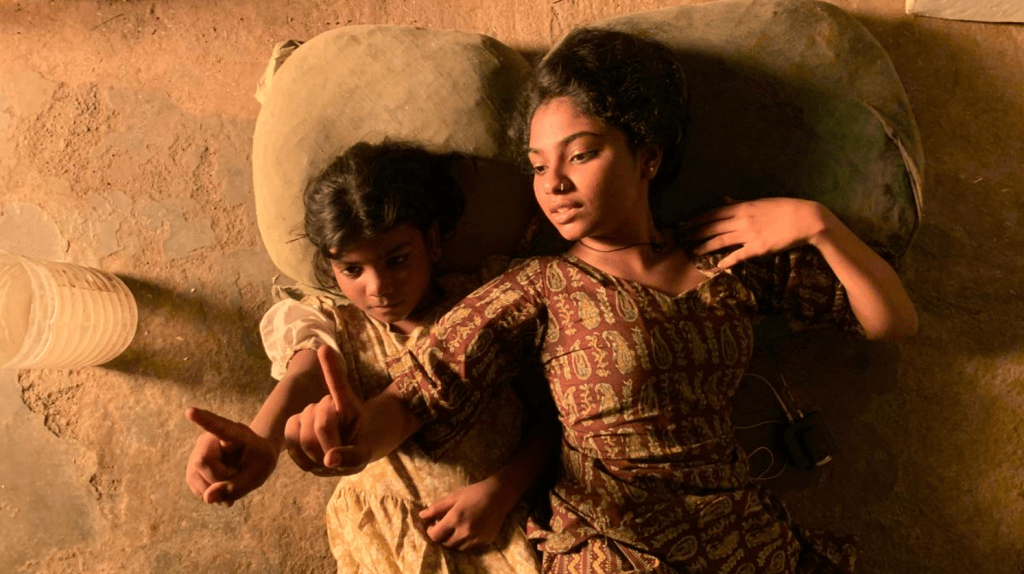
The film was a pleasant surprise. I loved it. It was just 22 minutes, but packed with emotions.

It tells the story of child labourers. They are presented not as helpless victims, but as resilient children who find joy even in hardship. The truth is, we often see others through our own lens and may view them as “helpless.” But for them, this is simply life. They know no other kind of life, and they’re doing their best with what they have. That’s what the movie captures so beautifully — life as they see it, not as we do.

It’s a social hierarchy. Someone wealthier might be looking at me with pity, thinking I’m suffering. Yet I’m making the most of what I have, because that’s the life I know. We suffer mostly when we lose something we once had, when we can compare the before and after, and we truly miss the before.

I’ve often felt that those not well-off often make the best of what little they have, which is why they find happiness in the smallest things, like a bag of jalebi, for instance. Anuja captures that spirit beautifully: “The present may not be bright, but we can strive for a better tomorrow.

The film avoids moral preaching or lecturing. It’s simply about two sisters supporting each other in a harsh world.

The most moving part of the film is that Sajda Pathan, who plays Anuja, was once a child labourer in Delhi before being rescued by the Salaam Baalak Trust (SBT). She now lives at the NGO’s Day Care Center, founded in 1988 by filmmaker Mira Nair, who, interestingly, is also the mother of New York’s new Mayor, Zohran Mamdani.

Ananya Shanbhag also delivers an excellent performance as the elder sister, Palak.

I would definitely recommend the short film. Anuja is streaming on Netflix.

From India-Pakistan to Gaza: Exploring the Duality of War

Fire explosion with smoke

Personal observation: In almost every war, there’s always someone who doesn’t want it to end.

In the India–Pakistan war, many in India didn’t want the fighting to stop because they felt Pakistan hadn’t learned its lesson yet. Some even wanted the government to reclaim PoK (Pakistan-occupied Kashmir) during this time (which I strongly oppose).

When Israel attacked Iran’s nuclear sites, many anti-regime Iranians wanted the war to continue because they hoped the regime would fall.

The Israel–Gaza conflict is even more unusual. Many who kept calling for a ceasefire suddenly went quiet or were openly against it when finally announced. Maybe they had expected Israel to be driven out and a new Palestinian state to rise “from the river to the sea.” But that idea is unrealistic and only calls for more violence. Just like India will never give up Kashmir, Israel will never give up its land. Both countries get a lot of criticism for putting their own interests first. But, over the years, Jews and Indians have learned an important lesson: if they want their interests protected, they can’t rely on anyone else. When Indians get murdered in America, there’s next to no backlash. It’s the same case with Jews. History is also proof that when Hindus face persecution or genocide (Kashmiri Pandits, Sandeshkhali, Bangladeshi, and Pakistani Hindus), the world stays silent. In a world shaped by selective activism, these two communities have gradually learned to shed their passivity and docile nature, standing up for themselves without guilt. Indians, in my view, are still learning. Our tendency to stay silent runs deep. But since 2014, that’s starting to change, much to the annoyance of some. Apparently, a “good” Indian is still largely expected to be a silent one in the face of persecution and bigotry.

Anyway, the point is that in any war, there’s always duality. Those who push for the conflict to continue aren’t always on the “far-right.” Sometimes, they are far-left or far-right figures from other communities, disguised as leftist liberals. Take, for example, the India-Pakistan war. Many leftists in India wanted it to end and for peace to prevail. Yet recently, some of those same voices wanted Hamas to reject the peace deal, even at the cost of many lives.

I’ve often felt that the far-left and far-right are just two sides of the same coin. The recent wars and reactions to them over the years only validate this claim.

***

Photo by Pixabay

Movie Spotlight: Paradha

Paradha Movie Poster

I actually wanted to watch Paradha in the theatre, because I thought the cast was interesting. It had my lovely curly-haired favourites: Anupama Parameshwaran and Darshana Rajendran, who are known faces in the South. But then I got caught up with other priorities and missed booking a ticket that weekend. Later, I came across some reviews that made me second-guess whether it was worth watching on the big screen and decided to skip going to the theatre. Recently, when it was released on Amazon Prime, I finally decided to watch it.

The movie made me realize that not every review online is meant for you. Reviews often reflect the reviewer’s personal taste, but we tend to assume we’ll feel the same way. I’ve had similar experiences with other films, too, where the reviews were harsh, yet I ended up enjoying them. I still don’t get the importance of movie reviews, because whether we like a movie or not is subjective. But here I am, giving my own movie reviews from a highly subjective viewpoint. I think we should treat reviews as such: personal opinions of someone who loves watching movies, and not the absolute truth.

What’s It About?

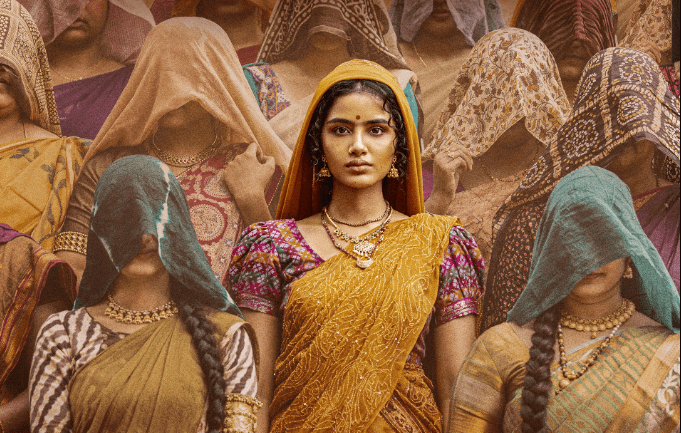
Paradha, true to its name, centers on Subbu (Anupama Parameshwaran), a young Hindu woman from a remote Indian village where the tradition of paradha (dupatta veiling) is strictly practiced. While this custom is largely cultural in many parts of India, the film presents it as a religious mandate. The villagers worship Goddess Jwalamma, who they believe commanded that women remain hidden behind a veil. From puberty onward, every girl is forced to follow this rule, with severe consequences for defiance. Subbu, however, finds herself caught in a controversy that threatens her marriage to the man she loves.

Thoughts

Though the story begins with a devout woman who strictly follows religious practices, Paradha is not just about her. It portrays women from different walks of life, each facing gender discrimination in unique ways.

The first woman is deeply religious, bound by the strict purdah or dupatta system. The second, married outside the village, has left purdah behind but remains traditional in other aspects. The third rejects religious traditions altogether, embraces modern values, and focuses on her career. The fourth is a policewoman who’s happily married, enjoying full freedom, and choosing to follow certain traditions out of personal preference rather than compulsion. The movie keeps the narrative balanced this way.

Paradha is a feminist film centered on women’s empowerment, and it may not appeal to everyone. It highlights how women, even the most progressive, continue to face discrimination, no matter how far they try to escape from it.

I really enjoyed the movie. The climax was chilling, and the performances, especially by Anupama Parameshwaran, Darshana Rajendran, and Sangeetha, were superb. It’s a brave film, because criticizing patriarchy is never easy. Often, women themselves defend restrictive practices by saying, “It’s our choice.” But true choice exists only when opting out doesn’t bring harsh criticism or punishment. Many women follow norms not out of freedom, but because they have no other option. The movie captures this truth powerfully.

Paradha is now streaming on Amazon Prime. I watched it in the original Telugu with English subtitles.