An Ode to 9 Thought-Provoking Life Quotes from Bonnie Garmus’s Lessons in Chemistry

Chemistry Experiment Image

I recently came to know that there is an Apple TV series based on Bonnie Garmus’s Lessons in Chemistry. Still, like many book lovers who believe the original story is always better than any adaptation, I chose to read the book first. And I am glad I did.

Lessons in Chemistry is warm, quirky, and emotional. It begins at a quick pace and later slows down to let the reader focus on how the characters are feeling. The fictional novel explores women empowerment, career, ambition, love, grief, and self discovery.

The story is about two unconventional scientists who view the world through logic. Their relationship feels unusual to others because their conversations revolve around research, experiments, and what most people would call nerdy banter. But the connection they feel with each other is real. They believe they are soulmates.

The female scientist eventually steps into an unexpected phase of her life and has to leave her career only to soon become the host of a cooking show. The show goes on to gain popularity dude to her unique, scientific approach towards food. She treats every recipe like a science experiment. She explains why each ingredient matters and the chemical composition that affects taste and cooking. This fresh perspective inspires her audience and transforms the way they think about cooking.

If you enjoy fiction that blends romance, feminism, science, and character driven storytelling, Lessons in Chemistry is worth adding to your reading list.

I also want to list some of my favourite thought-provoking quotes from the book. Hope you enjoy them as much as I did.

One thing I’ve learned, Calvin: people will always yearn for a simple solution to their complicated problems.

It’s a lot easier to have faith in something you can’t see, can’t touch, can’t explain, and can’t change, rather than to have faith in something you actually can.

From his own lessons, he knew repetition was important. The key was not to overdo the repetition—not to make it so tiresome that it actually had an inverse result and caused the student to forget. That was called boredom. According to Elizabeth, boredom was what was wrong with education today.

No wonder people didn’t understand animals. They could barely understand each other.

Having a baby, Elizabeth realized, was a little like living with a visitor from a distant planet. There was a certain amount of give and take as the visitor learned your ways and you learned theirs, but gradually their ways faded and your ways stuck. Which she found regrettable. Because unlike adults, her visitor never tired of even the smallest discovery; always saw the magic in the ordinary.

“What I find interesting about rowing,” Dr. Mason was saying, “is that it’s always done backwards. It’s almost as if the sport itself is trying to teach us not to get ahead of ourselves.” He opened his car door. “Actually, when you think about it, rowing is almost exactly like raising kids. Both require patience, endurance, strength, and commitment. And neither allow us to see where we’re going—only where we’ve been. I find that very reassuring, don’t you? Except for the flip-outs—of course. I could really do with fewer flip-outs.”

But as she read, she’d found herself wondering—did the artist ever get distracted? Ink an asp instead of a goat? And if so, did he have to let it stand? Probably. On the other hand, wasn’t that the very definition of life? Constant adaptations brought about by a series of never-ending mistakes?

“I don’t have hopes,” Mad explained, studying the address. “I have faith.”
He looked at her in surprise. “Well, that’s a funny word to hear coming from you.”
“How come?”
“Because,” he said, “well, you know. Religion is based on faith.”
“But you realize,” she said carefully, as if not to embarrass him further, “that faith isn’t based on religion. Right?”

“Whenever you start doubting yourself,” she said, turning back to the audience, “whenever you feel afraid, just remember. Courage is the root of change—and change is what we’re chemically designed to do. So when you wake up tomorrow, make this pledge. No more holding yourself back. No more subscribing to others’ opinions of what you can and cannot achieve. And no more allowing anyone to pigeonhole you into useless categories of sex, race, economic status, and religion. Do not allow your talents to lie dormant, ladies. Design your own future.

When you go home today, ask yourself what you will change. And then get started.”

***

Photo by Ron Lach
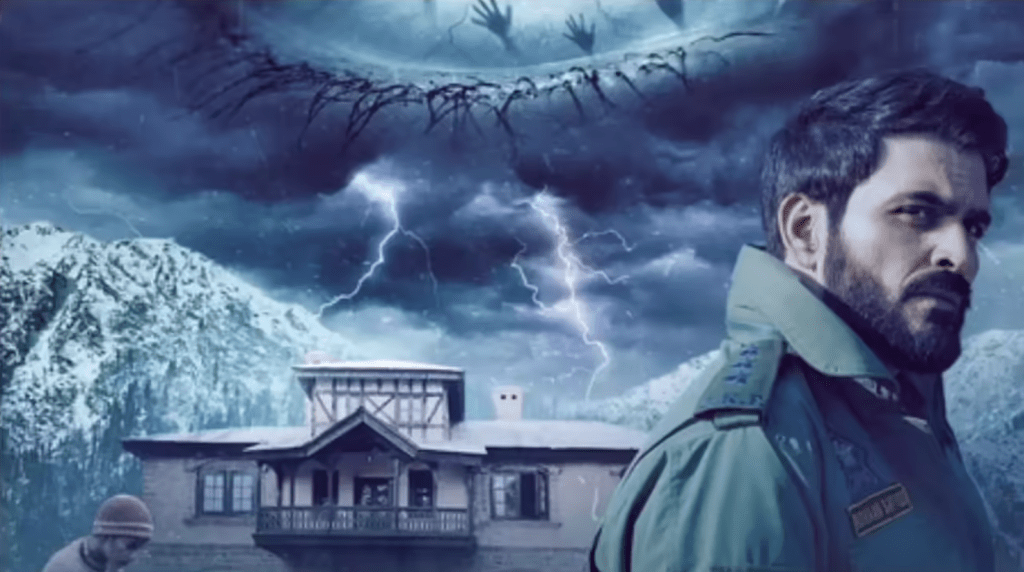
Netflix Movie Spotlight: Baramulla

Baramulla Movie Poster

What defines horror? We often think of ghosts, possessed souls, or strange creatures with no clear form. Yet I realized there’s another type of horror that hits harder. The ones that combine these supernatural ideas with the harsh truths of real life. This is a type of blend that creates an impact, which stays with you long after the movie is over. This is where Baramulla is about.

What’s It About?

Baramulla opens with a policeman who moves to Kashmir and stays in an old house filled with secrets. He is there to investigate the disappearance of children in the area. Strange events start to unfold at once. The elder daughter senses a foul, “dog-like” smell in the house, even if there are no dogs. The caretaker carries a plate of food every day to a locked room. What lies behind these mysteries? Why are children vanishing? These questions drive the heart of the story.

Thoughts

I can’t, unfortunately, share everything I felt without giving away the main plot. Since I wanted to share my thoughts in full, I placed them in a separate “Spoilers Ahead” block after this section. You can skip it if you prefer to avoid spoilers.

Baramulla left me with many emotions. I was genuinely amazed by how the team crafted it.

The movie tries something that Indian cinema, to my knowledge, hasn’t attempted before in a horror movie. That is, blending the past and the present into a story that’s rooted in historical events. It reminds you that horror has layers. It’s not only about the unknown, but also the known. The horror of trust turning into betrayal. The horror of being dismissed or gaslit. The horror of violence, both mental and physical. Baramulla captures all of this with sharp clarity.

The performances are strong across the board. Personally, I would say it’s a must-watch.

Baramulla is now streaming on Netflix.

**Spoilers Ahead**

I felt emotional through many scenes. The acting was powerful and honest. The pain never felt exaggerated.

By now, you probably know that the film draws from the suffering Kashmiri Hindus faced in the late ’80s and ’90s. Many cast members are Kashmiri Hindus who had to flee their homes. Manav Kaul is one of them. He left Kashmir when he was in grade 4. He moved on to become a competitive swimmer in his late teenage years and participated in state and national-level championships. He has more than 14 national medals in swimming to his credit.

The end scenes also show Sanjay Suri, which is befitting, since his father was killed by terrorists in Srinagar when Suri was just 19. He moved to Delhi after that and became a known face in the film industry.

The producer and writer, Aditya Dhar, who is also Yami Gautam’s husband, is a Kashmiri Pandit. He has been using his craft to share Kashmir’s story with care and technical prowess.

Some Kashmiri Pandit celebrities, like Kunal Khemu, have chosen not to explore their past, and that is their personal choice. In an interview with Smita Prakash, he said he doesn’t know much about that period, even though his own family lived through it.

I feel it’s important for us to understand our history so we don’t repeat old mistakes. Stories like these should be passed from one generation to the next. My only regret is not asking my grandfather about his experiences—how Kerala felt during the Indian freedom struggle, and what life was like then. Those anecdotes have been lost forever, as he did not pass on the stories to his children as well.

It’s remarkable that so many Kashmiri Hindus who had to flee the valley are using art to express their experiences instead of resorting to violence. Their goal is empathy and understanding, something they were denied for a long time, not provocation. Choosing storytelling over violence is admirable, especially in a world where violence is often justified in the name of resistance.

There are also a few Kashmiri Hindus with left-leaning views who defend problematic groups and take part in “Free Kashmir” sloganeering, similar to how a very small number of non-Zionist Israelis speak in ways that don’t reflect the wider population.

Most Kashmiri Hindus (and some Kashmiri Muslims) have appreciated the movie. However, left-leaning Hindus are also criticizing the movie for “propaganda,” even though the events have been well documented. Films that depict and educate the viewers on crimes against Muslims in India are welcomed, while films showing crimes against Hindus are often dismissed as Islamophobic, nationalist, or propaganda. This imbalance is where many activists struggle. They accept one truth but not the other.

People like me have slowly stepped out of that mindset to face the whole truth.

It may take a while, but I really believe the truth will eventually reach wider acceptance sooner or later. And the stories can’t stop until the pain is finally acknowledged. They need to be told, retold, and carried forward. Only then will they finally find the place they deserve.

How Does It Feel to Lose a Parent?

How Does It Feel to Lose a Parent

Losses are an unavoidable part of life. You win over some people while you lose others. However, some losses, especially the death of a parent, are permanent and leave an aching scar. Nothing can truly prepare you for this. The experience is uniquely profound in the sense that we often take our parents for granted, assuming they will always be there. When death eventually rears its ugly head, it comes as a rude shock.

I lost my father several years ago. I still vividly remember the days leading to his death. He had started losing his memory and was facing hallucinations. The doctors we consulted were unable to treat his issue effectively. As someone who has seen her father as a proactive and energetic man most of her life, this transition was unbearable. The pain and suffering of my loved ones always scared me. You feel helpless, knowing nothing you do can make them feel better. You also feel helpless witnessing their own struggle to comfort themselves.

Distance ends up helping your mental health in such circumstances, but it also brings with it a terrible amount of guilt. Some children go abroad and feel guilty for not spending enough time with their parents. I stayed near my parents, yet the guilt remained. How can you perfectly cater to your own mental health, essential for managing daily work life, while caring for an ailing loved one? It is not easy. This is the most difficult stage for any family member acting as a caregiver. We simply do not know how to navigate the situation.

My father quietly passed away one day while we were in the midst of hiring professional help for his care. It had become emotionally taxing for my mother to take care of him alone, so we needed the extra support. I guess his leaving us was his way of saying, “Don’t worry too much about me. I’m going to a better place where all my needs will be taken care of.

People often say that time heals the pain of losing a loved one. As someone who has lived with grief for several years, I can tell you it’s a lie. You never heal from a loved one’s death; you simply make peace with it. The sadness becomes a part of you, often camouflaging itself well within the depths of your soul, but it sometimes surfaces unexpectedly. When it does, you embrace it, sit with it until the moment passes, and then carry on with your life.

The sadness travels with you like a silent, understanding companion. It doesn’t demand your attention all the time, but it never leaves you. You don’t wish for it to leave you alone, either. In this digital, robotic world, when circumstances make me feel like I am devoid of sentiments, all I have to do is think of my father. As my eyes well up, I feel relieved knowing my soul still aches from his memory. It serves as a gentle reminder that I am still a living, breathing being, capable of experiencing deep, intense emotions.

***

Picture Courtesy: Matthias Zomer

My Heart Feels Heavy

My heart feels heavy

I have been grieving over what happened in the last few weeks.

Sometimes, I wish I could be blissfully ignorant of global affairs, so I could avoid the tyranny of empathy. It would have done me a lot of good if my line of thinking was, “There are enough issues in India. Why should I focus on other countries?

However, that’s not the case.

I am witnessing an ugly side of humanity, something I never observed in close quarters before. Innocent civilian deaths are being condemned based on race, community, history, and other factors. A lot of analysis is done before deciding whether to mourn the departed.

No one seems to see the civilians as people with their own set of traumas and fears. Each one is trying to prove why the deaths of “others” are justified. I saw similar arguments happening between friends. It just broke my heart.

I can feel something in me shifting. I think it’s grief from broken expectations. Pain changes you. It molds you into someone who is more prepared to deal with similar mind-numbing events in the future. Your mount of delusions slowly starts cracking, the same ones that had previously shielded you from the truth and kept you blissfully happy. I feel vulnerable in this new revelation. Everything feels like a daze, and my sleep is disturbed. It feels like a raw wound that will take time to recover from. At the same time, I am grieving the departure of my older version. The one that was relatively more optimistic about the goodness in people.

I am at a stage where I have to repeatedly comfort myself, saying it’s okay to let go of things I cannot control. I hope I find it in myself to forgive people who participated in selective empathy.

I want a peaceful tomorrow. But it looks like a distant dream now.

I am craving more than ever for a rational group that condemns the cruelty of innocent civilians, regardless of religion, race, or political affiliations. A group where humanity is the sole focus.

***

Photo by paul voie