
3 Body Problem: An Alien Show That Isn’t Just About Invasion

3 Body Problem Series Image

I loved 3 Body Problem on Netflix. It’s not a newly released series, but it was on my watchlist for the longest time.

The series follows the familiar trope of everything bad originating in Asian countries, while the developed countries work extra hard to save the world, even if it means resorting to some questionable measures.

But putting that aside, the show is incredibly engaging and entertaining. It keeps you hooked with its stunning visuals, innovative presentation and constant sense that something bigger is happening beneath the surface.

As someone who has watched quite a few shows and movies about aliens, 3 Body Problem felt different from the usual, sudden and direct “We are here to invade you” storyline.

There is much more going on here.

The show brings in politics, science, religion, human psychology and, most interestingly, people who believe that humanity cannot be saved from itself. It presents different viewpoints on human tragedies without dehumanizing either side. Each side believes it is right in its own way, something that feels relevant to the world we live in today, where nuance hardly exists anymore.

And then there is the alien question.

I, for one, find it almost impossible to believe that we are the only intelligent life in such a vast universe. The universe is simply too enormous for me to accept that humans are the only beings who have somehow managed to evolve, survive and become intelligent.

Why haven’t we encountered anyone else yet? There could be countless explanations. Maybe intelligent civilizations are too far apart. Maybe they exist at completely different points in time. Maybe we simply haven’t developed the technology to detect them.

Or maybe, as the show suggests, we have no idea what we might be dealing with.

I also find the idea that an extraterrestrial civilization could be far more intelligent than humans completely plausible. We tend to assume that because we are the most technologically advanced species we know, we must be at the top of the intelligence ladder.

But we only have one example to compare ourselves against: us.

What if something else has had millions of years more to evolve?

That possibility is one of the things that makes 3 Body Problem so fascinating to me.

The series is definitely worth watching if you enjoy science fiction and alien stories. Just don’t expect the first season to answer every question. There is a lot more to come, and a new season is on the way.

Streaming on: Netflix
Episodes: 8
Runtime: Approximately 50 minutes per episode

Musafir Cafe: For The Ones We Loved and Lost

Musafir Cafe Poster

If you’ve ever loved and lost, you’ll probably relate to Musafir Cafe.

The yearning, confusion, helplessness, and desperate search for closure all felt incredibly real. It is one of those rare romance dramas that understands that moving on isn’t as simple as people make it seem.

Love is rarely a straight road, yet many Bollywood romance films still portray it that way. Boy meets girl, they fall in love, and the conflicts are usually external, whether it’s parents, caste, or society.

While those issues absolutely continue to exist today, many modern relationships fall apart for entirely different reasons. Ego clashes, incompatibility, poor communication, bad timing, emotional baggage, and countless other factors play a role.

Relationships are layered and complicated, so why are we still confined to the typical boy-meets-girl stories?

That is where Musafir Cafe stands out. Instead of polishing relationships into something easy to consume, it embraces the messiness of love. The emotions feel raw, honest, and deeply human.

Even when the characters move forward with their lives, the past never completely disappears. And that’s exactly how real life works. We all carry pieces of our past relationships with us. They shape who we become. Some people turn them into lessons, while others carry the bitterness into every relationship that follows.

I haven’t read the book that Musafir Cafe is based on, and I actually think that worked in my favor. Once you’ve read the original book, comparisons are almost impossible to avoid. Going into the Netflix series without those expectations allowed me to experience the story exactly as it unfolded, without constantly measuring it against the source material.

The standout performance for me was Vedika Pinto as Sudha. A very close second was Mahima Makwana as Preeti, only because she wasn’t given enough screen time. But the moment she broke down in sheer helplessness, I found myself tearing up too. That fear of losing everything precious to you felt painfully relatable.

What resonated with me even more was her attempt to handle the situation with maturity despite the emotional turmoil. That part felt deeply personal because I’m exactly the same when it comes to matters of love. I don’t create a scene. I create space for the other person to process their emotions, even when it hurts.

Another refreshing aspect of Musafir Cafe was how natural everyone looked on screen. No obvious lip fillers or overly polished appearances. It reminded me of the 90s, when actors looked more relatable and expressive.

It was also nice to see small black bindis, black kajal, long earrings, and flowy Indian outfits take center stage again. These were once iconic Bollywood fashion staples but have become less common with the rise of minimalist beauty trends. Whether you prefer minimalism or not, there’s no denying that these little details add a certain charm and charisma to female characters.

Personally, I’ve always felt that black kajal has a depth that brown kajal simply doesn’t. It frames the eyes in a way that’s hypnotic. It’s probably one of the reasons people on Reddit still bring up Alia Bhatt’s looks in films like 2 States and Badrinath Ki Dulhania. Her bold black kajal became such a defining part of those looks.

If you’re looking for a heartwarming yet emotionally honest Netflix series, I’d definitely recommend giving Musafir Cafe a watch. It has around 8 episodes, making it an easy binge.

An Ode to 9 Thought-Provoking Life Quotes from Bonnie Garmus’s Lessons in Chemistry

Chemistry Experiment Image

I recently came to know that there is an Apple TV series based on Bonnie Garmus’s Lessons in Chemistry. Still, like many book lovers who believe the original story is always better than any adaptation, I chose to read the book first. And I am glad I did.

Lessons in Chemistry is warm, quirky, and emotional. It begins at a quick pace and later slows down to let the reader focus on how the characters are feeling. The fictional novel explores women empowerment, career, ambition, love, grief, and self discovery.

The story is about two unconventional scientists who view the world through logic. Their relationship feels unusual to others because their conversations revolve around research, experiments, and what most people would call nerdy banter. But the connection they feel with each other is real. They believe they are soulmates.

The female scientist eventually steps into an unexpected phase of her life and has to leave her career only to soon become the host of a cooking show. The show goes on to gain popularity dude to her unique, scientific approach towards food. She treats every recipe like a science experiment. She explains why each ingredient matters and the chemical composition that affects taste and cooking. This fresh perspective inspires her audience and transforms the way they think about cooking.

If you enjoy fiction that blends romance, feminism, science, and character driven storytelling, Lessons in Chemistry is worth adding to your reading list.

I also want to list some of my favourite thought-provoking quotes from the book. Hope you enjoy them as much as I did.

One thing I’ve learned, Calvin: people will always yearn for a simple solution to their complicated problems.

It’s a lot easier to have faith in something you can’t see, can’t touch, can’t explain, and can’t change, rather than to have faith in something you actually can.

From his own lessons, he knew repetition was important. The key was not to overdo the repetition—not to make it so tiresome that it actually had an inverse result and caused the student to forget. That was called boredom. According to Elizabeth, boredom was what was wrong with education today.

No wonder people didn’t understand animals. They could barely understand each other.

Having a baby, Elizabeth realized, was a little like living with a visitor from a distant planet. There was a certain amount of give and take as the visitor learned your ways and you learned theirs, but gradually their ways faded and your ways stuck. Which she found regrettable. Because unlike adults, her visitor never tired of even the smallest discovery; always saw the magic in the ordinary.

“What I find interesting about rowing,” Dr. Mason was saying, “is that it’s always done backwards. It’s almost as if the sport itself is trying to teach us not to get ahead of ourselves.” He opened his car door. “Actually, when you think about it, rowing is almost exactly like raising kids. Both require patience, endurance, strength, and commitment. And neither allow us to see where we’re going—only where we’ve been. I find that very reassuring, don’t you? Except for the flip-outs—of course. I could really do with fewer flip-outs.”

But as she read, she’d found herself wondering—did the artist ever get distracted? Ink an asp instead of a goat? And if so, did he have to let it stand? Probably. On the other hand, wasn’t that the very definition of life? Constant adaptations brought about by a series of never-ending mistakes?

“I don’t have hopes,” Mad explained, studying the address. “I have faith.”
He looked at her in surprise. “Well, that’s a funny word to hear coming from you.”
“How come?”
“Because,” he said, “well, you know. Religion is based on faith.”
“But you realize,” she said carefully, as if not to embarrass him further, “that faith isn’t based on religion. Right?”

“Whenever you start doubting yourself,” she said, turning back to the audience, “whenever you feel afraid, just remember. Courage is the root of change—and change is what we’re chemically designed to do. So when you wake up tomorrow, make this pledge. No more holding yourself back. No more subscribing to others’ opinions of what you can and cannot achieve. And no more allowing anyone to pigeonhole you into useless categories of sex, race, economic status, and religion. Do not allow your talents to lie dormant, ladies. Design your own future.

When you go home today, ask yourself what you will change. And then get started.”

***

Photo by Ron Lach

Netflix Thriller Spotlight: Wayward

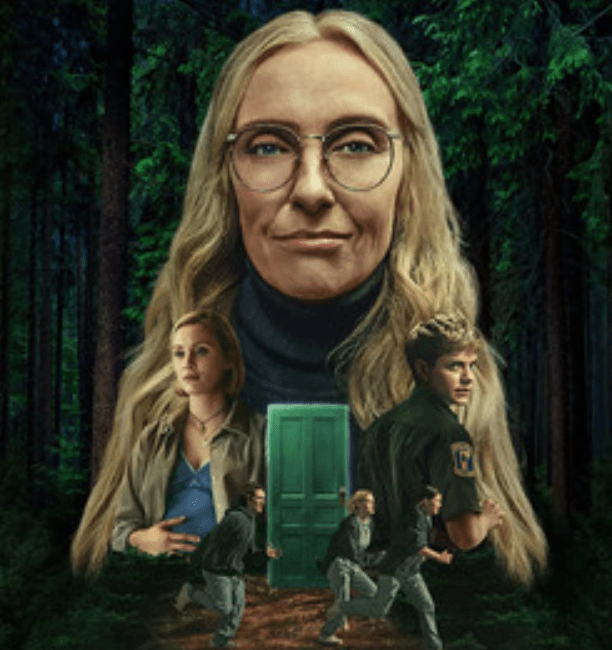
Wayward Netflix Poster

Do you ever pick a series solely based on its synopsis? That’s exactly how I do it. I tend to avoid Netflix teasers and trailers as they are way too detailed, giving away too much, and ruining the element of surprise for me. I prefer diving straight into a story with minimal hints, letting the plot unfold organically. It keeps the narrative fresh and exciting. This could also be because I prefer reading over visuals.

That’s how I ended up choosing Wayward. Just a quick read of the synopsis (which felt interesting), and I was in.

What’s It About?

Wayward is set in a school called Tall Pines. It looks like a regular school at first (just kidding!). But trust me, you’d never want your kid saying their school is anything like this one. It’s an academy where parents send troubled, rebellious teens hoping they’ll be “fixed.” But beneath the surface, something darker seems to be going on. There’s a creepy, almost sinister vibe that makes you question what’s really happening behind those closed doors.

Thoughts

I really enjoyed Wayward. Normally, I take ages to finish a series. Not because I’m swamped with work, but because my attention span has been wrecked by endless Instagram reel scrolling. I just can’t deal with shows that drag on forever. And let’s be honest, a lot of series tend to do exactly that. One-hour episodes stuffed with fillers that barely move the story forward.

But Wayward was refreshingly different. Just 8 episodes, and not once did I feel the urge to check my phone or zone out. I also have a soft spot for women-led storylines, so that probably helped keep me hooked.

The rebellious best friends were a bit much for someone like me. I’m naturally more disciplined. But aside from their chaotic energy, nothing really irked my nerves.

The acting was top-notch. Mae Martin as Alex, the transgender young police officer, and Toni Collette as Evelyn, the head teacher of Tall Pines academy, were perfect in their respective roles. The most layered character, I felt, was that of Laura, played by Sarah Gadon. Alyvia Alyn Lind and Sydney Topliffe as Leila and Abbie were convincing as the troubled teens. The ending could’ve been stronger, sure, but I’m not complaining.

Wayward is streaming on Netflix, with each episode running for about 45 minutes.

Movie Review: The One I Love

The One I Love Movie Poster

A lot of love stories released lately haven’t worked for me. I tried Saiyaara, but it felt more Gen Z-oriented. While they cried, I yawned. As a 40+ year-old, I am not quite sure if that yawn stemmed from a vitamin deficiency or because I was genuinely bored. It’s a tricky age group.

Then, I gave Metro In Dino a shot, only to find every character cheating on their partner… while singing songs, of course, because that’s how it is in Bollywood. Your loved one could have died, but you still end up singing a romantic song for your partner. Remember Suraj Hua Maddham?

While I was on this quest for a good love story, I realized there’s no chance of my stumbling upon a feel-good romcom that meets my dreamy requirements. So I thought, why not pick an old movie that already matches my soul? That’s how I ended up choosing this dark, unsettling Black Mirror-type romance, The One I Love.

What’s It About?

A couple struggling with marital issues goes on a retreat to a remote resort. This place, recommended by their therapist, is where many of his former patients have found healing. The home is warm and spacious, disconnected from the outside world, seemingly perfect for reconciliation. But soon, strange and unexpected events happen, which draw out very different responses from each partner.

Thoughts

I enjoyed the movie. It was gripping and featured some excellent performances.

I felt that even though the movie was released in 2014, it resonates with today’s AI age, where many people turn to artificial means to fulfill emotional needs their partners can’t always meet. The filmmaker probably foresaw a future where this would take shape in some shape or form.

I especially felt for the female lead, who genuinely seemed happy with the new experience. She was finally getting what she had always craved, even if it couldn’t last. It leaves you wondering what you might have done in her place. If you’re emotionally craving for a deeper bond, and you accidentally stumble upon it after years of acceptance that you would never experience it in your lifetime, how would you react?

You look at the character, see her face light up with a happiness that was missing in the previous scenes, and you can’t help but wish she could experience that bliss a bit longer. Routine has a way of dulling your emotions. You do not wish to take things for granted, but it happens anyway. These relatable human emotions make you empathize as well as get annoyed with Sophie (played by the talented Elisabeth Moss).

I would say The One I Love was a good watch. It’s currently available for free (not on rent in India, thankfully) on Amazon Prime.

An Ode to This American Woman

Zarna Garga's This American Woman Book Cover

As someone living in India, I enjoy hearing the stories of the Indian-American diaspora. In many ways, we are alike, yet also very different. While India itself holds a wide diversity of thoughts, the experiences of Indian-origin people abroad offer something unique – they make you see your own country from a fresh perspective. Zarna Garg’s This American Woman was one such story that offered me a deep dive into that view.

I have to admit, at first, I was put off by Zarna’s description of India in the few Instagram reels I came across. My patriotism made me defensive. But over time, she grew on me, and I realized that everyone sees a country through their own lens. As an ex-NRI myself, my perspective on India is very different from Zarna’s and her family’s. They see the USA as the best, while I believe India is the best – and that’s okay. Different views deserve respect. It was this curiosity about Zarna’s unique journey that ultimately led me to buy her book.

I loved this book. It made me both laugh and cry. Zarna’s life reads like a movie. Born in Mumbai, she ran away to the US as a teenager after her father tried to force her into an arranged marriage following her mother’s death. From there, she stayed with her sister and slowly built her life in America. Her journey has been tough, leaving her with mental blocks about returning to India. Yet she tells it all with such lightness, as if life itself is a comedy not meant to be taken too seriously.

Pain is my destiny and my company and my affinity. Embracing pain and not wasting time wondering “Why me?” will put you on the fast track to success.

What truly brought me to tears was the chapter her daughter dedicated to her. Even now, writing about it makes my eyes well up (though, to be fair, it might also be that time of the month – we women never really know what’s behind the tears). It’s a chapter worth reading. Everyone faces moments of self-doubt, especially women who’ve had to set aside their careers for family. But when that same family becomes your greatest support system, it’s a blessing. Zarna has that blessing in Zoya.

“For many parents, their children’s careers are their greatest accomplishment, but for me my mom’s is mine” – Zoya

The final part with Zarna’s brother was truly heart-warming. The speech she delivers on stage is pure heart.

I would strongly recommend reading This American Woman. It’s inspirational, funny, and heartwarming, capturing life in its own uniquely Indian-American way.