
Movie Review: The One I Love

The One I Love Movie Poster

A lot of love stories released lately haven’t worked for me. I tried Saiyaara, but it felt more Gen Z-oriented. While they cried, I yawned. As a 40+ year-old, I am not quite sure if that yawn stemmed from a vitamin deficiency or because I was genuinely bored. It’s a tricky age group.

Then, I gave Metro In Dino a shot, only to find every character cheating on their partner… while singing songs, of course, because that’s how it is in Bollywood. Your loved one could have died, but you still end up singing a romantic song for your partner. Remember Suraj Hua Maddham?

While I was on this quest for a good love story, I realized there’s no chance of my stumbling upon a feel-good romcom that meets my dreamy requirements. So I thought, why not pick an old movie that already matches my soul? That’s how I ended up choosing this dark, unsettling Black Mirror-type romance, The One I Love.

What’s It About?

A couple struggling with marital issues goes on a retreat to a remote resort. This place, recommended by their therapist, is where many of his former patients have found healing. The home is warm and spacious, disconnected from the outside world, seemingly perfect for reconciliation. But soon, strange and unexpected events happen, which draw out very different responses from each partner.

Thoughts

I enjoyed the movie. It was gripping and featured some excellent performances.

I felt that even though the movie was released in 2014, it resonates with today’s AI age, where many people turn to artificial means to fulfill emotional needs their partners can’t always meet. The filmmaker probably foresaw a future where this would take shape in some shape or form.

I especially felt for the female lead, who genuinely seemed happy with the new experience. She was finally getting what she had always craved, even if it couldn’t last. It leaves you wondering what you might have done in her place. If you’re emotionally craving for a deeper bond, and you accidentally stumble upon it after years of acceptance that you would never experience it in your lifetime, how would you react?

You look at the character, see her face light up with a happiness that was missing in the previous scenes, and you can’t help but wish she could experience that bliss a bit longer. Routine has a way of dulling your emotions. You do not wish to take things for granted, but it happens anyway. These relatable human emotions make you empathize as well as get annoyed with Sophie (played by the talented Elisabeth Moss).

I would say The One I Love was a good watch. It’s currently available for free (not on rent in India, thankfully) on Amazon Prime.

Hindi Movie Review: Aap Jaisa Koi

Aap Jaisa Koi on Netflix

A socially awkward 42-year-old Sanskrit professor from Jamshedpur meets a free-spirited 32-year-old Bengali French teacher through an arranged marriage setup. He’s orthodox, she’s liberal. This description may feel like the movie is based on a war of languages (keeping up with the trend). But it’s not. At its core, Aap Jaisa Koi delves into the multifaceted nature of relationships. It brings a fresh and nuanced take on modern love, tradition, and society’s double standards.

I’ve often wondered why our romantic cinema sticks to the same old formulas when dynamics within relationships and individuals involved are far more complex. Our movie industry usually focuses on the stereotypical boy-meets-girl story, where the characters fall in love, and then external forces play the villain. There are no other angles to the story. In real life, the friction often lies within the relationship itself – compatibility issues, cultural/morality issues, and more. Such issues are often subtle at first but end up being harder to fix. They aren’t dramatic but quietly playing in the background and are dismissed as unimportant. But each day, it chips away at a part of your soul. Some deal with it openly, whereas others act ignorant to maintain harmony in the household.

There are a lot of relationship angles left unexplored in Indian cinema. Someday, I’d love to see a romantic story about two divorcees giving love a second chance. That dynamic carries a quiet vulnerability: the fear of repeating past pain, the hesitation of stepping into something that once broke you. It’s raw, real, and deeply human. However, just like how society stigmatizes divorcees, I think our Indian cinema stigmatizes them too. India is not a country devoid of divorcees, yet they are rarely shown in cinema.

Unlike many Indian films, K-dramas explore these internal dynamics with depth and nuance. That’s why Aap Jaisa Koi felt refreshing. It brings a romance that’s familiar in setting but different in treatment. It spends extra time focusing on emotions and character development. The dialogues are so warm and real, they might just bring tears to your eyes. A few lines had that effect on me. Not because they were sad, but because they were crafted with such thoughtfulness. It felt like poetry. If you’re a non-Indian reader who enjoys K-dramas for their focus on emotions, give this one a shot. I think you’ll genuinely enjoy it.

Aside from the crackling chemistry, the movie has some dreamy music. Mila Tujhe is my favourite of the lot. In a romantic drama, music plays a crucial role. It should be tender, laced with hope, longing, and desire, not melancholy, to heighten emotions and pull you in completely. That’s exactly what the Aap Jaisa Koi soundtrack does. The couple’s chemistry draws you in, and the music wraps around it, making the experience all the more immersive.

Fatima Sana Shaikh is an actress I’d love to see more of. Whether she’s playing a traditional hijabi in Modern Love: Mumbai or a fiery Bengali in Aap Jaisa Koi, she brings authenticity to every role. There’s so much untapped potential in her, and it’s time filmmakers gave her the space she truly deserves. Her character in Aap Jaisa Koi is a feminist, yet deeply rooted in tradition. She looks ethereal in beautiful, traditional sarees. In Bollywood, modern women are often stereotyped as party-goers in Western clothes, but this film takes a different route. It reminds us that modernity is a mindset, not a dress code. You can be progressive and still stay connected to your culture. Meanwhile, many who dress trendy are found to be regressive in their thoughts. Clothes are not a true indicator of someone’s personality. To know a person, you need to know their thoughts.

Madhavan, as always, does full justice to a role that’s equal parts comical and endearing. His comic timing is spot on, and he effortlessly switches expressions, reminding us once again of his natural screen presence.

Aap Jaisa Koi is a feel-good romance that stays with you. I enjoyed it. The movie is streaming on Netflix.

An Ode to The Mehta Boys

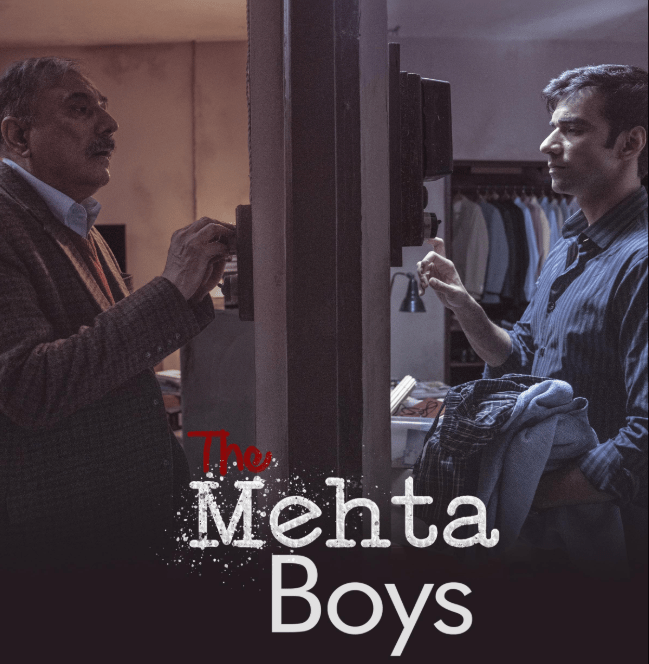
Wholesome movies are rare these days in Indian cinema, making them feel like an oasis in a desert when they do appear. The demand for feel-good movies is higher than ever, as seen in the success of re-releases like Laila Majnu and Sanam Teri Kasam, which prove that Indian audiences are eager for romance and uplifting cinema. It is during such a time that The Mehta Boys has arrived on OTT (Amazon Prime).

The Mehta Boys is a poignant, understated father-son drama centered on their dysfunctional relationship. Open communication and emotional expression are not their strengths, often leaving them struggling for words. Boman Irani portrays a grieving husband learning to cope with his loss, while Avinash Tiwary plays his talented yet self-doubting son. The heart of the story lies in their journey toward accepting each other’s imperfections.

We often see such father-son dynamics play out in real life. In many Indian families, open displays of affection are rare, making the relationship feel more formal than familial. Conversations typically revolve around daily chores and future plans, with emotions deliberately left out. The Mehta Boys captures this dynamic perfectly, portraying characters who have much to say but choose to hide behind silence.

Boman Irani has done an exceptional job as a first-time director, leaving me eager to see what he creates next. Avinash Tiwary, as always, excels, effortlessly bringing out the angst, anxiety, and awkwardness of a character who gradually finds his voice. He shines, leaving you wondering why you don’t get to see him on-screen more frequently. Instead, audiences are repeatedly offered star kids given endless chances to prove themselves, while talented actors like Avinash, who have already showcased their brilliance in just a film or two, are left waiting. It’s unfair, but all one can do is wait for movies like The Mehta Boys to arrive, offering a well-deserved cinematic experience.

Dear Indian Filmmakers: It’s Time to Bring Back Superficiality in Cinema

Dilwale Dulhania Le Jayenge

When was the last time you really switched off and relaxed while watching an Indian movie? I remember getting lost in a make-believe world whenever I watched Yash Raj or Karan Johar films. But sadly, over time, these filmmakers were pushed to make more realistic movies, at the cost of “superficial” ones.

Right now, I can’t seem to switch off completely while watching an Indian movie and drift into a world completely different from mine. I don’t watch movies for reality; I watch to escape it. If I wanted reality, I’d just take a walk outside, not sit down for a movie. But times have changed, and I don’t think we can expect Indian filmmakers to go back to creating movies with grand sets, stunning scenery, and actors with natural beauty and amazing chemistry. The current trend is all about violence, gore (often to the point of regression), and hyper-realism (and plastic surgeries).

Nowadays, if by chance a superficial movie gets released, we have to endure actors with little to no acting skills or the kind of magical chemistry we used to see with iconic pairs like Shahrukh Khan-Kajol, Shahrukh Khan-Juhi, basically Shahrukh with any actress, or Aamir-Juhi.

It’s a very dull era for the Indian film industry when it comes to making feel-good movies. Movie-watchers like myself, who want to escape into a world that isn’t focused on realism, end up turning to Korean or Pakistani dramas. The fact that so many Indian viewers are enjoying these shows proves there’s still an audience for feel-good romantic movies. The demand is there, but unfortunately, the quality supply is missing in the Indian film industry.

Part of the blame also lies with the audience, who now look for realism even in make-believe movies. If many of the romantic Korean or Pakistani dramas were released in India, they’d probably face intense criticism, with thousands of critics dissecting every single scene and evaluating it based on reality. This is why feel-good movies from the past (except maybe Wake Up Sid) are heavily criticized in today’s India. Such criticism discourages filmmakers from making more feel-good movies. Movie watchers like me, who yearn for superficial, romantic cinema, end up feeling dejected in the process.

I hope we get to see some romantic films, but since filmmakers are minting more money and fame from realistic and violent movies, I don’t expect the trend to change anytime soon.

We have good-looking actors like Ibrahim Ali Khan making their debut probably this year. Let’s hope he gets cast in some feel-good movies and his acting skills are as impressive as his looks. However, the current crop of actresses seems too focused on plastic surgeries, leading to a lack of diversity in looks. In the 90s and early 2000s, actresses like Kajol, Juhi, Sonali Bendre, Madhuri Dixit, and Raveena Tandon had distinct appearances. Sadly, that can’t be said now. So, the question arises—who will pair well with Ibrahim Ali Khan in a romantic movie? No one really comes to mind, except maybe Pratibha Ranta.

Cultural Surprises and Shocks in Zard Patton Ka Bunn

Zard Patton Ka Bunn

I have only completed one episode of Zard Patton Ka Bunn (I have no idea what this means) so far on YouTube, but I already have a feeling I will like this Pakistani drama better than Kabhi Main Kabhi Tum. Sharjeena and Mustafa were cute and the series started off well but I didn’t find the story engrossing enough towards the end.

The first episode of ZPKB is endearing. A girl is praying intensely that she passes her exams, while the Maulawi (religious scholar) requests everyone through the mic in the mosque to pray for her. He says it’s admirable that a girl in the village wants to study more. 

This Maulawi is hilarious! When a village officer visits the mosque to announce a population control drive, the Maulawi asks, “What’s the population of Pakistan?” The officer replies, “It’s now 22 crore.” The Maulawi then mumbles to himself in a lighthearted moment, “What’s the use of these 22 crore people if they can’t even sponsor one motor for the mosque well!” 

It’s funny how the Maulawi is shown as a comical character who no one in the village takes seriously. It’s surprising because I always thought Maulawis were treated with utmost respect. On the contrary, this series treats the Maulawi exactly like how some Indian movies show swamis and gurus in a funny light. In the first episode, the villagers are shown berating him for overusing the mosque mic. He’s on it every other minute, asking for donations for the motor.

Now, the shocking part was how casually a female character scolded her husband for waking up late, saying, “You’re a Muslim, not a kafir,” as if it were normal, everyday language. The way the word “kafir” (non-believer) was used so casually suggests it’s deeply ingrained in the cultural discourse. To a Hindu, like me, the word hit me like a jolt. In contemporary times, the word kafir can be seen as an insult by non-Muslims, especially when it is used to highlight the superiority of one religion over another. As a tolerant kafir, I’ll let it slide and move on, but it does make me wonder about its impact, especially among impressionable Indian youth who are into Pakistani dramas. My concern is that it could reinforce divisive ideas, encouraging people to see others through a binary lens of “believers” and “kafirs”. That’s a troubling thought in any diverse, multi-faith society. But here’s hoping Pakistani dramas will be more mindful of such polarized language in the future. As the world becomes more interconnected and local entertainment reaches a global audience, paying attention to details like language can help ensure you don’t alienate anyone who appreciates your work.

That said, I have no intention of boycotting the series. I look forward to watching the remaining episodes on YouTube. It’s not every day you come across such feel-good wholesome witty content. I will savor every moment of it.

An Ode to Kabhi Main Kabhi Tum

Kabhi Main Kabhi Tum
Hania Aamir plays the character of Sharjeena in Kabhi Main Kabhi Tum

I came to know about the Pakistani drama Kabhi Main Kabhi Tum from YouTube recommendations. This was one of those times when YouTube got its algorithm right.

I wasn’t initially sure whether I would like the drama, but once I started, I was hooked. It is no surprise that Kabhi Main Kabhi Tum has gained popularity in India. The reasons are plenty.

Focus on Relationships

The story focuses on everyday relationships. It does not aim to convey any profound social message. The drama is not entirely progressive, but as the audience, the onus lies on us to accept the fictional world of those characters.

We are at an age where we look into political correctness in every movie or drama. This mentality somehow has ruined the movie-watching experience for people like me who prefer rawness over perfection. Indian filmmakers have become too cautious and afraid to offend, which is understandable considering the polarized times we live in. However, they can still develop unique story ideas that are family-oriented.

Most Indian movies and dramas getting appreciated nowadays are dark. If, by chance, a love story gets released, people are quick to dismiss it as cringe, misogynistic, or fake. Box office numbers also reveal that romantic movies have lost their appeal in India. Or maybe it’s because we are not coming up with a captivating love story. Due to this, many filmmakers stay away from making out-and-out romantic, feel-good movies.

So, considering the lack of romantic content, it’s understandable why many Indians are drifting towards Korean and Pakistani dramas like Kabhi Main Kabhi Tum that keep the old-world romance and family-centered stories alive.

The primary takers of romance are women. Most of us understand that the romance shown in movies is make-believe and not realistic, yet we crave a world that we can deep-dive into when we are stressed. Unfortunately, there are not enough choices for us nowadays. This is why dramas like Kabhi Main Kabhi Tum come as a refresher.

Clean Love Story

Kabhi Main Kabhi Tum meets the bill of sweet, clean love stories that we used to enjoy in the past. No one is making out the moment they meet; no one has an “I am cooler than you” attitude. The chemistry is there for your eyes to see. They look lovingly at each other with slight smiles, enjoy quiet dinners sitting on their bedroom floor, and mesh into each other’s lifestyles even if they are poles apart. Small things that make a significant impact.

Beautiful and Relatable Styling

I absolutely love Sharjeena’s free-flowing Pakistani outfits. The styling gives you a feeling that you, too, can pull off the outfit. The hair is not overstyled; the fit is comfortable and suitable for all body sizes, and there is a feeling of relatability when you see it. Nothing seems out of reach for the regular person.

No Realism Fatigue

I personally do not wish to experience realism fatigue while watching a movie or drama, so a good balance of relatability and aesthetics is ideal. To clarify, you might have seen several scenes in Indian dramas/movies shot in the bathroom where the main character is shown answering nature’s calls. They are realistic but not aesthetic. So, in my opinion, such scenes are better avoided in a make-believe world. We don’t need to know if the character peed or pooped or has a runny nose or sweaty face. Some things are better left for the real world.

Conclusion

I believe Indian filmmakers should take note of the popularity of Korean and Pakistani dramas in India. They should recognize that there is a market for such content, which they are currently neglecting to cater to. To create such wholesome dramas or movies, first and foremost, we need better storytellers. Korean dramas are written by female writers, which brings a unique female perspective to the stories. Perhaps Indian filmmakers should consider hiring female writers to bring back the charm of feel-good content in our films.