Okay, I have to be honest first. I’m not a diehard Michael Jackson fan, which is probably why it took me some time to finally watch Michael. I’m actually not a diehard fan of any celebrity or public figure – you know, the kind of fan who can’t even hear anything negative about their hero without getting defensive.
I always tiptoe around such fans, concerned about whether I would offend them. This has been the case after one specific personal incident. I remember discussing a controversy with someone who was a huge MJ fan, and he went absolutely batshit crazy. He started abusing me simply because I pointed out the news when it came out.
So, in a world full of different kinds of “bhakts” covering politicians across ideologies, sportsmen, football clubs, actors, singers, influencers, religion, and everything else, I’m pretty much bhaktless. It still baffles me when people treat their favorite personalities as gods who can do no wrong or act as if they cannot be questioned.
But having said all that, I really enjoyed this movie! It was genuinely so much fun to watch.
I’m guessing there’s going to be a sequel because this movie seems to focus mainly on Michael Jackson’s troubled relationship with his father. There’s clearly a lot more of his life and career to explore.
Jaafar Jackson’s acting was phenomenal. To be cast in the lead role of his uncle might have been intimidating, but he passed with flying colors.
The song and dance sequences in the movie were incredibly energetic. The movie left me with one big feeling: positive vibes!
I started watching Off Campus because of all the social media hype surrounding the series. It took me almost two weeks to finish it, but honestly, that is how I watch almost every show these days.
In fact, it is not limited to web series alone. I often break movies into 30-minute sessions and watch them over several days like a series. I used to think it was because my attention span had become shorter. But then I watched both parts of Dhurandhar, which were over three hours each, in the theatre without feeling bored for a second. That made me realize the issue probably is not my attention span. The story simply has to hook me enough.
Anyway, back to Off Campus.
One thing I appreciated about this Amazon Prime series is that it fully embraces the campus drama setting and focuses on the lives of young adults. That said, I found it a little difficult to relate to the “college student” aspect because most of the cast looked quite grown-up and remarkably sorted out for their age.
As someone who belongs firmly to the K-drama enthusiast camp, I also struggled a bit with how physical the relationships felt compared to the emotional depth I am used to seeing in Korean dramas. The show does explore trauma, vulnerability, and personal growth, but it never quite reaches the level of empathy and layered storytelling that many K-dramas excel at. Because of that, the series did not emotionally move me as much as I expected.
At the same time, I completely understand why Off Campus has resonated with younger audiences. Beneath the romance, it talks about important themes like dealing with complicated feelings, open communication, consent, emotional support, and empathy. These may sound basic, but they are often easier said than done.
Personally, I enjoyed the friendship between Hannah and Allie even more than some of the main romantic storylines. The scene where Hannah finally chooses to share her story with Allie was an absolute tearjerker for me. Truly, blessed are those who have a friend like that in their lives.
I also found Allie’s romantic arc far more nuanced and interesting. She desperately wants to prove she can be alone without using relationships as a crutch and, in the process, makes some questionable decisions. Honestly, that felt very relatable because most of us have done our fair share of nonsense while trying to convince ourselves we have everything figured out.
Her confusion is what makes the storyline compelling. She has a partner who is not a bad person by any measure, but he is not quite the right person for her either. That grey area, where nobody is necessarily wrong yet things still do not feel right, makes for a much more engaging relationship story. Mika Abdalla aces the role. Her resemblance to the Indian actress, Mahima Chaudhry, is also uncanny.
For me, the overall vibe of Off Campus felt like a blend of 13 Reasons Why and Beartown. Because of that, it did not feel particularly fresh or groundbreaking. A quick Google search tells me that the Off Campus books were published around the same period as Beartown, and some even earlier. Still, my point is simply that the storyline felt familiar to me.
Overall, I think Off Campus is a decent one-time watch if you enjoy young adult romance. It may not have offered anything entirely new, but it was engaging enough to keep me watching.
Off Campus is currently streaming on Amazon Prime Video.
I often find myself missing the old Bollywood romance era. Films by Yash Chopra or early Karan Johar had a kind of magic that is hard to find today. The lead pairs had real chemistry, the kind that made you feel every emotion with them. When they looked at each other with misty eyes, you felt like you were falling in love too.
But in many new-generation films, that spark seems lost. I don’t know whether it’s the acting, the writing, or the shift in filmmaking trends. Modern romance feels rushed, predictable, too dark, melancholic, or sometimes just flat. The warmth, passion, and emotional storytelling that defined classic Hindi cinema is fading, and I genuinely miss it.
In today’s film landscape, Rohit Saraf feels like a breath of fresh air. He brings back that soft, believable romance many of us grew up loving. One thing that stands out about him is his effortless chemistry with his co-stars.
My favorite project of his isn’t even a Hindi film. It’s the Tamil romance Kamali From Nadukkaveri, where his performance and chemistry with the lead actress, Anandhi, is genuine and sweet. I would also suggest watching his earlier series on Zee5 titled Woh Bhi Din The. He filmed it when he was much younger. The emotional connection between the characters feels very real. Also, let’s not forget his impeccable chemistry with Pearle Maaney in Ludo, which remains one of my favourites.
In Sunny Sanskari Ki Tulsi Kumari, Rohit Saraf continues that image of the ideal romantic partner. His chemistry with Janhvi Kapoor feels natural and much stronger compared to the chemistry between the main lead pair. Honestly, their scenes had more warmth and emotional pull. I found myself wishing the makers had focused on that storyline instead of pushing the romance between Janhvi and Varun Dhawan. It felt like the more organic love story was sitting right there, but never fully explored.
Personnally, I feel Rohit Saraf deserves more recognition for keeping that old-school romantic charm alive.
Maybe it’s time filmmakers start looking for the right lead pair for Rohit Saraf. If they get that pairing right, many of us women could finally relive the era of Kajol and Shah Rukh Khan or Aamir Khan and Juhi Chawla. Those iconic pairs made romance feel real, soft, and unforgettable.
A couple with that kind of natural chemistry is missing in today’s Hindi films, and audiences like me are definitely craving it.
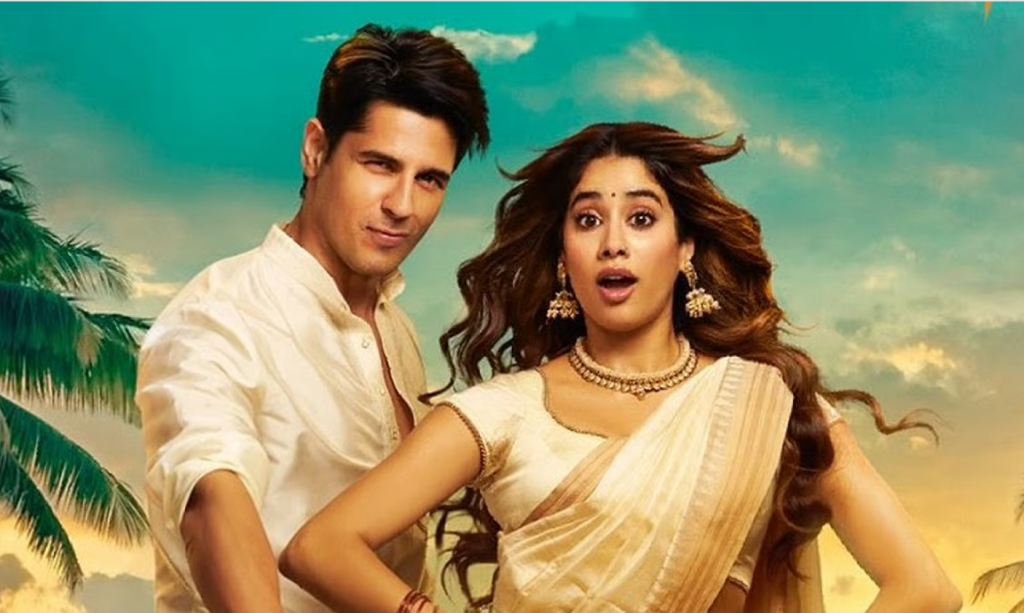
When my mother heard Janhvi Kapoor speak Malayalam in Param Sundari, she said, “That’s how Tamilians in Kerala speak.” So I’m guessing Janhvi’s character in Param Sundari is meant to be Tamilian. She does say a line in Tamil at the beginning, which might be the clue.
Still, it’s odd that her ammavan (Renji Panicker) speaks flawless Malayalam, while his son Venu, who grew up in Kerala, speaks Malayalam with a Tamilian accent. Not exactly consistent. Maybe he picked it up from his best friend, Janhvi’s character?
You will have to make similar conclusions and cook up your own stories to stay at peace with several things in the movie.
What’s It About?
Param, a wealthy start-up enthusiast, heads to Kerala to prove to his father that his newly funded dating app is worth the investment. At a resort there, he meetsSundari, and a love story quietly begins to unfold.
Thoughts
If you ignore the stereotypes, the sardar friend’s racist jokes, and the painfully bad Malayalam, it’s actually not such a bad movie. The first word that catches you off guard is when they pronounce Alappuzha as “Aalapozi.” I’m not sure if it was intentional. But yeah, leave behind your brain while watching this one.
The real star, of course, is Kerala. My state has been beautifully captured from start to finish. So, kudos to the filmmakers for that.
Janhvi looks lovely and delivers a stronger performance than Sidharth Malhotra. He also looks way older than her in the movie.
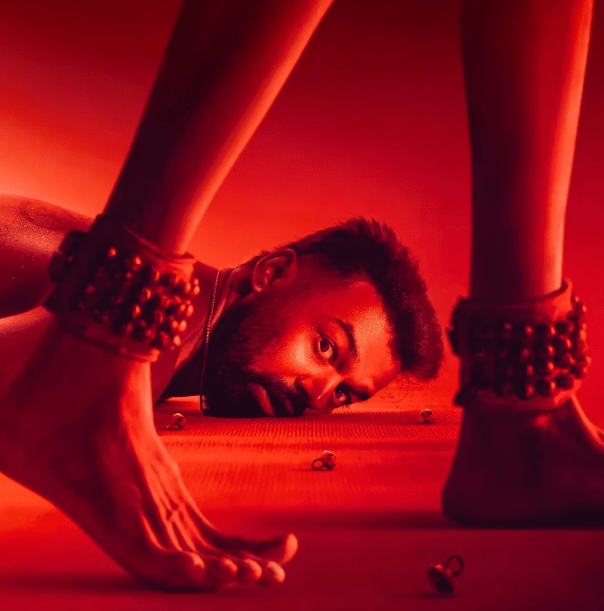
Like many, I found the movie’s name, Diés Iraé, tricky to pronounce. I’m quite sure I’m still saying it wrong. But the offbeat name adds to its charm. For those who don’t know, Diés Iraé is Latin for “Day of Wrath.” It’s a term from Christian theology referring to the day when souls are judged.
The first time I heard about Diés Iraé was when I went to watch Lokah. The trailer of the movie immediately captured my attention. The execution looked stylish, and Pranav Mohanlal looked good. I knew then that I had to watch this movie in a theatre.
What’s It About?
A young, wealthy man who lives life to the fullest begins experiencing strange supernatural events in his home after visiting the house of an ex-fling who was found dead in a well. The restless spirit haunting him seems furious for unknown reasons and determined to destroy his life.
Thoughts
Since Diés Iraé is a horror film, only adults were allowed inside the theatre. An ID card was required. The theatre I went to was almost empty, which I actually didn’t mind. It meant no one was around to make unwanted comments or jokes. This has become a real problem in many Kerala theatres. I faced this issue when I went to watch Bramayugam. I hope the film industry or theatre authorities take strict action against such behavior. If they want to attract more viewers, they must ensure a respectful environment. Otherwise, serious movie lovers will simply wait for the OTT release and enjoy the film peacefully at home.
Getting back to Diés Iraé, I wouldn’t call it mind-blowing. The special effects were impressive, though. Nothing looked fake or unintentionally funny. Pranav Mohanlal delivered a decent performance, and he looked great on screen, which helped balance out a few of his less convincing moments.
There are a few jump scares, so be prepared for that.
Overall, the story felt average. If you’ve seen a lot of horror films, this one might not surprise or scare you much. Still, the execution was solid, and the fact that a film of this scale and quality came from Kerala is definitely something to be proud of.
The creepiest part was seeing the line “inspired by true events.” I didn’t dare look up what those events were. Some things are better left unresearched if you want to sleep peacefully at night.
I would say Diés Iraé is a good one-time watch. At under two hours, it’s a quick and engaging film that keeps you entertained throughout.
It’s Diwali season. This time of year always puts me in the mood for something cozy and family-friendly to watch. But honestly, we just don’t get those kinds of movies anymore. The ones you can enjoy with everyone at home.
Remember the golden ’90s? We’d all sit together and watch Jo Jeeta Wohi Sikandar, Hum Hain Rahi Pyar Ke, or Dilwale Dulhania Le Jayenge without a single dull moment. Okay, not exactly in my family, as I was the only one truly into Bollywood, while the rest were more drawn to Malayalam movies. But I imagine these were the kind of movies that one would typically watch with their families. Nowadays, to relax, I tune into psychological thrillers because family movies do not feel family-oriented anymore.
That’s why I was keen to watch Greater Kalesh when it dropped on Netflix. It’s perfect for people like me who just want to unwind with something light and heartwarming. At under an hour, it’s an easy, breezy watch before jumping right back into Diwali celebrations.
What’s It About?
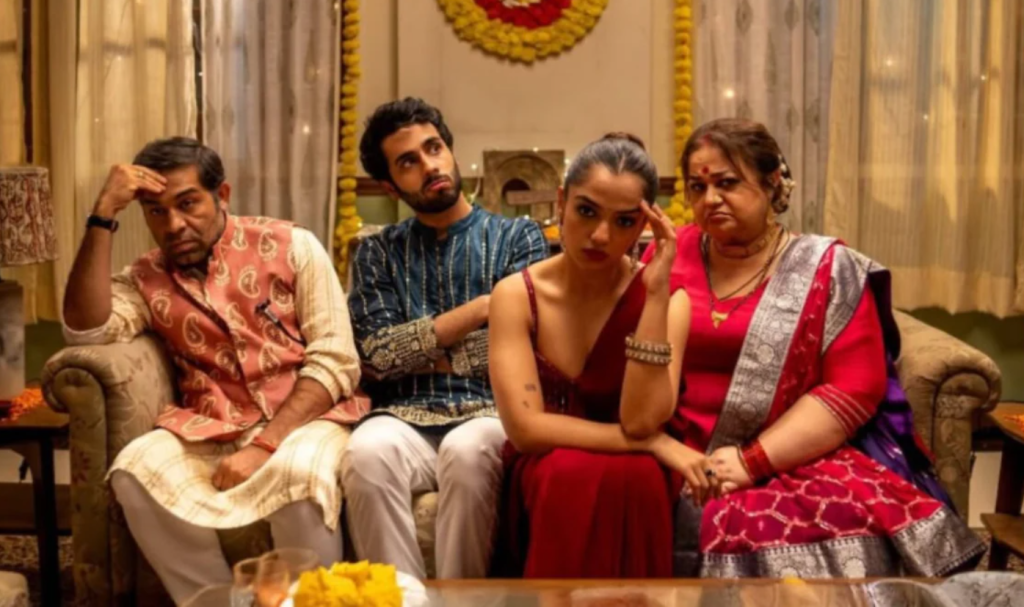
A young career woman returns home after a long time to celebrate Diwali with her family. She’s excited for a warm, cheerful reunion, but the moment she steps inside, she’s greeted not by laughter, but by chaos. Her family members are in the middle of a heated argument, and she can’t quite figure out what started it.
Thoughts
Greater Kalesh is short, simple, and surprisingly sweet. It doesn’t have high-stakes drama or a strong, twisting storyline. But that’s exactly what makes it refreshing for me. Sometimes you just want something light, easy, and comforting, and this little film delivers that perfectly. It might not be everyone’s cup of tea, especially if you seek something more cerebral or non-woke, but to me it felt like peeking into the everyday life of a next-door family and watching them sort things out in their own warm, relatable way.
Ahsaas Channa and Supriya Shukla truly shine here. Their mother-daughter bond feels real and layered. The kind that might make you think of your own mom with a smile.
It’s definitely worth a quick watch. Greater Kalesh is now streaming on Netflix.






You must be logged in to post a comment.