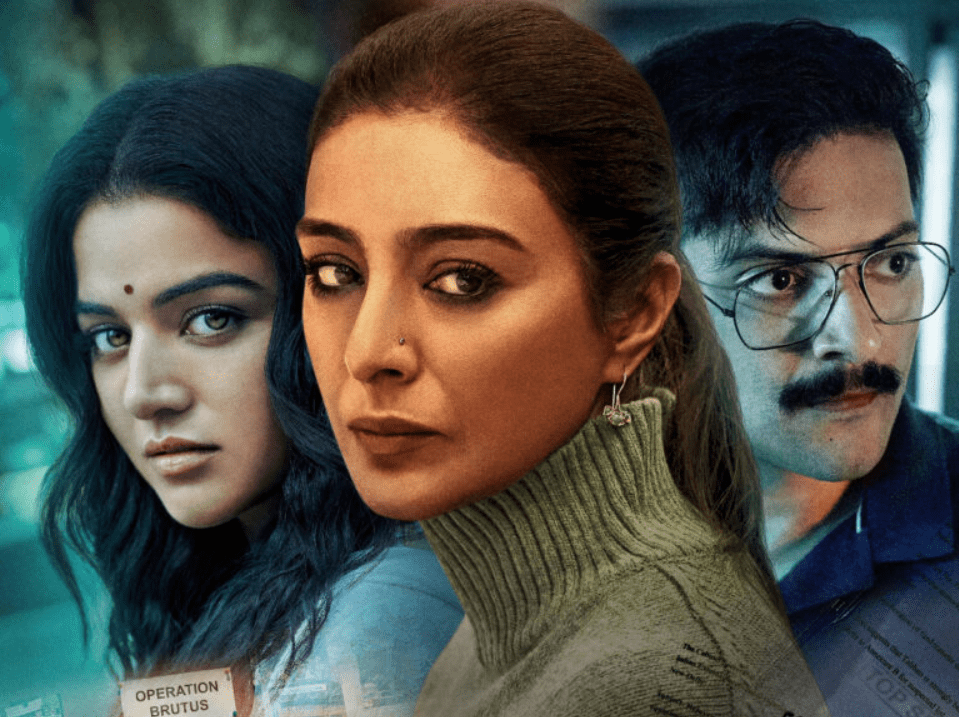
You won’t always find the newest movie or series reviews here. My watchlist is long, and what I finally pick to watch could have been released years ago. That’s how I ended up with Khufiya. In fact, I didn’t even choose it myself, AI did. I simply shared my watchlist because I couldn’t decide what to watch next, and all the options looked interesting. The AI randomly picked Khufiya for me, and I’d say it did a pretty good job.
What’s It About?
An Indian R&AW agent loses a teammate during a failed mission. When the agency discovers there’s a mole in their ranks, they set a trap to catch him, but the plan takes an unexpected turn.
Thoughts
I really enjoyed this movie. It keeps you engaged throughout. Wamiqa Gabbi is the real standout here. Tabu delivers a solid performance, though I wouldn’t call it one of her finest. Wamiqa’s role is the most layered, and she plays it convincingly. There’s also a guruji-like character, seemingly inspired by Sadhguru, who is amusing to watch, though some viewers may find him offensive.
What struck me most was how the film portrays the mindset of traitors. Moles often justify their betrayal by claiming they are “saving the country from conflicts” or “working for peace,” even as they leak sensitive information. In real life, too, Indian spies caught selling secrets often give similar excuses, trying to project themselves as heroes rather than wrongdoers. Khufiya captures this psyche well, showing how enemies exploit such individuals by convincing them they are doing the right thing.
Overall, Khufiya is definitely worth a watch. It is streaming on Netflix.
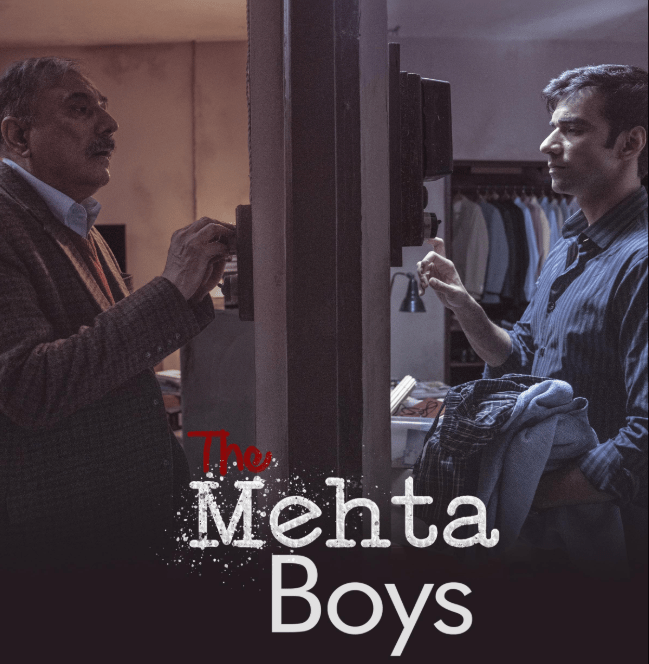
Wholesome movies are rare these days in Indian cinema, making them feel like an oasis in a desert when they do appear. The demand for feel-good movies is higher than ever, as seen in the success of re-releases like Laila Majnu and Sanam Teri Kasam, which prove that Indian audiences are eager for romance and uplifting cinema. It is during such a time that The Mehta Boys has arrived on OTT (Amazon Prime).
The Mehta Boys is a poignant, understated father-son drama centered on their dysfunctional relationship. Open communication and emotional expression are not their strengths, often leaving them struggling for words. Boman Irani portrays a grieving husband learning to cope with his loss, while Avinash Tiwary plays his talented yet self-doubting son. The heart of the story lies in their journey toward accepting each other’s imperfections.
We often see such father-son dynamics play out in real life. In many Indian families, open displays of affection are rare, making the relationship feel more formal than familial. Conversations typically revolve around daily chores and future plans, with emotions deliberately left out. The Mehta Boys captures this dynamic perfectly, portraying characters who have much to say but choose to hide behind silence.
Boman Irani has done an exceptional job as a first-time director, leaving me eager to see what he creates next. Avinash Tiwary, as always, excels, effortlessly bringing out the angst, anxiety, and awkwardness of a character who gradually finds his voice. He shines, leaving you wondering why you don’t get to see him on-screen more frequently. Instead, audiences are repeatedly offered star kids given endless chances to prove themselves, while talented actors like Avinash, who have already showcased their brilliance in just a film or two, are left waiting. It’s unfair, but all one can do is wait for movies like The Mehta Boys to arrive, offering a well-deserved cinematic experience.
When was the last time you really switched off and relaxed while watching an Indian movie? I remember getting lost in a make-believe world whenever I watched Yash Raj or Karan Johar films. But sadly, over time, these filmmakers were pushed to make more realistic movies, at the cost of “superficial” ones.
Right now, I can’t seem to switch off completely while watching an Indian movie and drift into a world completely different from mine. I don’t watch movies for reality; I watch to escape it. If I wanted reality, I’d just take a walk outside, not sit down for a movie. But times have changed, and I don’t think we can expect Indian filmmakers to go back to creating movies with grand sets, stunning scenery, and actors with natural beauty and amazing chemistry. The current trend is all about violence, gore (often to the point of regression), and hyper-realism (and plastic surgeries).
Nowadays, if by chance a superficial movie gets released, we have to endure actors with little to no acting skills or the kind of magical chemistry we used to see with iconic pairs like Shahrukh Khan-Kajol, Shahrukh Khan-Juhi, basically Shahrukh with any actress, or Aamir-Juhi.
It’s a very dull era for the Indian film industry when it comes to making feel-good movies. Movie-watchers like myself, who want to escape into a world that isn’t focused on realism, end up turning to Korean or Pakistani dramas. The fact that so many Indian viewers are enjoying these shows proves there’s still an audience for feel-good romantic movies. The demand is there, but unfortunately, the quality supply is missing in the Indian film industry.
Part of the blame also lies with the audience, who now look for realism even in make-believe movies. If many of the romantic Korean or Pakistani dramas were released in India, they’d probably face intense criticism, with thousands of critics dissecting every single scene and evaluating it based on reality. This is why feel-good movies from the past (except maybe Wake Up Sid) are heavily criticized in today’s India. Such criticism discourages filmmakers from making more feel-good movies. Movie watchers like me, who yearn for superficial, romantic cinema, end up feeling dejected in the process.
I hope we get to see some romantic films, but since filmmakers are minting more money and fame from realistic and violent movies, I don’t expect the trend to change anytime soon.
We have good-looking actors like Ibrahim Ali Khan making their debut probably this year. Let’s hope he gets cast in some feel-good movies and his acting skills are as impressive as his looks. However, the current crop of actresses seems too focused on plastic surgeries, leading to a lack of diversity in looks. In the 90s and early 2000s, actresses like Kajol, Juhi, Sonali Bendre, Madhuri Dixit, and Raveena Tandon had distinct appearances. Sadly, that can’t be said now. So, the question arises—who will pair well with Ibrahim Ali Khan in a romantic movie? No one really comes to mind, except maybe Pratibha Ranta.
The Kerala Story is back in the limelight. The right wing insists the movie is a must-watch, while the left wing is actively discouraging viewership. However, both sides could not have foreseen unexpected support emerging from unlikely sources – church factions in Kerala.
On Sunday, the Idukki Diocese of Syro-Malabar Catholic Church screened the movie for Class 10-12 children. Other factions are considering similar actions, although this remains unconfirmed at present.
Many seem to have taken offense to this move by the Church and are calling it “Islamophobic.” This opinion is indeed subjective. Personally, I do not think openly talking about extremist groups and their nefarious intentions is Islamophobic. It should not be eyed as such. When someone criticizes the RSS, it is not considered Hinduphobic. In the same way, openness to constructive criticism should be encouraged within all communities. Labeling discussions with terms like “phobia” can hinder healthy discourse about important issues. It’s essential to acknowledge and address problems, even if some individuals attempt to deny them.
Common Takes and Counter-Arguments
Here are a few common retaliations against The Kerala Story and my counter-arguments.
Take #1: The Kerala Story is all lies and propaganda
People who say this probably haven’t watched the movie or made an effort to fact-check the claims individually. Granted, the extrapolated count shown in the trailer was unnecessary. The makers have removed the count in the final cut. The acting and storytelling felt amateurish. There are other misleading claims in the movie. For instance, the movie makes it seem CM Achuthanthan predicted Kerala would become an Islamic state in 20 years. On the contrary, he was talking about PFI’s plan. He said, “They (PFI) want to turn Kerala into a Muslim-majority state in 20 years. They are using money and other inducements to convert people to Islam. They even marry women from outside their community in order to increase the Muslim population.“
That said, to dismiss the entire movie as a lie and propaganda is dangerous, considering there is evidence to show there are indeed some anti-national elements in the state who are actively working to convert and recruit members for not-so-peaceful intentions.
The Shahan Sha case file includes many of the atrocities portrayed in the movie. The following details are mentioned in the PDF, “The inquiry by the Special Branch reveals that fundamental outfits like NDF, PFI, and Campus Front have roots in the college campuses in the City referred to therein. Referring to Campus Front, it is stated in the report thus: As per the available information, the plan of this organization is to trap brilliant upper caste Hindu and Christian girls from well to do family, especially those who are studying for professional courses and employed in IT sectors.”
So, to say the entire story is a lie and propaganda is lazy reporting at its best.
As Ambedkar said, we cannot hide our heads in the sand just because the thought of it hurts our sentiments. The first step to resolving an issue is acknowledgment. Only then can there be proactive steps to prevent cases like Nimisha’s and Sonia’s from happening again. By outright denial, we risk leaving more people vulnerable to similar incidents, as they may not fully grasp the seriousness of the situation.
Take #2: The movie is Islamophobic
Is criticizing terrorists Islamophobic? Why is it that whenever a movie comes out that talks of terrorists, the left wing immediately calls it Islamophobic?
Terrorism has no religion. We should stop equating the two. I would say it’s Islamophobic to correlate the two – terrorism and religion – which is what the left often does with movies like The Kerala Story and Kashmir Files. Kashmir Files, in fact, starts with a Muslim child helping a Hindu child escape terrorists. The Kerala Story predominantly focuses on a radicalized group, not all Muslims. So, to claim the story as Islamophobic is unfair to the Muslims who have no part to play in all of this.
I would even go on to say that even Muslims should watch the movie as they are the most vulnerable. It’s crucial for individuals to recognize that there are extremist groups within the community who are determined to radicalize them. As per the PFI document, “Popular Front of India (PFI) is confident that even if 10% of the total Muslim population rally behind it, PFI would subjugate the coward majority community to their knees.”
TP Sulfath, the BJP member from Malappuram, bravely talked about such groups in Kerala in a video. Alas, the original Marunadan video was blocked or removed. The clip can now only be watched from a Reddit group.
Take #3: Only 2 or 3 cases have been recorded in Kerala
No one has an actual count. The existing ISIS cases in Kerala came to the limelight only when parents filed police cases. Many family members do not openly reveal such things out of shame and prestige issues. However, if you actively google for cases, you will find many. There are sufficient YouTube videos of Malayalee victims, not just two or three. Parents of radicalized children do not go to the police; instead, they seek help from centers like Arshya Vidya Samajam, as they wish to keep their concerns out of the limelight.
The official count of converts is taken from authorized conversion centers in Malappuram and Kozhikode in Kerala. These are state-approved centers. However, conversions happen outside such registered centers, so it is impossible to give an accurate number.
Take #4: We are too educated to fall for such traps, so we don’t need the guidance
I see the new generation saying this. However, love can make us, including the most educated, do illogical things. Anyone who has fallen in love madly and profoundly knows what it is like. We stop becoming rational. I often tell youngsters, “Follow your heart, but take your mind with you.” Love is at its most intense when we are teenagers. This is what radical groups look to exploit. They want you to fall so deep in love that you are ready to do anything, including convert, to be with them.
Maturity involves being open to advice from all sources, even those you may not initially consider necessary, as it equips you with the knowledge to handle similar situations that may arise in the future. The Kerala Story gives away the advice that in love you do not need to convert. If it does, it ceases to become love and more of a “You will get this, only if you do that” kind of transaction deal.
Take #5: The movie is vulgar and has adult scenes
I recently saw a politician saying this. The scenes are sourced from reality. The extremist group is known to enslave and rape women as they think it’s their right. It is a horrifying reality depicted in accounts like Nadia Murad’s The Last Girl. Further reading can offer more profound insight into the atrocities committed by ISIS.
Take #6: The Kerala Story has been released to make Kerala look bad
As a proud Keralite, I didn’t feel offended by the movie; instead, it made me more cautious.
We should reach a stage where not even one Keralite gets radicalized and joins ISIS. Then, we can claim victory as ours. Till then, we should be open to criticism and look for ways to rectify such problems, not hide them. What can we do to stop radicalization? How can we stop terrorist modules from cropping up in our state now and then (even as early as this year, 2024)? How can we stop Malayalee women like Nimisha and Sonia from joining such groups? Should we talk to our youngsters and spread awareness, or would we rather they find it out themselves (if at all they do)?
It’s like teaching kids the difference between good touch and bad touch. You cannot force anyone to follow your rulebook, but you can definitely advise them on what is good and bad. The decision on which route to take ultimately falls on them, but by encouraging active discussions, you are helping them to see through things that they would otherwise have failed to do on their own. At the same time, care should be taken not to generalize an entire community for the sins of a few. A nuanced approach is the need of the hour.
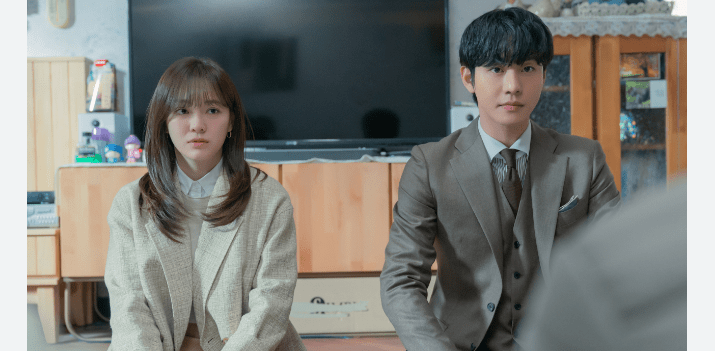
Lately, I have ventured into watching Korean dramas. I have to admit I am completely hooked. I tried to stay away from K-dramas for the longest time, assuming it would be too cheesy for my liking. And honestly, the titles did not help.
But after watching just a few K-dramas over the past few months, I can confidently say – don’t judge a series by its name!
K-drama is anything but corny, cheesy, or cringe. It has well-crafted plots with impeccable, high quality writing. It’s admirable how much importance they place on everyday emotions. I now find it so wholesome, engaging, and fulfilling that I would advise anyone to watch at least one episode every day, especially if you’ve had a particularly draining day. A K-drama episode a day might just keep the doctor away.
The Korean dramas I tend to choose are solely focused on relationships because that is what I am craving at the moment. Over the past decade, I binge-watched several serious, abstract, intellectual, gory, and violent movies. The types that movie critics couldn’t stop raving about. And now I’ve had enough. I have reached a saturation point when it comes to reality-based cinema. Bring on the whimsical, captivating, addictive world of romance! I want to leave my troubles behind, I want to dream of a better world and romanticize about it.
As an Indian, I can’t help but wonder what happened to the quintessential feel-good romantic Yash Raj-esque movies? Why have we stopped making them? They used to perform incredibly well at the box office and are still cherished. DDLJ has been on a running spree for decades in Mumbai, with no end in sight. Which other genre can boast of having a similar impact on the audience? We can’t get enough of the charming Raj or the dreamy-eyed Simran. My friends reminisce about the etherealness of Chandni and the intoxicating love of Veer Zara. Forget Yash Chopra movies. Even a dark project like Dil Se had its share of aesthetically pleasing love-packed moments. Not to forget the playful mischief enacted by the lead actors with full gusto. A quirky Preeti (played by Preity Zinta) asks Amar (portrayed by the king of romance Shah Rukh Khan), “Are you a virgin?” which catches him off-guard, like the rest of us. We loved the dialogue, the crackling chemistry, and the freshness of it all.
Personally, my favorite Bollywood pair is Konkona and Ranbir in Wake Up Sid. The romantic angle was offbeat – a young guy in his 20s falling for an older working woman. You might think this unconventional pairing might not work, but they proved their detractors wrong. The chemistry was bang-on, scenes were memorable, dialogues were fun and thoughtful, and it boasted of the right mix of profoundness and escapism. You fell in love with the characters. It was difficult not to.
Romantic stories used to sell big in Bollywood. So this sudden shift from romance to violence and trauma-inducing reality cinema is unreasonable. The ones that Bollywood does end up making nowadays have no soul and are almost, for the lack of a better word – “cringe.” They lack emotional intensity and nuance. It is difficult to connect with the characters and delve into their world. A sign of a compelling romantic story is when you find yourself developing an emotional connection with the characters. Their love feels like your love. You want to hug them when they are sad, cheer for them when their passion gets reciprocated, or blush when romance is in the air. This holds true whether you are reading a book or watching a movie. If this feeling is missing, the story fails to make a mark.
It is not that India has stopped indulging in romantic stories entirely. We get to witness some well-made series on OTT, such as Mismatched and Little Things. They have done well, proving that there is an audience out there for authentic Hindi romantic sagas.
I thought I would have to resort to books for my kind of romance. Still, lo and behold, I was introduced to the world of K-drama, where everything is just as mushy and glossy as it used to be in Bollywood.
What makes K-drama so different from regular Bollywood movies released nowadays?
Focus is on emotions and feelings
Hometown Cha-Cha-Cha
Those stolen glances, broad smiles, and yearning looks are what makes K-drama so swoon-worthy. While Bollywood has moved to a more lusty “fast food” kind of romance, Korean drama still hangs on to the original slow-cooked YRF magic with a tight leash. Why stop making something that is doing well?
Stories for the soul
Crash Landing On You
We all know romantic movies are a world of make-believe, and we can’t possibly expect all of that sweet idealism to seamlessly transfer into our everyday lives. It’s not practical. But that’s what movies should do, if not regularly, then at least occasionally, offer a form of escapism to its audience from real-life issues.
The cute playfulness, heart-warming dialogues, gestures, and scenes that revolve around emotions are what make K-drama so sinfully good and make anyone forget their worries.
Family-oriented
Twenty Five Twenty One
One thing I dread nowadays is watching a movie or a TV series with family. You never know what kind of provocative scene will jump out of nowhere, leaving you and your family overwhelmed with embarrassment and a sense of existential crisis.
Most of the K-dramas I have seen are family-oriented. You can sit and watch the shows in the open, reassured that nothing awkward will unexpectedly appear on your screen.
Binge-worthy
What’s Wrong with Secretary Kim
Each episode in Korean dramas tends to be lengthy! It can be over an hour long. But since the focus is on everyday relationships, you don’t end up getting bored.
The right amount of playfulness and romance
Love To Hate You
The couples in K-dramas tease each other, have healthy banter, crack jokes, and are playful. Contrary to the common belief held by those who haven’t yet watched K-dramas, the shows are not all about soppy dialogues. The noteworthy part is that it all looks organic, not forced, adding to the authenticity of the experience.
Catchy music
Business Proposal
The music and background score in K-drama blends in with the situations, and in no time, you find yourself humming the tunes while doing your everyday chores. It exudes a gentle yet addictive vibe.
More relatability for 30+-year-olds
While many romantic movies in India cater to a younger audience, I have noticed that most of the K-dramas I have watched feature older and more mature characters. This offers more relatability for people in my age group who want to see people their age romance on-screen as well.
It’s Your Turn Bollywood
In the 80s and 90s, Bollywood films incorporated many of these points I listed above, except maybe featuring characters in their 30s and older. However, the current landscape of Bollywood movies doesn’t provide the same enjoyment as those classic films.
A look into the popularity of K-drama proves that romantic stories still sell. It is well-liked world-over across all nationalities. In India, I am surrounded by K-drama enthusiasts. It’s safe to say there is still a broad audience for the romantic genre in India, but they are forced to venture beyond the confines of the Indian movie industry as there’s a scarcity of feel-good, wholesome cinema here.
Hindi filmmakers should seriously consider creating good ol’ romantic movies again infused with emotions, aesthetics, endearing chemistry, and romantic dialogues. Maybe then, they may witness the box office numbers soar, finally putting an end to complaints about the underperformance of Hindi movies in recent times.
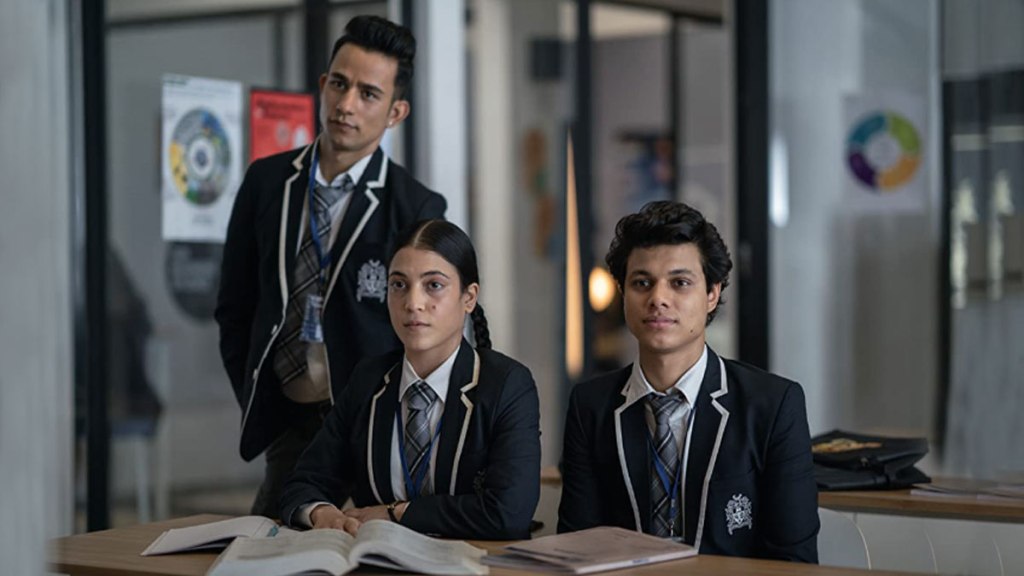
Class is the official Indian adaptation of the popular Netflix series Elite. But I am not here to talk about how good the show is or how different it is from the original. There are enough online reviews for that. I am here to stress the impact the actors had on me.
I was totally involved and immersed in the entire universe of Hampton International School. A big credit for that goes to the actors in the show. How often do you get to experience this engagement in Hindi movies nowadays? There are many reasons why it is not happening as much as you would like, but the predominant one is: most lead actors in Bollywood tend to look like they are acting. You see the actor, not their performance, which stops you from entirely immersing in their world, being one with them, feeling what they are feeling, and making you react to their scenes. You only observe them and see them as a part of the story. It’s difficult to connect with them because their star power often tends to overshadow their acting prowess.
This is where Class and its cast of actors come in. I see them as the torchbearers of hope in the industry and an example of how you could make a show or movie with non-famous faces and still have a successful project. These actors do not have a mainstream Bollywood filmy background and had to work hard to get where they were. And that effort is reflected in their performances. There is so much conviction and a feeling of realism so strong that you can relate to them.
When you see a show like Class with a talented set of actors, you immediately tag along with them on their journey without any effort. You become fully involved and feel intense hatred for some characters and love and sympathy for others. This is what good acting does. This is what immersive cinema is. You want more of these.
I was taken aback by how the young actors and actresses in Class had to wait years (some even 7-8 years) to get their first big break. By their age, star kids like Alia Bhatt had already become superstars. Celeb kids get a head start in their teens or early 20s, obtain enough time to star in good movies, and make a mark. By the time they are in the Class actors’ age group, they are financially stable enough to move to the next phase (marriage, parenthood, etc.). This is okay if you are a male actor. Still, in the case of a female actor, this can prove detrimental in a male-dominated movie industry like Bollywood. It is astonishing to see how middle-aged Indian actors are often paired with young women while their female counterparts of the same age are cast to play their mothers.
There’s nothing we can do about the nepotism prevalent in the Hindi movie industry except contemplate the unfairness of it all. It happens in all sectors and is not just restricted to Bollywood. But, in other industries, there are people to help the new kids in case they are not adept at their job. In movies, you can’t really make anyone perform for you. You have to do it yourself. So to compare it to other industries is not fair because such biases in the movie industry directly affect the experience you and I have, the actual consumers of entertainment. All viewers covet an immersive experience. It’s what we watch movies for. To escape reality for a while and to merge with another world cut off from your own. We have nothing to do with where the actors come from. But it is infuriating when the filmmakers take on celeb kids who have failed to impress even after a couple of chances, as it stops us, the viewers, from an immersive cinematic experience. There are exceptions, like Abhay Deol, who fit into any type of role you give him and make you connect with him.
I would love to see the cast of Class in more projects. I would love more casting directors to be like Sanjeev Maurya, who take actual effort to dig out talent, instead of going the lazy-ass way of trying the already-tested, the already-famous, who contribute nothing extra to the project, except maybe popularity and glamour. But we don’t need cinema that’s only about glamour, celebs with the perfect body and model-like features, or famous celebrities. People like me would love more relatability, good stories, and acting.
Until Bollywood learns its lessons, most of its movies will continue bombing at the box office, and people will continue to prefer OTT entertainment. OTTs have ensured all talented people get a platform to perform, which might be one reason why more people prefer to skip the theatres to watch content at home. Why pay to watch mediocre content when you can get quality entertainment at home?







 The Monkey Dilemma
You must be logged in to post a comment.