Netflix Drama Spotlight: Sirens

Netflix Drama Sirens

Although Sirens is presented as an American dark comedy, I didn’t find anything particularly funny in it. I’m a new fan of Meghann Fahy, so she was the main reason I chose to watch this series. I wasn’t disappointed.

What’s It About?

Sirens centers on three women, each unique in their own way, yet a common factor connects them all. This factor becomes more apparent as the story progresses. You may love or hate the characters, but our inherent nature compels us to judge them for who they are. It forms a subtle yet significant crux of the story.

Thoughts

Sirens was as gripping as I want a drama to be. I thoroughly enjoyed it. I am drawn to series with well-defined female characters, and this was no exception. Though Meghann Fahy is now being typecast in a specific type of role, she does full justice to it. Julianne Moore is breathtaking; no one else could have played the part of the beautiful yet intimidating persona. Milly Alcock as Simone is brilliant and likely has the most substantial role of the three, as she gets to reveal many layers of her character.

What struck me the most about the series is that no female character is entirely black or white. They are layers of gray, doing their best to survive in a world that has not been kind to them. The final scene might make you uncomfortable, but it represents the very essence of life, where nothing is predictable. You do what you have to do to confront your demons. This may seem selfish, but it is also essential for survival.

Sirens is a feminist movie at its core, and its profound messaging about how women are often blamed is woven in subtly without overt activism. You notice it and feel uncomfortable, but you never get the impression that the message is being forced upon you. This is the kind of messaging that is most effective – one that isn’t obvious but still makes a lasting impact. Human nature is such that we don’t listen when we are shouted or screamed at; we listen when we are subtly guided to notice discriminatory issues on our own.

Sirens is streaming on Netflix. The series has 5 episodes, with each episode lasting roughly an hour.

Empuraan and Its Controversial Take on Gujarat Riots

Empuraan is facing criticism from the right wing for allegedly promoting a biased narrative. Many are calling it a political propaganda film with a pro-Congress stance. How true is the allegation?

Spoilers Ahead

I haven’t watched the movie yet, but I’ve heard that the first 30 minutes focus on the Gujarat Riots. It depicts some of the most horrific incidents from that time. Reportedly, the film includes a rape scene that’s highly debatable. This particular rape story has been circulating since the time of the Gujarat Riots but remains unverified, with no solid evidence to support it. Additionally, the Godhra train burning in the movie is reportedly depicted as something that happened by accident. This portrayal gives the impression that the film is based on the findings of the Banerjee Committee Report, a report that was later ruled invalid, unconstitutional, and politically manipulated by the court. The Nanavati-Mehta Commission Report is the report that was officially accepted as the authoritative account of events due to its presentation of evidence. This information was also covered in the recent film The Sabarmati Report.

The Banerjee Committee was set up in 2004 by the UPA government, led by the Congress party. The committee’s report was released just before the Bihar Assembly elections, apparently to influence the election results and weaken the BJP’s position. The report concluded that the Godhra train fire was accidental, contradicting the BJP’s stance that it was a pre-planned attack.

However, the Nanavati-Mehta Commission later confirmed that the train burning was a premeditated communal act, not an accident.

  • The investigation found that large quantities of petrol were purchased a day before the incident from a nearby petrol pump.
  • The forensic report confirmed the presence of petrol residues inside Coach S-6, where the fire broke out.
  • Eyewitnesses and forensic evidence suggested that petrol was thrown into the coach and set on fire, indicating a pre-planned attack rather than an accidental fire.

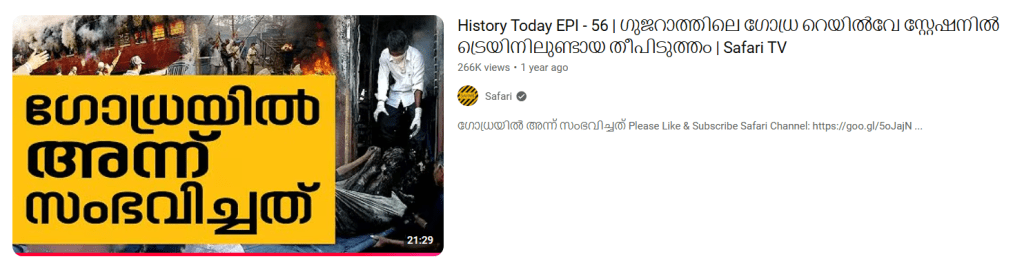
For Malayalees who prefer not to watch The Sabarmati Report, I recommend a documentary on YouTube by the Sanchari channel. It’s in Malayalam and provides a detailed account of the Godhra train burning. I am attaching a screenshot of the video below.

The documentary is likely one of the first of its kind in Malayalam. It offers a detailed look at the various angles of the Godhra train burning, the different reports that emerged, the political maneuvering involved, and the final conclusions drawn. If you are a Malayalee interested in research and fact-checking, I highly recommend watching this video.

Naturally, Congress is supporting Empuraan, just as the BJP backs right-wing films when they are released. Even if Empuraan turns out to be entirely pro-Congress, I support the creator’s right to make and release such a film. Several right-wing movies have been produced in India recently, so a left-leaning perspective is equally valid in a democratic space. However, as viewers, we must avoid taking any movie as absolute truth. Instead, we should conduct independent research, considering both left-leaning and right-leaning sources to develop a balanced understanding of the subject.

Why Indian Parents Should Watch Adolescence

Adolescence Netflix

The Netflix series Adolescence is a wake-up call. It shook me to the core and shed light on the stark realities the new generation faces.

I grew up in a time when online influence was non-existent, and our worldview was shaped by the people around us. Today, that has changed. Algorithms dictate perspectives, feeding you opinions from across the world. Knowledge is no longer derived from just parents, teachers, or elders. This is a positive thing, but it has also resulted in an information overload.

There are several social media accounts trying to dump different perspectives on you. For every argument supporting point A, there’s another endorsing point B. Ultimately, it depends on which perspective you resonate with the most. Once you decide, the algorithm ensures you see more of it, reinforcing your beliefs. Sometimes, without you even realizing it. This can be dangerous. What if a child interacts with harmful content? The algorithm ensures they see more of it, shaping their beliefs in a troubling direction. We risk raising a generation programmed by these echo chambers. It’s a challenge we can’t ignore.

**Spoilers Ahead**

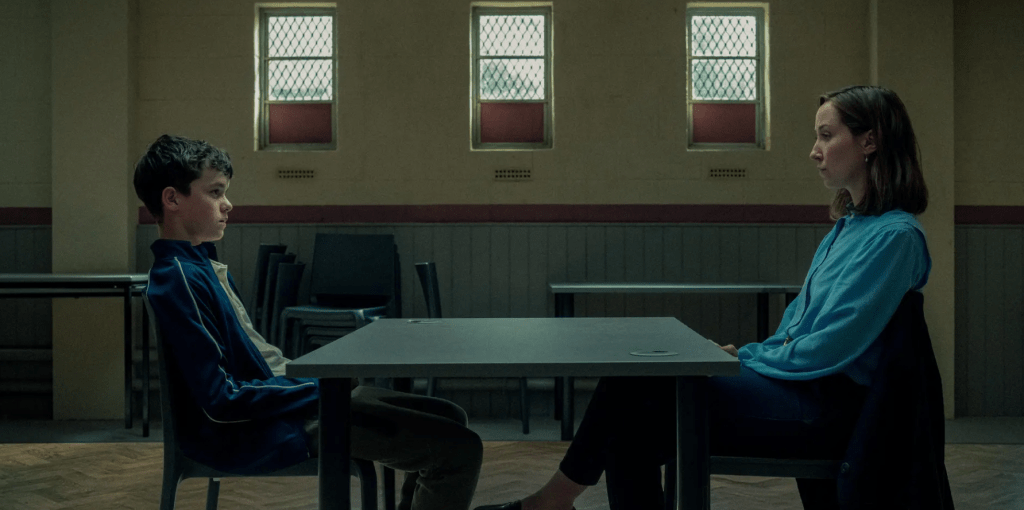
Every plus comes with a downside. Today, we have information at our fingertips, but this convenience comes at a cost. This is a reality that Adolescent portrays with unsettling accuracy. Jamie retreats to his room as soon as he gets home, immersing himself in his online world. His parents remain unaware of what he consumes, assuming, like many modern parents, that giving him complete freedom is the right approach. However, this unchecked digital exposure can shape young minds in ways they don’t anticipate, often with troubling consequences. It’s a new-age problem.

The series also introduced me to terms like Manosphere, Red Pill, and the 80-20 rule, making me realize how rapidly digital ideologies evolve. Figures like Andrew Tate are shaping young men’s perceptions of masculinity, often promoting the idea that being “alpha” means suppressing emotions. He preaches that men are providers and should be respected without being “given a headache.” This mindset isn’t foreign to India. I’ve noticed how men in my household particularly often express fewer emotions. When I was hospitalized recently, only the women in my family directly checked on me, while the men relied on them for updates. The burden of emotions lies on the women, whereas men are expected to be mere providers. Ironically, when men fall ill, women are expected to inquire directly. This emotional divide is ingrained in my household. I am unsure of other households. However, male-to-male interactions may differ. A “bro” might feel more comfortable checking in on a fellow “bro”.

I believe Adolescence should be screened in Indian classrooms with regional language dubbing. Andrew Tate-inspired accounts are emerging in India, pushing narratives that degrade women. If we don’t educate our youth about the dangers of such ideologies, we risk fostering a generation of men who lack empathy for women’s concerns, some of whom may even resort to violence to assert their views. The time to act is now.

The social message aside, this was Owen’s debut performance, yet he delivered with astonishing depth. It made me wonder how much the Indian film industry could thrive if it prioritized raw talent over nepotism, giving opportunities to newcomers who truly have the skill.

One of the most unsettling moments for me was Jamie’s chilling question to Briony with a steely, mocking gaze: “Are you afraid of a 13-year-old?” Owen Cooper’s portrayal was so disturbingly real that it made even a viewer like me uncomfortable. That’s the power of natural acting. His transformation, from an innocent boy insisting he has done nothing wrong, to someone consumed by uncontrollable rage, is nothing short of remarkable. It’s a performance that leaves a lasting impact.

An Ode to The Mehta Boys

Wholesome movies are rare these days in Indian cinema, making them feel like an oasis in a desert when they do appear. The demand for feel-good movies is higher than ever, as seen in the success of re-releases like Laila Majnu and Sanam Teri Kasam, which prove that Indian audiences are eager for romance and uplifting cinema. It is during such a time that The Mehta Boys has arrived on OTT (Amazon Prime).

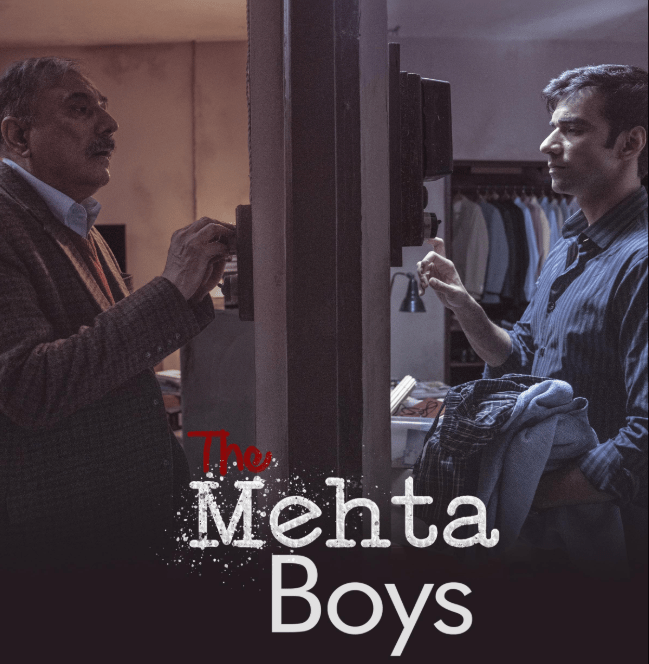
The Mehta Boys is a poignant, understated father-son drama centered on their dysfunctional relationship. Open communication and emotional expression are not their strengths, often leaving them struggling for words. Boman Irani portrays a grieving husband learning to cope with his loss, while Avinash Tiwary plays his talented yet self-doubting son. The heart of the story lies in their journey toward accepting each other’s imperfections.

We often see such father-son dynamics play out in real life. In many Indian families, open displays of affection are rare, making the relationship feel more formal than familial. Conversations typically revolve around daily chores and future plans, with emotions deliberately left out. The Mehta Boys captures this dynamic perfectly, portraying characters who have much to say but choose to hide behind silence.

Boman Irani has done an exceptional job as a first-time director, leaving me eager to see what he creates next. Avinash Tiwary, as always, excels, effortlessly bringing out the angst, anxiety, and awkwardness of a character who gradually finds his voice. He shines, leaving you wondering why you don’t get to see him on-screen more frequently. Instead, audiences are repeatedly offered star kids given endless chances to prove themselves, while talented actors like Avinash, who have already showcased their brilliance in just a film or two, are left waiting. It’s unfair, but all one can do is wait for movies like The Mehta Boys to arrive, offering a well-deserved cinematic experience.

Dear Indian Filmmakers: It’s Time to Bring Back Superficiality in Cinema

Dilwale Dulhania Le Jayenge

When was the last time you really switched off and relaxed while watching an Indian movie? I remember getting lost in a make-believe world whenever I watched Yash Raj or Karan Johar films. But sadly, over time, these filmmakers were pushed to make more realistic movies, at the cost of “superficial” ones.

Right now, I can’t seem to switch off completely while watching an Indian movie and drift into a world completely different from mine. I don’t watch movies for reality; I watch to escape it. If I wanted reality, I’d just take a walk outside, not sit down for a movie. But times have changed, and I don’t think we can expect Indian filmmakers to go back to creating movies with grand sets, stunning scenery, and actors with natural beauty and amazing chemistry. The current trend is all about violence, gore (often to the point of regression), and hyper-realism (and plastic surgeries).

Nowadays, if by chance a superficial movie gets released, we have to endure actors with little to no acting skills or the kind of magical chemistry we used to see with iconic pairs like Shahrukh Khan-Kajol, Shahrukh Khan-Juhi, basically Shahrukh with any actress, or Aamir-Juhi.

It’s a very dull era for the Indian film industry when it comes to making feel-good movies. Movie-watchers like myself, who want to escape into a world that isn’t focused on realism, end up turning to Korean or Pakistani dramas. The fact that so many Indian viewers are enjoying these shows proves there’s still an audience for feel-good romantic movies. The demand is there, but unfortunately, the quality supply is missing in the Indian film industry.

Part of the blame also lies with the audience, who now look for realism even in make-believe movies. If many of the romantic Korean or Pakistani dramas were released in India, they’d probably face intense criticism, with thousands of critics dissecting every single scene and evaluating it based on reality. This is why feel-good movies from the past (except maybe Wake Up Sid) are heavily criticized in today’s India. Such criticism discourages filmmakers from making more feel-good movies. Movie watchers like me, who yearn for superficial, romantic cinema, end up feeling dejected in the process.

I hope we get to see some romantic films, but since filmmakers are minting more money and fame from realistic and violent movies, I don’t expect the trend to change anytime soon.

We have good-looking actors like Ibrahim Ali Khan making their debut probably this year. Let’s hope he gets cast in some feel-good movies and his acting skills are as impressive as his looks. However, the current crop of actresses seems too focused on plastic surgeries, leading to a lack of diversity in looks. In the 90s and early 2000s, actresses like Kajol, Juhi, Sonali Bendre, Madhuri Dixit, and Raveena Tandon had distinct appearances. Sadly, that can’t be said now. So, the question arises—who will pair well with Ibrahim Ali Khan in a romantic movie? No one really comes to mind, except maybe Pratibha Ranta.

Cultural Surprises and Shocks in Zard Patton Ka Bunn

Zard Patton Ka Bunn

I have only completed one episode of Zard Patton Ka Bunn (I have no idea what this means) so far on YouTube, but I already have a feeling I will like this Pakistani drama better than Kabhi Main Kabhi Tum. Sharjeena and Mustafa were cute and the series started off well but I didn’t find the story engrossing enough towards the end.

The first episode of ZPKB is endearing. A girl is praying intensely that she passes her exams, while the Maulawi (religious scholar) requests everyone through the mic in the mosque to pray for her. He says it’s admirable that a girl in the village wants to study more. 

This Maulawi is hilarious! When a village officer visits the mosque to announce a population control drive, the Maulawi asks, “What’s the population of Pakistan?” The officer replies, “It’s now 22 crore.” The Maulawi then mumbles to himself in a lighthearted moment, “What’s the use of these 22 crore people if they can’t even sponsor one motor for the mosque well!” 

It’s funny how the Maulawi is shown as a comical character who no one in the village takes seriously. It’s surprising because I always thought Maulawis were treated with utmost respect. On the contrary, this series treats the Maulawi exactly like how some Indian movies show swamis and gurus in a funny light. In the first episode, the villagers are shown berating him for overusing the mosque mic. He’s on it every other minute, asking for donations for the motor.

Now, the shocking part was how casually a female character scolded her husband for waking up late, saying, “You’re a Muslim, not a kafir,” as if it were normal, everyday language. The way the word “kafir” (non-believer) was used so casually suggests it’s deeply ingrained in the cultural discourse. To a Hindu, like me, the word hit me like a jolt. In contemporary times, the word kafir can be seen as an insult by non-Muslims, especially when it is used to highlight the superiority of one religion over another. As a tolerant kafir, I’ll let it slide and move on, but it does make me wonder about its impact, especially among impressionable Indian youth who are into Pakistani dramas. My concern is that it could reinforce divisive ideas, encouraging people to see others through a binary lens of “believers” and “kafirs”. That’s a troubling thought in any diverse, multi-faith society. But here’s hoping Pakistani dramas will be more mindful of such polarized language in the future. As the world becomes more interconnected and local entertainment reaches a global audience, paying attention to details like language can help ensure you don’t alienate anyone who appreciates your work.

That said, I have no intention of boycotting the series. I look forward to watching the remaining episodes on YouTube. It’s not every day you come across such feel-good wholesome witty content. I will savor every moment of it.