Hindi Movie Review: Aap Jaisa Koi

Aap Jaisa Koi on Netflix

A socially awkward 42-year-old Sanskrit professor from Jamshedpur meets a free-spirited 32-year-old Bengali French teacher through an arranged marriage setup. He’s orthodox, she’s liberal. This description may feel like the movie is based on a war of languages (keeping up with the trend). But it’s not. At its core, Aap Jaisa Koi delves into the multifaceted nature of relationships. It brings a fresh and nuanced take on modern love, tradition, and society’s double standards.

I’ve often wondered why our romantic cinema sticks to the same old formulas when dynamics within relationships and individuals involved are far more complex. Our movie industry usually focuses on the stereotypical boy-meets-girl story, where the characters fall in love, and then external forces play the villain. There are no other angles to the story. In real life, the friction often lies within the relationship itself – compatibility issues, cultural/morality issues, and more. Such issues are often subtle at first but end up being harder to fix. They aren’t dramatic but quietly playing in the background and are dismissed as unimportant. But each day, it chips away at a part of your soul. Some deal with it openly, whereas others act ignorant to maintain harmony in the household.

There are a lot of relationship angles left unexplored in Indian cinema. Someday, I’d love to see a romantic story about two divorcees giving love a second chance. That dynamic carries a quiet vulnerability: the fear of repeating past pain, the hesitation of stepping into something that once broke you. It’s raw, real, and deeply human. However, just like how society stigmatizes divorcees, I think our Indian cinema stigmatizes them too. India is not a country devoid of divorcees, yet they are rarely shown in cinema.

Unlike many Indian films, K-dramas explore these internal dynamics with depth and nuance. That’s why Aap Jaisa Koi felt refreshing. It brings a romance that’s familiar in setting but different in treatment. It spends extra time focusing on emotions and character development. The dialogues are so warm and real, they might just bring tears to your eyes. A few lines had that effect on me. Not because they were sad, but because they were crafted with such thoughtfulness. It felt like poetry. If you’re a non-Indian reader who enjoys K-dramas for their focus on emotions, give this one a shot. I think you’ll genuinely enjoy it.

Aside from the crackling chemistry, the movie has some dreamy music. Mila Tujhe is my favourite of the lot. In a romantic drama, music plays a crucial role. It should be tender, laced with hope, longing, and desire, not melancholy, to heighten emotions and pull you in completely. That’s exactly what the Aap Jaisa Koi soundtrack does. The couple’s chemistry draws you in, and the music wraps around it, making the experience all the more immersive.

Fatima Sana Shaikh is an actress I’d love to see more of. Whether she’s playing a traditional hijabi in Modern Love: Mumbai or a fiery Bengali in Aap Jaisa Koi, she brings authenticity to every role. There’s so much untapped potential in her, and it’s time filmmakers gave her the space she truly deserves. Her character in Aap Jaisa Koi is a feminist, yet deeply rooted in tradition. She looks ethereal in beautiful, traditional sarees. In Bollywood, modern women are often stereotyped as party-goers in Western clothes, but this film takes a different route. It reminds us that modernity is a mindset, not a dress code. You can be progressive and still stay connected to your culture. Meanwhile, many who dress trendy are found to be regressive in their thoughts. Clothes are not a true indicator of someone’s personality. To know a person, you need to know their thoughts.

Madhavan, as always, does full justice to a role that’s equal parts comical and endearing. His comic timing is spot on, and he effortlessly switches expressions, reminding us once again of his natural screen presence.

Aap Jaisa Koi is a feel-good romance that stays with you. I enjoyed it. The movie is streaming on Netflix.

Korean Drama Spotlight: Family By Choice

Family by Choice

A good romantic comedy or family drama is hard to come by these days. Sometimes, I feel we really need more light-hearted stories on screen. Something to make us laugh and unwind. What I watch often influences my mood. I’m sure I’m not the only one. If it’s a tense or serious film or YouTube video, I tend to become irritable or withdrawn. But when I watch a well-made romcom, I feel lighter, more cheerful, and life suddenly seems brighter. So why don’t we see more of this feel-good content anymore? In that sense, Family By Choice stands out. It’s exactly the kind of uplifting drama we need right now.

What’s It About?

Family By Choice tells the story of three individuals, a girl and two boys, brought together by unexpected circumstances to live under one roof. The girl’s father takes the boys in and raises them as his own. Over time, they develop a strong bond that transcends blood. It’s a touching reminder that love isn’t always defined by family ties. Sometimes, those closest to you feel distant, while strangers become your true support. This is the heart of Family By Choice.

Thoughts

Family By Choice is everything I look for in a feel-good series. It’s not perfect, but it struck a chord with me. The bond between the three main characters is simply adorable. What stood out most was how each of them retained their core personality traits even as they grew up. One boy remains the quiet, poker-faced introvert. The other continues to mask his pain behind a cheerful smile. The girl stays fiery, hyper, and full of energy. That kind of character consistency is rare in dramas and movies. Usually, we see drastic changes as the characters grow up, which is understandable, since life tends to shape our personalities. However, here, it was refreshing to see their core traits remain unchanged.

All three characters are incredibly funny and share great on-screen chemistry. I especially liked how the female lead is written. She’s strong yet not over-the-top, modern yet grounded, a layered character you rarely encounter on-screen. Jung Chae-yeon is absolutely adorable. This was my first time watching her in a drama, and I was genuinely impressed by her performance. Hwang In-Youp and Bae Hyun-Sung are brilliant too. They bring charm and depth to their roles. Special mention to the child actors. They were brilliant.

Though we often talk about a parent’s unconditional love, the series explores the painful reality that not every parent needs to be the same. Some can be emotionally toxic and too consumed by their own needs to truly see their children. In such cases, it raises an important question. Should a child continue the relationship for the sake of duty, or is creating distance necessary for mental well-being? The series handles this theme with great sensitivity.

Family By Choice is streaming on Viki. The series has 16 episodes, with each episode lasting roughly an hour.

Netflix Drama Spotlight: Sirens

Netflix Drama Sirens

Although Sirens is presented as an American dark comedy, I didn’t find anything particularly funny in it. I’m a new fan of Meghann Fahy, so she was the main reason I chose to watch this series. I wasn’t disappointed.

What’s It About?

Sirens centers on three women, each unique in their own way, yet a common factor connects them all. This factor becomes more apparent as the story progresses. You may love or hate the characters, but our inherent nature compels us to judge them for who they are. It forms a subtle yet significant crux of the story.

Thoughts

Sirens was as gripping as I want a drama to be. I thoroughly enjoyed it. I am drawn to series with well-defined female characters, and this was no exception. Though Meghann Fahy is now being typecast in a specific type of role, she does full justice to it. Julianne Moore is breathtaking; no one else could have played the part of the beautiful yet intimidating persona. Milly Alcock as Simone is brilliant and likely has the most substantial role of the three, as she gets to reveal many layers of her character.

What struck me the most about the series is that no female character is entirely black or white. They are layers of gray, doing their best to survive in a world that has not been kind to them. The final scene might make you uncomfortable, but it represents the very essence of life, where nothing is predictable. You do what you have to do to confront your demons. This may seem selfish, but it is also essential for survival.

Sirens is a feminist movie at its core, and its profound messaging about how women are often blamed is woven in subtly without overt activism. You notice it and feel uncomfortable, but you never get the impression that the message is being forced upon you. This is the kind of messaging that is most effective – one that isn’t obvious but still makes a lasting impact. Human nature is such that we don’t listen when we are shouted or screamed at; we listen when we are subtly guided to notice discriminatory issues on our own.

Sirens is streaming on Netflix. The series has 5 episodes, with each episode lasting roughly an hour.

Empuraan and Its Controversial Take on Gujarat Riots

Empuraan is facing criticism from the right wing for allegedly promoting a biased narrative. Many are calling it a political propaganda film with a pro-Congress stance. How true is the allegation?

Spoilers Ahead

I haven’t watched the movie yet, but I’ve heard that the first 30 minutes focus on the Gujarat Riots. It depicts some of the most horrific incidents from that time. Reportedly, the film includes a rape scene that’s highly debatable. This particular rape story has been circulating since the time of the Gujarat Riots but remains unverified, with no solid evidence to support it. Additionally, the Godhra train burning in the movie is reportedly depicted as something that happened by accident. This portrayal gives the impression that the film is based on the findings of the Banerjee Committee Report, a report that was later ruled invalid, unconstitutional, and politically manipulated by the court. The Nanavati-Mehta Commission Report is the report that was officially accepted as the authoritative account of events due to its presentation of evidence. This information was also covered in the recent film The Sabarmati Report.

The Banerjee Committee was set up in 2004 by the UPA government, led by the Congress party. The committee’s report was released just before the Bihar Assembly elections, apparently to influence the election results and weaken the BJP’s position. The report concluded that the Godhra train fire was accidental, contradicting the BJP’s stance that it was a pre-planned attack.

However, the Nanavati-Mehta Commission later confirmed that the train burning was a premeditated communal act, not an accident.

  • The investigation found that large quantities of petrol were purchased a day before the incident from a nearby petrol pump.
  • The forensic report confirmed the presence of petrol residues inside Coach S-6, where the fire broke out.
  • Eyewitnesses and forensic evidence suggested that petrol was thrown into the coach and set on fire, indicating a pre-planned attack rather than an accidental fire.

For Malayalees who prefer not to watch The Sabarmati Report, I recommend a documentary on YouTube by the Sanchari channel. It’s in Malayalam and provides a detailed account of the Godhra train burning. I am attaching a screenshot of the video below.

The documentary is likely one of the first of its kind in Malayalam. It offers a detailed look at the various angles of the Godhra train burning, the different reports that emerged, the political maneuvering involved, and the final conclusions drawn. If you are a Malayalee interested in research and fact-checking, I highly recommend watching this video.

Naturally, Congress is supporting Empuraan, just as the BJP backs right-wing films when they are released. Even if Empuraan turns out to be entirely pro-Congress, I support the creator’s right to make and release such a film. Several right-wing movies have been produced in India recently, so a left-leaning perspective is equally valid in a democratic space. However, as viewers, we must avoid taking any movie as absolute truth. Instead, we should conduct independent research, considering both left-leaning and right-leaning sources to develop a balanced understanding of the subject.

Why Indian Parents Should Watch Adolescence

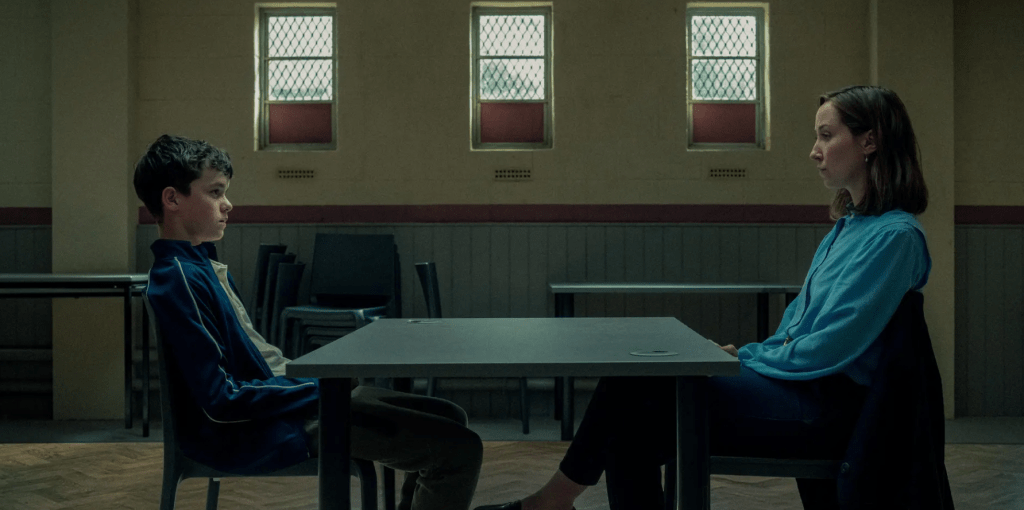
Adolescence Netflix

The Netflix series Adolescence is a wake-up call. It shook me to the core and shed light on the stark realities the new generation faces.

I grew up in a time when online influence was non-existent, and our worldview was shaped by the people around us. Today, that has changed. Algorithms dictate perspectives, feeding you opinions from across the world. Knowledge is no longer derived from just parents, teachers, or elders. This is a positive thing, but it has also resulted in an information overload.

There are several social media accounts trying to dump different perspectives on you. For every argument supporting point A, there’s another endorsing point B. Ultimately, it depends on which perspective you resonate with the most. Once you decide, the algorithm ensures you see more of it, reinforcing your beliefs. Sometimes, without you even realizing it. This can be dangerous. What if a child interacts with harmful content? The algorithm ensures they see more of it, shaping their beliefs in a troubling direction. We risk raising a generation programmed by these echo chambers. It’s a challenge we can’t ignore.

**Spoilers Ahead**

Every plus comes with a downside. Today, we have information at our fingertips, but this convenience comes at a cost. This is a reality that Adolescent portrays with unsettling accuracy. Jamie retreats to his room as soon as he gets home, immersing himself in his online world. His parents remain unaware of what he consumes, assuming, like many modern parents, that giving him complete freedom is the right approach. However, this unchecked digital exposure can shape young minds in ways they don’t anticipate, often with troubling consequences. It’s a new-age problem.

The series also introduced me to terms like Manosphere, Red Pill, and the 80-20 rule, making me realize how rapidly digital ideologies evolve. Figures like Andrew Tate are shaping young men’s perceptions of masculinity, often promoting the idea that being “alpha” means suppressing emotions. He preaches that men are providers and should be respected without being “given a headache.” This mindset isn’t foreign to India. I’ve noticed how men in my household particularly often express fewer emotions. When I was hospitalized recently, only the women in my family directly checked on me, while the men relied on them for updates. The burden of emotions lies on the women, whereas men are expected to be mere providers. Ironically, when men fall ill, women are expected to inquire directly. This emotional divide is ingrained in my household. I am unsure of other households. However, male-to-male interactions may differ. A “bro” might feel more comfortable checking in on a fellow “bro”.

I believe Adolescence should be screened in Indian classrooms with regional language dubbing. Andrew Tate-inspired accounts are emerging in India, pushing narratives that degrade women. If we don’t educate our youth about the dangers of such ideologies, we risk fostering a generation of men who lack empathy for women’s concerns, some of whom may even resort to violence to assert their views. The time to act is now.

The social message aside, this was Owen’s debut performance, yet he delivered with astonishing depth. It made me wonder how much the Indian film industry could thrive if it prioritized raw talent over nepotism, giving opportunities to newcomers who truly have the skill.

One of the most unsettling moments for me was Jamie’s chilling question to Briony with a steely, mocking gaze: “Are you afraid of a 13-year-old?” Owen Cooper’s portrayal was so disturbingly real that it made even a viewer like me uncomfortable. That’s the power of natural acting. His transformation, from an innocent boy insisting he has done nothing wrong, to someone consumed by uncontrollable rage, is nothing short of remarkable. It’s a performance that leaves a lasting impact.

An Ode to The Mehta Boys

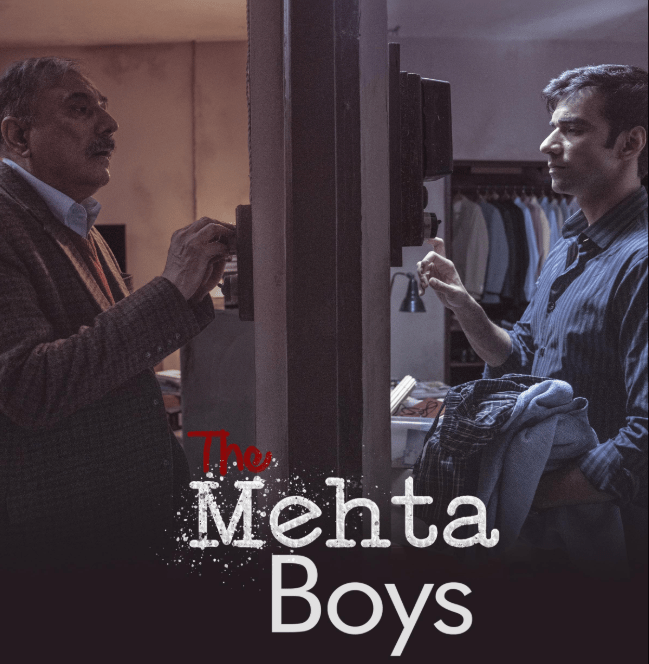
Wholesome movies are rare these days in Indian cinema, making them feel like an oasis in a desert when they do appear. The demand for feel-good movies is higher than ever, as seen in the success of re-releases like Laila Majnu and Sanam Teri Kasam, which prove that Indian audiences are eager for romance and uplifting cinema. It is during such a time that The Mehta Boys has arrived on OTT (Amazon Prime).

The Mehta Boys is a poignant, understated father-son drama centered on their dysfunctional relationship. Open communication and emotional expression are not their strengths, often leaving them struggling for words. Boman Irani portrays a grieving husband learning to cope with his loss, while Avinash Tiwary plays his talented yet self-doubting son. The heart of the story lies in their journey toward accepting each other’s imperfections.

We often see such father-son dynamics play out in real life. In many Indian families, open displays of affection are rare, making the relationship feel more formal than familial. Conversations typically revolve around daily chores and future plans, with emotions deliberately left out. The Mehta Boys captures this dynamic perfectly, portraying characters who have much to say but choose to hide behind silence.

Boman Irani has done an exceptional job as a first-time director, leaving me eager to see what he creates next. Avinash Tiwary, as always, excels, effortlessly bringing out the angst, anxiety, and awkwardness of a character who gradually finds his voice. He shines, leaving you wondering why you don’t get to see him on-screen more frequently. Instead, audiences are repeatedly offered star kids given endless chances to prove themselves, while talented actors like Avinash, who have already showcased their brilliance in just a film or two, are left waiting. It’s unfair, but all one can do is wait for movies like The Mehta Boys to arrive, offering a well-deserved cinematic experience.