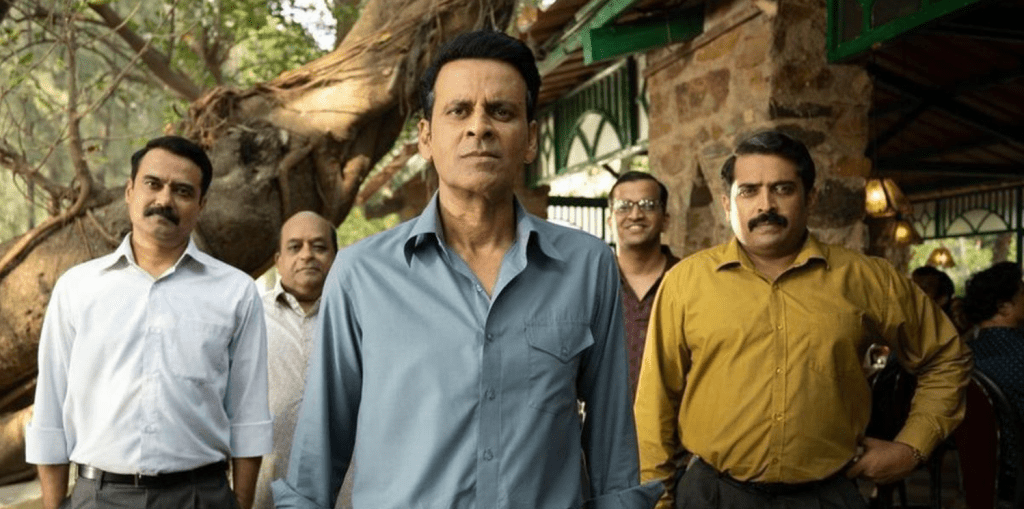
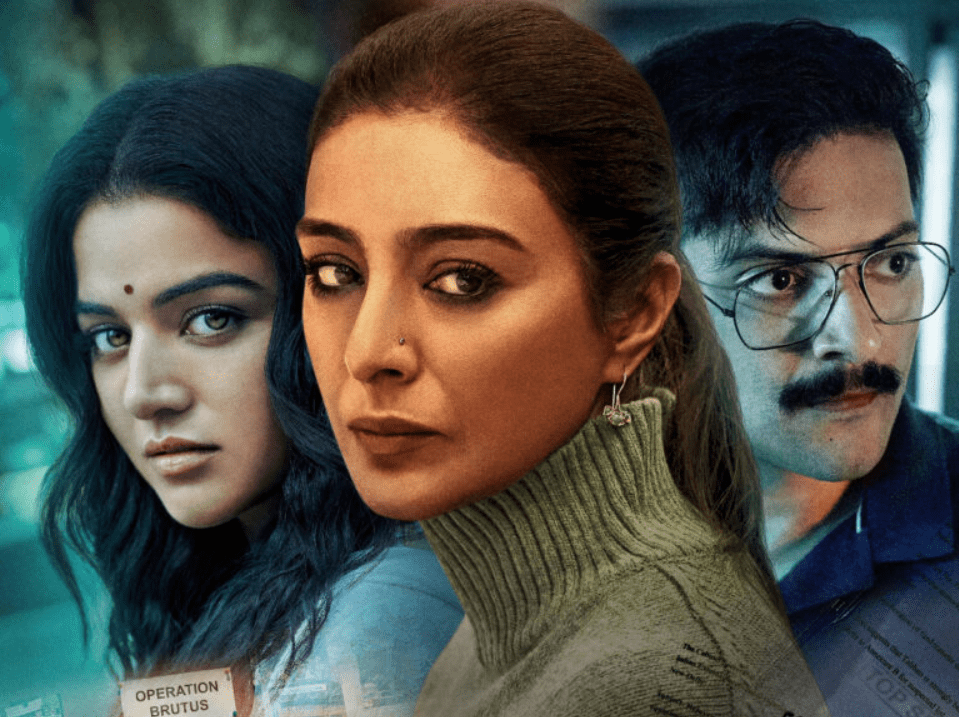
Empuraan is facing criticism from the right wing for allegedly promoting a biased narrative. Many are calling it a political propaganda film with a pro-Congress stance. How true is the allegation?
Spoilers Ahead
I haven’t watched the movie yet, but I’ve heard that the first 30 minutes focus on the Gujarat Riots. It depicts some of the most horrific incidents from that time. Reportedly, the film includes a rape scene that’s highly debatable. This particular rape story has been circulating since the time of the Gujarat Riots but remains unverified, with no solid evidence to support it. Additionally, the Godhra train burning in the movie is reportedly depicted as something that happened by accident. This portrayal gives the impression that the film is based on the findings of the Banerjee Committee Report, a report that was later ruled invalid, unconstitutional, and politically manipulated by the court. The Nanavati-Mehta Commission Report is the report that was officially accepted as the authoritative account of events due to its presentation of evidence. This information was also covered in the recent film The Sabarmati Report.
The Banerjee Committee was set up in 2004 by the UPA government, led by the Congress party. The committee’s report was released just before the Bihar Assembly elections, apparently to influence the election results and weaken the BJP’s position. The report concluded that the Godhra train fire was accidental, contradicting the BJP’s stance that it was a pre-planned attack.
However, the Nanavati-Mehta Commission later confirmed that the train burning was a premeditated communal act, not an accident.
The investigation found that large quantities of petrol were purchased a day before the incident from a nearby petrol pump.
The forensic report confirmed the presence of petrol residues inside Coach S-6, where the fire broke out.
Eyewitnesses and forensic evidence suggested that petrol was thrown into the coach and set on fire, indicating a pre-planned attack rather than an accidental fire.
For Malayalees who prefer not to watch TheSabarmati Report, I recommend a documentary on YouTube by the Sanchari channel. It’s in Malayalam and provides a detailed account of the Godhra train burning. I am attaching a screenshot of the video below.
The documentary is likely one of the first of its kind in Malayalam. It offers a detailed look at the various angles of the Godhra train burning, the different reports that emerged, the political maneuvering involved, and the final conclusions drawn. If you are a Malayalee interested in research and fact-checking, I highly recommend watching this video.
Naturally, Congress is supporting Empuraan, just as the BJP backs right-wing films when they are released. Even if Empuraan turns out to be entirely pro-Congress, I support the creator’s right to make and release such a film. Several right-wing movies have been produced in India recently, so a left-leaning perspective is equally valid in a democratic space. However, as viewers, we must avoid taking any movie as absolute truth. Instead, we should conduct independent research, considering both left-leaning and right-leaning sources to develop a balanced understanding of the subject.
Wholesome movies are rare these days in Indian cinema, making them feel like an oasis in a desert when they do appear. The demand for feel-good movies is higher than ever, as seen in the success of re-releases like Laila Majnu and Sanam Teri Kasam, which prove that Indian audiences are eager for romance and uplifting cinema. It is during such a time that The Mehta Boys has arrived on OTT (Amazon Prime).
The Mehta Boys is a poignant, understated father-son drama centered on their dysfunctional relationship. Open communication and emotional expression are not their strengths, often leaving them struggling for words. Boman Irani portrays a grieving husband learning to cope with his loss, while Avinash Tiwary plays his talented yet self-doubting son. The heart of the story lies in their journey toward accepting each other’s imperfections.
We often see such father-son dynamics play out in real life. In many Indian families, open displays of affection are rare, making the relationship feel more formal than familial. Conversations typically revolve around daily chores and future plans, with emotions deliberately left out. The Mehta Boys captures this dynamic perfectly, portraying characters who have much to say but choose to hide behind silence.
Boman Irani has done an exceptional job as a first-time director, leaving me eager to see what he creates next. Avinash Tiwary, as always, excels, effortlessly bringing out the angst, anxiety, and awkwardness of a character who gradually finds his voice. He shines, leaving you wondering why you don’t get to see him on-screen more frequently. Instead, audiences are repeatedly offered star kids given endless chances to prove themselves, while talented actors like Avinash, who have already showcased their brilliance in just a film or two, are left waiting. It’s unfair, but all one can do is wait for movies like The Mehta Boys to arrive, offering a well-deserved cinematic experience.
When was the last time you really switched off and relaxed while watching an Indian movie? I remember getting lost in a make-believe world whenever I watched Yash Raj or Karan Johar films. But sadly, over time, these filmmakers were pushed to make more realistic movies, at the cost of “superficial” ones.
Right now, I can’t seem to switch off completely while watching an Indian movie and drift into a world completely different from mine. I don’t watch movies for reality; I watch to escape it. If I wanted reality, I’d just take a walk outside, not sit down for a movie. But times have changed, and I don’t think we can expect Indian filmmakers to go back to creating movies with grand sets, stunning scenery, and actors with natural beauty and amazing chemistry. The current trend is all about violence, gore (often to the point of regression), and hyper-realism (and plastic surgeries).
Nowadays, if by chance a superficial movie gets released, we have to endure actors with little to no acting skills or the kind of magical chemistry we used to see with iconic pairs like Shahrukh Khan-Kajol, Shahrukh Khan-Juhi, basically Shahrukh with any actress, or Aamir-Juhi.
It’s a very dull era for the Indian film industry when it comes to making feel-good movies. Movie-watchers like myself, who want to escape into a world that isn’t focused on realism, end up turning to Korean or Pakistani dramas. The fact that so many Indian viewers are enjoying these shows proves there’s still an audience for feel-good romantic movies. The demand is there, but unfortunately, the quality supply is missing in the Indian film industry.
Part of the blame also lies with the audience, who now look for realism even in make-believe movies. If many of the romantic Korean or Pakistani dramas were released in India, they’d probably face intense criticism, with thousands of critics dissecting every single scene and evaluating it based on reality. This is why feel-good movies from the past (except maybe Wake Up Sid) are heavily criticized in today’s India. Such criticism discourages filmmakers from making more feel-good movies. Movie watchers like me, who yearn for superficial, romantic cinema, end up feeling dejected in the process.
I hope we get to see some romantic films, but since filmmakers are minting more money and fame from realistic and violent movies, I don’t expect the trend to change anytime soon.
We have good-looking actors like Ibrahim Ali Khan making their debut probably this year. Let’s hope he gets cast in some feel-good movies and his acting skills are as impressive as his looks. However, the current crop of actresses seems too focused on plastic surgeries, leading to a lack of diversity in looks. In the 90s and early 2000s, actresses like Kajol, Juhi, Sonali Bendre, Madhuri Dixit, and Raveena Tandon had distinct appearances. Sadly, that can’t be said now. So, the question arises—who will pair well with Ibrahim Ali Khan in a romantic movie? No one really comes to mind, except maybe Pratibha Ranta.
Indian politics cannot be easily categorized as “right” or “left” in the truest sense. However, it is easier for an apolitical person to understand whom you are referring to when you mention “left” (parties like CPI(M), but we generally include any non-BJP party in India) and “right” (NDA). I would call myself a centrist as I find a lot of things from both sides problematic. I can never swear allegiance to any one party, as I often look at the party’s performance and form my judgments based on that.
Now, the left-leaning crowd is naturally praising Maharaj, Netflix’s new movie starring Aamir Khan’s son, Junaid Khan. In contrast, the right-wing supporters are asking Hindus to boycott the movie. Truth be told, I haven’t read much about the Maharaj libel case, so I cannot pinpoint with utmost certainty which part of it is anti-Hindu. My opinion here is based on what I saw in the movie. Here’s why I, a centrist Hindu, did not find the movie problematic.
In Maharaj, Karsandas is portrayed as a reformist who is a practicing Hindu, but he asks questions and is not swayed easily by godmen. There is a monologue at the end where he says he fell more in love with his religion when he studied it in detail. He accuses the religious leader, Maharaj, of misusing it, misinterpreting the Sanskrit Vedas to further his vulgar agendas. This is not anti-Hindu in any manner. The court must have thought the same as well, which is why it got a clean chit.
The only material I referred to after watching the movie was a Wikipedia article on Karsandas. Interestingly, I found the following information, which was not covered in the movie.
He was deeply influenced by the English culture to an extent that he had dislike for institutional religious authority and had penchant for reading Christian sermons and later started translating English sermons & conduct manuals into Gujarati, thereby also bringing a distinctively Protestant ethic into Gujarati’s cultural world.
I am of the belief that community members and religious leaders should openly criticize the bad elements of their religion. If there is an extremist misusing and spoiling the name of your religion, why not openly oppose them? This applies to all communities. It’s only when you distance yourself from the fringe elements of religion that society truly reforms. As long as haters get support in the form of words or silence, radicals will continue to flourish.
Lately, I have ventured into watching Korean dramas. I have to admit I am completely hooked. I tried to stay away from K-dramas for the longest time, assuming it would be too cheesy for my liking. And honestly, the titles did not help.
But after watching just a few K-dramas over the past few months, I can confidently say – don’t judge a series by its name!
K-drama is anything but corny, cheesy, or cringe. It has well-crafted plots with impeccable, high quality writing. It’s admirable how much importance they place on everyday emotions. I now find it so wholesome, engaging, and fulfilling that I would advise anyone to watch at least one episode every day, especially if you’ve had a particularly draining day. A K-drama episode a day might just keep the doctor away.
The Korean dramas I tend to choose are solely focused on relationships because that is what I am craving at the moment. Over the past decade, I binge-watched several serious, abstract, intellectual, gory, and violent movies. The types that movie critics couldn’t stop raving about. And now I’ve had enough. I have reached a saturation point when it comes to reality-based cinema. Bring on the whimsical, captivating, addictive world of romance! I want to leave my troubles behind, I want to dream of a better world and romanticize about it.
As an Indian, I can’t help but wonder what happened to the quintessential feel-good romantic Yash Raj-esque movies? Why have we stopped making them? They used to perform incredibly well at the box office and are still cherished. DDLJ has been on a running spree for decades in Mumbai, with no end in sight. Which other genre can boast of having a similar impact on the audience? We can’t get enough of the charming Raj or the dreamy-eyed Simran. My friends reminisce about the etherealness of Chandni and the intoxicating love of Veer Zara. Forget Yash Chopra movies. Even a dark project like Dil Se had its share of aesthetically pleasing love-packed moments. Not to forget the playful mischief enacted by the lead actors with full gusto. A quirky Preeti (played by Preity Zinta) asks Amar (portrayed by the king of romance Shah Rukh Khan), “Are you a virgin?” which catches him off-guard, like the rest of us. We loved the dialogue, the crackling chemistry, and the freshness of it all.
Personally, my favorite Bollywood pair is Konkona and Ranbir in Wake Up Sid. The romantic angle was offbeat – a young guy in his 20s falling for an older working woman. You might think this unconventional pairing might not work, but they proved their detractors wrong. The chemistry was bang-on, scenes were memorable, dialogues were fun and thoughtful, and it boasted of the right mix of profoundness and escapism. You fell in love with the characters. It was difficult not to.
Romantic stories used to sell big in Bollywood. So this sudden shift from romance to violence and trauma-inducing reality cinema is unreasonable. The ones that Bollywood does end up making nowadays have no soul and are almost, for the lack of a better word – “cringe.” They lack emotional intensity and nuance. It is difficult to connect with the characters and delve into their world. A sign of a compelling romantic story is when you find yourself developing an emotional connection with the characters. Their love feels like your love. You want to hug them when they are sad, cheer for them when their passion gets reciprocated, or blush when romance is in the air. This holds true whether you are reading a book or watching a movie. If this feeling is missing, the story fails to make a mark.
It is not that India has stopped indulging in romantic stories entirely. We get to witness some well-made series on OTT, such as Mismatched and Little Things. They have done well, proving that there is an audience out there for authentic Hindi romantic sagas.
I thought I would have to resort to books for my kind of romance. Still, lo and behold, I was introduced to the world of K-drama, where everything is just as mushy and glossy as it used to be in Bollywood.
What makes K-drama so different from regular Bollywood movies released nowadays?
Focus is on emotions and feelings
Hometown Cha-Cha-Cha
Those stolen glances, broad smiles, and yearning looks are what makes K-drama so swoon-worthy. While Bollywood has moved to a more lusty “fast food” kind of romance, Korean drama still hangs on to the original slow-cooked YRF magic with a tight leash. Why stop making something that is doing well?
Stories for the soul
Crash Landing On You
We all know romantic movies are a world of make-believe, and we can’t possibly expect all of that sweet idealism to seamlessly transfer into our everyday lives. It’s not practical. But that’s what movies should do, if not regularly, then at least occasionally, offer a form of escapism to its audience from real-life issues.
The cute playfulness, heart-warming dialogues, gestures, and scenes that revolve around emotions are what make K-drama so sinfully good and make anyone forget their worries.
Family-oriented
Twenty Five Twenty One
One thing I dread nowadays is watching a movie or a TV series with family. You never know what kind of provocative scene will jump out of nowhere, leaving you and your family overwhelmed with embarrassment and a sense of existential crisis.
Most of the K-dramas I have seen are family-oriented. You can sit and watch the shows in the open, reassured that nothing awkward will unexpectedly appear on your screen.
Binge-worthy
What’s Wrong with Secretary Kim
Each episode in Korean dramas tends to be lengthy! It can be over an hour long. But since the focus is on everyday relationships, you don’t end up getting bored.
The right amount of playfulness and romance
Love To Hate You
The couples in K-dramas tease each other, have healthy banter, crack jokes, and are playful. Contrary to the common belief held by those who haven’t yet watched K-dramas, the shows are not all about soppy dialogues. The noteworthy part is that it all looks organic, not forced, adding to the authenticity of the experience.
Catchy music
Business Proposal
The music and background score in K-drama blends in with the situations, and in no time, you find yourself humming the tunes while doing your everyday chores. It exudes a gentle yet addictive vibe.
More relatability for 30+-year-olds
While many romantic movies in India cater to a younger audience, I have noticed that most of the K-dramas I have watched feature older and more mature characters. This offers more relatability for people in my age group who want to see people their age romance on-screen as well.
It’s Your Turn Bollywood
In the 80s and 90s, Bollywood films incorporated many of these points I listed above, except maybe featuring characters in their 30s and older. However, the current landscape of Bollywood movies doesn’t provide the same enjoyment as those classic films.
A look into the popularity of K-drama proves that romantic stories still sell. It is well-liked world-over across all nationalities. In India, I am surrounded by K-drama enthusiasts. It’s safe to say there is still a broad audience for the romantic genre in India, but they are forced to venture beyond the confines of the Indian movie industry as there’s a scarcity of feel-good, wholesome cinema here.
Hindi filmmakers should seriously consider creating good ol’ romantic movies again infused with emotions, aesthetics, endearing chemistry, and romantic dialogues. Maybe then, they may witness the box office numbers soar, finally putting an end to complaints about the underperformance of Hindi movies in recent times.
We are often encouraged to venture out of our comfort zones, push our boundaries and limits, and embrace the unknown. People say that’s where the real growth happens. I concur. Subjecting ourselves to new experiences is a sure-shot way to fuel personal development. Having a routine in place may or may not be detrimental, depending on the kind of person you are. Some people crave a time-tabled life, whereas others need a change every minute of the day.
We often try to stretch our comfort zones by altering our lives, such as starting a new job, relocating, trying novel exercises, or exploring new locations. These are primarily physical adjustments — you cajole your body into taking up these unaccustomed, exciting external goals to nourish your soul. But what about internal comfort zones? Are we open-minded enough to set aside the prejudices we have collected subconsciously over the years?
Mental transformation is unarguably more challenging than physical. Any change starts with the mind, even the physical. Encouraging yourself to expand your corporeal boundaries is often more fruitful than attempting to alter your thought process. It takes determination to discard years of conditioning, escape the chains of our preconceived notions, and declare, “Okay, I see and acknowledge this new way of living, even if it’s unfamiliar territory.” Personally, I find such people incredibly attractive. Their willingness to listen is commendable and praise-worthy. Yet, we don’t see it happen much.
Why are some people more flexible than others when it comes to accepting new ideas and ways of life, welcoming them wholeheartedly as if they were privy to this knowledge all along?
I would like to highlight one sector in particular to make my point: the Hindi movie industry. It is intriguing to observe how professionals evolve to keep up with the changing times. In the Indian series Gulmohar, an effervescent Sharmila Tagore, a senior citizen, plays a character that most in her cohort would have found blasphemous. Similarly, the iconic Madhuri Dixit portrays a determined mother in Maja Ma, traditional in some facets yet unconventional in others. A role many of her peers would have been unwilling to take on. Among the male actors, we have the young multifaceted Ayushmann Khurrana, renowned for taking up any daring character that comes his way. We have actors and actresses across age groups willing to change with the times. But these are just the minority. Most are reluctant to play characters who belong to the LGBTQIA+ community. Ranbir Kapoor, who’s within my age demographic, admitted in an interview a while back, during Shamshera‘s promotions, that he’s not brave enough to take up such roles.
Moving out of our emotional comfort zones is not age-dependent, as you can see. It requires a willingness to listen, understand, and acknowledge.
It is common to find friends and relatives who struggle to accept new ways of the world with its pressing issues simply because they find them unrelatable. They deny support despite knowing our backing may prove meaningful or pertinent to the intended group.
The most humane thing one can do is listen to the experiences and feelings of others and try to see things from their perspective without being judgmental. To sit with others’ thoughts for a while takes courage.
Sexuality is only one example. This rigidity in perceptions can be observed in a variety of scenarios. Conservatives look down upon women who wear clothes they consider vulgar. Feminists are thrashed because they are non-conformists. Men who display their emotions openly are often criticized by their peers and seen as inadequate to cope with daily tasks. Husbands who love PDA are called “hen-pecked.” We just have to take a look around to see the plethora of preconceived notions everyone, including you and I, are harboring.
The morality or behavioral police who preach righteousness are often people who have achieved much professional success in their respective fields by taking risks and boldly venturing beyond the boundaries of their concisely defined comfort zones. However, many refuse to embrace new lifestyles or cultural norms that challenge their convictions and emotional comfort. It is ironic to see them share inspirational videos about exceeding boundaries on social media when they themselves are not entirely free from the clutches of their comfort zones.
Sometimes it’s difficult to move away from what we have accepted so far as it’s an emotional state that we don’t want to let go of. Humans love their comfort zones — whether they be emotional or physical. An object at rest wants to continue being at rest. This theory is not just applicable physically but mentally as well. The discomfort of new fights, marches, debates, terminologies, laws, thoughts, and social media agitations build up our rage and make us criticize how the world is over-sensitive nowadays. Things are changing way too fast, and we can’t seem to keep up. It is overwhelmingly complex, and understandably so.
But whoever said we should accept the new all at once? Take it one at a time. Baby steps. Sit with the new, try to detach from the old, get acquainted with unfamiliar thoughts, ask questions (but kindly), and ruminate for a while. Give yourself time, as you deserve kindness too, to slowly break away from things you have treated as “home” until now.
But accept we should, if not immediately, maybe sometime in the future. To be a kinder person, less judgmental, and empathetic — traits that highlight growth as well. Acknowledging that change is a constant part of life and adapting to new ideas, beliefs, and perspectives is essential to becoming a well-rounded individual.
Shouldn’t we make a concerted effort to step outside our familiar settings, both in terms of our mindset and physical actions? Something to ponder as we continue to navigate the ever-changing world around us.
You must be logged in to post a comment.