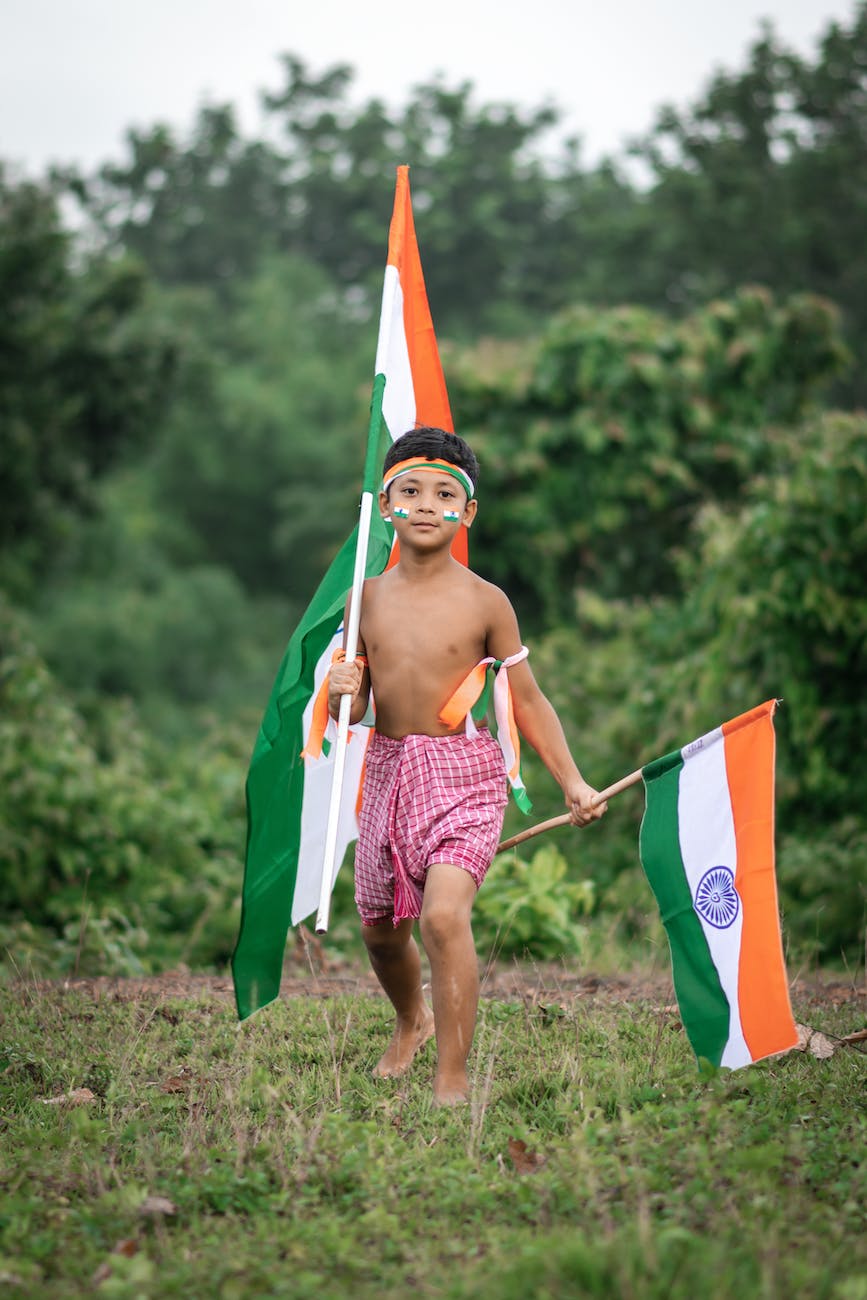
For the Love of India, Let’s Stop the Fearmongering

India Love and Peace

There was a time when I used to hear “Hindu khatre mein hain” (translation: “Hindus are in danger“) quite often in India. Now, I hear it from other communities – that they are in trouble.

Most of our fears stem from what the media selectively shows us. They put sensationalist headlines, which can scare even the most courageous. However, if you do more research, you realize there is always another side to the story.

Just now, I read a post on social media that minorities are in trouble. A line read, “Time to pack our bags and leave.” Most of us might not have faced any discrimination ourselves, but we will still choose to believe a piece of news we cannot personally verify. Unfortunately, the media is not the best place to get reliable news from nowadays. Everyone is so biased that you cannot know the actual truth unless you’re on the ground to witness everything with your own eyes.

Media often leaves the “before” and “after,” so we cannot always trust it to show the complete picture. Instead of blindly believing every negative news we are subjected to, our default emotion should be skepticism – “Are you telling the truth? Or do you have an agenda?” How do you know if they have an agenda? It is easy. Someone exclusively blaming the left or right, without ever mentioning their plus points, can be considered unreliable. They could be too brainwashed to look at the positives, not the type of people you should be getting the complete picture from.

Please note almost every news platform (and journalist) has an agenda nowadays. They consistently choose the negative news to highlight and then try to manipulate the information in such a way that you end up believing there is no other side to the story.

Election time is nearing. The left will try to project the right as communal, and the right will accuse the left of caste-based divisive politics. It’s up to us, the citizens, to be wary of hatemongering and fearmongering. If we have to choose between fear and peace, choose peace. If we have to pick between empathy or anger, choose empathy. This can only happen if we consider each other as a part of one big family – India – and not as separate entities.

No political party should be allowed to divide us on the basis of religion, caste, region, and other factors. Our aim should be to work towards the development of the country. This can only happen if we are empathetic to each other. We should be strictly against any extremist entities that can disrupt the peace and harmony of our nation and be careful not to spread more hatred or fear.

If we hate a party, we can show our disagreement using the most powerful tool in our possession – our votes. We can also take the legal route. However, resorting to fearmongering online can polarize us further. This is one of the several banes of a world increasingly becoming digital. We are becoming more informed, more than required sometimes, and also becoming increasingly polarized.

Once we accept the fact that “we are one,” political parties and media will stop playing such hatemongering politics. They will realize that every attempt to divide us will only end in failure. We should reach that point one day. For that to happen, a collective, conscious effort toward peace and harmony is needed.

***

Photo by Lucky Trips

Quick Bytes: Indian Journalists Should Stop Being Lazy

Indian Journalists Should Do More Research To Help Voters

Why are our Indian journalists so lazy? They refurbish stuff from news agencies like Reuters, hold some debates, and consider their job done. After a year or two, they forget what they reported in the past and make contradictory claims. Most are not well informed. They stick to one viewpoint. In the process, their viewers, i.e., us, suffer as we do not get a well-rounded perspective of current events, only a biased one.

When will we get a journalist who actually wants to help us understand the complete picture? At the moment, we have to resort to using multiple news sources for left, right, and centrist views. We are in dire need of a journalist who is pro-India in the sense they do not conduct any irresponsible journalism through hatemongering that can affect the social fabric of the country. Someone who gives us a side-by-side comparison of the rightist and leftist viewpoints and lets us, the viewer, decide what is right and wrong instead of feeding it to us in the form of polarizing “opinions”?

It’s almost election time, and no journalist or news media outlet has yet come out with a detailed study on what the parties have done for each state and its districts over the past five years. Where are the pros and cons? How many items in manifestos have been fulfilled so far?

We have so many journalists in this country. Yet, no one has made a detailed, well-researched, balanced list of achievements and criticisms of the various parties in the country. We get to see only the plain ol’ (but easy) hatemongering. They leave it upon us to do the hurdlesome, yet important, research.

I wish Indian journalists spent less time on debates and more time studying and providing citizens with material to help us, the voters, understand the actual work done by our politicians. By that, I mean a balanced take. Not a biased communal one. A tabled list of all the infra projects, health care, education facilities, and other tangible developments in the country, along with promises that weren’t fulfilled.

Do better, Indian media!

***

Photo by Pixabay

Korean Drama Spotlight: Gangnam Beauty

Gangnam Beauty Review

One thing is sure, Gangnam Beauty made me rethink my perspective on those opting for plastic surgery. I was of the opinion that people should learn to embrace their natural selves. But what to do when you get bullied and ridiculed for your looks? It’s easy to say, “Ignore and move on.” Let’s face it, we are a world obsessed with superficial beauty. We say beauty is skin deep, but our actions prove otherwise. There is indeed a pretty privilege. As a woman who was not considered conventionally beautiful as a youngster, I can empathize with the feelings of those who never got positive validation for their appearance. It’s a brutal world out there, and that’s what Gangnam Beauty tries to address. It nudges us to be more kind instead of judgmental.

Disclaimer: This post shouldn’t be treated as a review because I am far from qualified to give an objective and professional take on dramas. It should be treated as a subjective viewpoint of a cinephile who loves to watch movies and dramas purely for entertainment. I have only one criterion – I shouldn’t get bored. The drama will be judged on that factor alone.

What’s It About?

Gangnam Beauty starts with a young girl anxiously standing at the door of a surgery room, tightly grasping her mother’s hands, frightened yet hopeful of a brighter future. She wants acceptance, and her physical transformation could just prove to be the key. How Mi-rae’s story unfolds post-surgery once she enters college forms the crux of the story. Does life get simpler? Or will there be other unpleasant obstacles?

Thoughts

I liked how the story showed the “other side” of plastic surgery. We often mock and ridicule people who end up doing too many cosmetic surgeries. But Gangnam Beauty shifts your perspective by showing how “natural beauties” don’t always fare better.

The drama cleverly avoids revealing Mi-rae’s appearance before her surgery. This decision highlights the subjectivity of beauty. While Kyung-seok, the main character, and Mi-rae’s father considered her cute before the surgery, disclosing her former appearance would imply conforming to societal beauty standards.

Jo Woo-ri’s portrayal of Sua stood out as my favorite performance. Sua embodies natural beauty and a charming personality, effortlessly winning people over. Yet, beneath her exterior lies a complex character with hidden depths. Jo Woo-ri masterfully brings this multifaceted persona to life, a rarity to witness on-screen.

Though Gangnam Beauty has its imperfections, I would say it’s worth a watch, simply because it has a social message I feel everyone should be aware of.

Gangnam Beauty is available on Netflix. It has 16 episodes, with each episode lasting an hour.

The Worries of a Lover with a History of Heartbreak

The worries of a lover with a history of heartbreak

Relationships have never been a smooth sail for me. The kind of love glorified in movies and online platforms always felt like a distant dream. Agreed that cinema and social media do not always portray the complete picture. Yet, I envy people with uncomplicated relationships – they meet, like each other, and live happily ever after. Simple as that. For me, it has always been – we meet, we like each other, things fizzle out, distance, heartbreak, and increased caution.

I can cite many reasons for my past relationships not ending as I wanted them to. By this, I do not mean marriage, as that is not my end goal. I have been married once, and it was enough to make me realize that a traditional marriage, with its many rules and regulations, is not meant for someone unorthodox like me. It also wouldn’t be fair to impose my eccentric perspective on a family that adheres strictly to traditional marriage norms. In India, let’s face it, most families do want a marriage that sticks with the conventional route. Anyway, that’s a topic for another day.

What I seek is a long-lasting, peaceful, healthy, uncomplicated companionship rooted in friendship. The type that doesn’t make you stand on your toes or feel a sense of dread. The kind that doesn’t try to control or abuse. It is free-flowing and natural. A type of love that is as comforting as a warm cup of chai.

This post is not about my past relationships. It does not seek to give any motivational, positive advice. The thing I want to focus on is my feelings. There is always a fear lingering, no thanks to previous experiences.

I am currently in a relationship with the most caring man I have ever met. Someone who makes me feel at ease. I am at my most authentic self in his presence. However, sometimes, I look at his kindness with skepticism.

When you have had people playing with your feelings in the past, you eye even the sincere ones with suspicion. It’s a survival mechanism. You want to protect yourself from any impending heartbreak. You do that by asking yourself tough questions. You put yourself in a spot. You wonder if there will ever come a point when they, too, will start acting distant. Would the person, over time, forget that you two shared meaningful moments together, and end up talking in a manner devoid of any warmth or friendship as if you are a complete stranger wasting their time? Do you have it in you to deal with one more heartbreak, one more connection that transitions towards indifference?

These dark emotions are exclusive to us, the lovers with a broken track record.

It’s a terrible game your mind plays. Even your heart. You find yourself saying, “Be careful. Keep a safe distance always. It helps.” However, it is easier said than done. Gaining control over matters of the heart is not easy. It almost sounds robotic to do so. Humans often default to trust, hoping they’ve made the right choice and leaving the rest to fate. If events are destined, they’ll unfold regardless. Obsessing over control only brings suffocation and regret.

Life has this uncanny ability to unravel answers to your most pressing questions over time. That’s the one pro of aging – you gain this awareness that the answer will indeed arrive, if not now, then at a later stage. The sane thing to do would be to wait patiently instead of torturing yourself with questions that no one, even yourself, would be able to answer at the moment.

***

Photo by Hassan OUAJBIR

An Ode to Dr. Ambedkar’s Thoughts & Speeches

Dr Ambedkar Thoughts and Speeches

In recent years, I’ve shifted towards reading more non-fiction books. I’m not entirely sure why. There was a time when I exclusively indulged in fiction, but maybe as one grows older, there’s a desire for substance over escapism.

Currently, my topic of interest is my own country, India. For 40 years, I was mostly indifferent and satisfied with my understanding of India’s history. However, over the past few years, I’ve developed a strong desire to learn more. I’ve become curious about the psyche of our people, especially those who had to endure several seasons of conflict and unrest. I wish to understand our country’s past. What did our people go through during centuries of colonial rule? How did it mold our perspectives? What were the hurdles we faced before and after independence? As a nation, we have experienced true freedom only since 1947, which is less than a century. Considering this relatively short period, what valuable lessons should we absorb from our recent history as we navigate the present? At any point in history, did we feel a sense of unity? I am seeking hints because the present does not seem to offer any positive answers.

I never felt compelled to delve into books by influential leaders. It was during this quest to know more about India that I started reading Dr Ambedkar’s works. It feels surreal how a simple book could offer a glimpse into how Indians thought in the past, their sentiments, fears, anger, sorrow, etc. Everything feels like déjà vu.

History often repeats itself. By navigating the pages of Ambedkar’s book, you see glimpses of the present reflected in the past.

Some of his thought-provoking quotes include:

I measure the progress of a community by the degree of progress which women have achieved.

Cultivation of mind should be the ultimate aim of human existence.

History shows that where ethics and economics come in conflict, victory is always with economics. Vested interests have never been known to have willingly divested themselves unless there was sufficient force to compel them.

Religion must mainly be a matter of principles only. It cannot be a matter of rules. The moment it degenerates into rules, it ceases to be a religion, as it kills responsibility which is an essence of the true religious act.

I like the religion that teaches liberty, equality, and fraternity.

Law and order are the medicine of the body politic and when the body politic gets sick, medicine must be administered.

Life should be great rather than long.

Unlike a drop of water which loses its identity when it joins the ocean, man does not lose his being in the society in which he lives. Man’s life is independent. He is born not for the development of the society alone, but for the development of his self.

Dr. Ambedkar’s books offer numerous insights. I highly recommend Volume 8 to all Indians for a comprehensive analysis of the thoughts of Hindus and Muslims regarding the Partition of India. It deep-dives into arguments of each. Dr. Ambedkar fearlessly acknowledges and criticizes the cases from both communities while offering candid and constructive feedback. Ultimately, he leaves it up to you, the reader, to derive a conclusion.

For those interested in Dr. Ambedkar’s books, did you know that the MEA website allows you to download all volumes of his “Thoughts & Speeches” for free?

Here’s the link:  Books & Writings of Ambedkar

Enjoy!