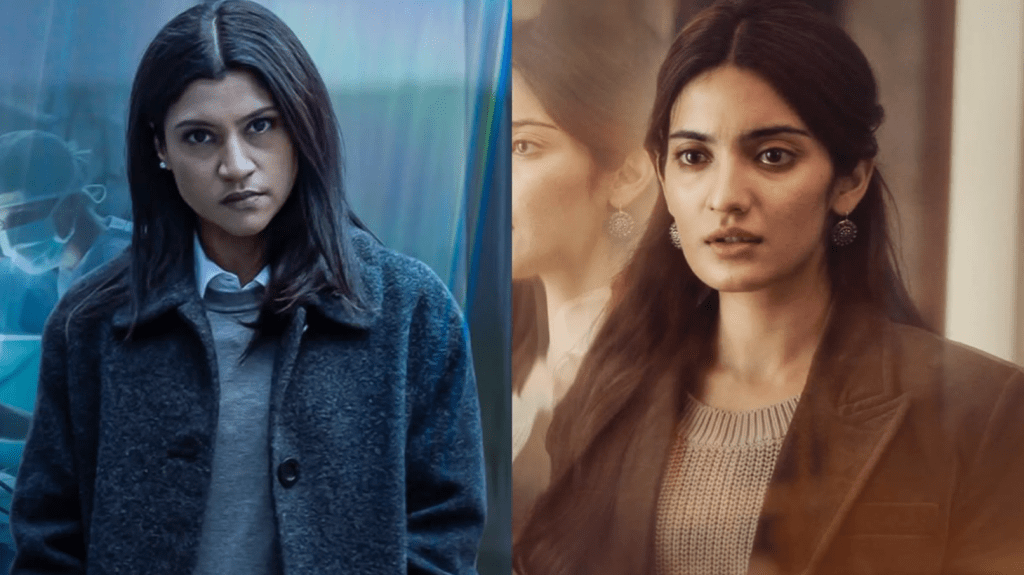
Feminichi Fathima is a Malayalam movie I had been waiting to watch for a long time. The film received strong appreciation at several film festivals. Many critics also spoke highly of it in their reviews. Now that it has finally released on OTT, the wait feels worth it. After watching the film, I can say it truly lives up to the praise it received.
The movieis a bold and thoughtful effort by director Fasil Muhammed to explore feminism from the perspective of a Muslim woman. This is a refreshing shift in Indian cinema, where feminist narratives are often shown through a cultural Hindu lens. Films like The Great Indian Kitchen (Mrs. in Hindi) and Thappad shaped much of that earlier conversation. Against that backdrop, this film feels timely and necessary. It adds a new voice to discussions on gender, faith, and everyday patriarchy.
What’s It About?
Fathima is married into a conservative and deeply religious family in the Malappuram district in Kerala. Her husband is a usthad (a religious leader) who expects his household to follow every rule without question. Life in the home is seen only through a strict, conservative lens.
Trouble begins when their young son wets the mattress. Fathima cleans it and leaves it outside to dry, but a dog later urinates on it. Since dogs are viewed as ritually impure, her husband reacts with anger and disgust. What follows is Fathima’s quiet struggle to fix the situation, facing resistance at every step.
The film makes a strong point that a woman in religious clothing can also be a feminichi (a slur often used by Malayalee misogynists to dismiss feminists).
Thoughts
Shamla Hamza and Kumar Sunil deliver standout performances. Shamla Hamza, in particular, is remarkable throughout the movie. It is hard to believe this is only her second project, after 1001 Nunakal, released in 2022. She performs with the ease and control of a seasoned actor. Her expressions carry much of the film’s emotional weight. Shamla winning the Kerala State Film Award for Best Actress feels well deserved. The storyline is fresh and quietly rebellious, which makes her performance even more powerful.
In many ways, the film feels braver than other feminist movies. Dissent is rarely encouraged in conservative Muslim families, which makes this narrative more powerful. The story shows how questioning norms itself becomes an act of courage. That is what sets this Malayalam feminist film apart. It opens space for conversations that are often silenced. Ideally, it will inspire more Feminichi Fathimas to speak up and stand for their rights.
Even though the subject is heavy, the movie never becomes overwhelming. It avoids melodrama and keeps emotions grounded. Light comedy is woven into the narrative. This balance makes the film feel surprisingly breezy. The pacing is tight and engaging throughout. You can easily watch the full 1.5 hours in one sitting without needing a break.
I would call this movie a must-watch for anyone interested in meaningful Malayalam cinema. Feminichi Fathima is now streaming on Manorama Max. You can also watch it via Amazon Prime with a Manorama Max subscription. English subtitles are available.
I often find myself missing the old Bollywood romance era. Films by Yash Chopra or early Karan Johar had a kind of magic that is hard to find today. The lead pairs had real chemistry, the kind that made you feel every emotion with them. When they looked at each other with misty eyes, you felt like you were falling in love too.
But in many new-generation films, that spark seems lost. I don’t know whether it’s the acting, the writing, or the shift in filmmaking trends. Modern romance feels rushed, predictable, too dark, melancholic, or sometimes just flat. The warmth, passion, and emotional storytelling that defined classic Hindi cinema is fading, and I genuinely miss it.
In today’s film landscape, Rohit Saraf feels like a breath of fresh air. He brings back that soft, believable romance many of us grew up loving. One thing that stands out about him is his effortless chemistry with his co-stars.
My favorite project of his isn’t even a Hindi film. It’s the Tamil romance Kamali From Nadukkaveri, where his performance and chemistry with the lead actress, Anandhi, is genuine and sweet. I would also suggest watching his earlier series on Zee5 titled Woh Bhi Din The. He filmed it when he was much younger. The emotional connection between the characters feels very real. Also, let’s not forget his impeccable chemistry with Pearle Maaney in Ludo, which remains one of my favourites.
In Sunny Sanskari Ki Tulsi Kumari, Rohit Saraf continues that image of the ideal romantic partner. His chemistry with Janhvi Kapoor feels natural and much stronger compared to the chemistry between the main lead pair. Honestly, their scenes had more warmth and emotional pull. I found myself wishing the makers had focused on that storyline instead of pushing the romance between Janhvi and Varun Dhawan. It felt like the more organic love story was sitting right there, but never fully explored.
Personnally, I feel Rohit Saraf deserves more recognition for keeping that old-school romantic charm alive.
Maybe it’s time filmmakers start looking for the right lead pair for Rohit Saraf. If they get that pairing right, many of us women could finally relive the era of Kajol and Shah Rukh Khan or Aamir Khan and Juhi Chawla. Those iconic pairs made romance feel real, soft, and unforgettable.
A couple with that kind of natural chemistry is missing in today’s Hindi films, and audiences like me are definitely craving it.
I recently came to know that there is an Apple TV series based on Bonnie Garmus’s Lessons in Chemistry. Still, like many book lovers who believe the original story is always better than any adaptation, I chose to read the book first. And I am glad I did.
Lessons in Chemistry is warm, quirky, and emotional. It begins at a quick pace and later slows down to let the reader focus on how the characters are feeling. The fictional novel explores women empowerment, career, ambition, love, grief, and self discovery.
The story is about two unconventional scientists who view the world through logic. Their relationship feels unusual to others because their conversations revolve around research, experiments, and what most people would call nerdy banter. But the connection they feel with each other is real. They believe they are soulmates.
The female scientist eventually steps into an unexpected phase of her life and has to leave her career only to soon become the host of a cooking show. The show goes on to gain popularity dude to her unique, scientific approach towards food. She treats every recipe like a science experiment. She explains why each ingredient matters and the chemical composition that affects taste and cooking. This fresh perspective inspires her audience and transforms the way they think about cooking.
If you enjoy fiction that blends romance, feminism, science, and character driven storytelling, Lessons in Chemistry is worth adding to your reading list.
I also want to list some of my favourite thought-provoking quotes from the book. Hope you enjoy them as much as I did.
One thing I’ve learned, Calvin: people will always yearn for a simple solution to their complicated problems.
It’s a lot easier to have faith in something you can’t see, can’t touch, can’t explain, and can’t change, rather than to have faith in something you actually can.
From his own lessons, he knew repetition was important. The key was not to overdo the repetition—not to make it so tiresome that it actually had an inverse result and caused the student to forget. That was called boredom. According to Elizabeth, boredom was what was wrong with education today.
No wonder people didn’t understand animals. They could barely understand each other.
Having a baby, Elizabeth realized, was a little like living with a visitor from a distant planet. There was a certain amount of give and take as the visitor learned your ways and you learned theirs, but gradually their ways faded and your ways stuck. Which she found regrettable. Because unlike adults, her visitor never tired of even the smallest discovery; always saw the magic in the ordinary.
“What I find interesting about rowing,” Dr. Mason was saying, “is that it’s always done backwards. It’s almost as if the sport itself is trying to teach us not to get ahead of ourselves.” He opened his car door. “Actually, when you think about it, rowing is almost exactly like raising kids. Both require patience, endurance, strength, and commitment. And neither allow us to see where we’re going—only where we’ve been. I find that very reassuring, don’t you? Except for the flip-outs—of course. I could really do with fewer flip-outs.”
But as she read, she’d found herself wondering—did the artist ever get distracted? Ink an asp instead of a goat? And if so, did he have to let it stand? Probably. On the other hand, wasn’t that the very definition of life? Constant adaptations brought about by a series of never-ending mistakes?
“I don’t have hopes,” Mad explained, studying the address. “I have faith.” He looked at her in surprise. “Well, that’s a funny word to hear coming from you.” “How come?” “Because,” he said, “well, you know. Religion is based on faith.” “But you realize,” she said carefully, as if not to embarrass him further, “that faith isn’t based on religion. Right?”
“Whenever you start doubting yourself,” she said, turning back to the audience, “whenever you feel afraid, just remember. Courage is the root of change—and change is what we’re chemically designed to do. So when you wake up tomorrow, make this pledge. No more holding yourself back. No more subscribing to others’ opinions of what you can and cannot achieve. And no more allowing anyone to pigeonhole you into useless categories of sex, race, economic status, and religion. Do not allow your talents to lie dormant, ladies. Design your own future.
When you go home today, ask yourself what you will change. And then get started.”
I recently watched Nobody Wants This Season 2. If you haven’t seen Season 1 of this Netflix series, I really think you should. It deals with a topic that most interfaith love stories never touch — conversion. It’s a sensitive issue, especially among Abrahamic religions. So it felt quite bold that the makers decided to go into it at all.
Season 1 had already touched on the idea of conversion. But Season 2 takes it a little further. This time, you see the boyfriend, who is a Jewish rabbi, and his family, constantly pushing his Christian girlfriend, who seems more atheist or maybe agnostic, to convert. It adds a new layer to their story and makes the whole situation feel even more complicated.
However, this post is not a detailed review of the series, but the many thoughts that came to my mind while watching it, mainly concerning conversion and how it is seen in India.
There are many abroad who have a distorted idea of religious freedom in India, no thanks to misleading, half-baked news articles, often written by left-leaning Hindus or non-Hindus, and I wish to debunk those notions as well and present them from the perspective of a centre-right Hindu who was, till two years ago, a leftist.
Be prepared for a long post, because this is a topic I feel strongly about. If you’re short on time, you may want to save or bookmark it and read it when you’re free.
A Hindu’s View on Conversion
Before I begin, I want to make my religious beliefs clear. I’m not a religious Hindu in the traditional sense, but I’m still a staunch Hindu. If that sounds confusing, it’s only because Hinduism allows this kind of pluralism. You can be spiritual, non-religious, or even an atheist, and still remain Hindu.
The faith makes space for many ways of thinking, which is why someone like me fits comfortably within it. I’m not ostracized for eating beef, nor am I ostracized for not following religious beliefs properly. I can question and I can push back against religious rules I don’t believe in without repercussions.
This freedom that my belief generously allows me is exactly why I strongly stand by the community and call myself a “staunch Hindu.” I advocate for the rights of my community, which a religious Hindu in India may not always do, as they wish to appear secular and tolerant of even the injustices against us.
Now that my beliefs are out of the way, I want to say that even as a non-traditional, progressive Hindu feminist, I don’t support conversion. I don’t understand why anyone has to give up their identity for love, marriage, or even politics, no matter how much anyone would try to justify it.
Most Hindus in India feel the same way, which is why you rarely see the community protesting against anti-conversion laws in some states. Among ourselves, we often say the same thing quietly: “What’s the need to convert?” Of course, many reasons are given. I address them later in this post.
Then we see Indian-origin Hindu politicians in America converting to Christianity to stay relevant and gain acceptance, and it makes us pause. It makes us wonder, “Is America really the land of the free?” And on what basis do they judge India on religious matters when they themselves have not reached full religious secularism yet?
However, in Abrahamic religions, conversion is considered a matter of freedom of faith. This is acknowledged. But this is also a major reason for communal tensions in a Hindu-majority country like India. Most Hindus do not believe in conversion or proselytization, while Abrahamic faiths consider it a part of their practice.
Hindus are of the belief that everyone should be free to practice their faith without disturbing others or disrespecting anyone else’s faith. Proselytization goes against that idea. It feels disrespectful because it implies someone’s existing faith is not good enough. It involves putting down those beliefs, so they are convinced enough to join the new one. So, this “freedom of faith” often comes at the expense of disrespecting others, which was tolerated for the longest period of time, till the Hindu community got the strength to say “enough is enough.”
This pushback is the part that’s often presented to the world as a “lack of religious freedom” in India. Or, to put it more frankly, the lack of freedom to convert Hindus. This clash of beliefs has no solution, and I see it continuing even after a change of government. It’s a label the country has to live with, because there can be no middle ground when people feel their identity is being erased.
A thought I often hear is, “There are so many Christian-majority and Muslim-majority countries in the world. Why can’t they just leave us alone?” It reflects the frustration many Hindus feel when they see constant pressure to convert despite already being a global minority.
Pressure to Convert in Interfaith Marriages
The topic of conversion in marriages is prevalent in Indian Reddit circles. Almost every other day, you see someone saying, “My partner’s parents want me to convert. What should I do?”
From what I’ve seen, it’s usually the Hindu who is expected to convert. And often, the Hindu partner is unaware of what that really means. They hear lines like, “You just need to get baptized. After that, you can follow your own culture,” and they assume there’s no conversion involved. Many agree because they don’t realize the deeper implications. We walk into these situations thinking others are as pluralistic and flexible as we are, and that’s where the misunderstanding begins.
Conversion is also very normalized. When I ask my Christian friends if someone needs to convert to marry into their community, they casually say “yes,” as if it’s the most ordinary thing in the world.
We recently saw this when JD Vance openly and coolly said he hopes his wife, Usha Vance, a Hindu, converts someday. Ironically, the same line appears in Nobody Wants This Season 2 as well, where the Jewish rabbi says he hopes his Christian girlfriend converts one day.
For us Hindus, it’s a culture shock, almost regressive, because we never expect something like this from others. At the same time, Abrahamics and international news channels are confused when they report that there’s outrage in India over Vance’s statement. They have no idea why Hindus are angry. So they brand it as “far-right Hindutva.”
Why Do Hindus Dislike Conversion?
Most Hindus find the idea of conversion strange, because the religion itself accepts that God can appear in many forms. It is naturally pluralistic. So someone like me, who is not religious, or even someone who is an atheist, is still seen as a Hindu, because schools like Carvaka already accept that. We also tend to readily accept other gods because of this pluralism. We don’t consider them as fake. We don’t believe that ours is the “only true god” either.
This pluralistic mindset of Hindus is both a boon and a bane. A boon because we naturally accept all faiths, and a bane because we expect the same openness from others, and we don’t always receive it.
On top of that, many Hindus today focus more on careers and less on having children. So there is a natural tendency to protect the current Hindu population from inducements. The Chattisgarh High Court reiterated the same thing recently:
Chhattisgarh High Court Condemning Induced Conversions
With all this in mind, it’s natural that the majority of Hindus don’t look at conversion in a positive way. Our faith is already mocked by many Abrahamics around the world, who use words like “demon-worshipping pagans.” This makes it even more important to push back against that narrative and simply exist as we are.
Hindus, in short, want the freedom to be seen and respected in their own identity. But this way of thinking is often dismissed by, ironically, the very same people who speak loudly about secularism and freedom of religion. If others believe Hindus can be freely converted, then Hindus also have the right to openly object to it.
Ghar Wapsi
Now, some may argue that even Hindus encourage conversion in the form of Ghar Wapsi (reverting to Hinduism). However, Ghar wapsi is not a core part of Hinduism. It is more of a reaction to the aggressive conversions that have been happening in the country.
Most people I know converted to Abrahamic religions because of perks, not out of faith. They were poor and needed money. They were promised financial benefits if they converted. The fact that they are openly admitting this is nothing any faith should feel proud of. The only reason to convert to another faith should be faith itself. You should feel that the new faith and its principles are right for you, not be influenced by inducements or pressure.
If you ask why the Hindu side can’t match these perks, the answer is simple: we don’t have multiple Hindu-majority nations funding such activities. India is the only major Hindu-majority country, so the playing field is not equal.
Ghar Wapsi is simply an attempt, based on faith alone, to help those who genuinely want to return to Hinduism.
Arguments Used to Justify Conversions in India
1. Charity
There’s this belief that the money given during conversions is out of pure kindness. But I know many Christians who are struggling, working extra hours just to manage their basic needs. If the intention is genuine help, why not support them first?
And, most importantly, why should any help come with the condition of conversion?
Real help doesn’t demand a change of faith. If it does, you have to wonder whether it’s truly help or part of an agenda.
2. Caste Discrimination in Hinduism
It’s also misleading to say that converted Christians escape discrimination to enter a better way of life after they leave Hinduism. Many are treated as “lower-level” Christians, and some have even gone back to Hinduism because of this.
Source: New Indian Express (July 2025)
Additionally, consider the points made below (took help from Google Search AI):
One person told me about a convert in her family who wants to return but cannot, because they signed a financial help agreement that now holds them back.
The good thing is that the caste system within Hindu society is slowly being dealt with. Families are becoming more open to inter-caste marriages, including in my own family. This change is happening faster in the South than in the North. It’s not perfect yet, but progress is real. In this situation, constantly blaming a community that is actively trying to fix the problem does not help.
Yes, many Hindus still support caste, and as long as they exist, the issue will continue. But this divide is also kept alive by leaders, both political and religious, because it benefits them. If caste truly disappears, many of these leaders lose their power to divide or convert Hindus, and that is why the system hasn’t faded away completely.
Instead of building bridges, the “narrative builders” choose to burn them by feeding divisive stories, which only pushes people of different castes further apart. Missionaries often highlight caste discrimination so aggressively because it helps them drive conversions. So you have to ask — are they really helping, or are they using the problem to serve their own goals?
4. Freedom of Faith
The tricky side of conversion in India is that Hindus openly say they are against it. But in Kerala, I often see Christian groups shift their stand based on who is converting and to which religion. They welcome anyone who joins their faith, but they loudly object when someone chooses to leave it.
Churches often use the term “love jihad” when a Christian woman converts to Islam for love. Yet the same groups talk about “freedom of faith” when a Hindu woman converts to Christianity for love.
Since both Abrahamic religions support proselytization as part of their belief system, you would expect them to be supportive of conversions into each other’s religion. But that rarely happens.
Complications of Conversion in Interfaith Relationships
Spoiler Ahead for Nobody Wants This Season 2
Click to reveal spoiler
Considering the many unwanted complications related to conversion, I was really hoping the female character in Nobody Wants This would take a stand. I wanted both partners to accept that two religions can live side by side without one needing to disappear. The ending didn’t go the way I hoped, but since there’s a Season 3 coming, I’m hoping they fix things and take the story in a better direction.
*Spoiler Ends*
In many interfaith relationships, I notice that the Hindu partner often gives in to the Abrahamic faith — if not through marriage, then through the children.
Take Usha Vance, for example. All three of her children were baptized because her husband couldn’t accept the kids growing up Hindu. That feels like a loss of her own identity. It shows that even an educated woman like her is not fully protected from this pressure.
If it were up to me, ideally, I would want the kids to grow up with both religions. But if we had to choose one religion for my “imaginary” children, I would fight hard to raise them in my own. Purely because Hinduism is naturally pluralistic, and it doesn’t invalidate any other faith. It would also matter to me because Hindus are a global minority, while the other religions face no existential crisis. It’s like the global majority religion being generous enough to make space for the growth of the minority.
Also, if I had to pick, I would choose a court marriage. But if the partner insists on a religious ceremony, then it would have to be a temple wedding. You don’t need to convert for that. You only need to respect the rituals. It’s simple, fair, and inclusive.
This is probably why I feel an interfaith marriage may not work for me. I believe in equality between religions, while an Abrahamic partner may not always see it the same way. There would be constant tension, and I am not the kind of Hindu who would compromise on my identity.
When I was younger, I probably would not have thought this way. Back then, love felt like everything. But growing older makes you see the bigger picture.
Pushback Against Conversions in India
More Hindus today realize that they don’t need to give up their beliefs for anything, which is why you see fewer people willing to convert.
Hindu Villagers in India Fighting Back Against Conversion
This awareness is slowly growing. I recently saw a post on Reddit where an Indian Christian said they felt sad that many Hindus in India are no longer open to conversion or to “the way of the Lord.” To me, this is actually a positive sign for the Hindu community. It shows that more people are choosing to stay firm in their identity.
And honestly, this should be true for every religion, because love and true secularism do not require anyone to change who they really are.
I recently watched Jovita George’s “Dating After Divorce” video on YouTube. First of all, kudos to her for creating such a video. This kind of content is still not very common, and many women, especially in the Malayalee community, hesitate to talk openly about their divorce stories. So seeing Jovita share her experience really impressed me. It has also motivated me to talk about my own journey with relationships (and also friendships) after divorce. So here goes.
Lessons and Red Flags
I will start not with relationships, but with the judgments you face as a divorced woman.
This may not be everyone’s experience, but after my divorce, I often sensed a certain judgment from people around me, not always from my male friends, but from the women in their lives.
For example, a male friend’s wife suddenly became suspicious of me, as if divorced women are seen as people who “prey” on married men. No one says it openly, but the distrust in their eyes makes it obvious. This was especially frustrating because I have always been careful around married men, even those who were flirtatious. I never encouraged them as I was always mindful of what their wife would feel. Yet society is quick to judge a woman the moment a man interacts with her.
It also became clear that many men, both married and unmarried, see a divorced woman as “easy.” They approach you often for casual fun. “Friends with Benefits.” Because you are deemed as someone who’s not serious about relationships, because you chose to “throw away” a marriage. It feels sad, but it happens.
This stereotype gets even stronger because of how movies and dramas show divorced women. They’re often portrayed as someone trying to break another woman’s marriage — the evil, overly glamorous vamp who cares only about herself. You hardly ever see a divorced woman on screen who’s just like anyone else, someone who wants warmth, kindness, and love.
So a divorced woman who wants something serious needs to stay alert and filter out these shallow bonds.
Finding Love Again After Divorce
I eventually got into a long, serious relationship. We met through mutual friends, and at first it felt promising. But it soon went downhill. I realised he was never truly serious. And the reason was my divorce status. That hit hard. It felt like he was embarrassed by who I was.
That’s something divorced women should watch out for — a man can say he’s serious, but you only know the truth when his actions match his words.
The gaslighting made it even worse. He made me think I shouldn’t feel the way I did, even when I felt disrespected. It was mentally draining, yet I held on because I wanted the relationship to work. His anger and verbal jabs made me anxious, and over time, they chipped away at my confidence.
When that relationship ended, I was shattered. I had loved him despite all the red flags. But the truth was hard to face — I don’t think he even saw me as a friend. There was no warmth, no respect. It’s tough to process that after all the compromises you make.
That experience changed me. It made me far more cautious about getting into a relationship again.
Slow and Steady
After that, I met someone by chance. A divorced man, part of my school group. He’s someone just as cautious as I am, so we take things slow. Both of us carry scars from our past. Probably why we’re kind to each other. Even when we fight, we stay respectful. That matters a lot to me, considering my past hasn’t been so kind. He feels like home because he is steady and respectful. Still, after what I went through, a part of me wonders how long it will last, even though we’ve been together for years now.
We’re not chasing marriage. We just want respect and companionship. How long this will last, I really don’t know. When you’ve seen bad relationships, there’s always that little voice saying good times don’t last. He could be the one, or maybe not. Time will decide.
So this is what dating after divorce has been like for me.
And here’s a reminder for divorced women — other people’s judgments only hurt when you believe them yourself. Don’t bring yourself down just to fit their expectations.
I watched The Girlfriend because most of my married (girl) friends praised it. After seeing it, I understood why. The story includes the classic “evil mother-in-law” angle, which many of them may relate to on some level.
What’s It About?
A psycho (but beautiful) real estate agent meets her boyfriend’s equally psycho (but rich) mother, which kickstarts a gruelling, intense face-off between two psychos.
Thoughts
I found the series average, probably because I’ve watched so many psychological thrillers in my 40+ years that nothing feels new anymore. But women in my age group seemed to love it.
I suspect it’s because the show portrays the partner’s mother as nauseatingly interfering, exactly how many wives and girlfriends see that figure in their lives – an overbearing presence who threatens their relationship.
To me, both sides, my female friends and their mothers-in-law, seem equally psycho, so watching that dynamic as an outsider feels different. And the guy is just there, unable to take sides. If you’re not in that sort of relationship, the series may not hook you as much. But for someone who’s personally caught in that kind of power struggle, the series would definitely hit harder.
I found the personality arcs of Cherry and Laura interesting. They keep going after each other, yet in many ways, they are alike. When you look at it more closely, it feels as if they are really battling a version of themselves.
The Girlfriend is now streaming on Amazon Prime Video. The series has six episodes, with each one running for about 50 minutes.
You must be logged in to post a comment.