Book Review: “Pretty Girls” by Karin Slaughter

Karin Slaughter Pretty Girls

It took some time to complete Karin Slaughter’s Pretty Girls. This is not because the plot wasn’t interesting, but because I was trying to divide my time equally among other interests in life. The storytelling is intense, descriptive, and graphic. So, I had to take breaks. Anyone who cannot handle violence should stay away from the book. It’s by far the most violent book I have ever read.

The crime thriller follows the story of three sisters. One of them has been missing for years, while the other two navigate their lives without their eldest sister’s presence. Their parents are separated, unable to cope with their daughter’s absence. What happened to their eldest? Why aren’t the cops providing clear answers? This mystery forms the crux of the story.

If you enjoy thrillers, I’d highly recommend Pretty Girls. Personally, I felt the descriptions were a bit lengthy at times, which slowed the pace for me. However, readers who appreciate detailed scenes and emotional depth may find that aspect especially engaging.

Ending this review with some interesting quotes from the book:

That she ended up with a boy who had grown up less than twenty miles from her childhood home was just further proof that no matter how far you ran, you always ended up back where you started.

People did not change their basic, core personalities. Their values tended to stay the same.

“The world stops for you when you’re pretty. That’s why women spend billions on crap for their faces. Their whole life, they’re the center of attention. People want to be around them just because they’re attractive. Their jokes are funnier. Their lives are better. And then suddenly, they get bags under their eyes or they put on a little weight and no one cares about them anymore. They cease to exist.”

“Reductio ad Hitlerum.” Claire couldn’t stop quoting Paul. “It’s when you compare someone to Hitler to win an argument.”

“Dyadic Completion,” Paul would’ve told Claire. “The human brain tends to assume that, if there’s a victim, there has to be a villain.”

He reminds me of the worst kind of student I used to have—the kind who is certain that they already know everything worth knowing

Korean Drama Spotlight: When Life Gives You Tangerines

When Life Gives You Tangerines

I wasn’t planning to watch this K-drama, but the glowing reviews in some K-drama groups convinced me to give it a try. I had my doubts. Mainly because I haven’t been able to finish any romantic K-dramas lately. But I’m glad I took the chance, because it turned out to be an absolute treat.

What’s It About?

When Life Gives You Tangerines follows the lives of three generations of women, whose main struggles revolve around money, not men. Their hardships and resilience form the heart of the story. At its core, the message is clear: with strong support, you can weather any storm life throws your way.

Thoughts

The story is as bittersweet as the name suggests. Tangerines are generally sweet with a slight tang, but when unripe, they can have a hint of bitterness. Just like the layered emotions in the narrative of the series.

Struggle stories can be hard to watch, but When Life Gives You Tangerines somehow makes even the toughest moments feel bearable. The female protagonist’s poetic narration offers a gentle sense of comfort, reaching out to you, the viewer, and softly encouraging you to keep going just as the characters do in the series.

IU shines as the standout performer in When Life Gives You Tangerines, beautifully supported by Park Bo Gum and Kim Seon-ho.

The series explores the complex relationship between parents and children with deep empathy and emotion. I heard it’s based on a true story, and that might explain the raw, genuine feeling that runs through every scene. You don’t just watch the characters. You journey with them, as if they’re personally guiding you through their world.

This isn’t your typical lighthearted romance. It’s a slow burn, and you might find yourself tearing up in almost every episode. Normally, I don’t appreciate being made to cry. But for this family, I was more than willing to make an exception.

When Life Gives You Tangerines is streaming on Netflix. The series has 16 episodes, with each episode lasting roughly an hour.

Cultural Surprises and Shocks in Zard Patton Ka Bunn

Zard Patton Ka Bunn

I have only completed one episode of Zard Patton Ka Bunn (I have no idea what this means) so far on YouTube, but I already have a feeling I will like this Pakistani drama better than Kabhi Main Kabhi Tum. Sharjeena and Mustafa were cute and the series started off well but I didn’t find the story engrossing enough towards the end.

The first episode of ZPKB is endearing. A girl is praying intensely that she passes her exams, while the Maulawi (religious scholar) requests everyone through the mic in the mosque to pray for her. He says it’s admirable that a girl in the village wants to study more. 

This Maulawi is hilarious! When a village officer visits the mosque to announce a population control drive, the Maulawi asks, “What’s the population of Pakistan?” The officer replies, “It’s now 22 crore.” The Maulawi then mumbles to himself in a lighthearted moment, “What’s the use of these 22 crore people if they can’t even sponsor one motor for the mosque well!” 

It’s funny how the Maulawi is shown as a comical character who no one in the village takes seriously. It’s surprising because I always thought Maulawis were treated with utmost respect. On the contrary, this series treats the Maulawi exactly like how some Indian movies show swamis and gurus in a funny light. In the first episode, the villagers are shown berating him for overusing the mosque mic. He’s on it every other minute, asking for donations for the motor.

Now, the shocking part was how casually a female character scolded her husband for waking up late, saying, “You’re a Muslim, not a kafir,” as if it were normal, everyday language. The way the word “kafir” (non-believer) was used so casually suggests it’s deeply ingrained in the cultural discourse. To a Hindu, like me, the word hit me like a jolt. In contemporary times, the word kafir can be seen as an insult by non-Muslims, especially when it is used to highlight the superiority of one religion over another. As a tolerant kafir, I’ll let it slide and move on, but it does make me wonder about its impact, especially among impressionable Indian youth who are into Pakistani dramas. My concern is that it could reinforce divisive ideas, encouraging people to see others through a binary lens of “believers” and “kafirs”. That’s a troubling thought in any diverse, multi-faith society. But here’s hoping Pakistani dramas will be more mindful of such polarized language in the future. As the world becomes more interconnected and local entertainment reaches a global audience, paying attention to details like language can help ensure you don’t alienate anyone who appreciates your work.

That said, I have no intention of boycotting the series. I look forward to watching the remaining episodes on YouTube. It’s not every day you come across such feel-good wholesome witty content. I will savor every moment of it.

Korean Drama Spotlight: No Gain No Love

No Gain No Love

Recently, I watched the Korean drama “No Gain No Love” on Amazon Prime. I was going through a Korean drama slump, so I was unsure if I would be able to complete the drama. However, the cute chemistry between the lead characters kept me going.

What’s It About?

No Gain No Love is precisely what the name implies – if there’s no gain involved, don’t expect any love.

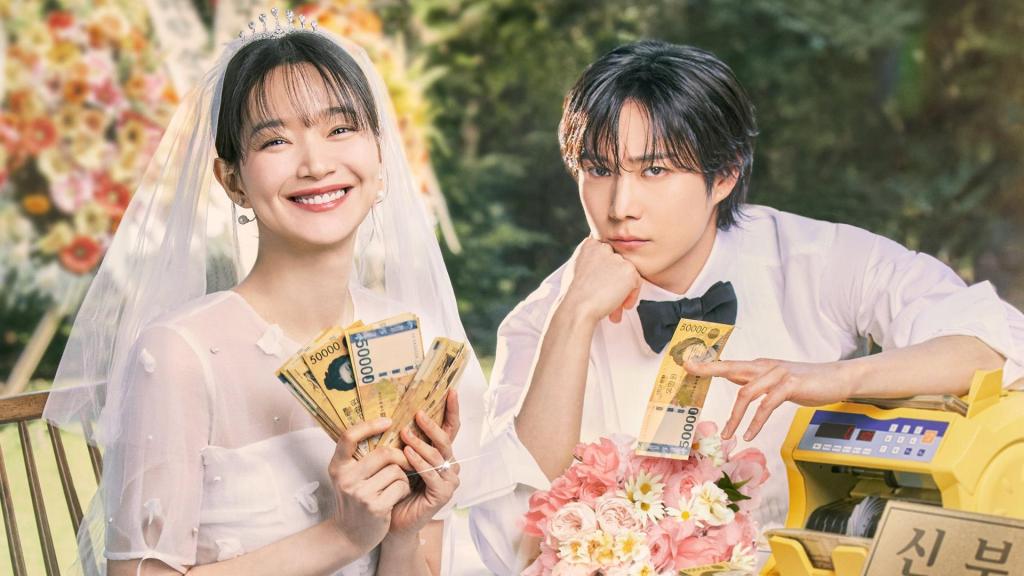
An ambitious woman, Son Hae-yeong, decides to enter into a fake marriage with a younger man, Kim Ji-uk, to claim office benefits. The man has his own share of secrets that he needs to safeguard from Son Hae-yeong.

Thoughts

I adored the chemistry between Shin Min-a and Kim Young-dae. Their pairing appeared fresh and different, accentuated by Shin Min-a’s perfect comedy timing and Kim Young-dae’s boyish charms.

Surprisingly, the series is bold in the sense it navigates different characters commonly unexplored in family-oriented Korean dramas. You have the leads indulging in mature, flirty conversations at the start, a departure from the usual cutesy romantic lines we are subjected to. Then, you have a writer who authors erotic books. Plus, there’s another couple engaged in an unconventional love story. The effort is commendable.

The newness of the characters aside, the story could have been written better. The plot is predictable and drags in the later episodes. However, the superlative performances save the series. It was Shin Min-a’s show through and through.

Another grievance is the considerable effort to portray the lead actress as someone younger than her age. Shin Min-a is 40 years old, whereas the character in the series is around 32-33. The smoothening filter felt overdone. Despite that flaw, the chemistry still worked for me, unlike “The Idea of You”, which had a much older character, played by Anne Hathaway, falling for a flirtatious, BTS-que boy band singer, played by Nicholas Galitzine. As long as the story and the chemistry make sense, the age difference does not matter. In “The Idea of You” the chemistry nor the story was convincing enough, but in “No Gain No Love” it was.

No Gain No Love is streaming on Amazon Prime. The series has 12 episodes, with each episode lasting roughly an hour.

Korean Drama Spotlight: Doctor Slump

Doctor Slump Review

We are a generation obsessed with climbing the corporate ladder. We want to make a lot of money and afford the best things money can buy. This is not necessarily a bad thing. Ambition is an admirable quality that many people aspire to possess. It takes you places. We all wish to do well in our respective careers and live the high life. But, it often comes at the expense of our health.

Enduring long periods of work-related stress may keep our bank balance happy, but when it’s time to relax, our entire being goes into a state of confusion. We have never been taught how to unwind. Since childhood, we’ve been taught to persevere and avoid rest. However, when we do take some time to catch a breather, restlessness uncannily creeps in. Before we know it, we find ourselves caught up in another stressful endeavor. Eventually, there comes a burnout point when our body and mind scream for a break, and our entire system goes into hibernation mode.

Doctor Slump is a k-drama that focuses on this particular phase in our life trajectory.

What’s It About?

Two doctors who were school rivals meet each other again at a turning point in their careers. They find comfort in each other, helping one another manage their mental exhaustion and insecurities in life.

Thoughts

The highlight, or rather highlights, of Doctor Slump are the characters. Park Hyung Sik is back to his quirky avatar, which he portrayed convincingly before with much fanfare in k-dramas like Strong Girl Bong Soon and The Heirs. It is difficult not to like him. His comedy timing is impeccable, and you end up feeling a sense of comfort watching him on-screen. Park Shin Hye aces her role as well. The moment she and Park Hyung Sik break down in tears while sitting on a bench is one for the books. I have not seen a scene like that in a web series or movie. The beautiful words in the background add to the overall vibe of the scene. Their chemistry will make you smile.

The downside of the series is, unfortunately, the story. Although Doctor Slump starts strong, it loses momentum after the 6th or 7th episode. You find yourself losing interest. However, you stick on because you love the characters.

If you are looking for some comic relief and an empathetic take on mental health, I would recommend Doctor Slump. It’s great to see a series promoting work-life balance amidst hustle culture.

All episodes of Doctor Slump are now streaming on Netflix. It has 16 episodes, with each episode lasting an hour.

An Ode to A Hundred Little Flames

A Hundred Little Flames

I recently finished reading A Hundred Little Flames by Preeti Shenoy. I bought the book assuming it would be a romantic novel (and I was proven right, but not in the way I expected). I had not taken the time to read the synopsis or reviews. I wanted the element of surprise, so I chose the book merely by looking at the title.

This is my first Preeti Shenoy book, so I was unsure what to expect. I was not looking for an ultra-cheesy romance but something wholesome and warm. I am happy to report that I got what I needed.

The main character, a young urban male residing in India, is pushed to leave his cozy job in a metro due to unprecedented situations and return to Kerala to visit his grandfather. As my base is in Kerala (Palakkad), this particular bit captured my attention. It played a major factor in my buying the book. How Preeti Shenoy beautifully narrated the ethereal, laidback beauty of a typical village in Kerala won my heart.  

There are many layers to this book. And many lessons. Here are some of my observations:

As most might know, Kerala is an aging state. The youngsters are leaving for better opportunities, while the parents and the elderly are choosing to stay behind. The many anxieties of an old person living a lonely life in Kerala are explained with much sensitivity in this book. It is something I witness whenever I visit home. Apart from my family, my elderly neighbors rush to me when they need help. There is always some mobile phone, gadget, or internet-related issue to be resolved. Their doubts could be as simple as “Will my WhatsApp DP appear to everyone on my contact list? Or only those whom I chat with?” These senior citizens often hesitate to call their children for help. “They will be busy,” they tell me. So they rely on youngsters around them to help with online work like booking vaccination slots during COVID-19, registering an online complaint, etc.

When they fall sick, they usually depend on neighbors to help them reach the hospital. Their children are able to arrive only a few days later, if at all they can. Their stay often does not last beyond a week. “We don’t have any leaves left,” they say. The fact that their children are out of reach might pinch the parents a bit during such pressing times. But they endure it, saying kids should enjoy themselves and life goes on.

As a silent observer, I often see the anxiety written on their faces and their mild helplessness. There’s concern regarding whom to ask for help. I guess, when we age, we all reach such a stage.

All these elements are captured well in Preeti Shenoy’s book – the problems of the elderly. I wonder if she has stayed with a senior citizen for an extended period, as only such people get to experience what an elderly goes through on a day-to-day basis.

Apart from this, I also immensely enjoyed the sweet, poetic love story depicted in the book. It caught me by surprise. The story was delicately told, and the characters were perfectly etched out. A warm romance with many layers, where the couple engages in a striking serenade of comforting words. The book shows how love is not always a straight, perfect line. It can be complex and unpredictable, hurtful even. Yet, love persists. The book captures this complexity brilliantly. It has an old-world charm to it. I am of the impression it would make a great movie.

I would definitely recommend buying the book. It is engaging from page one, and it will hook you into a world that is peaceful, and bright, yet somber and bittersweet all at the same time.