Breaking the Cycle of Extremism in India

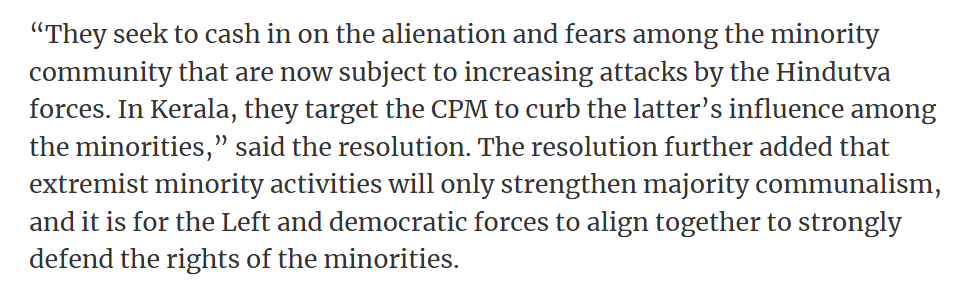
Today, I came across a news report from Kerala in The New Indian Express:

Source: newindianexpress.com/states/kerala/2025/Feb/04/cpm-admits-to-weakness-in-countering-bjps-growth-in-kerala

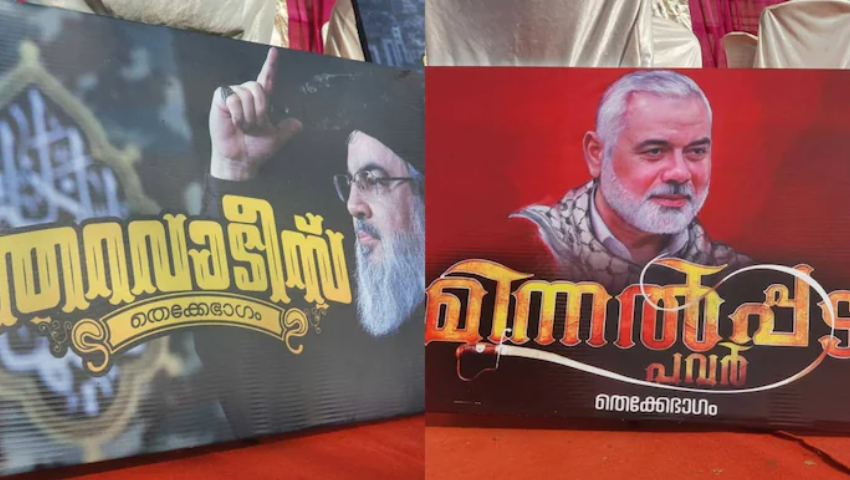
CPM mentions this about Islamist groups in the draft resolution:

Hindu extremists are using radical Muslim groups as fodder to fuel hatred between communities. But the reverse is also true—radical Muslim groups exploit the political climate to spread their own agenda. They feed off each other.

One side claims, “If Islamists stop, Hindu extremism will die down.”
The other side counters, “If Hindu extremists stop, Islamists will weaken.”

There’s no middle ground. How do we break this cycle? Who should compromise? The answer is—both.

The only way forward is to call out radical elements within your own community—those who discourage interfaith interactions, prevent you from celebrating others’ festivals, and push you away from the secular fabric of the country. Peaceful coexistence is the only solution.

However, I mostly see this self-criticism coming from the Hindu community. Not everyone supports right-wing politics, a Hindu Rashtra, or extremist activities, and many Hindus actively speak out against radicalism within their own circles. But the same level of criticism isn’t visible in other communities. At least 95% of the Muslims I know have never condemned extremism within their own community, but they are very vocal about Hindu extremism. If only one side is willing to challenge its radicals, how can we truly achieve peaceful coexistence in a secular, democratic nation like India?

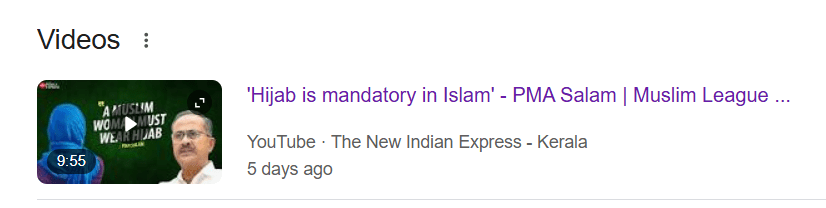
I feel this silence comes from fear—fear of being ostracized by their own community. In Kerala, the Muslim League openly stated that the hijab is not a choice for Muslim women; it is mandatory. When a journalist asked, “What if someone doesn’t want to wear it?” the leader reaffirmed, “If she’s a Muslim, we advise her to wear it.” There was no room for choice. Yet, despite often advocating for personal freedom, there was no backlash from within the Muslim community against this statement. This silence is unsettling. It makes people wonder—“If they won’t even speak up for their own freedom of choice, how can we expect them to stand up for ours?”

India is a secular nation, and preserving this secularism requires protecting religious freedom. When prominent leaders impose strict regulations on women, silence is not an option—it is a time to question them and hold them accountable. If not now, then when? Waiting until things spiral out of control will only make it harder to reclaim lost freedoms.

The Truth Behind Accusations of Lack of Religious Freedom in India

Western countries often criticize India, accusing it of restricting the religious freedom of minorities. For a long time, I was puzzled by this, as I saw minorities freely attending their religious places without any problems. On the other hand, Hindus in Jammu require police protection to visit their religious sites due to the ongoing threat of terrorism. So, where is this accusation truly coming from?

One of the main reasons many Christians oppose the BJP is that the party has significantly restricted international funds meant for proselytization. These funds were often misused in India to attract economically disadvantaged citizens into converting, with promises of financial assistance tied to conversion. As a result, conversions were driven more by economic pressures and manipulation than genuine faith.

Countries like the USA actively fund missionary programs, with groups such as the evangelical World Vision and the U.S. Commission on International Religious Freedom (USCIRF) advocating for unrestricted proselytization as a form of religious freedom. They often cite Article 18 of the United Nations’ Universal Declaration of Human Rights (UNDHR), which asserts that every individual “has the right to freedom of thought, conscience and religion; this right includes freedom to change his religion or belief…” This interpretation forms the basis for their criticism of India, accusing the country of limiting religious freedom and ranking it low in the religious freedom index. A 2012 article written by Dr Aseem Shukla explains this point brilliantly (hinduamerican.org/blog/proselytism-conversion-to-intolerance/).

This raises an important question: why offer monetary assistance only after conversion? Why not provide help based on humanitarian principles, without attaching religious conditions? When people are lured into faith through financial incentives, it undermines the integrity of the belief system itself. Shouldn’t conversions be driven by genuine faith and conviction, rather than economic manipulation or coercion?

Unfortunately, that’s not the reality for many. People are being lured into changing their religion through manipulation, whether through money or other means. I personally know several individuals who converted simply because they were promised financial support. What’s even more surprising is that younger generations are now making conversion a prerequisite for marriage. It’s hard to comprehend how, in today’s world, people still can’t accept different faiths and feel the need to demand conversion from their partner for the sake of marriage. Is this really secularism? Or love? I discussed this topic on this blog after watching a show, Nobody Wants This, on Netflix some time ago.

I’m currently reading a book about Kamala Das, The Love Queen of Malabar, written by a Canadian author, where it’s mentioned that Kamala was pressured to claim her conversion was out of faith, not love. The reasoning behind this was that saying she converted for love would diminish the strength of her faith. However, after her partner left her, she felt deeply depressed. The book suggests that the man she loved had been financially incentivized by foreign entities to convert Kamala. Later, Kamala wished to return to Hinduism but feared for her life and her family’s safety, including her grandchildren. Her sons even used to correct her whenever she, by habit, uttered the name of her former god, as they were afraid it might anger radicals and put their family at risk.

Why manipulate people into conversion? Let them choose to convert out of genuine faith – that is true religious freedom, not a process driven by external incentives.

The new government has largely restricted predatory conversion tactics by limiting international funds and addressing radical elements within society. This is one of the primary reasons the Indian government is widely criticized globally.

The propaganda against India has a broader base compared to the narratives propagated by BJP supporters. It’s easier for these narratives to spread, as the Christian and Muslim communities form larger global groups compared to the Hindu community. With such a widespread network, sensational news spreads quickly and easily. Adding to this challenge is the Hindu community’s general reluctance to actively counter exaggerated news, making it even harder to protect India’s image.

Many who believe in proselytization through unfair means seek the removal of the current government to restore previous practices. This is probably why they complain about every small issue and often manipulate facts to present one-sided stories. By focusing on selective narratives, they aim to undermine the current administration and bring back the old ways.

The narratives about India are often more complex than they appear in the media or through agenda-driven sources. They tend to present only one side of the story, exaggerating it to evoke emotional reactions. This is why it’s crucial to consult both left and right-wing media to gain a more balanced perspective. Otherwise, you risk forming judgments based on incomplete or biased information.

***

Photo by Luis Quintero

Khalistan & Kashmir – The Overlooked Pakistan Influence

Here’s something to think about:

Khalistanis demand a separate Sikh country called Khalistan which includes the Punjab region of India. However, they do not talk about including Pakistan’s Punjab as part of this homeland. Why?

Pakistan’s Punjab is four times larger than Indian Punjab in terms of land area.

Pakistan is also home to several important Sikh sites, such as Nankana Sahib, the birthplace of Guru Nanak (founder of Sikhism), and Kartarpur, where Guru Nanak spent his later years.

So why don’t Khalistanis demand a separate state that includes Pakistan’s Punjab if having a separate homeland for Sikhs is important?

The same reason why separatists in Kashmir and global leftists think only Indian Kashmir should be “freed,” not Pakistan-occupied Kashmir. 

Also, as mentioned in a previous post, The Most Intriguing Fact in “Kashmir Narratives” by Colonel Ajay Raina, the first step toward a plebiscite in Kashmir requires Pakistani militants to fully disengage from the region. According to the UN resolution, once they leave, the Indian military must also withdraw, ensuring a fair plebiscite. Yet, no one is calling on Pakistani militants to step back.

This glaring omission of Pakistani elements raises questions about whether Pakistani influences are shaping the narrative.

***

Photo by Suhail Lone

The Duality of Religious Tolerance in India

The duality of India is striking.

Some Indian Muslims like Arfa, Rana, Zubair, and Naseeruddin Shah feel India is intolerant and unsafe for Muslims. 

Yet, Muslims like Taslima Nasreen and Sheikh Hasina feel safer in India than in their own Muslim-majority countries. They have escaped their countries to avoid getting persecuted and can openly criticize extremists in India.

Souce: x.com/taslimanasreen

In India, you can criticize any religion freely, like PC George in Kerala targeting Islam, or Stalin in Tamil Nadu attacking Sanatana Dharma. 

Source: livelaw.in

But at the same time, mocking/disrespecting Hinduism or Islam can also lead to lynching or beheading.

This shows the complicated nature of India’s religious tolerance. It’s not fully black or white; there are many layers of grey.

A country, accused of religious intolerance, is also a country where seers like Swamy Premanand Ji openly advocate for LGBTQ issues. He advises young members of the LGBTQ community not to succumb to parental pressure to marry according to societal norms, as it could harm both their own life and that of their partner.

From these examples, it is quite clear that India is a nation with diverse perspectives. Yet international media often portrays it as a regressive and intolerant society, probably because they rely heavily on left-leaning biased sources for their information. This depiction is unfair to the country’s social fabric, which embraces various ideologies.

It is important to note that much of the left-leaning media in India tends to present only one side of the story, resulting in incomplete or biased information. In an era where media bias is prevalent, it is strongly recommended to read news from both left- and right-leaning sources to gain a comprehensive understanding of the issue. Without this balanced approach, people may remain unaware of where genuine reforms are needed and could be misled by those with specific agendas.

The downside of one-sided stories is that they can foster an extreme victim mentality, making people believe that any violence or attack is justified due to past suffering. For instance, some celebrated the LA fires, posting that the USA deserved it for funding weapons for Israel, without considering that pro-Palestinians could have lost their homes too. If a tragedy strikes India, similar comments might surface. This is partly due to media narratives that fuel such sentiments and intensify hatred.

In an increasingly polarized world, it is crucial to report news with accountability. Both extremes are harmful—religious extremism that forces others to conform through coercion and an extreme victim mentality that blinds individuals to any positive aspects, making them focus solely on negative narratives. Currently, in India, I am seeing more of the latter than the former. Media is partly responsible for this.

Breaking the Cycle: Ending Violence in Israeli-Palestinian Conflict

A ceasefire and hostage deal is close to being reached, with plans to start on Monday. However, some people on both sides want the situation to stay the same.

The ceasefire has not yet started and a journalist from Gaza is already talking about destroying Israel.

Source: x.com/bayanpalestine

Meanwhile, a far-right Israeli politician wants the Gaza war to continue.

Source: The Times of Israel

How long can this hate continue?

One thing is clear: things cannot go on as they are. Israel must implement the two-state solution right away and remove illegal settlements. This doesn’t mean Israel should give up its land, but rather stick to the established boundaries.

If Gaza wants peace, they must abandon the idea of revenge. Israelis are unlikely to give up their land without a fight. They would rather use extreme measures, including nuclear weapons, to destroy their land themselves than give it up. They are driven by strong nationalist sentiments.

Many countries have lost land due to disputes. India lost territory to Pakistan, and Pakistan lost land to Bangladesh. The Kashmiri Pandits were displaced from their homes. Now, imagine if these countries and communities harbored the same revenge mentality and resorted to violence to reclaim their lost land. It would lead to chaos worldwide, including in Muslim countries, with countless lives lost. At some point, peace with reality must be made and the past let go. Constantly planning the next bombing or uprising only results in more innocent lives being lost.

The only way forward is peace. A two-state solution should be established, and both countries must learn to coexist. The benefits are clear: Gaza could leverage Israel’s expertise to develop infrastructure and technology that could improve life for its people. Israel, in turn, could benefit from employing Gazan workers, as it did before October 7. Left to its own devices, Gaza would likely be under Hamas, whose focus is primarily on warfare rather than development.

Supporters worldwide, rather than calling for constant war, should recognize the importance of peace and coexistence.

Yet, all this seems like a distant dream.

If serious measures are not implemented to change the status quo, both Israel and Gaza will continue to live without peace. It’s easy for us to sit in our comfortable armchairs in distant countries, encouraging war and violence on social media, while those living in the conflict zones become the true casualties.

We support violence, only to condemn it later. It’s a vicious cycle that repeats, leading to the loss of many lives, yet we fail to learn from our mistakes.

Communal Riots in India: A History of Selective Remembrance

One thing I have learned is that there are different standards for different people.

We have forgiven Congress for the 1984 Sikh riots and the Emergency, a period during which thousands were killed and many were forcefully sterilized as part of a population control measure.

A Snippet from “The Emergency (India)” Wikipedia Article

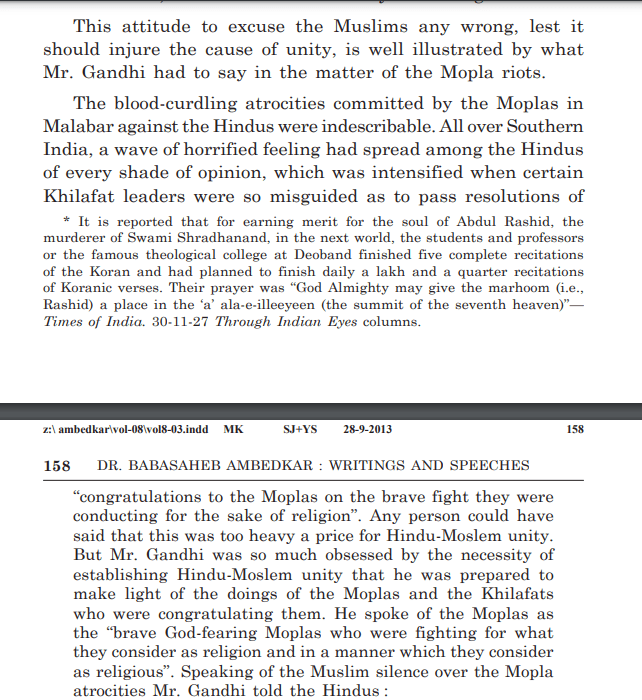
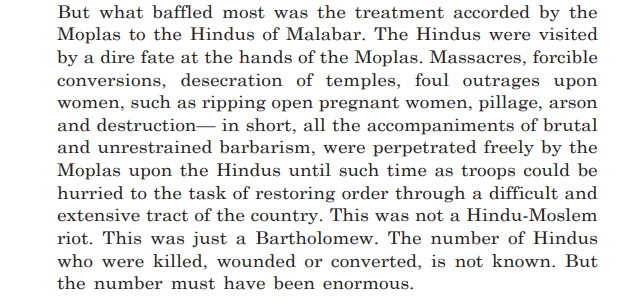
We also forgave all the anti-Hindu attacks that occurred in the country, such as the genocide of Kashmiri Pandits, the Godhra train burning, the 1992 Ajmer rape case, and the Moplah riots. The left attempted to whitewash these events, but historians like Ambedkar provided a different narrative.

We tell ourselves, “Why bring up the past?” But we are not ready to forgive or let go of the past when it comes to the Gujarat riots and the Babri Masjid demolition.

What makes certain communal riots more unforgivable and unforgettable than others, when all are equally horrendous?

Today, we see similar attempts at whitewashing, where any films addressing attacks on Hindus are immediately dismissed as propaganda. Why is it that every one of these events is labeled a lie, without any anomalies? What criteria must be met for an attack on Hindus to be acknowledged?

Recently, Khalistanis in Canada attacked a Hindu temple, but this was not given enough attention either. In their efforts to downplay attacks on Hindus to prevent riots, the left has caused many in the community to turn towards far-right ideologies. There’s no balance or consistency in beliefs. If you believe violence is bad, speak up against all types of violence. But, often we see, one type of violence being justified, whereas others are condemned.

A simple glance around is enough to recognize this hypocrisy. Observe how people around you react when there are attacks against Hindus. Are they condemning or justifying it?

Ultimately, it revolves around politicians, media, and agenda-driven propagandists manipulating people’s emotions. They dictate how you should feel about various issues, which riots deserve attention and remembrance, and which should be overlooked or forgotten.