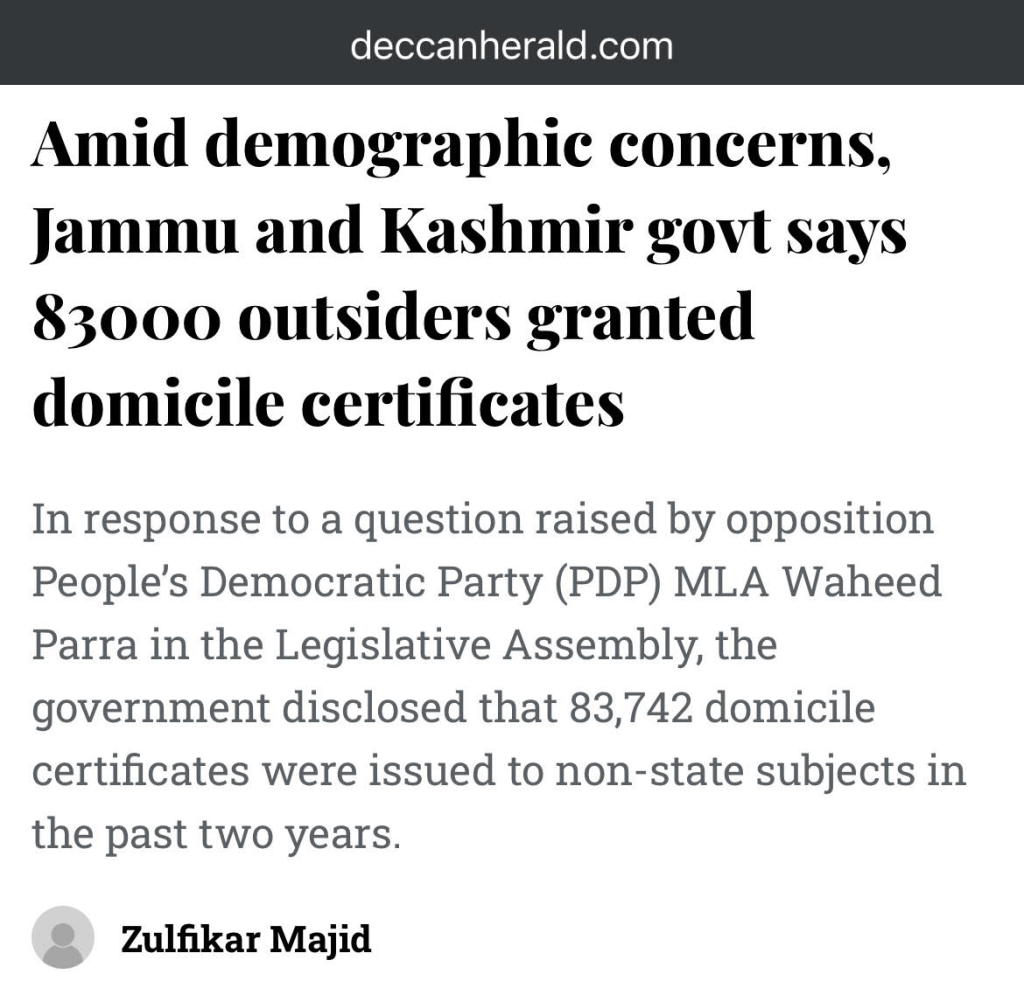
Say the words “demographic concerns” in any other Indian state, and you’d likely be branded a bigot. But in Kashmir, the “insider vs outsider” narrative is not only common, it’s actively pushed. If the Chief Minister, Omar Abdullah, has sworn allegiance to the Constitution of India, why the reluctance to openly embrace fellow Indians as equals? Kashmiris are free to work and settle anywhere in the country without being called outsiders. So why can’t someone from another Indian state do the same in Kashmir without facing hostility?
What India needs now more than ever is a spirit of unity. Not this constant “us vs them” divide.
These incidents make it clear: no one is truly secular, not even those who constantly criticize Hindu majoritarianism like Omar Abdullah. Let’s be honest. In Muslim-majority Kashmir, a fashion show during Ramadan sparked outrage, with people claiming it was against their “culture.” In parts of Malappuram and Kozhikode in Kerala, there have been cases where people were told not to eat in public during Ramadan. Meanwhile, in some Hindu-majority regions of North India, meat shops are ordered shut during Hindu festivals. Different standards, same mindset.
This isn’t just an Indian phenomenon. In the UK and the US, you’ll often hear people say, “We are a Christian country. This isn’t our culture!” whenever Hindu or Muslim festivals are celebrated in public spaces. The reaction is the same, just the setting changes.
Wherever you go, majority vs minority dynamics are always at play. What feels like a “religious restriction” to one person might feel like cultural protection to another. It all depends on your bias and perspective. Take Iran, for instance. Many of us might see it as deeply restrictive for women. But some Iranian Muslim women might see it as ideal because it strictly upholds their religious values. That’s religious bias in action – shaped by belief, identity, and comfort with the dominant culture.
Most people are secular only on paper. In reality, they tend to place their own religious beliefs a notch above others. They’re usually comfortable with the rules their faith imposes, no matter how restrictive those rules might seem to someone outside that belief system. It’s less about universal values and more about what feels familiar and justified to them.
Empuraan is facing criticism from the right wing for allegedly promoting a biased narrative. Many are calling it a political propaganda film with a pro-Congress stance. How true is the allegation?
Spoilers Ahead
I haven’t watched the movie yet, but I’ve heard that the first 30 minutes focus on the Gujarat Riots. It depicts some of the most horrific incidents from that time. Reportedly, the film includes a rape scene that’s highly debatable. This particular rape story has been circulating since the time of the Gujarat Riots but remains unverified, with no solid evidence to support it. Additionally, the Godhra train burning in the movie is reportedly depicted as something that happened by accident. This portrayal gives the impression that the film is based on the findings of the Banerjee Committee Report, a report that was later ruled invalid, unconstitutional, and politically manipulated by the court. The Nanavati-Mehta Commission Report is the report that was officially accepted as the authoritative account of events due to its presentation of evidence. This information was also covered in the recent film The Sabarmati Report.
The Banerjee Committee was set up in 2004 by the UPA government, led by the Congress party. The committee’s report was released just before the Bihar Assembly elections, apparently to influence the election results and weaken the BJP’s position. The report concluded that the Godhra train fire was accidental, contradicting the BJP’s stance that it was a pre-planned attack.
However, the Nanavati-Mehta Commission later confirmed that the train burning was a premeditated communal act, not an accident.
The investigation found that large quantities of petrol were purchased a day before the incident from a nearby petrol pump.
The forensic report confirmed the presence of petrol residues inside Coach S-6, where the fire broke out.
Eyewitnesses and forensic evidence suggested that petrol was thrown into the coach and set on fire, indicating a pre-planned attack rather than an accidental fire.
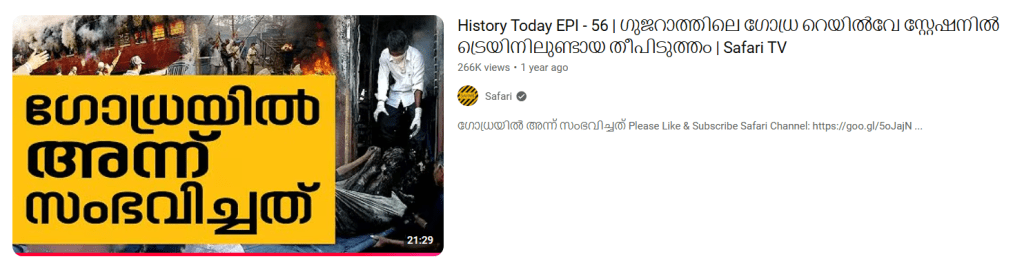
For Malayalees who prefer not to watch TheSabarmati Report, I recommend a documentary on YouTube by the Sanchari channel. It’s in Malayalam and provides a detailed account of the Godhra train burning. I am attaching a screenshot of the video below.
The documentary is likely one of the first of its kind in Malayalam. It offers a detailed look at the various angles of the Godhra train burning, the different reports that emerged, the political maneuvering involved, and the final conclusions drawn. If you are a Malayalee interested in research and fact-checking, I highly recommend watching this video.
Naturally, Congress is supporting Empuraan, just as the BJP backs right-wing films when they are released. Even if Empuraan turns out to be entirely pro-Congress, I support the creator’s right to make and release such a film. Several right-wing movies have been produced in India recently, so a left-leaning perspective is equally valid in a democratic space. However, as viewers, we must avoid taking any movie as absolute truth. Instead, we should conduct independent research, considering both left-leaning and right-leaning sources to develop a balanced understanding of the subject.
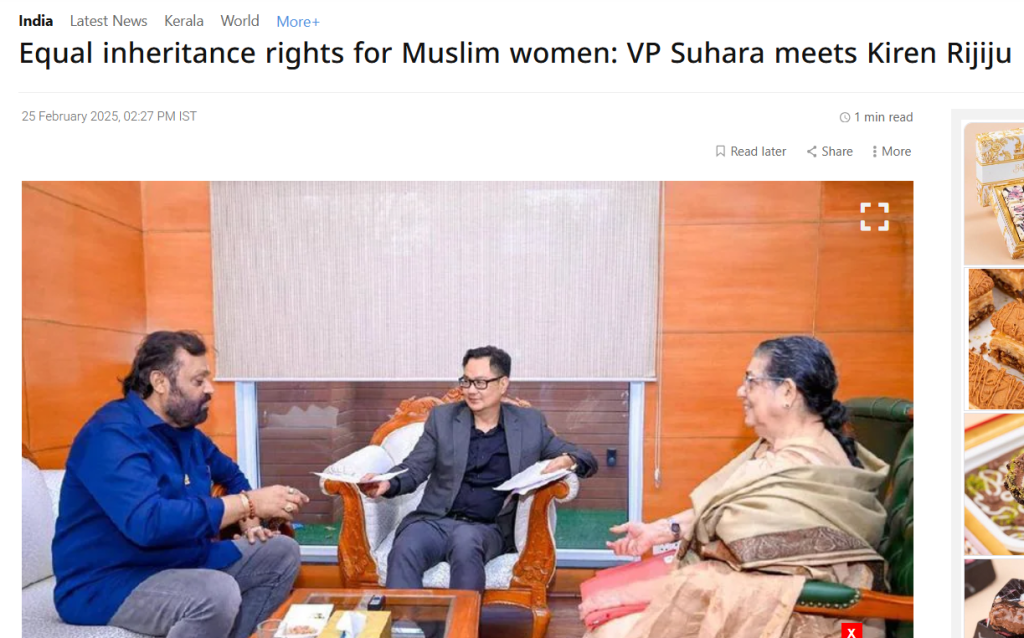
Social activist and NISA founder V.P. Suhara met Indian Minister Kiren Rijiju to demand equal inheritance rights for Muslim women in India, similar to those of Muslim men. Actor and BJP leader Suresh Gopi was also present at the meeting.
V.P. Suhara had earlier launched an indefinite hunger strike at Delhi’s Jantar Mantar, advocating for equal inheritance rights for Muslim women. However, the protest was forcibly stopped by the police. Before returning to Kerala, she announced plans to discuss the issue with key leaders in Delhi.
Did you see anyone in Kerala supporting her? Likely not. Instead, you’ll hear women with internalized misogyny saying, “We don’t want such reforms.” But these reforms aren’t for them. They are for women who seek more. Women who wish to follow traditional rules can continue to do so. Reforms do not prevent anyone from adhering to their beliefs, just as Triple Talaq is still practiced in India despite being banned. However, these reforms give Muslim women the legal option to seek justice if they are forced into following restrictive rules against their will.
When Muslim progressives like Suhara fight for women’s rights, you would expect so-called secular voices in India to stand with them. But these voices only seem to speak up when it comes to reforming Hinduism—whether it’s elephants in festivals, casteism, regressive practices, or allowing women in Brahmachari temples—because, let’s be honest, it’s far safer to push for changes in Hinduism. You see people from all communities, whether Hindu, Christian, or Muslim, openly advocate for these changes with confidence, knowing they face no serious repercussions. However, if you question some of the regressive practices in other communities, suddenly, you’re a bigot. The moment you point out that some proselytization techniques are predatory, you’re immediately accused of supporting the “restriction of religious freedom.” If you take a moment to observe people, you’ll notice countless little things that suddenly jolt you out of your slumber. You won’t need any political party to point this out to you. The double standards are there for the world to see.
When asked why the Muslim community largely does not openly advocate support for such reforms, progressive Muslims argue that it is dangerous to challenge established rules, unlike in other communities. They believe real change requires both internal and external pressure. While I acknowledge that speaking out within the Muslim community comes with risks, how long should we wait? Another century? Would it ever happen in our lifetime? Until then, are we expected to remain silent and unquestioning?
If the Indian government applies the “external pressure” suggested, it would inevitably lead to accusations of Islamophobia, further damaging the global perception of Indian Hindus and India’s image as a whole. Any attempt at reform would be spun as targeting a particular community, making meaningful change even harder to achieve.
Now, another group conveniently refuses to support this cause simply because the BJP—“the communal party”—is handling it. But name one other party that has ever stood up for Muslim women’s rights. The Opposition has always catered to Muslim men, not women, and will continue to dance to their tunes. This isn’t new; it has been the pattern for decades, ever since the Shah Bano case. If the BJP doesn’t take up the issue raised by Suhara, I can say with 100% certainty that no other party in India will.
***
Pic Source: Mathrubhumi.com (auto-translated from Malayalam)
Religious fundamentalism is gradually rising in Kerala. Yet few dare to question it. Perhaps because it originates outside the Hindu community.
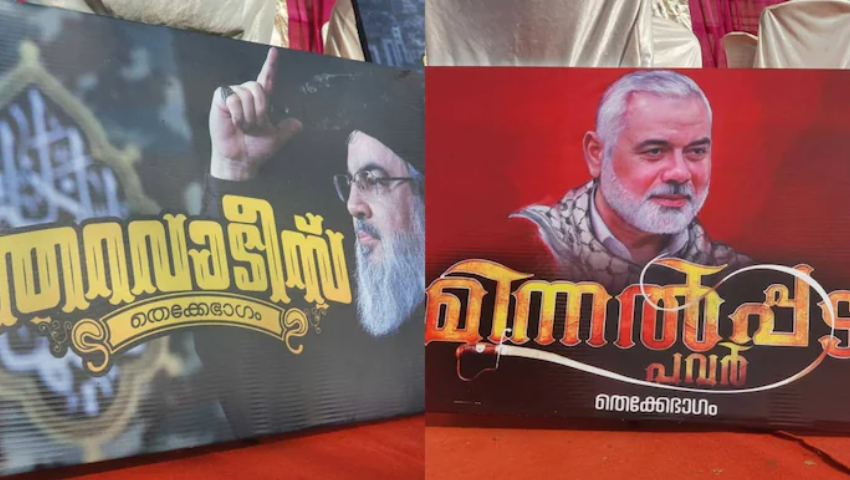
Members of the Muslim League, an ally of Congress in Kerala, now openly claim that the hijab is not a choice and are pushing for gender segregation in public spaces like the Mec7 exercise program. Recently, a religious leader criticized a Muslim widow for traveling to Manali, insisting that widows should remain at home and devote themselves to prayer. Others are now openly urging community members to refrain from participating in non-Muslim festivals, further deepening social divisions. Meanwhile, Hamas and Hezbollah supporters freely display posters of their leaders in Kerala, despite these groups’ ties to Pakistani terrorist organizations like JeM and LeT, which have carried out multiple attacks in India.
Was there any outrage from political parties or within the community? None at all.
When you point out the lack of internal criticism, the common response is that speaking out invites real danger and that reforms take time. While it’s true that advocating change within the Muslim community is difficult and radicals may threaten dissenters, how long must we wait? Another century? Should we remain silent and allow religious fundamentalism to grow unchecked? If no meaningful reforms have happened so far, what guarantees change in the future? If the community cannot challenge extremist views now, how will they resist when these forces become even stronger and impose their rules on others?
We are already seeing glimpses of this with the Waqf Board’s land disputes, where properties legally owned by other communities are being claimed. Why should non-Muslims be bound by Waqf rules? If the land originally belonged to Muslims, the claims may hold merit. However, many of these properties now belong to other communities. If they were encroachments, why did the Waqf Board fail to prevent them? In cases where the land was legally sold, why is it being reclaimed now? The Board’s mismanagement highlights the urgent need for Waqf reforms to prevent future disputes.
Unfortunately, political parties are misleading the Muslim community, falsely claiming that reforms would lead to property seizures. The reality is that corrupt politicians have more to lose than ordinary Muslims, especially the poor. Many are likely benefiting from Waqf properties, living in luxury through corruption. The revenue generated from Waqf assets is disproportionately low compared to their vast holdings, raising questions about where the money is going. Instead of being used for community development, it is likely being siphoned for personal gain.
This is why reforms are crucial. However, many in the community rely on their leaders for information, unaware that they are being misled. These leaders manipulate facts for their own interests, radicalizing and mobilizing people with lies. This is why it’s important that citizens seek information from multiple sources—both left- and right-leaning—to avoid being deceived.
It is a mistake to believe that only the BJP spreads communal hatred. Congress leaders have also exploited the Manipur issue, framing it as a Hindu vs. Christian conflict when it is, in fact, an ethnic dispute. When Hamas posters appear in Kerala and critics raise concerns, Congress dismisses them as “Islamophobia.” This selective outrage makes them unreliable as leaders. They are vocal against Hindu extremism but silent when it comes to Islamist fundamentalism.
Some progressive Muslims argue that meaningful reforms require both external pressure, such as government intervention, and internal efforts from within the community. However, in India, any government-led push for reform risks being labeled Islamophobic. This, in turn, gives radicals more ammunition and invites criticism from the Western world, which often misinterprets such actions as oppression rather than necessary change. Moreover, since Hindus form the majority, any move by the Indian government is framed as an attack on Muslims, further polarizing the discourse and making genuine reform even harder to achieve.
At this point, the situation feels like a deadlock. Either we wait indefinitely for internal reforms, which may never come, or the government steps in, triggering backlash and further polarization. Both paths are fraught with challenges, and in either case, things could turn messy. The fear of being labeled Islamophobic limits external intervention, while internal resistance to change keeps fundamentalist views unchecked. This leaves little room for meaningful progress, making the prospect of reform seem increasingly distant.
For the uninitiated, in February 2025, during the annual Uroos festival at a mosque in Thrithala, Palakkad district, Kerala, a procession featured banners displaying images of Hamas and Hezbollah leaders.
These banners were prominently displayed atop elephants. The event drew over 3,000 participants and sparked widespread controversy and discussions on social media. Critics questioned the organizers’ decision to include images of individuals associated with designated terrorist organizations. The participation of local political figures, including Congress leader VT Balram and Minister MB Rajesh, further intensified the debate. They maintained the status quo of excusing terror sympathizers by criticizing media outlets for allegedly using the incident to target the Muslim community and Kerala at a national level.
During a News18 Kerala debate, a Malayalee Muslim from Palakkad admitted that what happened at the Uroos was wrong. However, he dismissed concerns by saying, “The event was organized by kids who randomly picked images from the Internet. They had no idea who these people were, so we shouldn’t make a big deal out of it.”
This raises an important question: Why is it that when left to “randomly” select images, they chose figures linked to terror groups instead of respected Muslim leaders, scientists, or sports personalities? A former Indian Army officer who was stationed in Kashmir responded thoughtfully: “If they were simply Googling, why not Abdul Kalam, cricketers like Siraj or Shami, or Muslim soldiers who died protecting our nation? Why did they choose a group in cahoots with Pakistani militant groups like LeT and JeM? Instead of dismissing this, we should educate young people about who should be admired and who should not. Only then can our nation progress. We also cannot keep excusing such incidents as the actions of innocent children. Recently in Europe, a teenager attempted a suicide bombing, and in another case, four children from the same family were radicalized into extremism.”
The Malayalee panelist logged out before responding, but a Muslim League leader acknowledged the need for change. However, like many others accused of spreading hate, he quickly shifted the discussion, saying, “Yes, all of this is bad, BUT Israel is committing genocide.”
This pattern of deflection is becoming more common. When doctors in Australia were suspended for their hate speech, the response from left-leaning supporters and a major Australian Muslim group was, “They should not have been suspended because Israel is committing genocide.” When California faced wildfires, some even claimed, “Well deserved because the U.S. supplies arms to Israel.”
The Israel-Hamas war is being used to justify hate and extremism worldwide. While criticism of geopolitical events is valid, it cannot be a shield for promoting radicalism or excusing problematic behavior.
If we applied the same logic, we could say, “Islamophobia is wrong, BUT Islamist groups like ISIS have mass-murdered people.” That would be an absurd and dangerous argument, just as deflecting discussions on extremism with geopolitical grievances is.
Condemning violence and radicalization should not come with conditions. No ifs or buts—wrong is wrong, no matter who commits it.
Why don’t we see progressive Muslim nations like the UAE and Bahrain glorify Hamas on the streets, unlike India? Because they understand the consequences— supporting such groups could destabilize their own countries and invite extremism. They firmly recognize the Muslim Brotherhood, the group from which Hamas originated, as a terrorist organization and have banned it, seeing it as a source of extremism. In contrast, many Western countries have not taken similar action in their attempt to uphold secular values. This could also explain why leaders of many Muslim nations maintain ties with Modi, meeting him and discussing business, decorating him with awards and honors, instead of ostracizing him. They likely recognize where some of the propaganda against him stems from.
In 1921, Kerala witnessed the Moplah Riots, where numerous Hindus were killed in communal violence. However, to this day, Congress and CPI(M) refuse to acknowledge it as a communal riot and instead label it a “class struggle between Hindu landlords and Muslim peasants.”
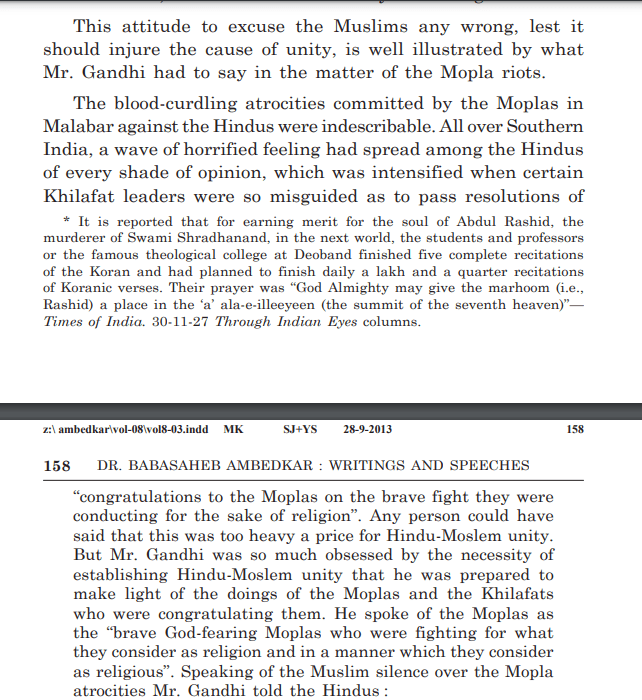
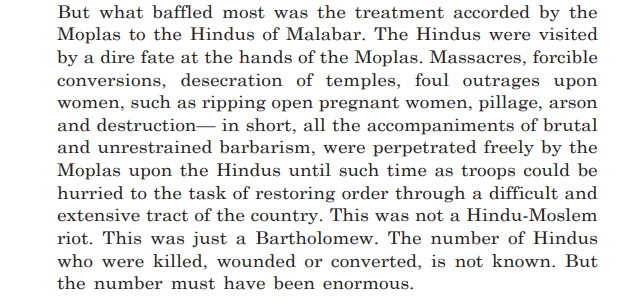
I also believed the class struggle narrative until I read B.R. Ambedkar’s book, The Partition of India. He clearly highlights the communal nature of the Moplah Riots, mentioning temple destruction, mass killings, and forced conversions of Hindus.
Some clippings from the book:
Source: Dr. Babasaheb Ambedkar : Writings and Speeches (Vol. 8)
If Hindus were specifically targeted, their temples destroyed, and they were forcibly converted, how can this not be considered a communal riot? Ambedkar’s account challenges the attempt to whitewash history by reducing it to just a landlord-peasant conflict.
Here is the question I asked AI and the response it generated:
Question: Were temples destroyed during the Moplah riots?
Answer: Yes, several temples were destroyed, looted, or desecrated during the Moplah Riots of 1921 in the Malabar region of Kerala.
Historical Accounts of Temple Destruction:
Looting and Desecration:
Many Hindu temples were attacked, idols were broken, and valuables were looted.
Records mention temples like the Thirumandhamkunnu Bhagavathy Temple being desecrated.
Forced Conversions and Killings:
The riots targeted Hindus, with reports of forced conversions, massacres, and mass displacement.
Many Hindus fled their villages, leaving temples unprotected.
British Reports and Historical Records:
British colonial reports and contemporary eyewitness accounts mention temple destruction.
Annie Besant and Veer Savarkar documented attacks on Hindu religious sites.
Conclusion:
Yes, temples were destroyed and desecrated during the Moplah Riots, which started as an anti-British uprising but later turned into violent communal attacks against Hindus in Malabar.
So how can it be concluded as merely a class struggle? Next time, someone dismisses the communal angle of the Moplah Riots as propaganda, one should ask, “Why were temples destroyed if the riots weren’t communal? Why did conversions happen? Was Ambedkar lying in his book?“
This is just one of the many lies spread by Congress and CPI(M). Why do they do it? Only they know. Perhaps to ensure Hindus keep supporting them, or maybe to prevent the majority community from developing resentment.
The second reason might have been understandable if only they didn’t paint Hindus as villains in other communal conflicts. The lack of consistency exposes their bias.

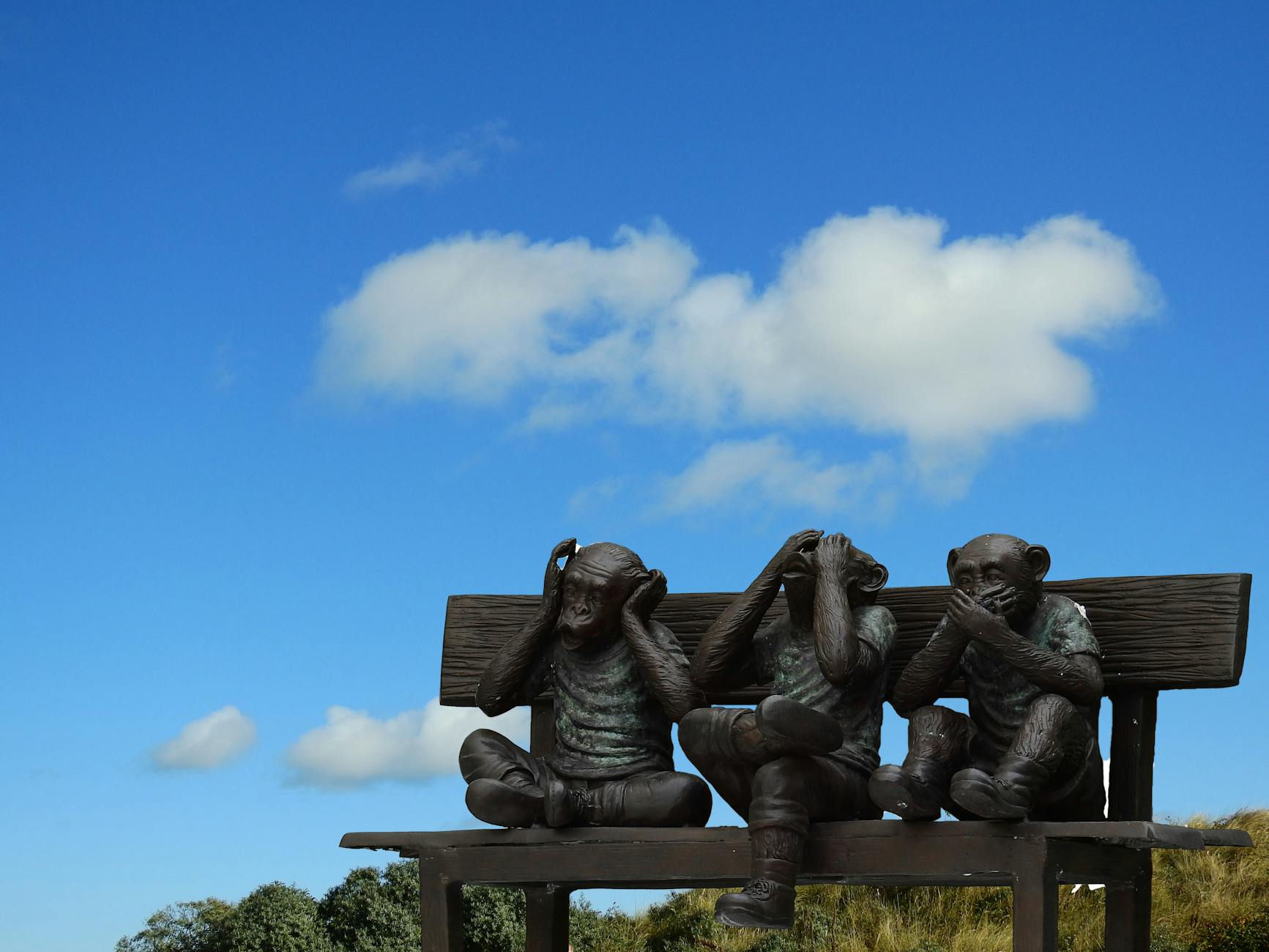

 The Monkey Dilemma
You must be logged in to post a comment.