Why Indian Parents Should Watch Adolescence

Adolescence Netflix

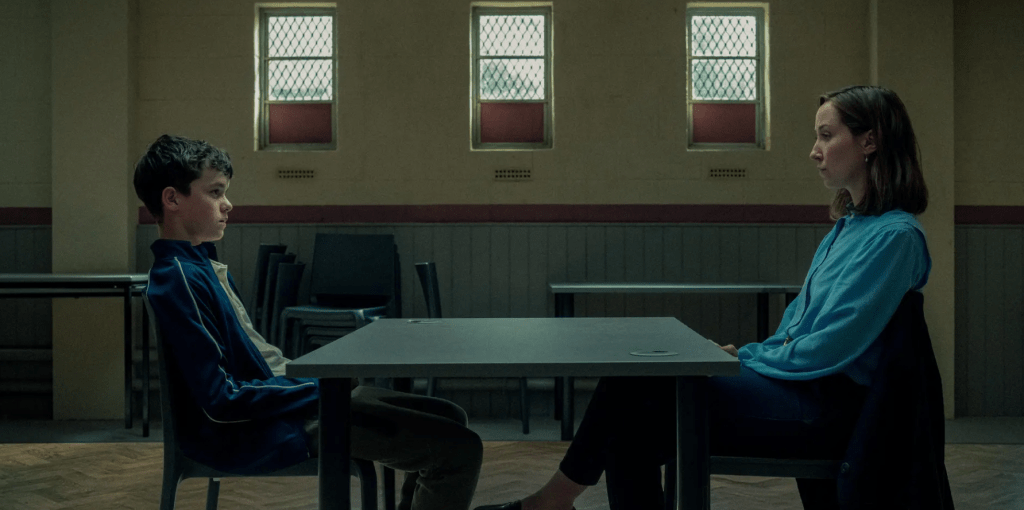
The Netflix series Adolescence is a wake-up call. It shook me to the core and shed light on the stark realities the new generation faces.

I grew up in a time when online influence was non-existent, and our worldview was shaped by the people around us. Today, that has changed. Algorithms dictate perspectives, feeding you opinions from across the world. Knowledge is no longer derived from just parents, teachers, or elders. This is a positive thing, but it has also resulted in an information overload.

There are several social media accounts trying to dump different perspectives on you. For every argument supporting point A, there’s another endorsing point B. Ultimately, it depends on which perspective you resonate with the most. Once you decide, the algorithm ensures you see more of it, reinforcing your beliefs. Sometimes, without you even realizing it. This can be dangerous. What if a child interacts with harmful content? The algorithm ensures they see more of it, shaping their beliefs in a troubling direction. We risk raising a generation programmed by these echo chambers. It’s a challenge we can’t ignore.

**Spoilers Ahead**

Every plus comes with a downside. Today, we have information at our fingertips, but this convenience comes at a cost. This is a reality that Adolescent portrays with unsettling accuracy. Jamie retreats to his room as soon as he gets home, immersing himself in his online world. His parents remain unaware of what he consumes, assuming, like many modern parents, that giving him complete freedom is the right approach. However, this unchecked digital exposure can shape young minds in ways they don’t anticipate, often with troubling consequences. It’s a new-age problem.

The series also introduced me to terms like Manosphere, Red Pill, and the 80-20 rule, making me realize how rapidly digital ideologies evolve. Figures like Andrew Tate are shaping young men’s perceptions of masculinity, often promoting the idea that being “alpha” means suppressing emotions. He preaches that men are providers and should be respected without being “given a headache.” This mindset isn’t foreign to India. I’ve noticed how men in my household particularly often express fewer emotions. When I was hospitalized recently, only the women in my family directly checked on me, while the men relied on them for updates. The burden of emotions lies on the women, whereas men are expected to be mere providers. Ironically, when men fall ill, women are expected to inquire directly. This emotional divide is ingrained in my household. I am unsure of other households. However, male-to-male interactions may differ. A “bro” might feel more comfortable checking in on a fellow “bro”.

I believe Adolescence should be screened in Indian classrooms with regional language dubbing. Andrew Tate-inspired accounts are emerging in India, pushing narratives that degrade women. If we don’t educate our youth about the dangers of such ideologies, we risk fostering a generation of men who lack empathy for women’s concerns, some of whom may even resort to violence to assert their views. The time to act is now.

The social message aside, this was Owen’s debut performance, yet he delivered with astonishing depth. It made me wonder how much the Indian film industry could thrive if it prioritized raw talent over nepotism, giving opportunities to newcomers who truly have the skill.

One of the most unsettling moments for me was Jamie’s chilling question to Briony with a steely, mocking gaze: “Are you afraid of a 13-year-old?” Owen Cooper’s portrayal was so disturbingly real that it made even a viewer like me uncomfortable. That’s the power of natural acting. His transformation, from an innocent boy insisting he has done nothing wrong, to someone consumed by uncontrollable rage, is nothing short of remarkable. It’s a performance that leaves a lasting impact.

Korean Drama Spotlight: No Gain No Love

No Gain No Love

Recently, I watched the Korean drama “No Gain No Love” on Amazon Prime. I was going through a Korean drama slump, so I was unsure if I would be able to complete the drama. However, the cute chemistry between the lead characters kept me going.

What’s It About?

No Gain No Love is precisely what the name implies – if there’s no gain involved, don’t expect any love.

An ambitious woman, Son Hae-yeong, decides to enter into a fake marriage with a younger man, Kim Ji-uk, to claim office benefits. The man has his own share of secrets that he needs to safeguard from Son Hae-yeong.

Thoughts

I adored the chemistry between Shin Min-a and Kim Young-dae. Their pairing appeared fresh and different, accentuated by Shin Min-a’s perfect comedy timing and Kim Young-dae’s boyish charms.

Surprisingly, the series is bold in the sense it navigates different characters commonly unexplored in family-oriented Korean dramas. You have the leads indulging in mature, flirty conversations at the start, a departure from the usual cutesy romantic lines we are subjected to. Then, you have a writer who authors erotic books. Plus, there’s another couple engaged in an unconventional love story. The effort is commendable.

The newness of the characters aside, the story could have been written better. The plot is predictable and drags in the later episodes. However, the superlative performances save the series. It was Shin Min-a’s show through and through.

Another grievance is the considerable effort to portray the lead actress as someone younger than her age. Shin Min-a is 40 years old, whereas the character in the series is around 32-33. The smoothening filter felt overdone. Despite that flaw, the chemistry still worked for me, unlike “The Idea of You”, which had a much older character, played by Anne Hathaway, falling for a flirtatious, BTS-que boy band singer, played by Nicholas Galitzine. As long as the story and the chemistry make sense, the age difference does not matter. In “The Idea of You” the chemistry nor the story was convincing enough, but in “No Gain No Love” it was.

No Gain No Love is streaming on Amazon Prime. The series has 12 episodes, with each episode lasting roughly an hour.

‘Nobody Wants This’ Delves into a Rarely Explored Topic

Nobody Wants This Netflix

I decided to watch “Nobody Wants This”, starring Adam Brody and Kristen Bell, after reading positive reviews by friends and acquaintances on social media. The synopsis on Netflix initially failed to interest me, so it never made it to my watchlist. However, after going through reviews, I decided to give it a try. “I could always stop if I didn’t enjoy it,” I reasoned. Thankfully, I found the romcom drama refreshing.

I enjoyed the side characters more than the main leads, especially the Jewish family members. They were quirky, hilarious, and surprisingly felt close to home. My country, India, is not exactly the most open when it comes to interfaith relationships. Sure, it is happening more than ever, but some questions persist.

“How will the two adjust to different religious beliefs?”

“Whose religion would the kids inherit?”

“Would we lose our child to another religion?”

These are some common questions that arise in the minds of many Hindu families when their child’s interfaith relationship progresses to the marriage stage.

Netflix’s ‘Nobody Wants This’ interestingly tackles a subject that not many interfaith romcoms have done before – conversion. Should you convert if your partner from another faith insists on it, claiming (or emotionally blackmailing) marriage is impossible otherwise? I will be honest. I do not think one has to sacrifice their identity in love. Requiring conversion as a condition for marriage feels manipulative and unfair. If your partner truly loves you, why would they expect you to change your identity?

I wouldn’t have hesitated to convert for love in my younger days. Back then, love mattered more to me than anything else, even religion. However, as I matured and understood life better, I realized you can follow your heart without leaving your brain behind. You don’t have to bend over backward in love. That’s the beauty of aging – you realize that sacrificing your identity is never an option. Your partner has to accept the way you are.

Yet, some people, unable to disappoint their parents, push their partners to take this extreme step. If they can’t disagree with their parents over an important issue such as the partner’s identity, how will they ever be able to support the partner when issues involving parents over less important matters pop up in the future? Once you let go of your identity, more demands pour in – you are expected to raise your children following only one belief and break off all ties with your “old” religion. It is an overwhelming decision no one should be subjected to, especially on the people you love. One sacrifice is often followed by umpteen other sacrifices.

I am glad this aversion to conversion is gaining traction in India, with many refusing to convert for marriage. In fact, some people are even choosing to end their relationships over it. Why convert when our legal system allows couples from different faiths to marry in court?

The romcom touches on this sensitive topic of conversion and the ideological differences between the two communities. One is liberal, the other conservative. How to tackle differing opinions? The main characters aspire to provide you with an answer.

‘Nobody Wants This’ is streaming on Netflix. It has a total of 10 episodes, with each lasting around 30 minutes.

Korean Drama Spotlight: Gyeongseong Creature

Gyeongseong Creature captivates you with every frame. The intricate storytelling, excellent performances, and impeccable cinematography hook you from the start.

I completed Season 1 the day it was released on Netflix. I did not leave a review on this website even if I enjoyed it as laziness got the better of me. When Season 2 was released, I knew I had to watch it, but I thought of taking it a bit slow and spread it over the course of a week so I would not spend too much time glued to my couch. However, once I started, I couldn’t stop, and I binge-watched it in a day. This, in short, gives you an idea of how I felt about the series.

What’s It About?

Gyeongseong Creature, as the name gives away, is a creature born in the labs of power-hungry monsters. Their sinister motive makes them more repulsive and horrifying than the Najin they created. The first season, which starts in 1945 during the late stages of the Japanese occupation of Korea, explores this origin story in detail. The second season takes place in a free Korea, where the evil elements are still at play.  

Thoughts

Season 2 isn’t as perfect as Season 1, but it still has much to offer. Park Seo Jun and Han So Hee shine in both seasons. Special mention to Claudia Kim, who played Lady Maeda. She portrayed the character with such finesse that you cannot help but admire and loathe her at the same time. I also liked the new character in Season 2, Seung-Jo. Like Lady Maeda, Seung-Jo is a complicated character with many layers. His angelic looks contrast his duality.

Once I compeleted the series, I couldn’t help but relate it to the current world. We aren’t even remotely close to what is shown in the drama. Yet, you can’t help but consider the possibility of this absurdity getting executed in a smaller, intangible capacity in the wrong hands. In their pursuit of power, some leaders may be willing to sacrifice lives to achieve their goals. If a time comes when leaders cease to distinguish between right and wrong, how will ordinary civilians cope? Gyeongseong Creature offers a thought-provoking message in that sense.

Gyeongseong Creature is streaming on Netflix. The first season has ten episodes, and the second has seven. Each episode lasts roughly an hour.

Quick Bytes: As a Centrist Hindu, I Did Not Find Netflix’s Maharaj Problematic

Netflix Maharaj Review

Indian politics cannot be easily categorized as “right” or “left” in the truest sense. However, it is easier for an apolitical person to understand whom you are referring to when you mention “left” (parties like CPI(M), but we generally include any non-BJP party in India) and “right” (NDA). I would call myself a centrist as I find a lot of things from both sides problematic. I can never swear allegiance to any one party, as I often look at the party’s performance and form my judgments based on that.

Now, the left-leaning crowd is naturally praising Maharaj, Netflix’s new movie starring Aamir Khan’s son, Junaid Khan. In contrast, the right-wing supporters are asking Hindus to boycott the movie. Truth be told, I haven’t read much about the Maharaj libel case, so I cannot pinpoint with utmost certainty which part of it is anti-Hindu. My opinion here is based on what I saw in the movie. Here’s why I, a centrist Hindu, did not find the movie problematic.

In Maharaj, Karsandas is portrayed as a reformist who is a practicing Hindu, but he asks questions and is not swayed easily by godmen. There is a monologue at the end where he says he fell more in love with his religion when he studied it in detail. He accuses the religious leader, Maharaj, of misusing it, misinterpreting the Sanskrit Vedas to further his vulgar agendas. This is not anti-Hindu in any manner. The court must have thought the same as well, which is why it got a clean chit.

The only material I referred to after watching the movie was a Wikipedia article on Karsandas. Interestingly, I found the following information, which was not covered in the movie.

He was deeply influenced by the English culture to an extent that he had dislike for institutional religious authority and had penchant for reading Christian sermons and later started translating English sermons & conduct manuals into Gujarati, thereby also bringing a distinctively Protestant ethic into Gujarati’s cultural world.

I am of the belief that community members and religious leaders should openly criticize the bad elements of their religion. If there is an extremist misusing and spoiling the name of your religion, why not openly oppose them? This applies to all communities. It’s only when you distance yourself from the fringe elements of religion that society truly reforms. As long as haters get support in the form of words or silence, radicals will continue to flourish.

Korean Drama Spotlight: Doctor Slump

Doctor Slump Review

We are a generation obsessed with climbing the corporate ladder. We want to make a lot of money and afford the best things money can buy. This is not necessarily a bad thing. Ambition is an admirable quality that many people aspire to possess. It takes you places. We all wish to do well in our respective careers and live the high life. But, it often comes at the expense of our health.

Enduring long periods of work-related stress may keep our bank balance happy, but when it’s time to relax, our entire being goes into a state of confusion. We have never been taught how to unwind. Since childhood, we’ve been taught to persevere and avoid rest. However, when we do take some time to catch a breather, restlessness uncannily creeps in. Before we know it, we find ourselves caught up in another stressful endeavor. Eventually, there comes a burnout point when our body and mind scream for a break, and our entire system goes into hibernation mode.

Doctor Slump is a k-drama that focuses on this particular phase in our life trajectory.

What’s It About?

Two doctors who were school rivals meet each other again at a turning point in their careers. They find comfort in each other, helping one another manage their mental exhaustion and insecurities in life.

Thoughts

The highlight, or rather highlights, of Doctor Slump are the characters. Park Hyung Sik is back to his quirky avatar, which he portrayed convincingly before with much fanfare in k-dramas like Strong Girl Bong Soon and The Heirs. It is difficult not to like him. His comedy timing is impeccable, and you end up feeling a sense of comfort watching him on-screen. Park Shin Hye aces her role as well. The moment she and Park Hyung Sik break down in tears while sitting on a bench is one for the books. I have not seen a scene like that in a web series or movie. The beautiful words in the background add to the overall vibe of the scene. Their chemistry will make you smile.

The downside of the series is, unfortunately, the story. Although Doctor Slump starts strong, it loses momentum after the 6th or 7th episode. You find yourself losing interest. However, you stick on because you love the characters.

If you are looking for some comic relief and an empathetic take on mental health, I would recommend Doctor Slump. It’s great to see a series promoting work-life balance amidst hustle culture.

All episodes of Doctor Slump are now streaming on Netflix. It has 16 episodes, with each episode lasting an hour.