I Watched Homebound… and Ended Up Thinking About India Beyond the Film

Homebound Photograph

I waited a while before watching Neeraj Ghaywan’s Homebound on Netflix. Even with glowing reviews and friends urging me to watch it, I knew it wouldn’t be an easy experience. It’s heavy in more ways than one, because the film doesn’t just explore caste discrimination, it also shines a light on the prejudice faced by Muslims in India. So from the beginning, you know you’re stepping into something intense and uncomfortable.

Neeraj Ghaywan holds an important place in Indian cinema as he’s one of the very few Dalit directors who publicly acknowledge his Dalit identity. As viewers, most of us don’t sit and think about a filmmaker’s caste or religion when watching a movie. But the uncomfortable truth is that opportunities in the film industry still seem to be uneven. If he is the first Dalit filmmaker in decades because of gatekeeping rather than lack of talent, then that says a lot about how deep systemic bias still runs in India, even in an artistic platform like the film industry. This is something the film industries across India need to acknowledge and work on.

As expected, the story in Homebound was heartwrenching. It’s based on a real incident, which sadly doesn’t come as a surprise. The film also draws inspiration from the Bhim-Meem idea, a political expression that promotes Dalit-Muslim unity, adding another layer of depth and context to its narrative.

For me, the most heartbreaking scene was when Ishaan’s character, a young Muslim boy, is accused of being Pakistani after an India vs Pakistan cricket match. That moment was infuriating and hard to sit through.

At the same time, I feel Indian films need to move beyond the usual “General Category vs Dalit” and “Hindu vs Muslim” framework when addressing oppression. Recent incidents, including the honour killing of a Dalit man by an OBC family because he dared to love their girl, show that reality is much more complex in India, and discrimination doesn’t come from one direction. It exists across castes and religions. Dalit Christians, Pasmanda Muslims, and many others face layered forms of exclusion, yet these conversations rarely enter mainstream media or pop culture.

I recently spoke to someone from the Yadav community who felt that Yadavs should be getting more opportunities than others in Bihar. It surprised me, because it shows how deeply caste identity shapes expectations, even among groups that aren’t “upper caste.” It’s even sadder to see communities that once faced discrimination now repeating the same mindset toward those they see as lower in the hierarchy. Many people assume caste hierarchy is a simple top-to-bottom structure, but in reality, it behaves more like overlapping layers of status, power, and regional identity.

I also think about the discrimination that exists within minority communities. My neighbour, a very liberal Muslim woman in Kerala, once told me that some of her extended family members won’t eat food cooked by non-Muslims. So who addresses that side of prejudice?

If we want a more equal and united India, we need to acknowledge and call out all forms of discrimination. But if someone tries to make a film exploring other angles, it often gets labelled propaganda or agenda-driven. That makes honest conversation difficult.

We’ve seen similar themes in films like Dhadak 2 this year, and even the first Dhadak explored the same kind of social divide. Something that stood out to me across movies in this space was the prominent placement of Ambedkar’s photograph. It’s a small detail, but it says a lot. Ambedkar himself is a layered and complex figure. His critique was not limited to Hinduism, and he questioned multiple belief systems with the same sharpness. But that side of him rarely enters public discussion, because even many of his admirers seem hesitant or defensive about acknowledging it.

Many of us are ready to recognise discrimination against Muslims and Dalits, and those conversations are important. But there should also be space to talk about other traumatic histories like the Kashmiri Pandit exodus without being dismissed or judged. Empathy and understanding shouldn’t stop at one group. If injustice matters, it should matter universally.

This isn’t a rant. Just a hope that our films, stories, and discussions grow braver and more layered. Because India isn’t simple. It’s diverse, complicated, emotional, and full of uncomfortable truths. And storytelling feels meaningful when it reflects that reality rather than just one slice of it.
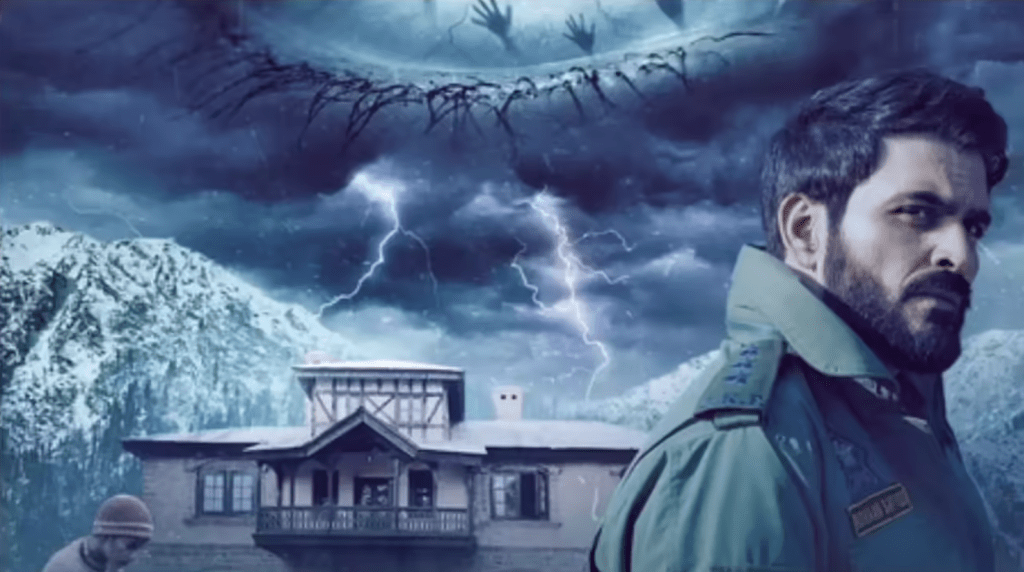
Netflix Movie Spotlight: Baramulla

Baramulla Movie Poster

What defines horror? We often think of ghosts, possessed souls, or strange creatures with no clear form. Yet I realized there’s another type of horror that hits harder. The ones that combine these supernatural ideas with the harsh truths of real life. This is a type of blend that creates an impact, which stays with you long after the movie is over. This is where Baramulla is about.

What’s It About?

Baramulla opens with a policeman who moves to Kashmir and stays in an old house filled with secrets. He is there to investigate the disappearance of children in the area. Strange events start to unfold at once. The elder daughter senses a foul, “dog-like” smell in the house, even if there are no dogs. The caretaker carries a plate of food every day to a locked room. What lies behind these mysteries? Why are children vanishing? These questions drive the heart of the story.

Thoughts

I can’t, unfortunately, share everything I felt without giving away the main plot. Since I wanted to share my thoughts in full, I placed them in a separate “Spoilers Ahead” block after this section. You can skip it if you prefer to avoid spoilers.

Baramulla left me with many emotions. I was genuinely amazed by how the team crafted it.

The movie tries something that Indian cinema, to my knowledge, hasn’t attempted before in a horror movie. That is, blending the past and the present into a story that’s rooted in historical events. It reminds you that horror has layers. It’s not only about the unknown, but also the known. The horror of trust turning into betrayal. The horror of being dismissed or gaslit. The horror of violence, both mental and physical. Baramulla captures all of this with sharp clarity.

The performances are strong across the board. Personally, I would say it’s a must-watch.

Baramulla is now streaming on Netflix.

**Spoilers Ahead**

I felt emotional through many scenes. The acting was powerful and honest. The pain never felt exaggerated.

By now, you probably know that the film draws from the suffering Kashmiri Hindus faced in the late ’80s and ’90s. Many cast members are Kashmiri Hindus who had to flee their homes. Manav Kaul is one of them. He left Kashmir when he was in grade 4. He moved on to become a competitive swimmer in his late teenage years and participated in state and national-level championships. He has more than 14 national medals in swimming to his credit.

The end scenes also show Sanjay Suri, which is befitting, since his father was killed by terrorists in Srinagar when Suri was just 19. He moved to Delhi after that and became a known face in the film industry.

The producer and writer, Aditya Dhar, who is also Yami Gautam’s husband, is a Kashmiri Pandit. He has been using his craft to share Kashmir’s story with care and technical prowess.

Some Kashmiri Pandit celebrities, like Kunal Khemu, have chosen not to explore their past, and that is their personal choice. In an interview with Smita Prakash, he said he doesn’t know much about that period, even though his own family lived through it.

I feel it’s important for us to understand our history so we don’t repeat old mistakes. Stories like these should be passed from one generation to the next. My only regret is not asking my grandfather about his experiences—how Kerala felt during the Indian freedom struggle, and what life was like then. Those anecdotes have been lost forever, as he did not pass on the stories to his children as well.

It’s remarkable that so many Kashmiri Hindus who had to flee the valley are using art to express their experiences instead of resorting to violence. Their goal is empathy and understanding, something they were denied for a long time, not provocation. Choosing storytelling over violence is admirable, especially in a world where violence is often justified in the name of resistance.

There are also a few Kashmiri Hindus with left-leaning views who defend problematic groups and take part in “Free Kashmir” sloganeering, similar to how a very small number of non-Zionist Israelis speak in ways that don’t reflect the wider population.

Most Kashmiri Hindus (and some Kashmiri Muslims) have appreciated the movie. However, left-leaning Hindus are also criticizing the movie for “propaganda,” even though the events have been well documented. Films that depict and educate the viewers on crimes against Muslims in India are welcomed, while films showing crimes against Hindus are often dismissed as Islamophobic, nationalist, or propaganda. This imbalance is where many activists struggle. They accept one truth but not the other.

People like me have slowly stepped out of that mindset to face the whole truth.

It may take a while, but I really believe the truth will eventually reach wider acceptance sooner or later. And the stories can’t stop until the pain is finally acknowledged. They need to be told, retold, and carried forward. Only then will they finally find the place they deserve.

From India-Pakistan to Gaza: Exploring the Duality of War

Fire explosion with smoke

Personal observation: In almost every war, there’s always someone who doesn’t want it to end.

In the India–Pakistan war, many in India didn’t want the fighting to stop because they felt Pakistan hadn’t learned its lesson yet. Some even wanted the government to reclaim PoK (Pakistan-occupied Kashmir) during this time (which I strongly oppose).

When Israel attacked Iran’s nuclear sites, many anti-regime Iranians wanted the war to continue because they hoped the regime would fall.

The Israel–Gaza conflict is even more unusual. Many who kept calling for a ceasefire suddenly went quiet or were openly against it when finally announced. Maybe they had expected Israel to be driven out and a new Palestinian state to rise “from the river to the sea.” But that idea is unrealistic and only calls for more violence. Just like India will never give up Kashmir, Israel will never give up its land. Both countries get a lot of criticism for putting their own interests first. But, over the years, Jews and Indians have learned an important lesson: if they want their interests protected, they can’t rely on anyone else. When Indians get murdered in America, there’s next to no backlash. It’s the same case with Jews. History is also proof that when Hindus face persecution or genocide (Kashmiri Pandits, Sandeshkhali, Bangladeshi, and Pakistani Hindus), the world stays silent. In a world shaped by selective activism, these two communities have gradually learned to shed their passivity and docile nature, standing up for themselves without guilt. Indians, in my view, are still learning. Our tendency to stay silent runs deep. But since 2014, that’s starting to change, much to the annoyance of some. Apparently, a “good” Indian is still largely expected to be a silent one in the face of persecution and bigotry.

Anyway, the point is that in any war, there’s always duality. Those who push for the conflict to continue aren’t always on the “far-right.” Sometimes, they are far-left or far-right figures from other communities, disguised as leftist liberals. Take, for example, the India-Pakistan war. Many leftists in India wanted it to end and for peace to prevail. Yet recently, some of those same voices wanted Hamas to reject the peace deal, even at the cost of many lives.

I’ve often felt that the far-left and far-right are just two sides of the same coin. The recent wars and reactions to them over the years only validate this claim.

***

Photo by Pixabay