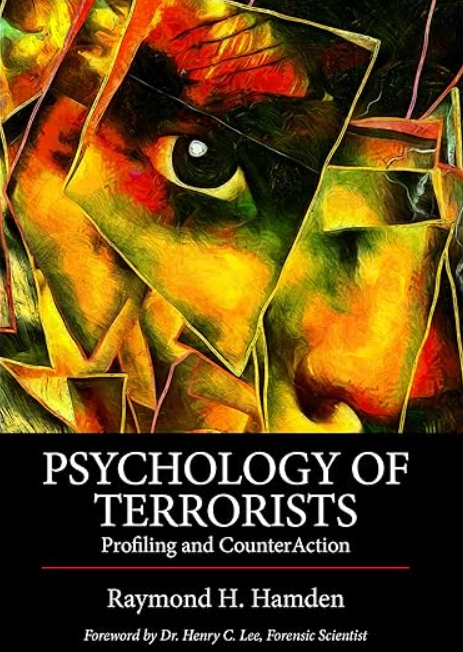
I recently finished reading Psychology of Terrorists by Raymond H. Hamden. I decided to write this post to analyze the key ideas the author has included in the book and see how they apply to India.
This post is a deeper dive than my usual posts, so settle in for a longer read.
Reasons for Radicalization
The book places a strong focus on understanding why someone becomes radicalized in the first place.
It could stem from a difficult past shaped by parents, relatives, or even state officials. In such situations, terrorism becomes a way for them to channel their suppressed anger. It could also come from a long sense of discrimination or oppression, which makes people vulnerable to extremist groups looking to push their own agenda.
While this explanation works in many cases, it can’t be applied to everyone.
Take India, for example. Kashmiri Hindus faced years of injustice, yet they didn’t turn to violence. Their response shows that not everyone reacts to trauma in the same way. It also raises a bigger question. Can radicalization really be justified by blaming external factors alone? At some point, there has to be honest introspection about why disproportionate numbers of extremists emerge from certain sections of society. And this introspection can’t come from outside. It needs to happen within the communities themselves, just as the book explains in detail.
Different Takes on Terrorism
When we deem someone a terrorist, it remains clearly subjective and depends on which side we as individuals are on.
If we are on the side of the victims, we will easily call it terrorism. If we are on the side of the aggressor, we might call it something else entirely to justify self-defense.
As the author mentions, one person’s terrorist can be another person’s freedom fighter. So while I might see someone as an extremist for supporting a particular group, they could just as easily see me the same way for sympathizing with another.
This clash of morals isn’t something that can be fixed easily, but it can at least be recognised.
Disguise
Among the aims of terrorists is to delegitimize the government in the eyes of the people as an attempt to bring to the surface what they view as wrongful actions being taken by the government, and have the public on their side.
One of their techniques is to disguise themselves as civilians and provoke governments into attacking the wrong group, which casts the government in a terrible light.
In today’s social media world, it has become incredibly easy to gather people around a cause. We saw this during the 2020 Delhi Riots, where religion-based WhatsApp groups were created to organise protests against the CAA. Protests are a normal part of any democracy and often help highlight important issues. The problem begins when large gatherings get infiltrated or managed by groups that want to cause harm or steer the movement in a direction that was never intended.
Bringing students or young people into political movements isn’t new, but history shows that outcomes can sometimes take unexpected turns. Events like the Iranian Revolution or Bangladesh remind us that unrest and sudden regime changes can lead to even more restrictive systems coming into power. The most vulnerable tend to be women. In Iran and Bangladesh, women-led protests are becoming the norm, but it is met with uncomfortable silence by the global majority.
A concerning pattern is how quickly narratives can shift. When a protest turns violent, and action is taken against those involved, it can be reframed as persecution. In a country like India, where claims of victimhood often circulate through celebrities, politicians, and media, these narratives can be picked up and amplified. This creates an environment where genuine concerns get overshadowed, and the focus slowly shifts from raising awareness to pushing an agenda. It’s becoming harder to take action against someone who has actually done something wrong because the narrative shifts so quickly.
Global Terror
The age of modern terrorism commenced when the Popular Front for the Liberation of Palestine (PFLP) hijacked an El Al plane coming from Tel Aviv and going to Rome. Planes had been hijacked before, but this had symbolic value as it had a certain aim. It was also the first time in history where hostages were used to meet demands. This operation gained a lot of attention from the media, which worked to increase both awareness and moral panic.
The point about media attention is important because many terror groups depend on heavy media coverage to spread fear. This particular incident marked a shift where the media became a tool for amplifying messages of terror.
The book shares an interesting view on how the media should be careful when reporting such events. Detailed coverage can unintentionally motivate lone wolves to copy these attacks. But there’s another side to it. If an incident doesn’t get enough attention, groups might feel pushed to plan something even bigger just to be noticed. It feels like there’s no real win here, no matter how the media handles it.
Funerals
The first was the so-called Islamic sea burial that the United States had for bin Laden. Several Muslim scholars, such as the Grand Sheikh of Al Azhar (leading world institution for Islamic decisions) in Egypt, condemned this type of burial and confirrmed the fact that a sea burial is against Islamic traditions and requirements. The United States argued that its reason for this type of burial was to prevent having bin Laden’s burial place become a shrine.
In India, the idea of a burial site turning into a shrine is often raised in public discussions, especially by nationalist voices. Historical figures from the Mughal era, who arrived as conquerors, now have grand memorials that many people celebrate. We’ve also seen large gatherings at the funerals of individuals linked to extremist activities. For example, reports noted that Yakub Memon’s funeral in Mumbai drew a crowd of around fifteen thousand people, while Abdul Kalam’s funeral on the same day saw much smaller public participation.
The argument at the time was that there wasn’t enough proof against Yakub Memon, and many attended the funeral as an expression of empathy for what they believed was unfair treatment. But this pattern repeats often. Even when solid evidence exists, parts of society dismiss it as manipulated or fake. This creates confusion and frustration, especially among vulnerable groups, and can unintentionally push some people toward more extreme opinions.
This gap in how different groups perceive guilt and justice is why global events, like the killing of Osama Bin Laden, triggered such mixed reactions. Even when someone is widely known to have committed violent acts, the responses can vary dramatically depending on personal beliefs, political views, and community narratives.
Though President Obama did come out after this event and declare that the United States was not at war with Islam, and that bin Laden was in fact not a Muslim leader, the event was interpreted in a number of different ways by different individuals, politicians, and states.
For instance, Hamas leader Ismael Haniya and the Muslim Brotherhood of Egypt both condemned the killing of Osama bin Laden, whereas Palestinian Authority spokesman Ghassan Khateeb and Palestinian Prime Minister Salam Fayyad both provided positive feedback from the event, saying that it was a landmark event marking the end of an individual who was involved in terror and destruction.
Difference Between Extremism and Terrorism
People like me often use the terms extremism and terrorism interchangeably, but the author clearly differentiates the two:
Terrorism is a call to and threat of violence. Extremism is about achieving a political goal and changing minds to fit one’s own agenda. Al Qaeda engaged in terrorism, and the Iranian revolution was about extremism.
He goes on to cite a report that says extremism will be more of a threat than terrorism in the years to come:
A report by the Strategic Foresight Group (2007) estimates that extremism will be more of a threat than terrorism in the years to come. The objectives of extremist groups focus largely on infiltrating their ideas into the minds of individuals, especially youth.
Extremists are no longer engaging in terrorist acts but are instead aiming to and promising the people of reaching a “better world.” The term better, of course, is relative, since it originates from their own perspective. Their strategy has been proven successful in several countries. For example, the Muslim Brotherhood in Egypt won a large percentage of Parliament seats in the elections of 2005. Likewise, the theocratic regime in Iran has currently grown and become more powerful and influential.
Since extremism tends to act as a precursor to terrorism, the main issue is how those extremists enforce their beliefs. If a violent means is taken, then those extremists have now become terrorists (Martin, 2009). This smooth dispersion of extremist groups and their success across a number of countries is viewed by many as a dangerous phenomenon facing the coming generations.
In Kerala, there have been instances where groups like Jamaat-e-Islami make statements suggesting that a true believer should naturally support the idea of an Islamic Republic. Views like this find an audience, often strengthened by political narratives and by those who want communities to feel that only a religion-based party can truly protect their interests.
We’re beginning to see similar patterns in small pockets across India. A recent example was the BMC election in Maharashtra, where a noticeable share of Muslim votes shifted from the Congress to Owaisi’s AIMIM. It shows how identity-driven messaging can influence political choices, especially when people feel their concerns aren’t being addressed by mainstream parties.
Victimhood Narrative
When well-known figures like AR Rahman speak publicly about feeling targeted, it pushes the broader anti-minority narrative that is often circulated about India. In many cases, the larger context gets lost. Is the person actually being targeted for their religion, or is there another reason behind it? When the feeling of communalism becomes dominant, fueled by media, politicians, global platforms, and society in general, every other explanation gets brushed aside.
This isn’t unique to India. The victimhood narrative is a global trend, especially in countries with strong free-speech cultures, where organised groups know how to shape public opinion.
The victimhood narrative also pops up when a government is pushed into taking strict action against extremist activities. This creates a cycle where narratives overshadow facts, and public perception becomes the real battleground.
Research conducted by Jeanne Knutson in 1981 allowed her to argue that victimization remains the motivating force behind much political violence in the contemporary world.
Victimization is defined as a personally experienced injustice, which the victim recognizes to be unnecessary (or unjust), and which creates a basic fear of annihilation. Discrete events that may cause victimization and have the strength to change the victim’s perception of the world can cause them to defend themselves or their group in order to reduce the chances of experiencing secondary victimization against the self, family, community, or all three.
Since a majority of terrorist activity will involve some form of victimization, we recognize a vicious cycle where terrorism and victimization breed and feed into one another.
Education
Though many people argue that better education would prevent radicalisation, events like the 2025 Delhi terror attack show that even well-educated individuals can be drawn into violent ideologies.
In November 2025, a car explosion near the Red Fort in Delhi was treated by Indian authorities as a terrorist incident after it killed and injured several people, and investigations linked it to suspects with professional backgrounds. This shows that no level of formal education alone can make someone immune to extremist beliefs.
The author emphasizes this point:
With regard to their educational background, findings suggest that the majority of participants have received some formal education, with 38.5% holding bachelor’s degrees and 23.1% having received high school diplomas. Most participants were reported to have been married (46.2%), while 38.5% admitted to being single and 7.7% divorced.
People across varying socioeconomic statuses, levels of education, cultures, and nationalities can be influenced by radical ideology. In fact, it is noted that many individuals within well-known Middle Eastern terrorist groups, such as Al Qaeda and the Islamic State of Iraq and Syria (ISIS), come from middle-to-high-income families and possess high levels of education. Often, these individuals have specializations in aeronautical engineering, chemistry, and information technology; skills that are used to meet specific goals of the organization, particularly with planning violent attacks.
In matters of extremism, religious influence can outweigh education and even personal relationships.
One clear-cut example of psychopathic traits in a terrorist is illustrated in Nezar Hindawi, a Jordanian terrorist who, upon sending his pregnant girlfriend on a flight to Israel, had a bomb planted in her luggage, unknown to her. This terrorist clearly demonstrates psychopathy in that he was willing to sacrifice his girlfriend and his unborn child, with callousness, and no sense of remorse in doing so.
Blaming External Factors
When terror attacks take place, supporters of the violence often shift the blame to the victims by claiming they somehow enabled the situation. We’ve seen this in debates where writers like Arundhati Roy framed the Mumbai attacks as a reaction to the situation in Kashmir, or where the October 7 Hamas attacks were described by some as a response to the suffering of Palestinians. This was seen even after the recent Pahalgam attacks. Yet the same reasoning is rarely applied when discussing the persecution of Kashmiri Hindus or minorities in Bangladesh and Pakistan. Despite these groups never resorting to violence, their experiences are still dismissed or minimised by people who otherwise speak strongly about human rights.
This selective empathy reflects a broader human tendency. We often assign positive motives to the actions of our own group and negative motives to others. For example, if someone from our social circle fails to contribute to a donation, we might assume they have a genuine reason. But if an outsider does the same, we’re more likely to label them as selfish or uncaring.
The psychopathic terrorist will make “you statements,” thereby accusing his opponent of being involved with criminal and/or terrorist-related activities. He is likely to see himself as the victim rather than the perpetrator. He is likely to make statements such as “I am not the terrorist. You are the one causing terror. You are the reason for all this destruction.”
In such an instance, he is essentially blaming his opponents for his own destructive behavior. If involved with a religious or political terror group, he may use their ideologies to blame oppositional religious or political groups for the destruction from their own violent attacks.
In most of the research, fundamental “terrorists generally do not regard themselves as terrorists but rather as soldiers, liberators, martyrs, and legitimate fighters for noble social causes. Those terrorists who recognize that their actions are terroristic are so committed to their cause that they do not really care how they are viewed in the outside world. Others may be just as committed but loathe to be identified as terrorists as opposed to freedom fighters or national liberators” (The Psychology of the Terrorist, n.d.).
Stockholm Syndrome
According to the author, feelings similar to Stockholm Syndrome are quite common during hostage situations involving terror groups.
While the psychopathic terrorist holds no concern for his hostages, it is possible that he may display a charming persona toward them. Assessing for Stockholm syndrome is vital, especially if the crisis is drawn out for a long period of time, as it could increase the chances of hostages experiencing feelings of affection and trust for the terrorist. If hostages develop positive feelings toward the psychopathic terrorist, this can be dangerous and can interfere with the successful capture of the terrorist, as hostages with Stockholm syndrome may work with or even risk their own lives to help the terrorist.
Religious Angle
The religious angle remains one of the strongest factors behind many modern terror attacks. This pattern isn’t limited to any single faith or community.
“It is certainly true that many horrible things have been done under the cover of religion—the inquisition springs to mind along with Islamic terrorism and the Catholic–Protestant wars that have raged and influenced European and American politics for centuries” (Desai, 2013; see also Valencia et al., 2011).
Dulles (2002) further observes that Christianity has had more than a fair share of religious tensions in human history. Christians have persecuted Jews and fought wars against Muslims, within Christianity; there have been internecine wars, especially between Roman Catholic and Protestants, but sometimes with Eastern orthodox. Influenced by these postulations, casual observers accept as fact, even in western culture, that religion is the worst culprit of the global terrorist attacks (Okoro, 2008)
These characteristics may be illustrated in the followers of many religious groups having the sense of a messianic or apocalyptic dream in their political vision, which comprises the thought of political dominance of a state (or the world) through its association. Believers of these groups take the dream of future prominence gravely, where power and control compensate for their present deprivations.
Methods of Countering Radicalization and Prevention
There are methods to counter radicalisation within communities. In India, these efforts are often difficult to put into practice because they face immediate pushback in the name of persecution or discrimination, a narrative that can easily gain momentum in India and abroad through media and political voices. Still, there’s a lot India can learn from places like Saudi Arabia, Bahrain, and the UAE, where structured deradicalisation programs have shown promising results.
When national security is at stake, the focus needs to stay on addressing the issue rather than endlessly worrying about political correctness.
This approach was utilized by the Saudi Arabian government as part of a multipronged terrorist deradicalization program. By having clerics of the Islamic faith engage in an in-depth discussion of the Islamic text versus misinterpretations used by terrorist organizations, these facilitators served as mentors and built strong relationships with those in the program. In doing so, the Saudi Arabian government claims to have a success rate of 80–90% within their participants, with low recidivism (Bouchek, 2008).
As part of their multipronged approach, the Saudi Arabian deradicalization program utilized family members of the terrorist to help with the reintegration process. In doing so, the program was highly eective in changing the ideology of a large portion of the participants in their program (Bouchek, 2008). If the individual feels a need for belongingness with his family and community, he is unlikely to rejoin his terrorist group.
The process of deradicalization is only one aspect of counter-terrorism, and if utilized in insolation it will likely result in partial success. Family members and the community must be involved in creating positive change for the detainee.
These are some of the reasons why many Gulf countries see fewer terror attacks and remain relatively safe. They have systems in place to identify and address extremist ideas right at the root.
There are two measures mentioned in the book that I do not necessarily agree with:
- Another aspect of the deradicalization process involves improving the quality of life for the terrorist. Quite often individuals become a part of terrorist organizations as a result of external factors, such as difficult socioeconomic conditions, as well as internal factors, including low levels of self-efficacy and self-esteem and challenges gaining control of their lives. Therefore, this aspect seeks to reduce potential economic barriers by providing educational opportunities, vocational training, and job placement. By being provided the opportunity to be a contributing member of society, the terrorist will experience an increase in self-worth and self-esteem. Terrorists can also be helpful in deradicalization efforts and researching the effectiveness of rehabilitation programs for other terrorists. This process allows released terrorists to reintegrate back into society.
- In addition, the state must be able to provide incentive as positive reinforcement in keeping the terrorist away from the terrorist group. These incentives can come in the form of housing, monetary income, or education or through providing employment opportunities.
Improving someone’s quality of life doesn’t always work when their mindset is already deeply radicalised. Many individuals involved in extremist activity may have a stable education and enough resources to take care of themselves, so their motivations can be more ideological or political than economic.
Better living conditions might help people who aren’t fully radicalised and who take part in lower-level acts, like stone pelting, mainly for quick financial gain, but it doesn’t address those who are already committed to an extremist worldview.
I also don’t fully agree with the idea of using financial incentives as a solution. India has seen examples where offering money or support to separatist figures like Yasin Malik didn’t lead to moderation. Reports over the years have suggested that leaders who were expected to act as mediators continued to support extremist ideas despite the assistance they received. This shows that financial rewards alone cannot shift someone who is already strongly influenced by radical beliefs.
What does work, and what India needs more of, is a strong prevention-first approach. Violent extremism should be tackled early through families and local communities. Prevention programs in schools, workplaces, and community centres, along with clear public awareness campaigns, can make a real difference. These efforts help build resilience at the grassroots level before harmful ideas take root.
Media Exposure
The media has been both a boon and a bane. On the one hand, it keeps the public informed when terror attacks take place. On the other hand, incorrect or sensational reporting has sometimes ended up becoming a useful tool for terrorists.
Media exposure is a goal of many terrorist groups. Attracting the audience’s attention is important to terrorist groups who value the media as they offer a direct outlet for them to attract this attention and get their message across, for free.
In India, we often see extremist actions being described as “mental health issues” to prevent lone attackers from gaining attention or becoming examples for others. But this approach can have the opposite effect. When members of a group feel their actions aren’t being acknowledged, some may escalate to more violent methods in an attempt to get their message noticed.
Though there have been efforts made by the media to censor certain people or organizations that carry out terrorism in hopes of prevention, this may in fact act to further exasperate the situation and cause unheard of or suppressed terrorists to become even more violent and attract the attention they desire.
Some argue that the media has played a huge role in the spread of Islamophobia. To the dismay of many, the media also “protects” individuals who are terrorists, by portraying them in a way that defends their acts of terrorism—for example, by attributing their motivations to mental health issues even though this may be inaccurate.
How Terror Groups Look for Recruits
In the age of social media and constant online access, it has become very easy for terror groups to look for potential recruits on the internet.
The comments sections on websites covering terrorism news reveal a divided world and provide easy access for terrorist groups to leverage their resources to mobilize more support for their cause by spreading propaganda and receiving funds. Terrorist group manifestos are easily available online for the public to access. Terrorist groups have websites that provide information in detail about their cause and how to become a member.
Terrorist groups have Twitter accounts (Murgia, 2017), post videos on YouTube, and have an active social media presence. The millions and billions of accounts present on social media websites provide a huge pool of potential “candidates” for terrorists to recruit.
People who have faced inequality, discrimination or long-term social injustices often become the most vulnerable to radical ideas. When someone feels marginalised or unheard, it’s easier for them to be drawn toward groups that promise protection, identity or a sense of belonging.
Recruiters usually look for individuals who lack strong family support, are dealing with financial stress or are searching for acceptance. These situations make a person more likely to absorb extremist ideas without fully thinking through the harm such ideologies can cause.
Cognitive Dissonance
We also see cognitive dissonance among terror sympathizers. Research shows that while many people may agree with or support a group’s ideology from a distance, most are not willing to actually engage in violence. When someone believes in an idea that promotes violence but also believes that harming others is wrong, the clash creates an internal conflict. This is what we call cognitive dissonance. In simple terms, it’s the uncomfortable, anxious feeling a person gets when they hold two opposing beliefs at the same time.
Conclusion
Understanding terrorism isn’t just about looking at the violence itself. It’s about recognising the layers beneath it, the personal struggles, community influences, political narratives, and global patterns that shape how people think and act.
Psychology of Terrorists highlights how complex these motivations can be, and looking at them through the Indian context makes the picture even more layered.
If there’s one takeaway, it’s that radicalisation doesn’t grow overnight. It grows in silence, in neglected corners of society, in unchecked narratives, and in environments where fear or resentment is allowed to spread. Countering it needs awareness at home, in schools, in communities, and in the way we talk about these issues in public. Prevention, more than punishment, is what actually helps.
The topic is uncomfortable, but it’s necessary. Only by understanding how radicalisation works can we build stronger, safer communities and ensure that extremist ideas find less space to grow.



 The Monkey Dilemma
You must be logged in to post a comment.