It is by chance that I stumbled on the Co-Ed series on Amazon MX Player. The algorithm showed the trailer to me and I thought I would give it a try. I wasn’t expecting much but I was in for a surprise.
Co-Ed looks like a simple school drama at first, but it quickly turns into a lively mix of humour, friendship, and small twists that keep you curious. The writing feels fresh, and the young cast brings an energy that makes every episode, lasting around 20-30 minutes, easy to watch. I found myself hitting the next episode button without even thinking.
What’s It About?
Two twins step into a new chapter when their all-boys and all-girls schools merge to form a co-ed campus. The boy is nervous about sharing space with girls for the first time, while his sister walks in with full confidence. As they try to adjust to this sudden shift, their parents are also dealing with their own set of challenges at home. The mix of teenage chaos and family moments gives the series a relatable, everyday charm that keeps you curious about what happens next.
Thoughts
Co-Ed Season 1 took me by surprise. I didn’t expect to enjoy it this much.
Every actor in the series delivers a heartfelt performance. Honestly, they outshone many big names I watched this year. That says a lot. You slip into the world of the characters so easily that their joys and troubles feel like your own. You laugh with them and you end up tearing up with them too.
The parents in the story add another layer of emotion. Their struggles feel raw and real. I could sense the mother’s pain as she tries to hold everything together while staying proud of her small business. The question is, does her family see the same value in it? On the outside, the parents look like the perfect couple who split chores and support each other. But life is rarely that simple. It is often the quiet moments, the unsaid thoughts and the tiny frustrations that shape a home. Co-Ed captures all of this with surprising depth.
Rajeshwari Sachdev, Varun Badola, Adrija Sinha, Vedant Sinha, and Stuti Sahijwani are impressive in their respective roles. They complemented each other perfectly.
Shows like Co-Ed deserve a lot more attention. Viewers who enjoy warm, slice-of-life stories often find these gems by luck, not because they are promoted by popular reviewers.
For me, this one is a must-watch. You can stream it for free with ads on Amazon MX Player.
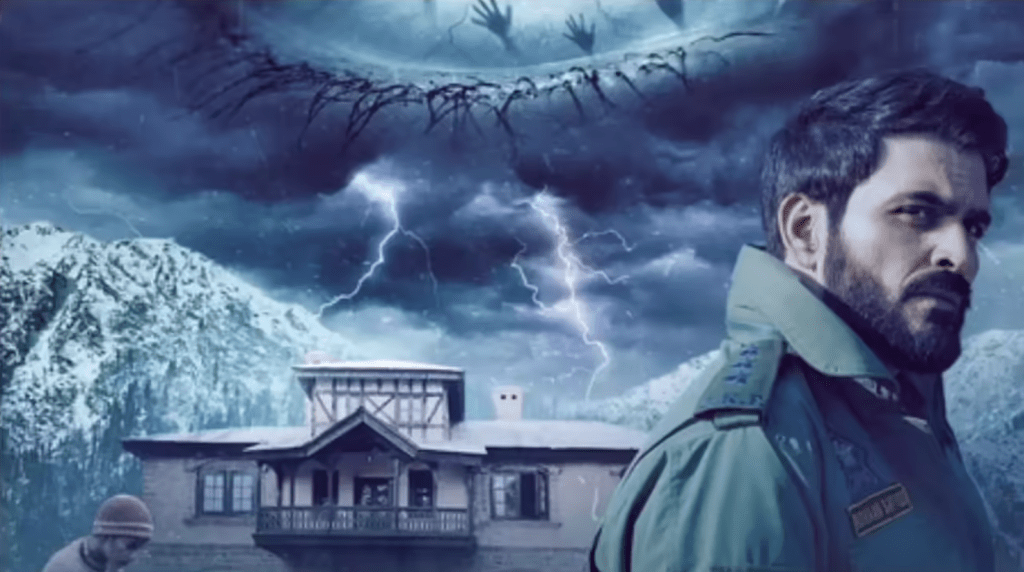
What defines horror? We often think of ghosts, possessed souls, or strange creatures with no clear form. Yet I realized there’s another type of horror that hits harder. The ones that combine these supernatural ideas with the harsh truths of real life. This is a type of blend that creates an impact, which stays with you long after the movie is over. This is where Baramulla is about.
What’s It About?
Baramulla opens with a policeman who moves to Kashmir and stays in an old house filled with secrets. He is there to investigate the disappearance of children in the area. Strange events start to unfold at once. The elder daughter senses a foul, “dog-like” smell in the house, even if there are no dogs. The caretaker carries a plate of food every day to a locked room. What lies behind these mysteries? Why are children vanishing? These questions drive the heart of the story.
Thoughts
I can’t, unfortunately, share everything I felt without giving away the main plot. Since I wanted to share my thoughts in full, I placed them in a separate “Spoilers Ahead” block after this section. You can skip it if you prefer to avoid spoilers.
Baramulla left me with many emotions. I was genuinely amazed by how the team crafted it.
The movie tries something that Indian cinema, to my knowledge, hasn’t attempted before in a horror movie. That is, blending the past and the present into a story that’s rooted in historical events. It reminds you that horror has layers. It’s not only about the unknown, but also the known. The horror of trust turning into betrayal. The horror of being dismissed or gaslit. The horror of violence, both mental and physical. Baramulla captures all of this with sharp clarity.
The performances are strong across the board. Personally, I would say it’s a must-watch.
Baramulla is now streaming on Netflix.
**Spoilers Ahead**
I felt emotional through many scenes. The acting was powerful and honest. The pain never felt exaggerated.
By now, you probably know that the film draws from the suffering Kashmiri Hindus faced in the late ’80s and ’90s. Many cast members are Kashmiri Hindus who had to flee their homes. Manav Kaul is one of them. He left Kashmir when he was in grade 4. He moved on to become a competitive swimmer in his late teenage years and participated in state and national-level championships. He has more than 14 national medals in swimming to his credit.
The end scenes also show Sanjay Suri, which is befitting, since his father was killed by terrorists in Srinagar when Suri was just 19. He moved to Delhi after that and became a known face in the film industry.
The producer and writer, Aditya Dhar, who is also Yami Gautam’s husband, is a Kashmiri Pandit. He has been using his craft to share Kashmir’s story with care and technical prowess.
Some Kashmiri Pandit celebrities, like Kunal Khemu, have chosen not to explore their past, and that is their personal choice. In an interview with Smita Prakash, he said he doesn’t know much about that period, even though his own family lived through it.
I feel it’s important for us to understand our history so we don’t repeat old mistakes. Stories like these should be passed from one generation to the next. My only regret is not asking my grandfather about his experiences—how Kerala felt during the Indian freedom struggle, and what life was like then. Those anecdotes have been lost forever, as he did not pass on the stories to his children as well.
It’s remarkable that so many Kashmiri Hindus who had to flee the valley are using art to express their experiences instead of resorting to violence. Their goal is empathy and understanding, something they were denied for a long time, not provocation. Choosing storytelling over violence is admirable, especially in a world where violence is often justified in the name of resistance.
There are also a few Kashmiri Hindus with left-leaning views who defend problematic groups and take part in “Free Kashmir” sloganeering, similar to how a very small number of non-Zionist Israelis speak in ways that don’t reflect the wider population.
Most Kashmiri Hindus (and some Kashmiri Muslims) have appreciated the movie. However, left-leaning Hindus are also criticizing the movie for “propaganda,” even though the events have been well documented. Films that depict and educate the viewers on crimes against Muslims in India are welcomed, while films showing crimes against Hindus are often dismissed as Islamophobic, nationalist, or propaganda. This imbalance is where many activists struggle. They accept one truth but not the other.
People like me have slowly stepped out of that mindset to face the whole truth.
It may take a while, but I really believe the truth will eventually reach wider acceptance sooner or later. And the stories can’t stop until the pain is finally acknowledged. They need to be told, retold, and carried forward. Only then will they finally find the place they deserve.
What surprises me more than the terror attacks in India is the speed with which some Indians dismiss them as “false flag operations.” For instance, a look at the comments under Faye D’Souza’s Instagram post about the Delhi terror blasts shows several users mocking the incident and blaming the Indian government instead of the perpetrators. Many genuinely seem to believe it’s a political ploy to influence votes rather than an act of terror.
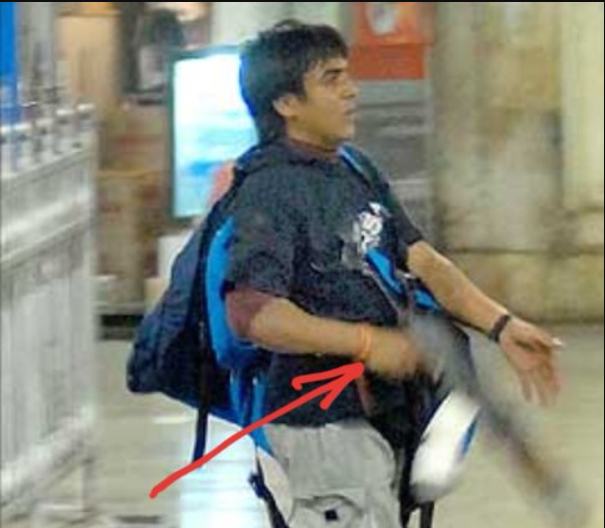
The “false flag” narrative isn’t new. It has surfaced after nearly every major terror attack in India. Even the 26/11 Mumbai attacks were, at first, misrepresented by some as an internal operation. The claim gained attention mainly because Ajmal Kasab, one of the attackers, wore a saffron thread on his wrist. Those spreading the theory strangely assumed such a thread could only belong to members of BJP or RSS. They overlooked the possibility that it might have been deliberately used to mislead investigators.
Ajmal Kasab with Saffron Thread on His Wrist
Kasab’s real plan, as later revealed, was to die appearing as a “Hindu” and thus shift suspicion away from Pakistan-based handlers, reinforcing the myth of “saffron terror.” Thankfully, due to the extraordinary courage and sacrifice of Assistant Sub-Inspector Tukaram Omble, Kasab was captured alive and later confessed to being a Pakistani national trained by terrorists.
Tukaram Omble
By then, however, the false-flag theory had already gained widespread circulation. Well-known public figures even released a book titled 26/11: RSS ki Saazish? that promoted the “false flag” theory surrounding the attacks.
Influential Indian Figures Promoting “26/11: RSS ki Saazish?” Book
The “false flag” narrative resurfaced after the Pulwama terror attack, when a suicide bomber from Jaish-e-Mohammed (JeM) drove an explosive-laden vehicle into a CRPF convoy in Pulwama, Jammu & Kashmir, killing 40 soldiers. Following the attack, some voices in Pakistan, including senior officials, suggested that India might have staged the incident to influence the upcoming 2019 elections. Commentators in India echoed similar theories online, framing the tragedy as politically motivated rather than acknowledging it as an act of cross-border terrorism.
Then came the recent Pahalgam attacks, where Pakistani media outlets and online commentators claimed that India had staged the incident to divert attention from domestic issues and influence elections. They described it as part of an alleged “Indian playbook” of false-flag operations. Soon after, similar talking points appeared in sections of Indian social media and commentary spaces.
In each case, claims of “false flag operations” lacked credible evidence and were primarily rooted in conspiracy theories first circulated in Pakistan and later amplified by certain opinion groups in India.
The Global “False Flag” Obsession
It’s worrying that many people in India tend to believe external narratives about terror attacks rather than trusting verified investigations at home.
This pattern might have been up for serious debate if it only happened locally, but the deflection from religious extremism appears to be a global trend. To cite a few examples:
The 9/11 attacks are still viewed by some as a “false flag” orchestrated by the U.S. or Israel to malign Muslims. This is a theory long disproved but still used by extremist groups to recruit followers. They thrive on anger, convincing vulnerable minds that violence is the only response to perceived oppression. In India, extremist recruiters have similarly exploited stories like the Babri Masjid while dismissing events like the Godhra train burning as conspiracies, weaving grievance into a tool for radicalization.
The October 7 attacks in Israel were also met with widespread conspiracy claims, framed as a false flag operation meant to discredit certain groups.
Likewise, criticism of regimes such as Iran’s leadership, the Taliban, or Hamas is often dismissed as Western propaganda. This is another form of deflection that prevents honest introspection.
Conspiracies Shield Extremists
It’s time to move past the overused “false flag” narrative.
Each time a terror attack is dismissed as a conspiracy, it insults the victims, weakens trust, and blurs the line between truth and propaganda. These baseless claims don’t protect anyone. They only embolden extremists and deepen divisions.
Real courage and national unity will come from confronting facts, condemning violence without bias, and demanding accountability from those who spread hate, no matter where it comes from.
Ending the false flag obsession is the first step toward restoring integrity in how we respond to terrorism.
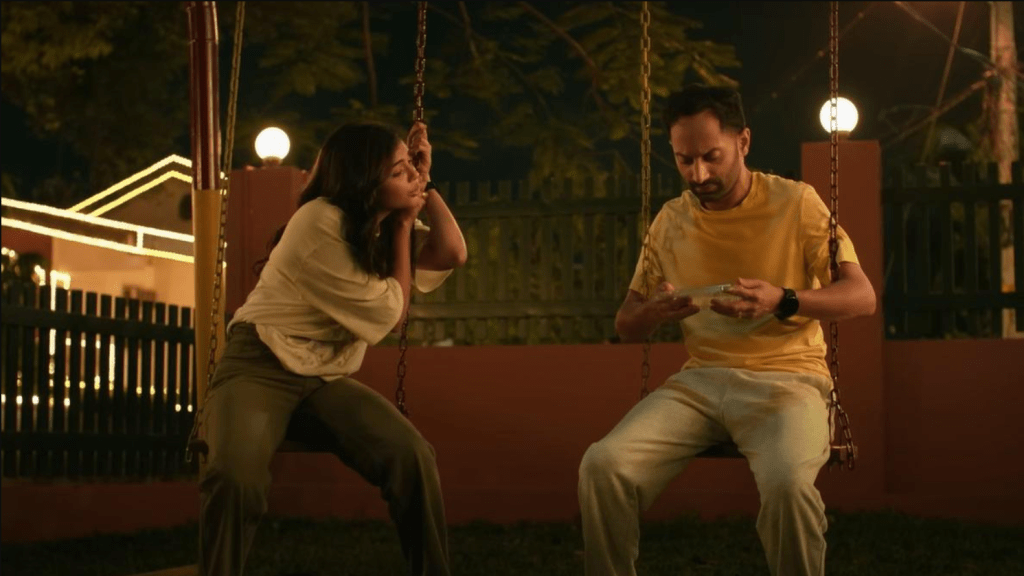
Odum Kuthira Chaadum Kuthira is a Malayalam movie that didn’t get glowing reviews. Still, I decided to give it a shot, because over time, I’ve learned that my taste rarely matches what others say. I’ve liked movies that everyone else trashed, and I’ve dropped shows that got rave reviews.
Take Bads of Bollywood, for instance. I quit after three episodes. The humor just didn’t click with me. The Emmy winner, Severance, on Apple TV? I made it to five episodes before giving up. It was too slow for my liking, and yes, I shamelessly looked up the spoilers for both because I couldn’t sit through the rest.
Serious movie fans and critics might think my choices are questionable. And that’s fine. I’m not trying to be anyone’s go-to person for movie recommendations. I watch movies for one simple reason: to be entertained. If a film or show keeps me hooked, that’s all that matters. I’ve also noticed how people often get shamed for liking a movie that others dislike, or for disliking one that everyone praises. This makes many stay silent about their opinions. My attempt at being open is simply to break away from that.
So, with that mindset, I started watching Odum Kuthira Chaadum Kuthira. I didn’t expect much, but I ended up being pleasantly surprised.
What’s It About?
Odum Kuthira Chaadum Kuthira opens with the wedding preparations of a quirky couple. On the night before the wedding, the bride visits the groom with an unusual request: she wants him to arrive at the venue on a horse. It’s her dream, she says. Or rather, it’s something that keeps recurring in her dreams. She believes the dream will stop only if he makes that grand entry for real. The ever-romantic groom agrees without hesitation. But what follows is a chain of chaotic events that quickly spiral out of control.
Thoughts
Unlike most recent Malayalam movies, Odum Kuthira Chaadum Kuthira is not dark, intellectual, or overly smart. The type critics will rave about. And it’s not meant to be. It’s a crackpot of a film filled with quirky, eccentric characters, and that’s exactly why I liked it. I enjoy seeing wacky personalities on screen, the kind you’d find in Andaz Apna Apna. This kind of comedy works for me. It’s not vulgar, it doesn’t demean women, and it’s genuinely funny.
The movie feels like a group of friends coming together to create something chaotic just for fun. More like a personal, experimental project than a polished production. Kudos to Fahadh Faasil and the team for taking that risk. I especially liked Lal’s character as Fahadh’s father, and I thought Revathi Pillai shared better chemistry with Fahadh than Kalyani Priyadarshan did.
I wish the ending were better. It was underwhelming, but that did not take away the fact that I enjoyed the majority of the movie.
Watch it if you’re in the mood for something silly, unserious, and refreshingly offbeat. Don’t expect a masterpiece: just expect a fun, wacky ride to unwind after a long day at work. Odum Kuthira Chaadum Kuthira is now streaming on Netflix.
Personal observation: In almost every war, there’s always someone who doesn’t want it to end.
In the India–Pakistan war, many in India didn’t want the fighting to stop because they felt Pakistan hadn’t learned its lesson yet. Some even wanted the government to reclaim PoK (Pakistan-occupied Kashmir) during this time (which I strongly oppose).
When Israel attacked Iran’s nuclear sites, many anti-regime Iranians wanted the war to continue because they hoped the regime would fall.
The Israel–Gaza conflict is even more unusual. Many who kept calling for a ceasefire suddenly went quiet or were openly against it when finally announced. Maybe they had expected Israel to be driven out and a new Palestinian state to rise “from the river to the sea.” But that idea is unrealistic and only calls for more violence. Just like India will never give up Kashmir, Israel will never give up its land. Both countries get a lot of criticism for putting their own interests first. But, over the years, Jews and Indians have learned an important lesson: if they want their interests protected, they can’t rely on anyone else. When Indians get murdered in America, there’s next to no backlash. It’s the same case with Jews. History is also proof that when Hindus face persecution or genocide (Kashmiri Pandits, Sandeshkhali, Bangladeshi, and Pakistani Hindus), the world stays silent. In a world shaped by selective activism, these two communities have gradually learned to shed their passivity and docile nature, standing up for themselves without guilt. Indians, in my view, are still learning. Our tendency to stay silent runs deep. But since 2014, that’s starting to change, much to the annoyance of some. Apparently, a “good” Indian is still largely expected to be a silent one in the face of persecution and bigotry.
Anyway, the point is that in any war, there’s always duality. Those who push for the conflict to continue aren’t always on the “far-right.” Sometimes, they are far-left or far-right figures from other communities, disguised as leftist liberals. Take, for example, the India-Pakistan war. Many leftists in India wanted it to end and for peace to prevail. Yet recently, some of those same voices wanted Hamas to reject the peace deal, even at the cost of many lives.
I’ve often felt that the far-left and far-right are just two sides of the same coin. The recent wars and reactions to them over the years only validate this claim.
I have only completed one episode of Zard Patton Ka Bunn (I have no idea what this means) so far on YouTube, but I already have a feeling I will like this Pakistani drama better than Kabhi Main Kabhi Tum. Sharjeena and Mustafa were cute and the series started off well but I didn’t find the story engrossing enough towards the end.
The first episode of ZPKB is endearing. A girl is praying intensely that she passes her exams, while the Maulawi (religious scholar) requests everyone through the mic in the mosque to pray for her. He says it’s admirable that a girl in the village wants to study more.
This Maulawi is hilarious! When a village officer visits the mosque to announce a population control drive, the Maulawi asks, “What’s the population of Pakistan?” The officer replies, “It’s now 22 crore.” The Maulawi then mumbles to himself in a lighthearted moment, “What’s the use of these 22 crore people if they can’t even sponsor one motor for the mosque well!”
It’s funny how the Maulawi is shown as a comical character who no one in the village takes seriously. It’s surprising because I always thought Maulawis were treated with utmost respect. On the contrary, this series treats the Maulawi exactly like how some Indian movies show swamis and gurus in a funny light. In the first episode, the villagers are shown berating him for overusing the mosque mic. He’s on it every other minute, asking for donations for the motor.
Now, the shocking part was how casually a female character scolded her husband for waking up late, saying, “You’re a Muslim, not a kafir,” as if it were normal, everyday language. The way the word “kafir” (non-believer) was used so casually suggests it’s deeply ingrained in the cultural discourse. To a Hindu, like me, the word hit me like a jolt. In contemporary times, the word kafir can be seen as an insult by non-Muslims, especially when it is used to highlight the superiority of one religion over another. As a tolerant kafir, I’ll let it slide and move on, but it does make me wonder about its impact, especially among impressionable Indian youth who are into Pakistani dramas. My concern is that it could reinforce divisive ideas, encouraging people to see others through a binary lens of “believers” and “kafirs”. That’s a troubling thought in any diverse, multi-faith society. But here’s hoping Pakistani dramas will be more mindful of such polarized language in the future. As the world becomes more interconnected and local entertainment reaches a global audience, paying attention to details like language can help ensure you don’t alienate anyone who appreciates your work.
That said, I have no intention of boycotting the series. I look forward to watching the remaining episodes on YouTube. It’s not every day you come across such feel-good wholesome witty content. I will savor every moment of it.





 The Monkey Dilemma
You must be logged in to post a comment.