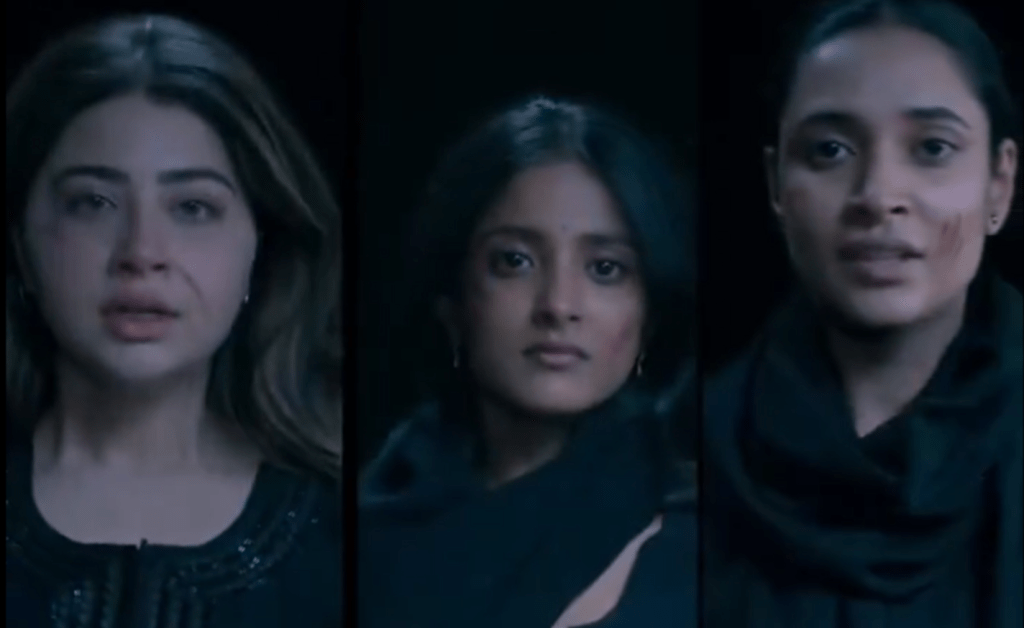
I finally watched The Kerala Story 2 trailer because the noise around it became impossible to avoid. I had stayed away from watching it till then, hoping we would collectively ignore it.
The trailer begins with a call to “convert India into a Muslim nation.” That kind of rhetoric comes from extremist outfits like PFI, not from everyday Muslims. It’s in PFI’s “India 1947” doctrine, available online. But the moment a film shows Islamist extremists, people immediately react as if the entire Muslim community is being insulted. That jump is what frustrates me. The trailer is clearly about extremists, not ordinary people (also confirmed by the makers).
I keep seeing reels saying, “Where in Kerala is this? This is nothing like Kerala.” Exactly. It is not about the regular Muslims we meet every day. It is about fringe groups.
When the movies, Bombay or Empuraan, showed Hindu extremists attacking Muslims, no one claimed the film insulted all Hindus, and that it was an insult to Bombay and a generalization. When films show fringe Hindutva groups, we do not accuse the filmmakers of attacking every Hindu. So why is criticism of Islamist extremism treated as an attack on Muslims as a whole? This inability to separate ideology from community makes any honest conversation impossible. And political groups thrive on that confusion.
I thought the film would be ignored this time. I watched the trailer only to understand the hype. Otherwise, I would not have bothered. And once again, the makers got free publicity because controversy sells.
The director’s NDTV interview
In an NDTV interview, the director was asked why he named it after Kerala again even though the film covers incidents in multiple states. His answer was very simple. He said he got attention for the first film because of the name “Kerala.” So he used it again to get the same effect. It was a marketing strategy. And we fell for it.
He also mentioned that the film connects certain cases to networks like Chhangur Baba’s. According to him, these networks have a specific goal in mind. Again, he presented this as the reasoning behind the storyline, not as a statement on all Muslims.
The song and the real-life cases
The song O Maayi Ri, sung beautifully by Shreya Ghoshal, reminded me of the emotional interviews with the mothers of victims (some notable victims include Nimisha, Sonia Sebastian, and Merrin Jacob). They begged for their daughters to be brought back from ISIS camps in Afghanistan. The girls, as per officials, were too radicalized to be brought back home. No country easily brings back citizens who have a soft corner for a terror group. Many countries around the world refuse repatriation because of national security concerns.
And Kerala has had some troubling conversion-related cases too.
- There is the case of Sona Eldhose, who was allegedly forced to go to Ponnani for conversion.
- There is also the story of Kamala Surayya, discussed in the book The Love Queen of Malabar. According to the book, she was encouraged to convert with the promise of marriage made by a mainstream political figure. Once she converted, he backed away. The book also mentions foreign funding from the Gulf that influenced the situation.
These cases do not define Kerala as a state, but they exist. They cannot be erased from the larger conversation.
Kerala’s habit of defending itself too quickly
What irritates me is how quickly Keralites jump into defensive mode. The moment someone brings up extremist incidents or conversion cases, people post “This is the real Kerala story” along with photos of communal harmony and Onam celebrations. Those moments are beautiful, but they do not cancel out the darker stories. Kerala can be progressive and safe while still having pockets of extremism. That duality is real. Acceptance does not mean defamation. In fact, acceptance is the first step toward accountability.
My issue with the beef discourse
Beef in Kerala has become a political symbol. I eat beef, but I am not here to prove that “I am a Hindu who eats beef. I’m so cool.” I am also not going to claim that Hindus who eat beef are not real Hindus. Those extremes mean nothing to me.
There are actual cases of people being forced to eat beef by partners or relatives. A basic online search shows plenty of such stories. So mocking that scene in the trailer becomes insensitive because coercion is not fictional for some people.
What makes the discourse more insensitive is the constant use of beef as a political prop in Kerala. Historically, beef has been used to hurt Hindu sentiments and harass certain groups. As someone who eats beef, I have never felt proud of it in a political sense. It is food. We can all eat what we like, but weaponising it feels disrespectful.
Even the MSF, the youth wing of the Muslim League, called out the SFI beef fests happening on campuses. They said it is insulting to those Hindus in Kerala who consider beef unholy. They added that they themselves would find it offensive if there were pork fests. Whether political or not, they made a fair point. Sensitivity should work both ways.
The political angle behind the controversy
This is something I have been observing closely. In my opinion, the controversy did not naturally explode. It was amplified politically. The first major reaction came from CM Pinarayi Vijayan on X. Once he reacted, his supporters followed, and the discussion spiralled from there.
I believe his response was a political strategy to position himself as the protector of secularism in Kerala. He had lost support earlier due to his association with Vellapally Natesan and also the Sabarimala gold case. His tweet seemed carefully framed as the Kerala election is near. He even highlighted that Kerala has not seen any communal riots in the last ten years, which also happens to be the period during which he served as Chief Minister.
Whether intentional or not, the film’s visibility multiplied because of this political reaction.
Why the title still annoys me
The title “Kerala Story Goes Beyond” suggests that Kerala is some central hub of Islamist extremism, which is simply not true. Kerala is safe. Hindus are safe. Fringe groups exist, but the narrative of “Hindu genocide” is false.
At the same time, filmmakers have always used region names to provoke reactions.
Movies like Bombay did not lead anyone to generalise the entire city.
Shows like Delhi Crime did not make people say Delhi is entirely unsafe.
But names like Kashmir or Kerala grab attention instantly. Filmmakers know this. It is part of the business. And audiences fall for it every single time.
Final thoughts
Kerala has many stories of harmony, culture, and peaceful coexistence. But Kerala also has some unsettling stories involving extremism, manipulation, and political strategy. Both realities can exist together. Loving a state does not mean denying the uncomfortable parts. Real progress and intellect come from honest acknowledgement.
 The Monkey Dilemma
You must be logged in to post a comment.