For the most part, Haq is not a story only about Muslim women. It is a story about women in general. Almost all of us know someone, married or unmarried, who has been cheated in love. We have seen that heartbreak up close, and we understand the emotional toll it takes.
When Shazia feels betrayed, we feel it too. When she wants the best for her children, that emotion feels familiar. When she fights for her rights, it resonates deeply. And when her father stands by her without hesitation, it reminds us of our own fathers and the quiet strength that support brings. These are emotions that are universal to women, cutting across religion, culture, and background.
The narrative becomes specifically about Muslim women only when the legal issues come into focus. That is where the real differences emerge, and the film clearly highlights how laws and systems can shape a woman’s fight for justice. It is to be noted that soon after the Triple Talaq ban was implemented in India, many Muslim women began approaching the courts to seek justice. While there was no open praise for the current government for such a ban, there was a quiet acceptance of the relief and protection the law offered them in real life. Many Muslim men, however, continue to view the ban as an insult to their faith rather than as a legal safeguard for women.
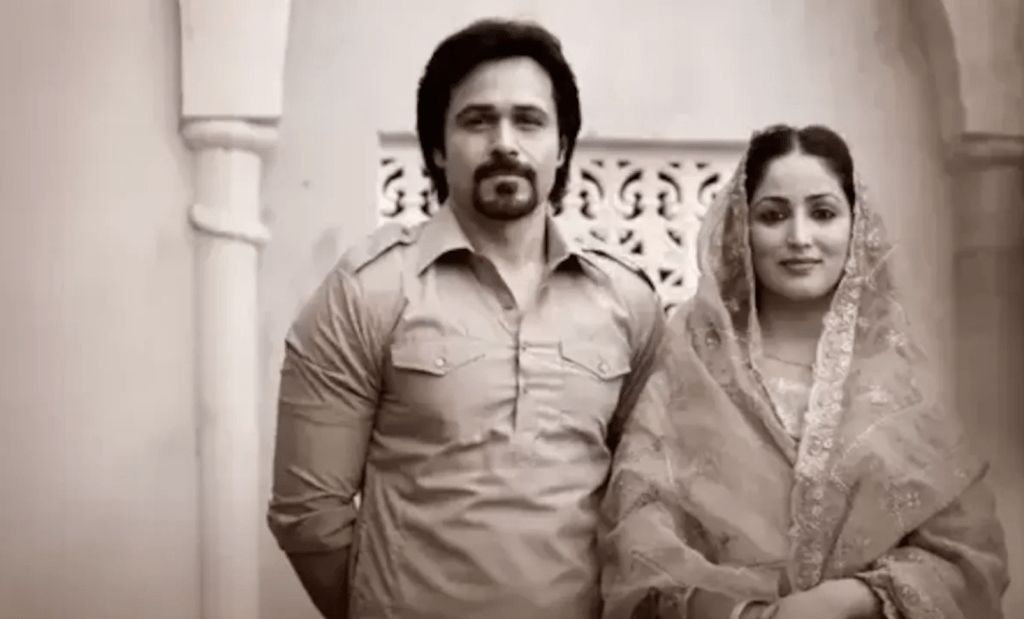
Getting back to the movie, Yami’s final monologue is powerful and leaves a strong impact. Emraan feels completely natural throughout and never once seems like he is performing. Sheeba Chaddha is equally convincing and brings depth to her role.
I especially want to credit Emraan for choosing to act in a film that openly talks about Muslim women’s rights. It takes conviction to support a story like this, especially as a Muslim, without dismissing it as Islamophobic. The film is clearly not that. Instead, it focuses on real issues and lived experiences, and his decision to back the narrative adds credibility and strength to the message being told.
Overall, I liked the film. The background music could have been better, and Yami is not fully convincing in a few scenes. Still, she more than makes up for it in the final act, which stays with you long after the film ends.
I recently came across a video featuring an interview with Stalin Devan, the activist managing the legal research and paperwork for Munambam. In this interview with Shajan Skariah, Stalin shares that Father Joshy added him to a WhatsApp group with the Munambam residents and said, “Explain one point from the Act every day in simple words.” Over time, Stalin became their legal guide, and his efforts are one of the main reasons the community now understands the law so well.
The interview was informative in many ways. At a time when there is still no clear update from politicians or the media on what is actually delaying the resolution for Munambam, even after the Waqf Amendment Bill was passed, Stalin explains the situation with complete clarity.
A screenshot of the video
The Three Possible Legal Outcomes for Munambam
According to Stalin, there are three possible solutions for Munambam:
The government restores revenue rights immediately. This can be done at any time if the Chief Minister approves an administrative order restoring those rights.
If the Supreme Court upholds the High Court order declaring the land not Waqf, all cases, tribunal, revenue, and others will automatically end.
If the Supreme Court rules otherwise, the next legal step will rely on the amended law using Section 2A.
Why Section 2A Cannot Be Used Yet
Earlier, I assumed that recent positive court developments were on the basis of Section 2A. I later realised that was incorrect. Stalin’s interview clarified it. He said:
“We must wait for the rules to be notified. Only after the rules come into force can we use the amendment. As soon as the rules are published, we will file a new petition before the Waqf Tribunal. Once the new rules take effect, the Waqf Board’s order cannot survive.”
It was only through him that I learned the rules tied to the amendment have not yet been fully implemented (central rules were notified in July 2025, but further steps, such as central and state compliance and the ongoing Supreme Court matter, are still pending). Once implementation of the rules is complete, Munambam will be able to use the amendment (Section 2A) fully to establish its rights.
This is where politics begins to overlap with law.
Where Politics Meets Law
Stalin said:
“When everything is resolved, people should celebrate and then withdraw the protest with dignity. But politics entered the issue, and some withdrew support — not because the problem is unresolved, but because they feared the BJP might gain political mileage.”
This is why I feel that even though BJP is the party that helped Munambam with the establishment of new Waqf amendments that can prove favourable to Munambam residents, the Congress-led alliance (UDF) may still win the election there.
Strategically, it makes sense. Now that they’ve pushed the BJP to change the Waqf rules, Christian voters can continue supporting the party they feel protects their religious interests, especially one that does not interfere with missionary activity.
UDF has traditionally been the preferred choice of many Christian voters in Kerala. However, their position on the Waqf Amendment has not aligned with what Munambam residents expected or hoped for. Even so, Christian voters may still continue supporting UDF, largely because they align with the coalition’s lack of anti-conversion sentiment.
Why Timing Matters to BJP and CPM
Here’s where it gets interesting. What follows is only my analysis, not a confirmed claim:
As mentioned earlier, the amendment becomes fully usable only after the remaining implementation steps (central and state action, portal uploads, surveys, and Supreme Court clarity). That process can take months, sometimes more than a year.
Because of that, the timing is now in the hands of both the Central Government (BJP) and the Kerala Government (CPM). Residents say Rijiju has not been active recently. It is possible that the central leadership is waiting to see how the political situation evolves before re-engaging. The BJP may already understand that, even with the support they are offering, they might still not gain full trust or support from the Munambam Christian community. Religious identity often influences decisions more than political assistance. BJP may choose to wait and see whether their support translates into goodwill before offering more help or speeding up the process. In short, they might be waiting for election results to analyze public sentiment.
Meanwhile, CPM has not yet updated or published Waqf lists in the state gazette or uploaded them to the central portal. This is of utmost importance to implement the waqf amendment. CPM has not given explicit technical reasons for the delay.
Current Status of the Waqf Amendment Process (December 5, 2025)
Central Government (BJP)
The Act itself was published and came into force in April 2025. Rules were notified in July 2025. But implementation is still pending: WAMSI portal digitization is incomplete, nationwide surveys and audits have not been done, and the Supreme Court stay since September blocks key provisions.
The central government’s delay primarily reflects implementation challenges. However, political considerations may also play a role, as governments often pace sensitive rollouts based on election outcomes and political advantage.
Kerala Government (CPM)
CPM has not published Waqf lists in the Kerala state gazette. Nor have they uploaded lists to the central portal (90-day deadline under Section 2A). Waqf Tribunal and Board procedures are not aligned yet.
The Kerala government’s delay appears more political in nature. They seem to be officially resisting the amendment.
My view is that the full rollout (central setup, state compliance, and Supreme Court resolution) will now unfold at a pace influenced by political timing. Legally, the delay should not be indefinite, but in practice, regulations and execution can remain pending for a long time if the government chooses.
Why Munambam’s Leadership Is Remaining Neutral
Politics has made the situation complicated.
Many in the Munambam Land Protection Council do not want the BJP to gain politically, but they appear to be trying to remain neutral as the process is still unfinished. The ball is still in the court of both CPM and BJP. This may also explain why Church leaders reportedly asked Joseph Benny, the head of the Munambam Land Protection Council, to withdraw from the election as a UDF candidate. Any outright political affiliation may prove disadvantageous to Munambam residents at this stage.


 The Monkey Dilemma
You must be logged in to post a comment.