For me, the best part of travel is rarely just the destination. It is almost always the people I meet along the way. Sometimes they are fellow Indians I happen to run into while traveling abroad. Other times, they are locals who live there. Either way, travel experiences often become more meaningful because of the people you unexpectedly connect with.
It always amazes me how you can visit a completely new place and instantly click with someone. Someone you had almost zero chance of meeting in your life. Someone you may never meet again. There is something both beautiful and bittersweet about that.
For a brief moment, you feel understood. You find a kind of ease in being yourself. It makes you wish there was someone like that back home. A friend with whom conversations flow naturally, and silence is comfortable. But when the trip ends, you leave with the quiet realization that a part of that connection belongs to that place and moment. And you need to regrettably acknowledge and accept that fact and move on.
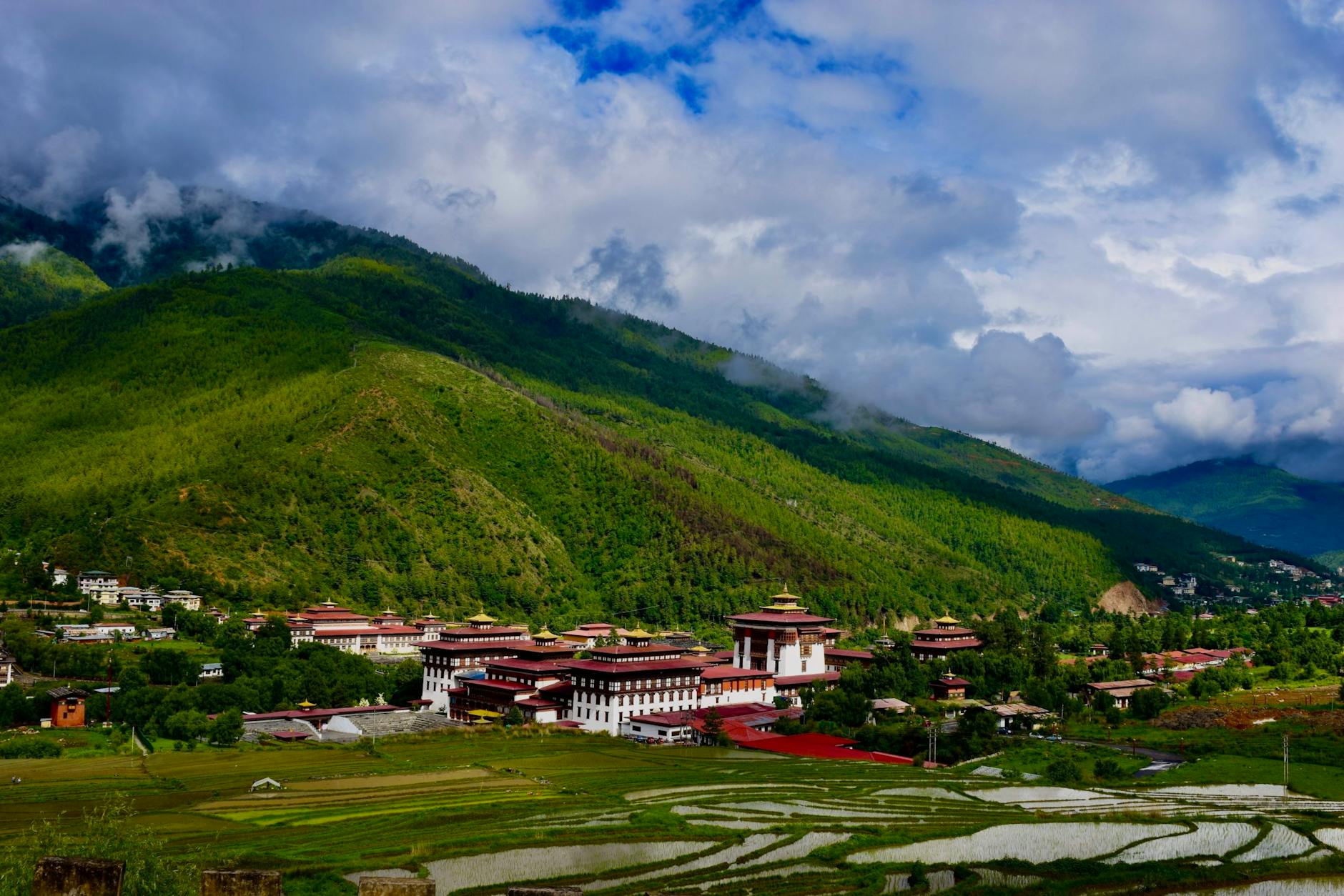
Now that I am back in India after my trip to the North East, I realize something interesting. What stays with me is not the destination or the sightseeing. It is the people I connected with during my travels. The random conversations, the shared laughter, and the small moments that made the journey special.
Those encounters also reminded me of something important. Even in my 40s, making new friends is still very much possible. Travel has a funny way of proving that meaningful connections can happen at any stage of life.
Of course, we can stay connected online. Social media and messaging apps make it easy to keep in touch with people you meet while traveling. But it is never quite the same as meeting someone face to face. There is a kind of chemistry in real-life interactions that online conversations cannot fully capture. The smiles, the sparkle in someone’s eyes, the playful teasing, the expressions, and the shared energy of the moment.
That is one reason why travel feels both rejuvenating and humbling. It lifts you into a small dreamlike bubble for a while. You feel lighter, freer, and more open to people and experiences.
But eventually, every trip ends. You leave that bubble behind and return to everyday life. Routine, work, responsibilities, and schedules slowly start filling your days again. Your mind may not be fully ready for reality for a few days. Part of you is still wandering through those travel memories.
Life, however, has a gentle way of bringing you back to the familiar. Slowly, day by day, you settle back into your usual rhythm. The memories of the trip remain, but over time they soften. The details blur a little. The feelings become less intense.
So I’m thinking of making this a regular feature on the blog. I usually have slightly contrarian takes on most news stories anyway, so putting them together in a quick post feels like a good idea. Think of this as a simple roundup where I share my thoughts on a few current issues making headlines.
Here’s today’s quick take.
Iran–US/Israel War
The ongoing Iran–US–Israel conflict is dominating global news. From what I am seeing online, most Muslims and leftists appear to be supporting Iran in this war. The primary reason is Iran’s long-standing pro-Palestine position and its support for Palestinian causes and groups.
However, in my opinion, Iran is equally in the wrong for dragging Gulf countries into this conflict.
Iranian officials have said they are only targeting US bases in the region. But the reality seems very different. Civilian infrastructure is being hit, and innocent people have lost their lives. That cannot be justified.
At this point, it is important to acknowledge responsibility on both sides. The US and Israel are certainly to blame for starting the conflict, hitting a girl’s school, and causing massive damage and loss of civilian lives. At the same time, Iran also bears responsibility for expanding the war into countries in the GCC.
Several Gulf countries had already assured Iran that their land would not be used to attack Iran. Yet they are now facing retaliation simply because US bases exist on their soil.
Personally, this issue also feels close to home because I have relatives living in the GCC. It is extremely unsettling to see those countries becoming targets when they are not directly part of the conflict.
At the same time, expecting these countries to suddenly remove US military bases is not practical. Those bases exist largely as a security arrangement, especially considering long-standing tensions with Iran.
Instead of taking sides in this Iran–Israel–US conflict, the best outcome would simply be for all parties involved to step back and find a way to de-escalate the situation before it gets worse.
Monalisa’s Interfaith Marriage in Kerala
Another story that caught attention recently is the marriage of Monalisa Bhosle, the viral Kumbh Mela girl, who married her Muslim partner in Kerala.
On the surface, this is good news. Two people who liked each other decided to get married. Interfaith marriages should not automatically be seen negatively.
At the same time, it is natural to feel a little concerned about the girl’s situation. From what we know publicly, she did not receive much formal education and appears quite naive. The relationship reportedly developed online, and the couple had known each other for only around six months, when the girl was still a minor, before deciding to get married. The guy, as per reports, is 7-8 years older than her. That combination can make anyone a bit worried, regardless of religion.
Kerala already has a controversial reputation in some circles. Because of that, it felt unnecessary for state government officials to publicly participate in what was essentially a private wedding ceremony.
If, unfortunately, the marriage faces problems in the future (I hope not), the same incident could easily be used to criticize Kerala again.
A more mature approach by Kerala’s state government would have been to stay away from the public spotlight while offering quiet support if needed. Not every personal decision needs to be turned into a political or symbolic event.
Kavya Maran and Abrar Ahmed
The next topic is from the cricket world.
Kavya Maran’s decision to include Pakistani cricketer Abrar Ahmed in her Hundred League team, Sunrisers Leeds, has sparked debate among fans. Given the current political climate between India and Pakistan, reactions were bound to be strong.
But there is another angle to this story that people are not discussing enough.
In February 2026, reports suggested that league members were warned of strict action if there was any discrimination against Pakistani players.
So one possible explanation is that Kavya Maran was simply trying to follow league rules.
Other team owners may have quietly avoided selecting Pakistani players, but technically that could still be seen as discrimination if the league had issued such warnings.
I can somewhat relate to this situation on a psychological level. Many of us have experienced moments where we strictly follow rules, while others casually ignore them and face no consequences.
To be clear, this is not meant as a justification for selecting a Pakistani player. As an Indian, I stand with my country. But it may explain the thinking behind the decision.
Sometimes people are simply trying to stay within the rules, even when others around them are not.
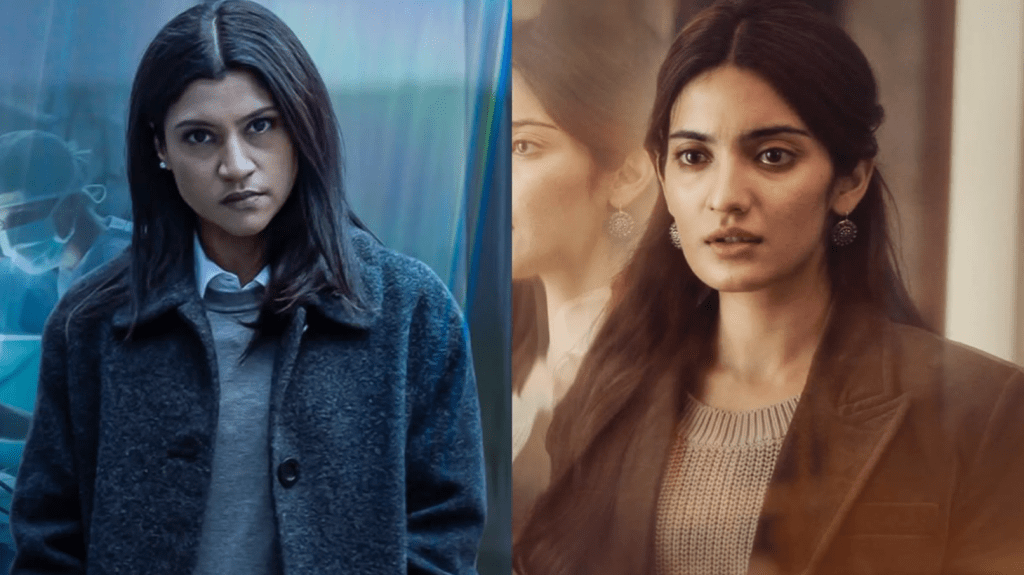
I knew I would be watching Accused on Netflix the moment I saw the lead pair: Konkona Sen Sharma and Pratibha Ranta. I have always liked both actors, so that alone was reason enough to hit the play button. But what really caught my attention was the theme of queer romance. In Indian cinema, stories about same-sex relationships are still relatively rare, which makes films like this especially interesting.
Over the past few years, India has slowly begun opening up to conversations about LGBTQ+ relationships. What once felt shocking to mainstream audiences is gradually becoming part of everyday discussion. That change did not happen overnight. It is the result of efforts from many sides: legal changes like the decriminalization of homosexuality in India, activists who have spent years spreading awareness, and filmmakers who are willing to tell stories about queer love on screen. Because of that collective push, movies exploring same-sex romance are finding space in Indian cinema.
I still remember when the Malayalam movie Kaathal: The Core was released. It remains one of the Malayalam films I feel proud of. I saw its impact firsthand at a family event we attended around that time. Some of my elderly relatives actually began discussing the theme of the film. It was clear they were still a bit uncomfortable talking about homosexuality, but the conversation itself was a big step. What surprised me most was that a few of them were able to acknowledge that homosexuality is real and not something a person can simply control or change. And the reason they were willing to even consider that perspective was simple: Mammootty was part of the film. Seeing an actor from their own generation portray such a character helped normalize the topic for them.
That moment reminded me of the real impact cinema can have. Movies are not just entertainment. Sometimes, they quietly open the door to conversations that people would otherwise avoid.
Getting back to the movie in question, Accused begins on a fast-paced note. The opening pulls you in immediately, and there is enough intrigue to keep you watching as the story unfolds. For a while, the film manages to hold that tension well. Unfortunately, the narrative loses some of its strength towards the end, and the impact is not quite as powerful as the beginning promised.
That said, the performances are a big highlight. Konkona Sen Sharma and Pratibha Ranta are both wonderful to watch. Pratibha, in particular, looked great throughout the film. I even found myself noticing her earrings more than once. She has mostly been seen in village girl roles so far, so it was refreshing to see her play a modern, city girl in this Netflix film. I am definitely looking forward to seeing more stories featuring her.
Konkona, as expected, delivers a strong performance. Her character is aggressive, ambitious, and very clear about what she wants. She does not soften her words to make others comfortable, and that confidence makes her come across as a true “boss girl” personality. At the same time, the film also shows how women like her often end up being judged or disliked for the same qualities that would be admired in men.
Overall, Accused starts off as a gripping Netflix drama with an interesting queer romance angle and strong performances. Even though the ending feels a bit underwhelming, the film is still worth watching for its lead actors and the way it brings conversations about same-sex relationships in India to a wider audience.
I finally watched The Kerala Story 2 trailer because the noise around it became impossible to avoid. I had stayed away from watching it till then, hoping we would collectively ignore it.
The trailer begins with a call to “convert India into a Muslim nation.” That kind of rhetoric comes from extremist outfits like PFI, not from everyday Muslims. It’s in PFI’s “India 1947” doctrine, available online. But the moment a film shows Islamist extremists, people immediately react as if the entire Muslim community is being insulted. That jump is what frustrates me. The trailer is clearly about extremists, not ordinary people (also confirmed by the makers).
I keep seeing reels saying, “Where in Kerala is this? This is nothing like Kerala.” Exactly. It is not about the regular Muslims we meet every day. It is about fringe groups.
When the movies, Bombay or Empuraan, showed Hindu extremists attacking Muslims, no one claimed the film insulted all Hindus, and that it was an insult to Bombay and a generalization. When films show fringe Hindutva groups, we do not accuse the filmmakers of attacking every Hindu. So why is criticism of Islamist extremism treated as an attack on Muslims as a whole? This inability to separate ideology from community makes any honest conversation impossible. And political groups thrive on that confusion.
I thought the film would be ignored this time. I watched the trailer only to understand the hype. Otherwise, I would not have bothered. And once again, the makers got free publicity because controversy sells.
The director’s NDTV interview
In an NDTV interview, the director was asked why he named it after Kerala again even though the film covers incidents in multiple states. His answer was very simple. He said he got attention for the first film because of the name “Kerala.” So he used it again to get the same effect. It was a marketing strategy. And we fell for it.
He also mentioned that the film connects certain cases to networks like Chhangur Baba’s. According to him, these networks have a specific goal in mind. Again, he presented this as the reasoning behind the storyline, not as a statement on all Muslims.
The song and the real-life cases
The song O Maayi Ri, sung beautifully by Shreya Ghoshal, reminded me of the emotional interviews with the mothers of victims (some notable victims include Nimisha, Sonia Sebastian, and Merrin Jacob). They begged for their daughters to be brought back from ISIS camps in Afghanistan. The girls, as per officials, were too radicalized to be brought back home. No country easily brings back citizens who have a soft corner for a terror group. Many countries around the world refuse repatriation because of national security concerns.
And Kerala has had some troubling conversion-related cases too.
There is the case of Sona Eldhose, who was allegedly forced to go to Ponnanifor conversion.
There is also the story of Kamala Surayya, discussed in the book The Love Queen of Malabar. According to the book, she was encouraged to convert with the promise of marriage made by a mainstream political figure. Once she converted, he backed away. The book also mentions foreign funding from the Gulf that influenced the situation.
These cases do not define Kerala as a state, but they exist. They cannot be erased from the larger conversation.
Kerala’s habit of defending itself too quickly
What irritates me is how quickly Keralites jump into defensive mode. The moment someone brings up extremist incidents or conversion cases, people post “This is the real Kerala story” along with photos of communal harmony and Onam celebrations. Those moments are beautiful, but they do not cancel out the darker stories. Kerala can be progressive and safe while still having pockets of extremism. That duality is real. Acceptance does not mean defamation. In fact, acceptance is the first step toward accountability.
My issue with the beef discourse
Beef in Kerala has become a political symbol. I eat beef, but I am not here to prove that “I am a Hindu who eats beef. I’m so cool.” I am also not going to claim that Hindus who eat beef are not real Hindus. Those extremes mean nothing to me.
There are actual cases of people being forced to eat beef by partners or relatives. A basic online search shows plenty of such stories. So mocking that scene in the trailer becomes insensitive because coercion is not fictional for some people.
What makes the discourse more insensitive is the constant use of beef as a political prop in Kerala. Historically, beef has been used to hurt Hindu sentiments and harass certain groups. As someone who eats beef, I have never felt proud of it in a political sense. It is food. We can all eat what we like, but weaponising it feels disrespectful.
Even the MSF, the youth wing of the Muslim League, called out the SFI beef fests happening on campuses. They said it is insulting to those Hindus in Kerala who consider beef unholy. They added that they themselves would find it offensive if there were pork fests. Whether political or not, they made a fair point. Sensitivity should work both ways.
The political angle behind the controversy
This is something I have been observing closely. In my opinion, the controversy did not naturally explode. It was amplified politically. The first major reaction came from CM Pinarayi Vijayan on X. Once he reacted, his supporters followed, and the discussion spiralled from there.
I believe his response was a political strategy to position himself as the protector of secularism in Kerala. He had lost support earlier due to his association with Vellapally Natesan and also the Sabarimala gold case. His tweet seemed carefully framed as the Kerala election is near. He even highlighted that Kerala has not seen any communal riots in the last ten years, which also happens to be the period during which he served as Chief Minister.
Whether intentional or not, the film’s visibility multiplied because of this political reaction.
Why the title still annoys me
The title “Kerala Story Goes Beyond” suggests that Kerala is some central hub of Islamist extremism, which is simply not true. Kerala is safe. Hindus are safe. Fringe groups exist, but the narrative of “Hindu genocide” is false.
At the same time, filmmakers have always used region names to provoke reactions. Movies like Bombay did not lead anyone to generalise the entire city. Shows like Delhi Crime did not make people say Delhi is entirely unsafe.
But names like Kashmir or Kerala grab attention instantly. Filmmakers know this. It is part of the business. And audiences fall for it every single time.
Final thoughts
Kerala has many stories of harmony, culture, and peaceful coexistence. But Kerala also has some unsettling stories involving extremism, manipulation, and political strategy. Both realities can exist together. Loving a state does not mean denying the uncomfortable parts. Real progress and intellect come from honest acknowledgement.
With dark and heavy content flooding streaming platforms these days, my old soul keeps craving simple old school romance. I still enjoy serious shows, no doubt about that, but when the real world already feels intense, I prefer feel-good stories when I sit down to unwind. The type of content that I grew up watching.
I have stepped away from Pakistani dramas and films on YouTube because I didn’t want my views or money indirectly going anywhere near causes I don’t support. The disrespectful remarks on India after Pahalgam from their celebrities didn’t help either. The mental distance I felt afterwards was enough for me to stop endorsing their entertainment. Everyone is free to choose what they watch though. I chose to stop out of personal preference. People say politics and art/sports/religion should not be mixed, but in reality, they often overlap.
There’s definitely a void now that I’ve stopped watching Pakistani dramas, so I’ve been hunting for lighthearted Indian content instead that would lift my mood. And I’m happy I found it in the new romcom series Tu Juliet Jatt Di.
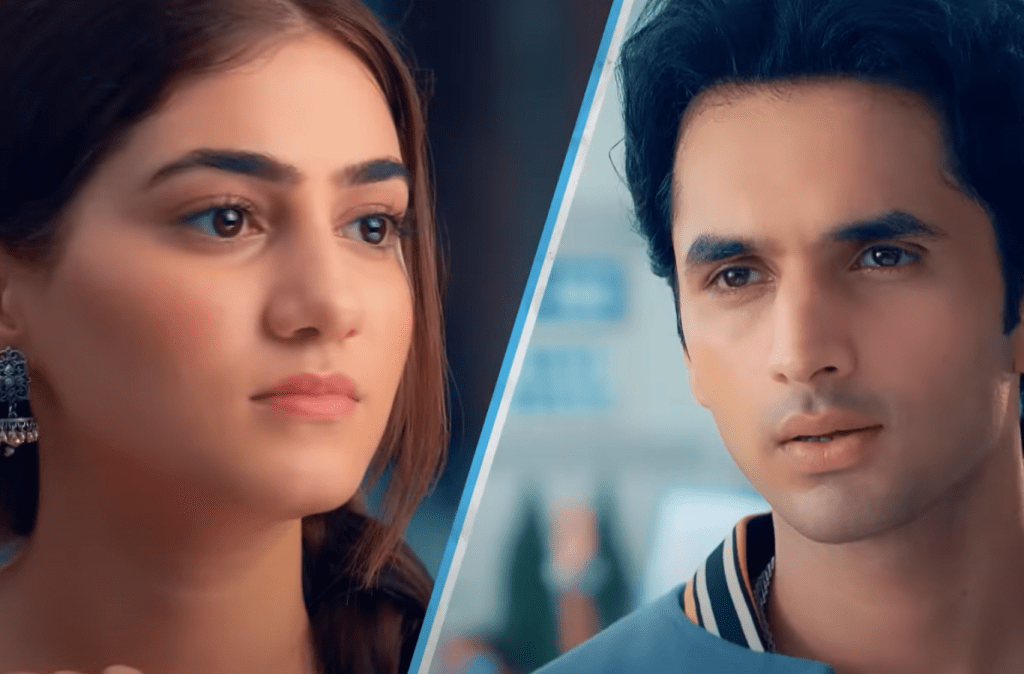
I cannot believe this is Jasmeet Kaur’s first project. She performs like a seasoned professional and is already more competent than many Hindi industry actresses who’ve been around for years. Syed Raza is impressive.
The chemistry between Syed Raza and Jasmeet Kaur is electric. I haven’t seen such crackling romance on screen in a long time. Most modern romances feel too serious. Think of movies like Saiyaara and Aashiqui 2, where the mood stays melancholic instead of happy or dreamy. There’s definitely an audience for that kind of storytelling, but I usually prefer something lighter and a little more positive.
We don’t get that fun vibe in Hindi movies anymore, the kind we once loved in Salaam Namaste, Kuch Kuch Hota Hai, Dilwale Dulhaniya Le Jayenge, Kal Ho Naa Ho, or, if we are to talk about something comparatively newer, then Wake Up Sid. Stories where silence and lingering eye contact made an impression, where romance was a slow-burn and intense, yet positive. When you watch stories like these, your mood shifts almost instantly. You walk away feeling lighter and a little happier than before. You feel like you yourself are in love, the feeling of butterflies in your stomach. That’s missing nowadays, isn’t it?
Critics and serious cinema lovers have been pushing the industry to take up more logical, serious, and believable stories that have put romcom fans like me in a fix. That’s why Tu Juliet Jatt Di feels refreshing. It’s playful, flirty, and full of swoonworthy moments. Sure, there are emotional scenes and melodramatic scenes, which may not feel like reality, but they don’t drag the mood down. Also, the heroine refuses to wallow. She’s bold, sharp, and unafraid to call out nonsense. Syed Raza as Nawab adds the right amount of mischief, something that’s missing in many love stories today.
Tu Juliet Jatt Di is loud, lively, chaotic, just like the old times. It’s not here to spread a social message or make you think. It’s here to offer pure entertainment that isn’t enveloped in hopelessness, violence, and despair. And what can be more entertaining than love?
If you enjoy Korean dramas or Pakistani romantic shows, you will, in full certainty, like this new Hindi series too.
Tu Juliet Jatt Di is currently streaming on Colors TV and Jio Hotstar.
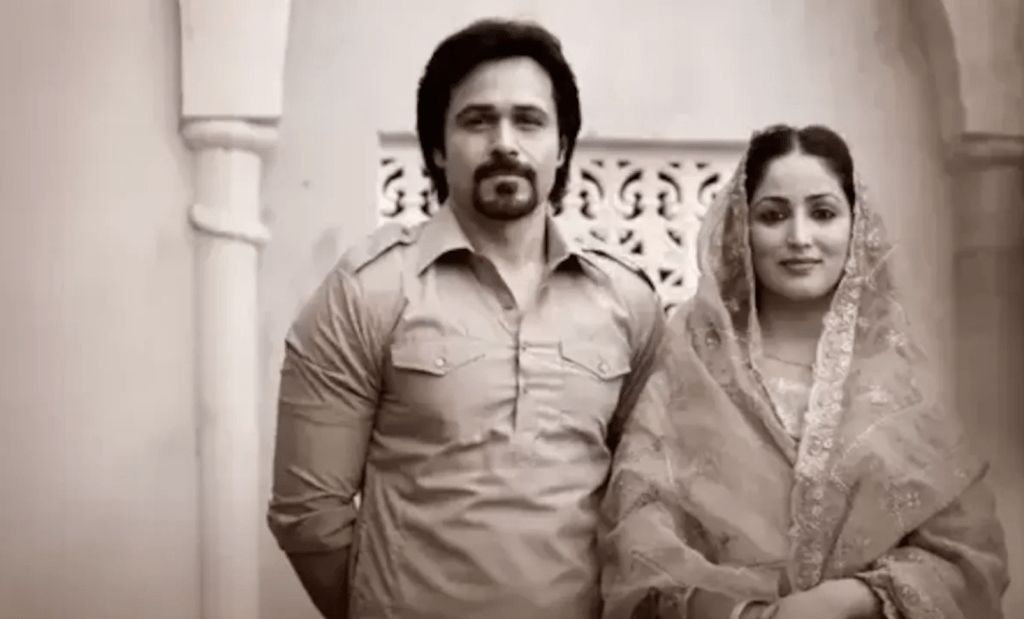
For the most part, Haq is not a story only about Muslim women. It is a story about women in general. Almost all of us know someone, married or unmarried, who has been cheated in love. We have seen that heartbreak up close, and we understand the emotional toll it takes.
When Shazia feels betrayed, we feel it too. When she wants the best for her children, that emotion feels familiar. When she fights for her rights, it resonates deeply. And when her father stands by her without hesitation, it reminds us of our own fathers and the quiet strength that support brings. These are emotions that are universal to women, cutting across religion, culture, and background.
The narrative becomes specifically about Muslim women only when the legal issues come into focus. That is where the real differences emerge, and the film clearly highlights how laws and systems can shape a woman’s fight for justice. It is to be noted that soon after the Triple Talaq ban was implemented in India, many Muslim women began approaching the courts to seek justice. While there was no open praise for the current government for such a ban, there was a quiet acceptance of the relief and protection the law offered them in real life. Many Muslim men, however, continue to view the ban as an insult to their faith rather than as a legal safeguard for women.
Getting back to the movie, Yami’s final monologue is powerful and leaves a strong impact. Emraan feels completely natural throughout and never once seems like he is performing. Sheeba Chaddha is equally convincing and brings depth to her role.
I especially want to credit Emraan for choosing to act in a film that openly talks about Muslim women’s rights. It takes conviction to support a story like this, especially as a Muslim, without dismissing it as Islamophobic. The film is clearly not that. Instead, it focuses on real issues and lived experiences, and his decision to back the narrative adds credibility and strength to the message being told.
Overall, I liked the film. The background music could have been better, and Yami is not fully convincing in a few scenes. Still, she more than makes up for it in the final act, which stays with you long after the film ends.


 The Monkey Dilemma
You must be logged in to post a comment.