Umar Khalid, Sharjeel Imam, and the Bail Debate: The Right-Wing Take

Umar Khalid and Sharjeel Imam

The debate around Umar Khalid, Sharjeel Imam, and other Delhi riots accused who have not yet been granted bail has once again come into focus. From the right-wing perspective, the issue is not as simple as “judicial delay” or “denial of justice.” I thought of writing this post because many in India only trust left-wing channels, which causes them to miss important fact-based points shared by the right-wing.

Adjournments and CJI’s Remarks

First of all, let us understand what an adjournment is. Simply put, it is when a court hearing or trial is postponed to a later date instead of being completed on the scheduled day.

Out of the 14 adjournments in Umar Khalid’s case, 7 were initiated by his own legal team. This was mentioned by CJI D.Y. Chandrachud himself in his interview with Barkha Dutt.

Umar Khalid Bail Plea: Multiple Adjournments, Withdrawal
Source: Lawbeat

“I do not want to comment on the merits of the case but I must tell you one thing which is lost sight by a lot of people when it comes to Umar Khalid‘s case, can you imagine that the case was adjourned, they were at least seven if not more adjournments which were sought by the council appearing for Umar Khalid and eventually the application for bail was withdrawn.” – CJI Chandrachud

Justice Chandrachud noted that, on social media, a one-sided narrative often takes hold, leaving judges with no space to defend themselves. He added that if one looks closely at the actual proceedings in court, the reality is far more nuanced than what is portrayed online.

While some “fact checkers” online have attempted to dismiss this claim by relying on surface-level sources, it is reasonable to trust the CJI more on this matter. As head of the judiciary, he had direct access to both official and indirect records of adjournments.

The Delay Tactic

According to many on the right, Khalid and Imam’s legal strategy is clear. If the trial begins, conviction is almost certain. Thus, their team is accused of deliberately delaying proceedings by filing fresh petitions, often citing a “change in circumstances.” The idea is to drag the trial as long as possible and eventually claim bail on the grounds of delay.

Notably, some petitions that caused delays were also filed by other accused who are already out on bail.

The Judicial Tactic Explained

The strategy seen here is not unique. It is a common tactic in the Indian judiciary:

  1. Lawyers repeatedly file petitions (often citing new circumstances).
  2. Each petition leads to adjournments, dragging the trial.
  3. Eventually, the accused can argue that their right to a speedy trial (protected under Article 21 of the Constitution) has been violated.
  4. On that ground, they can seek bail due to judicial delay.

This slow erosion of the process not only stalls justice but also erodes public trust in the judiciary. Something that many argue is part of the plan.

CJI on Unseen Angles

In an interview with Barkha Dutt, CJI Chandrachud hinted that there are angles in the case that cannot be revealed to the public. Right-wing commentators believe this may refer to multiple coordinated fronts behind the Delhi riots.

One example often cited is ISIS member Arshad Warsi (not the actor), who was in contact with Sharjeel Imam. Warsi allegedly helped decide the content of pamphlets that were distributed to mosques and Muslim neighbourhoods prior to the riots to incite violence. He was later arrested in the Pune ISIS module case.

Sharjeel Imam and Arshad Warsi
Sharjeel Imam’s connection with Arshad Warsi. Source: indiankanoon.org/doc/156202283/
Arrest of Arshad Warsi
Arshad Warsi arrested

There are also allegations of foreign funding and terror groups like PFI supporting the protests and unrest.

Umar Khalid PFI
Umar Khalid met with other accused people in the PFI office to discuss funds for riots. Source: indiankanoon.org/doc/156202283/

The Seriousness of the Delhi Riots

The 2020 Delhi riots were not minor incidents of unrest. They claimed the lives of 53 people, including Intelligence Bureau officer Ankit Sharma. For many, this underscores the gravity of the case and why justice cannot be indefinitely postponed.

Right-Wing Response

Right-wing commentators like Abhijit Iyer-Mitra and Kushal Mehra have now openly criticized the delay of trials. They argue that instead of dragging the matter endlessly, the trial should begin as soon as possible, and justice should be delivered. In their view, it is time to see through legal manoeuvres and bring the culprits to justice. The longer the delay, the more the perception of judicial inefficiency grows, and that benefits only those seeking to evade accountability.

It is also important to understand that, though we can call for quick trials, courts in India are bound to follow established legal procedures. Every step, adjournments, evidence submission, witness examination, bail hearings, has to comply with the Code of Criminal Procedure (CrPC), the Evidence Act, and constitutional safeguards like Article 21 (right to life and liberty, including speedy trial).

Judges cannot simply “override” these protocols, even if they suspect delaying tactics. If the defense files a petition citing “change in circumstances” or another procedural ground, the court is obliged to hear it and decide. Ignoring or fast-tracking outside the rules would open the door to appeals, accusations of bias, or even the case collapsing later.

Delays often frustrate people. However, they’re also part of the judiciary, ensuring the trial stands on solid legal ground.

Left-Wing Response

The left-wing argues that delays aren’t only due to Khalid’s side and that long undertrial detention is unfair. While these points deserve acknowledgment, they don’t erase the fact that half the adjournments were filed by Khalid’s own team and that Sibal’s strategy clearly aims at running down the clock.

They also say Hindu mobs who killed during the riots haven’t faced equal scrutiny. But the distinction is clear: Hindu rioters were violent on the ground, yes, but they did not make the kind of provocative, mass-scale mobilizing speeches Khalid and Sharjeel Imam did that led to loss of lives. Khalid mobilized crowds by invoking the Kashmir issue, while Sharjeel Imam spoke about separating Assam from India and attempted to provoke people through pamphlets referencing the Babri Masjid dispute. Videos of their speeches can be accessed easily on social media platforms. That’s why the charges against them are different and why delaying the trial feels like a deliberate tactic.

My Take

It is important to examine cases from every angle instead of blindly accepting one-sided propaganda. Dhruv Rathee does not question the opposition, while journalists like Shiv Aroor do not question the ruling party. So it’s up to us, the citizens, to collect points from both sides and analyze it.

I have tried to provide proof for all the points in this post, but they can also be independently validated online. I would highly recommend going through the Indian Kanoon link (indiankanoon.org/doc/156202283/) to read more about the case.

Rather than dismissing everything right-wing as lies, citizens should review the available evidence and ask: Is a separatist attitude acceptable for the country? Does this kind of behaviour warrant bail? This cannot simply be brushed off as freedom of speech, because in this case, speech directly incited violence and led to the loss of 53 lives and the injury of thousands.

In India, there are rarely open-and-shut cases. Even Ajmal Kasab, a convicted terrorist, was given a fair trial. By that standard, it is certain that Sharjeel Imam and Umar Khalid will also receive a fair hearing once their trial begins, especially since their offences, while serious, are not on the same level as Kasab’s. That is why the trial should begin without further delay. So their actions can be properly examined, and justice delivered swiftly.

Communal Harmony in India: Easier Than We Think?

Onam flowers

After celebrating Onam and engaging in numerous social activities, my introvert battery hit rock bottom. I needed a desperate recharge. So what do I do? Naturally, I retreated to every introvert’s most favourite new-gen comfort zone: scrolling endless Instagram reels. Nothing says “I’ve had enough of people” quite like being a couch potato, locked up in your house, while going through everyone else’s social lives.

As I scrolled through the multiple Onam-related posts, I couldn’t help but appreciate the inclusivity in Kerala. Malayalees across religions, whether they are Hindus, Christians, or Muslims, celebrated Onam with equal enthusiasm. Everyone welcomed Mahabali with open arms. A few voices did try to stop their communities, saying Onam is a “Hindu festival,” but not many paid attention. That’s a good sign. People are choosing to step out of religious bubbles to celebrate together.

Still, Kerala, often praised as a secular state, has been showing sporadic worrying signs of exclusion. Just before Onam, a teacher told students not to participate in the festival because “our religion doesn’t allow it.” The outrage led to her suspension, but this mindset isn’t limited to one person. How widespread is the thought? No one can quantify. It’s impossible to analyze each and every Indian’s thought. However, there is an increasing number of cases that advocate for exclusionary behaviour. You are penalized for celebrating other festivals, or for respecting someone else’s god, or for chanting something as simple as “Bharat Mata ki Jai.”

India guarantees freedom of religion for all communities. But if we use that freedom only to exclude ourselves from others, we risk creating deeper divides. True communal harmony comes from participation: joining in festivals, enjoying each other’s food, and refusing to see other faiths as “untouchable.”

For India to stay secular, this effort has to come from all of us. We’ve come far since independence, but there’s still a long way to go. It’s up to us to ensure religion doesn’t become a wall, but a bridge.

***

Photo by Saran Indokera

Netflix Movie Review: Khufiya

Khufiya movie poster

You won’t always find the newest movie or series reviews here. My watchlist is long, and what I finally pick to watch could have been released years ago. That’s how I ended up with Khufiya. In fact, I didn’t even choose it myself, AI did. I simply shared my watchlist because I couldn’t decide what to watch next, and all the options looked interesting. The AI randomly picked Khufiya for me, and I’d say it did a pretty good job.

What’s It About?

An Indian R&AW agent loses a teammate during a failed mission. When the agency discovers there’s a mole in their ranks, they set a trap to catch him, but the plan takes an unexpected turn.

Thoughts

I really enjoyed this movie. It keeps you engaged throughout. Wamiqa Gabbi is the real standout here. Tabu delivers a solid performance, though I wouldn’t call it one of her finest. Wamiqa’s role is the most layered, and she plays it convincingly. There’s also a guruji-like character, seemingly inspired by Sadhguru, who is amusing to watch, though some viewers may find him offensive.

What struck me most was how the film portrays the mindset of traitors. Moles often justify their betrayal by claiming they are “saving the country from conflicts” or “working for peace,” even as they leak sensitive information. In real life, too, Indian spies caught selling secrets often give similar excuses, trying to project themselves as heroes rather than wrongdoers. Khufiya captures this psyche well, showing how enemies exploit such individuals by convincing them they are doing the right thing.

Overall, Khufiya is definitely worth a watch. It is streaming on Netflix.

An Ode to Zarna Garg & Family

Zarna Garg and Family

I recently started watching Zarna Garg’s stand-up videos. Until then, I had only seen snippets of her interviews on Instagram reels. At that time, I assumed she was yet another comic who makes a living by criticizing India, as many Indian comedians do. Negative takes on India tend to get more attention, and I, honestly, had grown a bit tired of that negativity. So I stayed away from watching Zarna’s videos for the longest time.

Eventually, I decided to watch her special Practical People Win on JioHotstar (originally on Hulu). That special led me to the Zarna Garg Family podcast on YouTube, where I found Zarna, her husband, Shalabh, and their three children having honest, open conversations. Something every Indian family could learn from.

In my opinion, it’s a brilliant marketing tactic on her part to build that curiosity around her family in her specials. She says, “My son… so handsome,” “My daughter… so nerdy,” so you naturally want to know more about this family, what they look like, and witness their quirks in real life. This is the intention of the podcast – to get you more involved in the Garg family brand.

People like me crave a more personal connection with celebrities, influencers, and comedians. I want to hear their real thoughts, personal likes and dislikes, without sugarcoating or political correctness. The Garg family brings exactly that authenticity, which keeps you hooked. Bollywood, on the other hand, lacks this today. Most interviews feel overly scripted, with celebrities giving dull, promotional takes right before a movie release.

Zarna calls herself the quintessential “Indian aunty.” As someone in my 40s, I relate to many of her traditional views. Opinions that I did not hold in my 20s. Her daughter Zoya, on the other hand, reminds me of my younger self: idealistic and confident that hard work and determination can achieve anything. But life eventually teaches you that not everything goes your way. However, this is a lesson only experience teaches you. It cannot be taught by others.

I would like to take this chance to point out how much I admire Zoya. She is articulate and strikingly pretty, with the most gorgeous eyes, even though the Garg family often jokes about the eldest son being the most attractive. Zoya is never dismissive or disrespectful to her parents, even when they go against her views. I find this refreshing, especially today when many youngsters tend to be more casual, even rude, with their parents. As an old-school millennial who values parental respect, this stands out to me.

The podcast drew me into Zarna’s world. I ended up binge-watching episodes where the family openly discusses topics like dating, marriage, interracial relationships, and finances. All of them, including the children, are articulate and express themselves clearly and thoughtfully. As someone unmarried and child-free, I couldn’t help but compare their conversations to those my cousins and siblings have with their children. One of my nieces is dating a white man (and she has a history of dating only white men), so Zarna and her husband’s confusion and concerns felt very relatable. The podcast not only helps you reflect on your own feelings but also offers a fresh perspective from the younger generation. This is something new-gen parents can highly benefit from.

What endears me most to Zarna is her unapologetic Indianness. Many Indians abroad change their attire, avoid Indian clothes or bindis, culture, and even end up cooking less traditional food so that the masala smell doesn’t linger on their clothes. They have to compromise on their Indianness, just to blend in, be accepted, and respected. Despite these compromises, racism still continues. So, how much of this “blending in” has proven effective?

I’m of the belief that to enjoy Indian culture fully and unabashedly, one needs to stay back in India. Other countries, unfamiliar with the Indian, especially Hindu, way of life, may not be as accepting or comfortable with it. Living abroad often means diluting many aspects of your culture just to make others feel at ease. Zarna, however, proudly wears her Indian identity on her sleeve. She wears Indian outfits and a bindi on stage, despite admitting she constantly faces racist remarks in the USA over it. Her refusal to shed her identity to fit in is admirable. It takes courage and conviction to stay true to oneself in a foreign land, and Zarna has that in abundance. As racism against Indians has reached new heights globally, Zarna’s pride in her identity is truly inspiring. She shows that we should not cower before hate but instead embrace and celebrate our culture and traditions without fear.

***

Picture Source: Instagram/ZarnaGarg

Interracial Romance and the Indian Mindset

Interracial Romance in Indian Families

I recently watched a thoughtful discussion by Zarna Garg on interracial romance, featuring her own family. Based in the US, their candid conversation offers a refreshing glimpse into how Indian-American families are navigating such topics. It was heartening to see everyone, parents and kids, engage so openly. In many Indian households, these conversations either happen too late or not at all, often wrapped in hesitation or silence. But here was a family talking honestly about dating, identity, and interracial relationships. A big shoutout to them for their openness and clarity. It’s these dialogues that make a real difference.

Watch the video below:

Thoughts

I’ve spent most of my life abroad before choosing to return to India. Yet even while living overseas, I always knew my relationships would be with Indian men. Perhaps it’s because I studied in an Indian school and mostly socialized within the Indian community, even outside the country. I look Indian, dress Indian, and speak with an Indian accent. So it was natural to feel more comfortable with Indian men.

However, in today’s globalized world, with increasing interracial mingling, millennials like me must come to terms with the fact that more non-Indians are likely to become part of our families. Someone recently remarked how the world is blending in such a way that you can no longer easily tell someone’s ethnicity. Even appearances are getting “globalized.” It was an eye-opener. I’ve come to realize this holds especially true in the Indian context. Today’s new-generation kids often no longer look or sound traditionally Indian, especially the kids in Indian metros. Their accents, fashion, and even body language reflect a more global identity.

A few months ago, a relative married a Spanish man, the first white partner in our family. Surprisingly, everyone, including the older generation, was welcoming. No drama. No resistance. That in itself feels like progress. Our extended family no longer fusses over caste or religion in love marriages. Marrying someone from a “lower caste” has become normal (though I personally reject terms like “lower” and “upper” caste, which are inherently divisive). Only a few super-senior relatives seem to hold on to rigid views, but even that seems to be fading.

I wonder if this shift is due to the older generation’s growing access to YouTube and social media. Many now watch global discussions on love, identity, and acceptance. One moment really stood out: a senior aunt watched Kaathal, a Malayalam film about same-sex love, and casually remarked, “Being gay or lesbian is fine. It’s not a disease.” That kind of acceptance would’ve been unthinkable even a decade ago. But it’s happening now, and that matters.

More recently, one of my nieces fell in love with a white guy. It’s a bit more delicate because it hits closer to home. While I’m happy she found someone, I can’t help but feel a bit anxious. Our cultures are worlds apart, and it’s not just the couple that has to adjust, but the families too. At this age, do I or her parents have the patience? I’m unsure. On second thought, it doesn’t concern me or her family, as the relationship is hers to navigate. Still, as Zarna Garg wisely said in her family discussion, any relationship can thrive if the core values align: education, family, career, loyalty, and health. Everything else is secondary and can be worked around.

One comment from Zarna’s husband lingered with me. He mentioned that their eldest daughter has only dated white men, and he took it personally. He had read somewhere that girls whose fathers aren’t ideal husbands are more likely to do this. That struck a chord. My niece also has a pattern of dating white men, and to be honest, her father isn’t exactly the perfect partner either. Could there be a subconscious link? I wouldn’t dare bring it up now, especially since she lives abroad, but maybe someday in person.

There’s so much our generation is still figuring out. As millennials in our 40s, we stand between tradition and transition. We want to be open-minded and inclusive, but also grounded. At times, it worries us to see the younger generation drifting away from tradition. There’s a quiet fear: will our culture someday fade into oblivion? But these are changing times, and change demands a degree of acceptance. We may not always agree, but we must learn to adapt. I also see a growing trend among young parents today: trying too hard to be politically correct, often avoiding difficult conversations just to stay in their children’s good books. This might be a measure to ensure they don’t repeat their parents’ mistakes of being too restrictive. But experience teaches us that hard truths, spoken with love, are just as necessary today as it was yesterday.

Some of the advice I dismissed in my 20s now makes perfect sense. You only begin to understand your parents once you reach their age. That’s how life unfolds. You gain clarity with time. Until then, all we can do is trust, adapt, and hope it all works out in the end.

***

Photo by Bhavitya Indora

Comedy Movie Review: Prince and Family

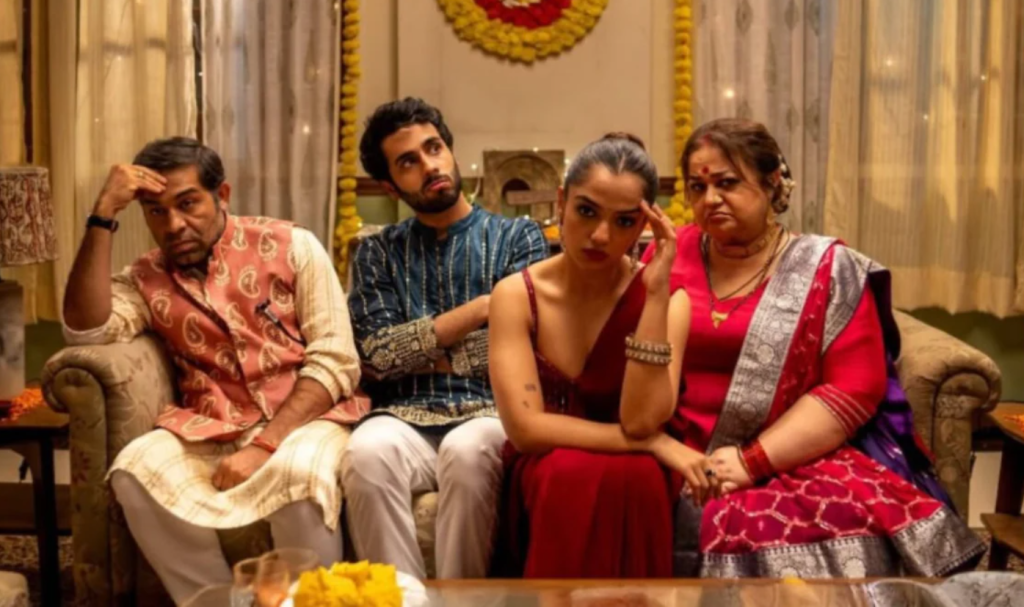
Prince and Family

I think it’s safe to say I’m seriously craving a good comedy film. The genre seems to be fading in Indian cinema. I’m not enjoying that shift one bit. Remember the Andaz Apna Apna era? Pure classic. Even Malayalam cinema had its fair share of timeless comedies that still hold up today. That comedy void is exactly what led me to subscribe to Zee5, just to watch the Malayalam film Prince and Family.

To be honest, I’ve become quite disconnected from new movie releases. Life in your 40s tends to be more news-oriented and less in touch with the entertainment world. And to make it worse, the kind of feel-good content I enjoy seems to be rare these days. I was brought up in the era of Yash Chopra and Karan Johar movies. So it’s natural that I miss the soft aesthetics of good ol’ Bollywood romance and the comedy movies of Malayalee actors like Mohanlal and Sreenivasan.

Considering my disconnect, I actually discovered Prince and Family through Instagram Reels. It was the viral dance entry of Chinju Rani that caught my eye and motivated me to subscribe to Zee5.

What’s It About?

Prince and Family tells the story of Prince Chakkalakkal, a well-known fashion designer in his 40s working in Kerala. He carries the weight of his entire family, including his two unemployed brothers and their families, on his shoulders. Despite his success, Prince remains unmarried, struggling to find the right partner.

Enter Chinju Rani. A hyper-energetic woman in her 20s and a popular social media influencer. Their match is arranged through an online matrimonial site.

Chinju Rani lives for the ‘likes.’ Every decision she makes is filtered through the lens of her followers. So much so that on her wedding night, she’s busy editing and posting her wedding video, while her husband waits and eventually falls asleep.

Can two people from such different worlds build a happy marriage? That’s the heart of Prince and Family.

Thoughts

I enjoyed Prince and Family overall. It had a promising comic tone at the start. I only wish they had stuck with that all the way through. While I understand the film’s intention, that is to highlight the dangers of living through social media at the cost of real-life connections, the shift to a more serious tone felt a bit abrupt. Honestly, the world of influencers offers plenty of material for comedy, and the film could have explored that further in a subtle manner without losing its message.

Some of the emotional scenes felt exaggerated. But not to the point of losing interest. The film kept its entertainment quotient intact throughout.

Dileep’s character is particularly interesting. He’s choosy about marriage proposals, with one preference that seems to be clearly dominant over all others even though it’s not explicitly stated: he wants a young, unmarried, attractive woman. Despite being in his 40s, this mindset makes him dismiss proposals from women his own age with a certain disdain. It’s old-school thinking, but it mirrors real-life attitudes in India that still persist. This is why we see 50-year-old Indian male actors romancing 20-year-olds on-screen, while actresses of the same age group play their mothers.

The real star of the movie, though, is Raniya Raanaa. Some might say she’s overacting, but I think she nails the hyper energy of a social media influencer who lives for the camera. Her performance is full of life, and she handles emotional scenes with ease. Siddique and Bindu Panicker are excellent in their supporting roles as well.

All in all, Prince and Family is worth a watch. Just don’t expect too much logic or nuance. It’s streaming now on Zee5.