Netflix Movie Review: Khufiya

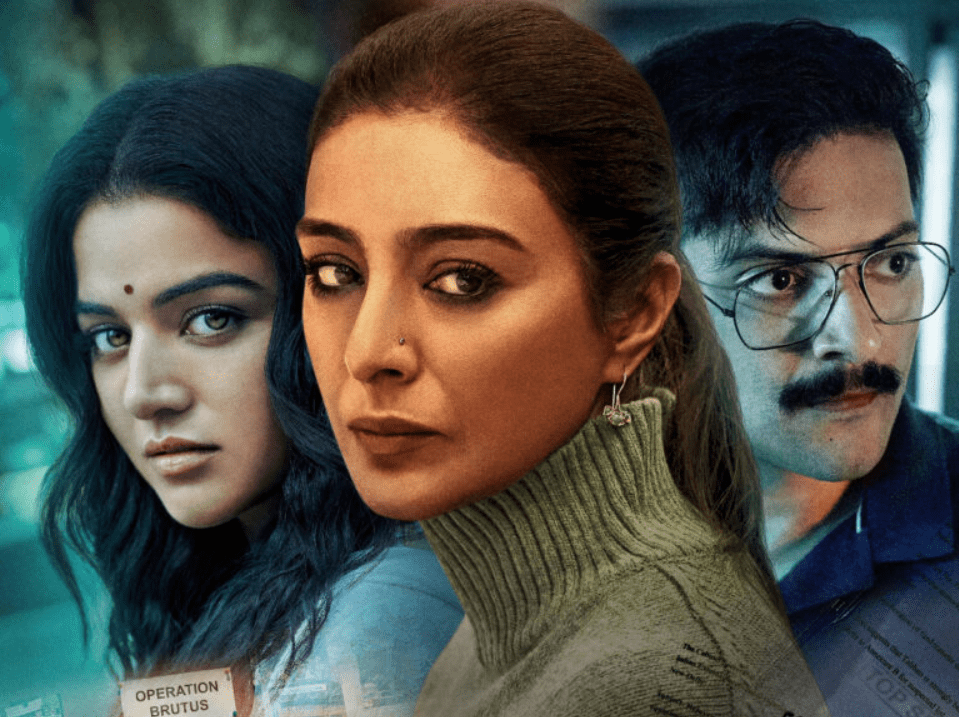
Khufiya movie poster

You won’t always find the newest movie or series reviews here. My watchlist is long, and what I finally pick to watch could have been released years ago. That’s how I ended up with Khufiya. In fact, I didn’t even choose it myself, AI did. I simply shared my watchlist because I couldn’t decide what to watch next, and all the options looked interesting. The AI randomly picked Khufiya for me, and I’d say it did a pretty good job.

What’s It About?

An Indian R&AW agent loses a teammate during a failed mission. When the agency discovers there’s a mole in their ranks, they set a trap to catch him, but the plan takes an unexpected turn.

Thoughts

I really enjoyed this movie. It keeps you engaged throughout. Wamiqa Gabbi is the real standout here. Tabu delivers a solid performance, though I wouldn’t call it one of her finest. Wamiqa’s role is the most layered, and she plays it convincingly. There’s also a guruji-like character, seemingly inspired by Sadhguru, who is amusing to watch, though some viewers may find him offensive.

What struck me most was how the film portrays the mindset of traitors. Moles often justify their betrayal by claiming they are “saving the country from conflicts” or “working for peace,” even as they leak sensitive information. In real life, too, Indian spies caught selling secrets often give similar excuses, trying to project themselves as heroes rather than wrongdoers. Khufiya captures this psyche well, showing how enemies exploit such individuals by convincing them they are doing the right thing.

Overall, Khufiya is definitely worth a watch. It is streaming on Netflix.

Comedy Movie Review: Prince and Family

Prince and Family

I think it’s safe to say I’m seriously craving a good comedy film. The genre seems to be fading in Indian cinema. I’m not enjoying that shift one bit. Remember the Andaz Apna Apna era? Pure classic. Even Malayalam cinema had its fair share of timeless comedies that still hold up today. That comedy void is exactly what led me to subscribe to Zee5, just to watch the Malayalam film Prince and Family.

To be honest, I’ve become quite disconnected from new movie releases. Life in your 40s tends to be more news-oriented and less in touch with the entertainment world. And to make it worse, the kind of feel-good content I enjoy seems to be rare these days. I was brought up in the era of Yash Chopra and Karan Johar movies. So it’s natural that I miss the soft aesthetics of good ol’ Bollywood romance and the comedy movies of Malayalee actors like Mohanlal and Sreenivasan.

Considering my disconnect, I actually discovered Prince and Family through Instagram Reels. It was the viral dance entry of Chinju Rani that caught my eye and motivated me to subscribe to Zee5.

What’s It About?

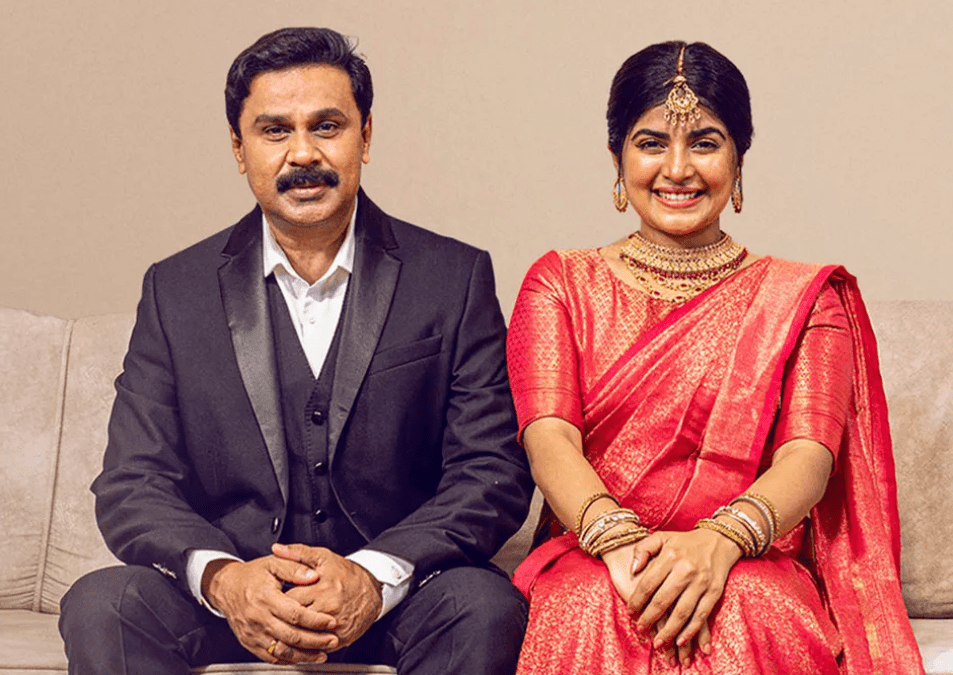
Prince and Family tells the story of Prince Chakkalakkal, a well-known fashion designer in his 40s working in Kerala. He carries the weight of his entire family, including his two unemployed brothers and their families, on his shoulders. Despite his success, Prince remains unmarried, struggling to find the right partner.

Enter Chinju Rani. A hyper-energetic woman in her 20s and a popular social media influencer. Their match is arranged through an online matrimonial site.

Chinju Rani lives for the ‘likes.’ Every decision she makes is filtered through the lens of her followers. So much so that on her wedding night, she’s busy editing and posting her wedding video, while her husband waits and eventually falls asleep.

Can two people from such different worlds build a happy marriage? That’s the heart of Prince and Family.

Thoughts

I enjoyed Prince and Family overall. It had a promising comic tone at the start. I only wish they had stuck with that all the way through. While I understand the film’s intention, that is to highlight the dangers of living through social media at the cost of real-life connections, the shift to a more serious tone felt a bit abrupt. Honestly, the world of influencers offers plenty of material for comedy, and the film could have explored that further in a subtle manner without losing its message.

Some of the emotional scenes felt exaggerated. But not to the point of losing interest. The film kept its entertainment quotient intact throughout.

Dileep’s character is particularly interesting. He’s choosy about marriage proposals, with one preference that seems to be clearly dominant over all others even though it’s not explicitly stated: he wants a young, unmarried, attractive woman. Despite being in his 40s, this mindset makes him dismiss proposals from women his own age with a certain disdain. It’s old-school thinking, but it mirrors real-life attitudes in India that still persist. This is why we see 50-year-old Indian male actors romancing 20-year-olds on-screen, while actresses of the same age group play their mothers.

The real star of the movie, though, is Raniya Raanaa. Some might say she’s overacting, but I think she nails the hyper energy of a social media influencer who lives for the camera. Her performance is full of life, and she handles emotional scenes with ease. Siddique and Bindu Panicker are excellent in their supporting roles as well.

All in all, Prince and Family is worth a watch. Just don’t expect too much logic or nuance. It’s streaming now on Zee5.

Hindi Movie Review: Aap Jaisa Koi

Aap Jaisa Koi on Netflix

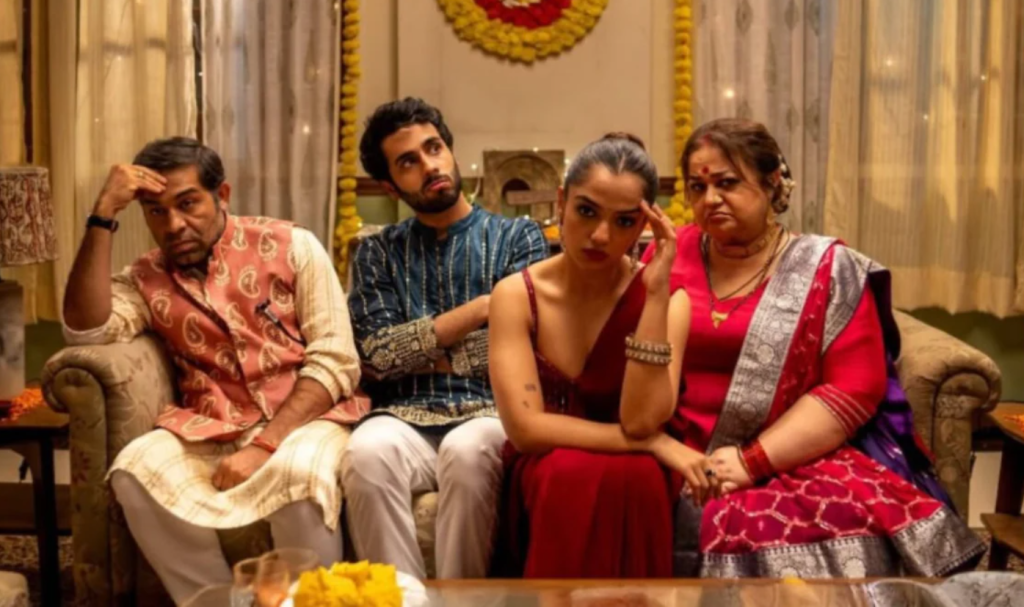
A socially awkward 42-year-old Sanskrit professor from Jamshedpur meets a free-spirited 32-year-old Bengali French teacher through an arranged marriage setup. He’s orthodox, she’s liberal. This description may feel like the movie is based on a war of languages (keeping up with the trend). But it’s not. At its core, Aap Jaisa Koi delves into the multifaceted nature of relationships. It brings a fresh and nuanced take on modern love, tradition, and society’s double standards.

I’ve often wondered why our romantic cinema sticks to the same old formulas when dynamics within relationships and individuals involved are far more complex. Our movie industry usually focuses on the stereotypical boy-meets-girl story, where the characters fall in love, and then external forces play the villain. There are no other angles to the story. In real life, the friction often lies within the relationship itself – compatibility issues, cultural/morality issues, and more. Such issues are often subtle at first but end up being harder to fix. They aren’t dramatic but quietly playing in the background and are dismissed as unimportant. But each day, it chips away at a part of your soul. Some deal with it openly, whereas others act ignorant to maintain harmony in the household.

There are a lot of relationship angles left unexplored in Indian cinema. Someday, I’d love to see a romantic story about two divorcees giving love a second chance. That dynamic carries a quiet vulnerability: the fear of repeating past pain, the hesitation of stepping into something that once broke you. It’s raw, real, and deeply human. However, just like how society stigmatizes divorcees, I think our Indian cinema stigmatizes them too. India is not a country devoid of divorcees, yet they are rarely shown in cinema.

Unlike many Indian films, K-dramas explore these internal dynamics with depth and nuance. That’s why Aap Jaisa Koi felt refreshing. It brings a romance that’s familiar in setting but different in treatment. It spends extra time focusing on emotions and character development. The dialogues are so warm and real, they might just bring tears to your eyes. A few lines had that effect on me. Not because they were sad, but because they were crafted with such thoughtfulness. It felt like poetry. If you’re a non-Indian reader who enjoys K-dramas for their focus on emotions, give this one a shot. I think you’ll genuinely enjoy it.

Aside from the crackling chemistry, the movie has some dreamy music. Mila Tujhe is my favourite of the lot. In a romantic drama, music plays a crucial role. It should be tender, laced with hope, longing, and desire, not melancholy, to heighten emotions and pull you in completely. That’s exactly what the Aap Jaisa Koi soundtrack does. The couple’s chemistry draws you in, and the music wraps around it, making the experience all the more immersive.

Fatima Sana Shaikh is an actress I’d love to see more of. Whether she’s playing a traditional hijabi in Modern Love: Mumbai or a fiery Bengali in Aap Jaisa Koi, she brings authenticity to every role. There’s so much untapped potential in her, and it’s time filmmakers gave her the space she truly deserves. Her character in Aap Jaisa Koi is a feminist, yet deeply rooted in tradition. She looks ethereal in beautiful, traditional sarees. In Bollywood, modern women are often stereotyped as party-goers in Western clothes, but this film takes a different route. It reminds us that modernity is a mindset, not a dress code. You can be progressive and still stay connected to your culture. Meanwhile, many who dress trendy are found to be regressive in their thoughts. Clothes are not a true indicator of someone’s personality. To know a person, you need to know their thoughts.

Madhavan, as always, does full justice to a role that’s equal parts comical and endearing. His comic timing is spot on, and he effortlessly switches expressions, reminding us once again of his natural screen presence.

Aap Jaisa Koi is a feel-good romance that stays with you. I enjoyed it. The movie is streaming on Netflix.

Dear Indian Filmmakers: It’s Time to Bring Back Superficiality in Cinema

Dilwale Dulhania Le Jayenge

When was the last time you really switched off and relaxed while watching an Indian movie? I remember getting lost in a make-believe world whenever I watched Yash Raj or Karan Johar films. But sadly, over time, these filmmakers were pushed to make more realistic movies, at the cost of “superficial” ones.

Right now, I can’t seem to switch off completely while watching an Indian movie and drift into a world completely different from mine. I don’t watch movies for reality; I watch to escape it. If I wanted reality, I’d just take a walk outside, not sit down for a movie. But times have changed, and I don’t think we can expect Indian filmmakers to go back to creating movies with grand sets, stunning scenery, and actors with natural beauty and amazing chemistry. The current trend is all about violence, gore (often to the point of regression), and hyper-realism (and plastic surgeries).

Nowadays, if by chance a superficial movie gets released, we have to endure actors with little to no acting skills or the kind of magical chemistry we used to see with iconic pairs like Shahrukh Khan-Kajol, Shahrukh Khan-Juhi, basically Shahrukh with any actress, or Aamir-Juhi.

It’s a very dull era for the Indian film industry when it comes to making feel-good movies. Movie-watchers like myself, who want to escape into a world that isn’t focused on realism, end up turning to Korean or Pakistani dramas. The fact that so many Indian viewers are enjoying these shows proves there’s still an audience for feel-good romantic movies. The demand is there, but unfortunately, the quality supply is missing in the Indian film industry.

Part of the blame also lies with the audience, who now look for realism even in make-believe movies. If many of the romantic Korean or Pakistani dramas were released in India, they’d probably face intense criticism, with thousands of critics dissecting every single scene and evaluating it based on reality. This is why feel-good movies from the past (except maybe Wake Up Sid) are heavily criticized in today’s India. Such criticism discourages filmmakers from making more feel-good movies. Movie watchers like me, who yearn for superficial, romantic cinema, end up feeling dejected in the process.

I hope we get to see some romantic films, but since filmmakers are minting more money and fame from realistic and violent movies, I don’t expect the trend to change anytime soon.

We have good-looking actors like Ibrahim Ali Khan making their debut probably this year. Let’s hope he gets cast in some feel-good movies and his acting skills are as impressive as his looks. However, the current crop of actresses seems too focused on plastic surgeries, leading to a lack of diversity in looks. In the 90s and early 2000s, actresses like Kajol, Juhi, Sonali Bendre, Madhuri Dixit, and Raveena Tandon had distinct appearances. Sadly, that can’t be said now. So, the question arises—who will pair well with Ibrahim Ali Khan in a romantic movie? No one really comes to mind, except maybe Pratibha Ranta.

Quick Bytes: As a Centrist Hindu, I Did Not Find Netflix’s Maharaj Problematic

Netflix Maharaj Review

Indian politics cannot be easily categorized as “right” or “left” in the truest sense. However, it is easier for an apolitical person to understand whom you are referring to when you mention “left” (parties like CPI(M), but we generally include any non-BJP party in India) and “right” (NDA). I would call myself a centrist as I find a lot of things from both sides problematic. I can never swear allegiance to any one party, as I often look at the party’s performance and form my judgments based on that.

Now, the left-leaning crowd is naturally praising Maharaj, Netflix’s new movie starring Aamir Khan’s son, Junaid Khan. In contrast, the right-wing supporters are asking Hindus to boycott the movie. Truth be told, I haven’t read much about the Maharaj libel case, so I cannot pinpoint with utmost certainty which part of it is anti-Hindu. My opinion here is based on what I saw in the movie. Here’s why I, a centrist Hindu, did not find the movie problematic.

In Maharaj, Karsandas is portrayed as a reformist who is a practicing Hindu, but he asks questions and is not swayed easily by godmen. There is a monologue at the end where he says he fell more in love with his religion when he studied it in detail. He accuses the religious leader, Maharaj, of misusing it, misinterpreting the Sanskrit Vedas to further his vulgar agendas. This is not anti-Hindu in any manner. The court must have thought the same as well, which is why it got a clean chit.

The only material I referred to after watching the movie was a Wikipedia article on Karsandas. Interestingly, I found the following information, which was not covered in the movie.

He was deeply influenced by the English culture to an extent that he had dislike for institutional religious authority and had penchant for reading Christian sermons and later started translating English sermons & conduct manuals into Gujarati, thereby also bringing a distinctively Protestant ethic into Gujarati’s cultural world.

I am of the belief that community members and religious leaders should openly criticize the bad elements of their religion. If there is an extremist misusing and spoiling the name of your religion, why not openly oppose them? This applies to all communities. It’s only when you distance yourself from the fringe elements of religion that society truly reforms. As long as haters get support in the form of words or silence, radicals will continue to flourish.