Kerala Story 2 Trailer: My Honest Take on Extremism, Politics, and the Real Kerala

Kerala 2 Story Photo

I finally watched The Kerala Story 2 trailer because the noise around it became impossible to avoid. I had stayed away from watching it till then, hoping we would collectively ignore it.

The trailer begins with a call to “convert India into a Muslim nation.” That kind of rhetoric comes from extremist outfits like PFI, not from everyday Muslims. It’s in PFI’s “India 1947” doctrine, available online. But the moment a film shows Islamist extremists, people immediately react as if the entire Muslim community is being insulted. That jump is what frustrates me. The trailer is clearly about extremists, not ordinary people (also confirmed by the makers).

I keep seeing reels saying, “Where in Kerala is this? This is nothing like Kerala.” Exactly. It is not about the regular Muslims we meet every day. It is about fringe groups.

When the movies, Bombay or Empuraan, showed Hindu extremists attacking Muslims, no one claimed the film insulted all Hindus, and that it was an insult to Bombay and a generalization. When films show fringe Hindutva groups, we do not accuse the filmmakers of attacking every Hindu. So why is criticism of Islamist extremism treated as an attack on Muslims as a whole? This inability to separate ideology from community makes any honest conversation impossible. And political groups thrive on that confusion.

I thought the film would be ignored this time. I watched the trailer only to understand the hype. Otherwise, I would not have bothered. And once again, the makers got free publicity because controversy sells.

The director’s NDTV interview

In an NDTV interview, the director was asked why he named it after Kerala again even though the film covers incidents in multiple states. His answer was very simple. He said he got attention for the first film because of the name “Kerala.” So he used it again to get the same effect. It was a marketing strategy. And we fell for it.

He also mentioned that the film connects certain cases to networks like Chhangur Baba’s. According to him, these networks have a specific goal in mind. Again, he presented this as the reasoning behind the storyline, not as a statement on all Muslims.

The song and the real-life cases

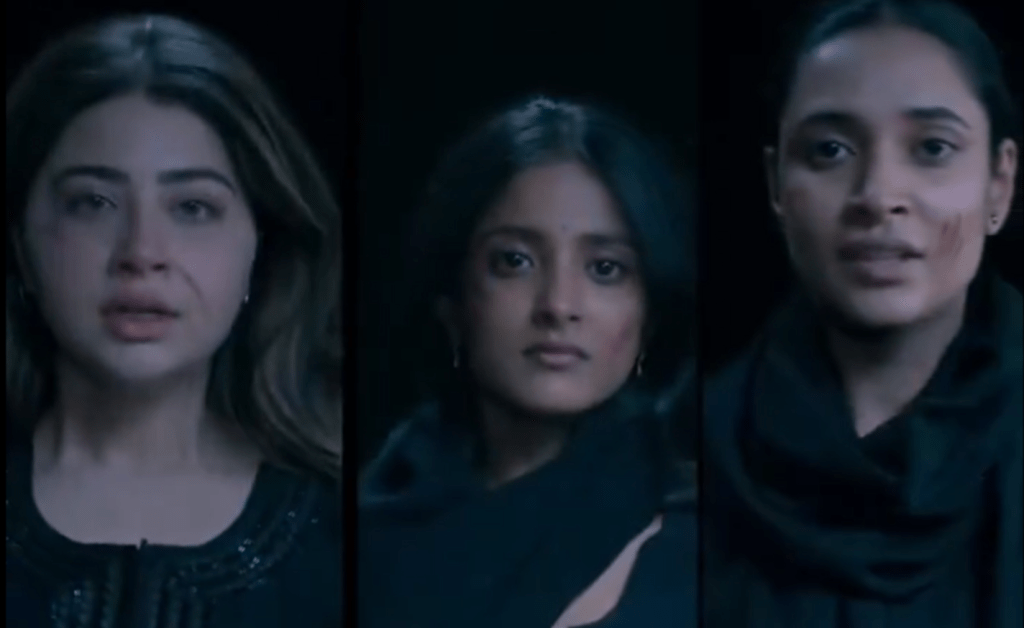
The song O Maayi Ri, sung beautifully by Shreya Ghoshal, reminded me of the emotional interviews with the mothers of victims (some notable victims include Nimisha, Sonia Sebastian, and Merrin Jacob). They begged for their daughters to be brought back from ISIS camps in Afghanistan. The girls, as per officials, were too radicalized to be brought back home. No country easily brings back citizens who have a soft corner for a terror group. Many countries around the world refuse repatriation because of national security concerns.

And Kerala has had some troubling conversion-related cases too.

  • There is the case of Sona Eldhose, who was allegedly forced to go to Ponnani for conversion.
  • There is also the story of Kamala Surayya, discussed in the book The Love Queen of Malabar. According to the book, she was encouraged to convert with the promise of marriage made by a mainstream political figure. Once she converted, he backed away. The book also mentions foreign funding from the Gulf that influenced the situation.

These cases do not define Kerala as a state, but they exist. They cannot be erased from the larger conversation.

Kerala’s habit of defending itself too quickly

What irritates me is how quickly Keralites jump into defensive mode. The moment someone brings up extremist incidents or conversion cases, people post “This is the real Kerala story” along with photos of communal harmony and Onam celebrations. Those moments are beautiful, but they do not cancel out the darker stories. Kerala can be progressive and safe while still having pockets of extremism. That duality is real. Acceptance does not mean defamation. In fact, acceptance is the first step toward accountability.

My issue with the beef discourse

Beef in Kerala has become a political symbol. I eat beef, but I am not here to prove that “I am a Hindu who eats beef. I’m so cool.” I am also not going to claim that Hindus who eat beef are not real Hindus. Those extremes mean nothing to me.

There are actual cases of people being forced to eat beef by partners or relatives. A basic online search shows plenty of such stories. So mocking that scene in the trailer becomes insensitive because coercion is not fictional for some people.

What makes the discourse more insensitive is the constant use of beef as a political prop in Kerala. Historically, beef has been used to hurt Hindu sentiments and harass certain groups. As someone who eats beef, I have never felt proud of it in a political sense. It is food. We can all eat what we like, but weaponising it feels disrespectful.

Even the MSF, the youth wing of the Muslim League, called out the SFI beef fests happening on campuses. They said it is insulting to those Hindus in Kerala who consider beef unholy. They added that they themselves would find it offensive if there were pork fests. Whether political or not, they made a fair point. Sensitivity should work both ways.

The political angle behind the controversy

This is something I have been observing closely. In my opinion, the controversy did not naturally explode. It was amplified politically. The first major reaction came from CM Pinarayi Vijayan on X. Once he reacted, his supporters followed, and the discussion spiralled from there.

I believe his response was a political strategy to position himself as the protector of secularism in Kerala. He had lost support earlier due to his association with Vellapally Natesan and also the Sabarimala gold case. His tweet seemed carefully framed as the Kerala election is near. He even highlighted that Kerala has not seen any communal riots in the last ten years, which also happens to be the period during which he served as Chief Minister.

Whether intentional or not, the film’s visibility multiplied because of this political reaction.

Why the title still annoys me

The title “Kerala Story Goes Beyond” suggests that Kerala is some central hub of Islamist extremism, which is simply not true. Kerala is safe. Hindus are safe. Fringe groups exist, but the narrative of “Hindu genocide” is false.

At the same time, filmmakers have always used region names to provoke reactions.
Movies like Bombay did not lead anyone to generalise the entire city.
Shows like Delhi Crime did not make people say Delhi is entirely unsafe.

But names like Kashmir or Kerala grab attention instantly. Filmmakers know this. It is part of the business. And audiences fall for it every single time.

Final thoughts

Kerala has many stories of harmony, culture, and peaceful coexistence. But Kerala also has some unsettling stories involving extremism, manipulation, and political strategy. Both realities can exist together. Loving a state does not mean denying the uncomfortable parts. Real progress and intellect come from honest acknowledgement.
Kerala Christians and Politics: Which Parties Really Stand With Them?

A picture of a church in India for an article on Kerala Christians and politics

As someone who’s chronically online and keeps up with news from all kinds of sources, mainstream, regional, left, and right, I’ve noticed something important: Christians in Kerala don’t really have a go-to political party anymore.

For a long time, people assumed the Indian National Congress (INC) was the party in Kerala that understood what every community wanted. But that idea seems to be changing fast on the ground.

Communal Conflicts in Kerala: Who Supports Whom?

If you’re new to Kerala politics, here’s a simple way to understand how parties respond to communal issues here:

  • Hindu vs Minority: CPM and Congress usually back the minority community.
  • Upper Caste Hindu vs Lower Caste Hindu: CPM and Congress generally side with the lower caste.
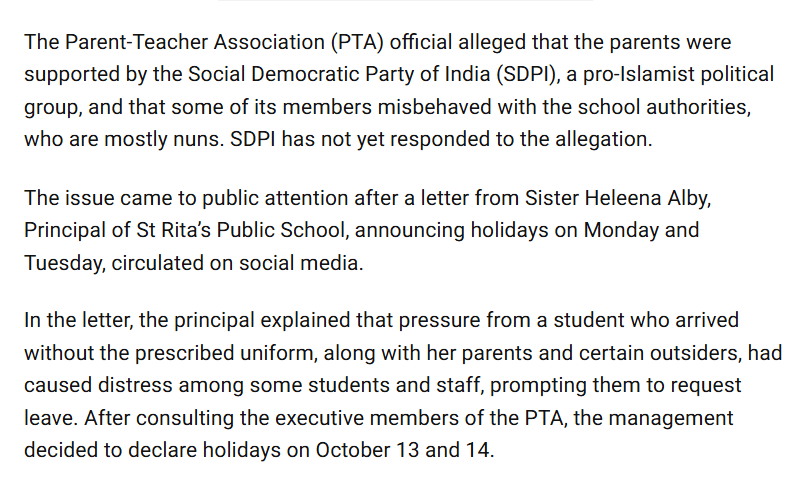
  • Christian vs Muslim: CPM and Congress often stay neutral at first, saying things like “we’ll look into it,” but in the end, they tend to side with Muslims. Examples include the Munambam Waqf issue, Professor Joseph’s case, Sona Eldhose’s conversion, and incidents involving SDPI bullying, such as the hijab case at the Christian-run St Rita’s school in Kochi (details in the image below).
Hijab controversy in Kochi school
News Source: “Hijab controversy forces school in Kochi to close temporarily after parents’ protest” (Mathrubhumi.com)

If you look at any case in Kerala, the pattern more or less stays the same. I’m not sure about regional politics in other states, but I suspect it’s similar elsewhere.

While BJP clearly positions itself as a Hindu party, there’s a growing sense in Kerala that Congress and CPM lean pro-Muslim. Why? It’s not really about religion. It’s about vote-bank politics. Christians are a minority among minorities in Kerala, so pandering to them doesn’t win many votes and can even cost support from other minority groups.

Growth of Chrisanghis in Kerala

Now, in Kerala, there’s a growing group called “Chrisanghis,” a term left-leaning voices like Arundhati Roy have used. These are Christians who support the BJP. Arundhati recently warned Christians in Kerala not to become Chrisanghis, citing conversion attacks in the North as a concern.

So why do some Christians support the BJP? It’s because they view Islamist groups like SDPI and Jamaat-e-Islami as a bigger threat than BJP. Many point to the persecution of Christians in countries like Nigeria by Islamist groups and feel that, compared to such threats, the BJP’s Hindutva agenda poses a lesser danger. At the same time, parties like Congress and CPM often downplay or ignore the activities of these Islamist groups in India, mostly for political gain, leading some Christians to see BJP as a safer option.

Congress support for Jamaat-e-Islami
News Source: “Congress in a fix as Jamaat arm readies to back theocratic state” (NewIndianExpress.com)

Notably, Jamaat-e-Islami has frequently been in the news, even recently, for persecuting minorities in Pakistan and Bangladesh. In India, its branch presents a secular image, likely to gain acceptance and influence within mainstream politics, using it as a pathway to gain power.

It’s also true that Kerala’s two mainstream parties have largely ignored such concerns from the Christian community. Their typical response is often, “Don’t fall for RSS/BJP propaganda,” even when the issues have nothing to do with RSS or BJP.

Thoughts

So what can the Christian population in India do in this situation? On one side, there’s a pro-Hindu or “Hindutva” party that will never fully accept conversions under “freedom of religion,” and on the other, there are parties that haven’t supported Christians when they faced threats from Islamist groups.

From my perspective, Christians should keep all parties guessing about where their votes will go. They shouldn’t strongly back any party, since none fully meets their needs. Take the Munambam Waqf issue, for example: the removal of Section 40 in the Waqf Bill allowed the Kerala High Court to rule the Waqf claim over Munambam land as illegal, protecting Christian landowners. Congress leaders like Hibi Eden tried to persuade residents to drop their case, saying nothing would come of it, while the only BJP MP from Kerala, Suresh Gopi, stood by the people, largely comprising Christian fisherfolk, and supported the amendment that ensured their land rights.

When missionaries face attacks by far-right Hindus in the North, that’s when Opposition parties step in. But in cases like the Chhattisgarh nuns’ arrests over alleged conversions, the local Congress in Chhattisgarh hardly protested, as taking a stand would have cost them votes. On the other hand, in Kerala, protesting the arrest of the nuns would have earned them support, which is why several Opposition leaders from Kerala traveled to Chhattisgarh to show solidarity.

This shows that Christians can’t rely fully on any party and should strategically make their political influence felt.

This is how politics works: there are no fixed principles for political parties. They act based on the local political context. Christians in India should remember this and avoid fully backing or rejecting any party. Instead, they can use this knowledge strategically and wisely, since different parties support them in different situations.

***

Photo by Pratheesh S

Communal Harmony in India: Easier Than We Think?

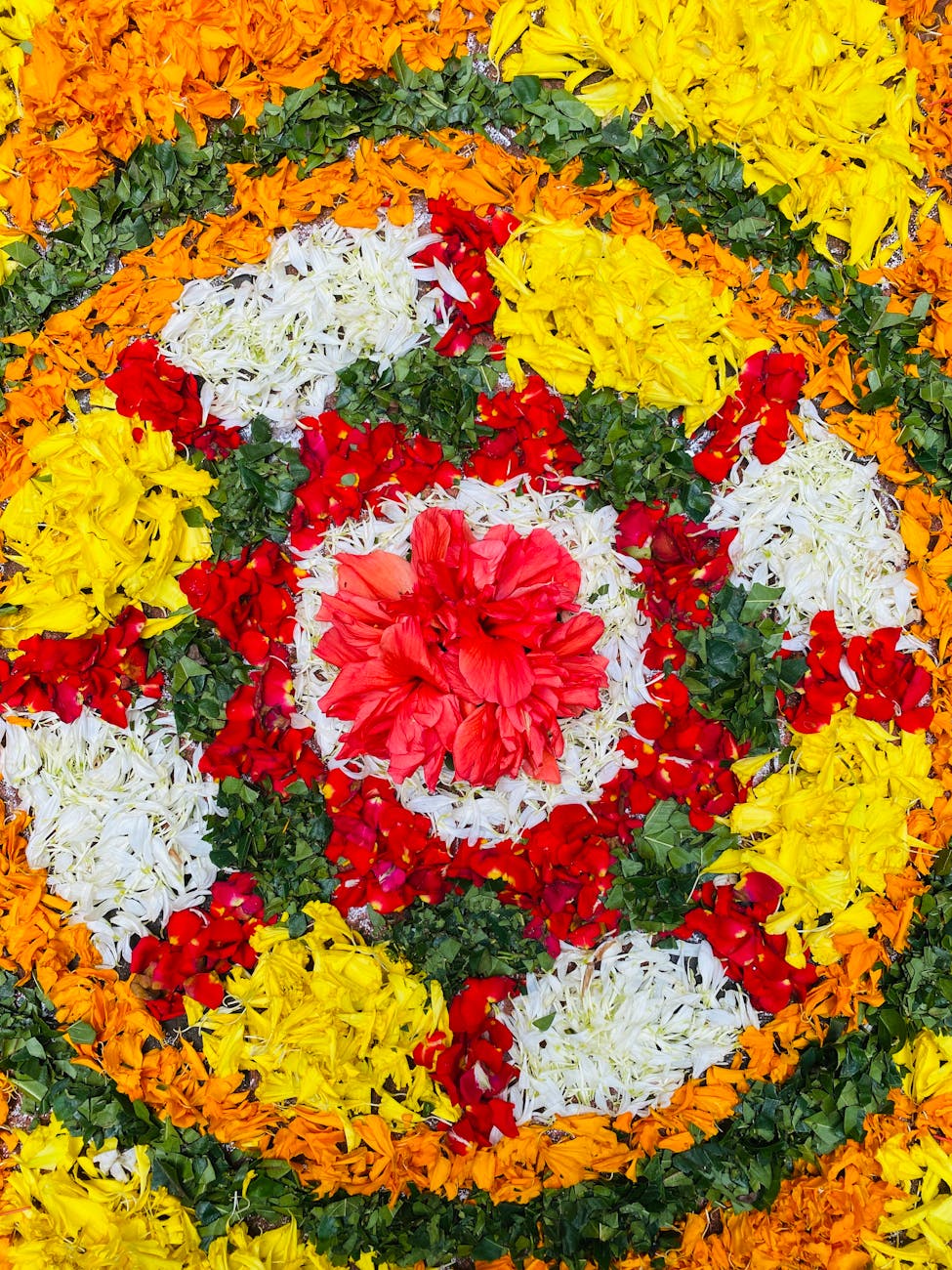
Onam flowers

After celebrating Onam and engaging in numerous social activities, my introvert battery hit rock bottom. I needed a desperate recharge. So what do I do? Naturally, I retreated to every introvert’s most favourite new-gen comfort zone: scrolling endless Instagram reels. Nothing says “I’ve had enough of people” quite like being a couch potato, locked up in your house, while going through everyone else’s social lives.

As I scrolled through the multiple Onam-related posts, I couldn’t help but appreciate the inclusivity in Kerala. Malayalees across religions, whether they are Hindus, Christians, or Muslims, celebrated Onam with equal enthusiasm. Everyone welcomed Mahabali with open arms. A few voices did try to stop their communities, saying Onam is a “Hindu festival,” but not many paid attention. That’s a good sign. People are choosing to step out of religious bubbles to celebrate together.

Still, Kerala, often praised as a secular state, has been showing sporadic worrying signs of exclusion. Just before Onam, a teacher told students not to participate in the festival because “our religion doesn’t allow it.” The outrage led to her suspension, but this mindset isn’t limited to one person. How widespread is the thought? No one can quantify. It’s impossible to analyze each and every Indian’s thought. However, there is an increasing number of cases that advocate for exclusionary behaviour. You are penalized for celebrating other festivals, or for respecting someone else’s god, or for chanting something as simple as “Bharat Mata ki Jai.”

India guarantees freedom of religion for all communities. But if we use that freedom only to exclude ourselves from others, we risk creating deeper divides. True communal harmony comes from participation: joining in festivals, enjoying each other’s food, and refusing to see other faiths as “untouchable.”

For India to stay secular, this effort has to come from all of us. We’ve come far since independence, but there’s still a long way to go. It’s up to us to ensure religion doesn’t become a wall, but a bridge.

***

Photo by Saran Indokera