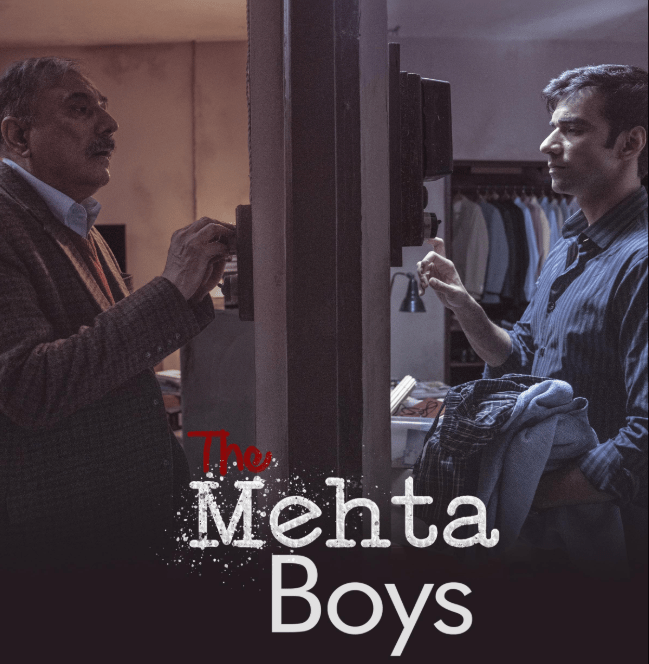
Wholesome movies are rare these days in Indian cinema, making them feel like an oasis in a desert when they do appear. The demand for feel-good movies is higher than ever, as seen in the success of re-releases like Laila Majnu and Sanam Teri Kasam, which prove that Indian audiences are eager for romance and uplifting cinema. It is during such a time that The Mehta Boys has arrived on OTT (Amazon Prime).
The Mehta Boys is a poignant, understated father-son drama centered on their dysfunctional relationship. Open communication and emotional expression are not their strengths, often leaving them struggling for words. Boman Irani portrays a grieving husband learning to cope with his loss, while Avinash Tiwary plays his talented yet self-doubting son. The heart of the story lies in their journey toward accepting each other’s imperfections.
We often see such father-son dynamics play out in real life. In many Indian families, open displays of affection are rare, making the relationship feel more formal than familial. Conversations typically revolve around daily chores and future plans, with emotions deliberately left out. The Mehta Boys captures this dynamic perfectly, portraying characters who have much to say but choose to hide behind silence.
Boman Irani has done an exceptional job as a first-time director, leaving me eager to see what he creates next. Avinash Tiwary, as always, excels, effortlessly bringing out the angst, anxiety, and awkwardness of a character who gradually finds his voice. He shines, leaving you wondering why you don’t get to see him on-screen more frequently. Instead, audiences are repeatedly offered star kids given endless chances to prove themselves, while talented actors like Avinash, who have already showcased their brilliance in just a film or two, are left waiting. It’s unfair, but all one can do is wait for movies like The Mehta Boys to arrive, offering a well-deserved cinematic experience.
Hania Aamir plays the character of Sharjeena in Kabhi Main Kabhi Tum
I came to know about the Pakistani drama Kabhi Main Kabhi Tum from YouTube recommendations. This was one of those times when YouTube got its algorithm right.
I wasn’t initially sure whether I would like the drama, but once I started, I was hooked. It is no surprise that Kabhi Main Kabhi Tum has gained popularity in India. The reasons are plenty.
Focus on Relationships
The story focuses on everyday relationships. It does not aim to convey any profound social message. The drama is not entirely progressive, but as the audience, the onus lies on us to accept the fictional world of those characters.
We are at an age where we look into political correctness in every movie or drama. This mentality somehow has ruined the movie-watching experience for people like me who prefer rawness over perfection. Indian filmmakers have become too cautious and afraid to offend, which is understandable considering the polarized times we live in. However, they can still develop unique story ideas that are family-oriented.
Most Indian movies and dramas getting appreciated nowadays are dark. If, by chance, a love story gets released, people are quick to dismiss it as cringe, misogynistic, or fake. Box office numbers also reveal that romantic movies have lost their appeal in India. Or maybe it’s because we are not coming up with a captivating love story. Due to this, many filmmakers stay away from making out-and-out romantic, feel-good movies.
So, considering the lack of romantic content, it’s understandable why many Indians are drifting towards Korean and Pakistani dramas like Kabhi Main Kabhi Tum that keep the old-world romance and family-centered stories alive.
The primary takers of romance are women. Most of us understand that the romance shown in movies is make-believe and not realistic, yet we crave a world that we can deep-dive into when we are stressed. Unfortunately, there are not enough choices for us nowadays. This is why dramas like Kabhi Main Kabhi Tum come as a refresher.
Clean Love Story
Kabhi Main Kabhi Tum meets the bill of sweet, clean love stories that we used to enjoy in the past. No one is making out the moment they meet; no one has an “I am cooler than you” attitude. The chemistry is there for your eyes to see. They look lovingly at each other with slight smiles, enjoy quiet dinners sitting on their bedroom floor, and mesh into each other’s lifestyles even if they are poles apart. Small things that make a significant impact.
Beautiful and Relatable Styling
I absolutely love Sharjeena’s free-flowing Pakistani outfits. The styling gives you a feeling that you, too, can pull off the outfit. The hair is not overstyled; the fit is comfortable and suitable for all body sizes, and there is a feeling of relatability when you see it. Nothing seems out of reach for the regular person.
No Realism Fatigue
I personally do not wish to experience realism fatigue while watching a movie or drama, so a good balance of relatability and aesthetics is ideal. To clarify, you might have seen several scenes in Indian dramas/movies shot in the bathroom where the main character is shown answering nature’s calls. They are realistic but not aesthetic. So, in my opinion, such scenes are better avoided in a make-believe world. We don’t need to know if the character peed or pooped or has a runny nose or sweaty face. Some things are better left for the real world.
Conclusion
I believe Indian filmmakers should take note of the popularity of Korean and Pakistani dramas in India. They should recognize that there is a market for such content, which they are currently neglecting to cater to. To create such wholesome dramas or movies, first and foremost, we need better storytellers. Korean dramas are written by female writers, which brings a unique female perspective to the stories. Perhaps Indian filmmakers should consider hiring female writers to bring back the charm of feel-good content in our films.

 The Monkey Dilemma
You must be logged in to post a comment.