Personal Takeaways from American Manhunt: Osama bin Laden

American Manhunt: Osama bin Laden

I’ve watched many documentaries on Bin Laden, but what sets American Manhunt: Osama bin Laden on Netflix apart is that the U.S. intelligence officers themselves are narrating the incident. It shows a side of intelligence officers we rarely see or acknowledge: one that’s vulnerable, emotional, and capable of error, just like any of us.

The fact that they faced extreme guilt after 9/11, plus humiliation from those who expected them to have superhero capabilities, shows us that intelligence work is a thankless job. You’re not remembered for the hundred attacks you prevented, but for the one you didn’t.

We tend to view intelligence agencies as all-knowing, supreme beings capable of preventing every threat. But they are made up of people just like you and me – flawed, prone to mistakes, and constantly learning how to address loopholes.

Almost every terrorist attack in the world has been labelled an “intelligence failure.” In most cases, including Mumbai’s 26/11, intelligence agencies had some idea that an attack was likely. But without knowing exactly when, where, or how, they couldn’t act decisively. Acting on vague information risks wasting resources and creating false alarms.

We owe our intelligence officers greater respect and appreciation, not just criticism.

Another key takeaway was the deep distrust the U.S. had toward Pakistan. They chose not to inform Pakistani authorities about the Osama bin Laden raid, fearing it would be sabotaged. This seems to negate Pakistan’s constant claims of being a victim of terrorism rather than a supporter of it. After the raid, the Pakistan army tried to shoot down the U.S. Navy SEALs’ helicopter. If they are actively involved in the fight against terrorists, why resist when others take them down for you?

One U.S. intelligence officer mentioned that Al Qaeda had regular contact with Pakistani nuclear scientists. It makes you think of Pakistan’s constant nuclear blackmail. Are they using it against the U.S. as well by implying that if Pakistan collapses or goes bankrupt, its nuclear arsenal could fall into the wrong hands (such as the terror groups that want to take down America)? Is this how they get their IMF loans approved? Perhaps this fear is why the U.S. continues to be soft on Pakistan, even though it sheltered the prime suspect in the 9/11 attacks. We will never know.

An Ode to The Last Girl

Nadia Murad had luck on her side the day she escaped ISIS. The door was unlocked, and no guards surrounded the area. She says their negligence could have stemmed from the assumption that she was too weak, both physically and mentally, to attempt an escape. To add to the luck factor, the family she eventually sought help from while on the move turned out to be empathetic rather than deceitful, a fortunate outcome not experienced by most Yazidi women who tried to escape.

Keeping luck aside, Nadia exhibited a quality that day uncommon for someone in her position – courage. To muster the strength and determination to capitalize on an opportunity, especially when you are exhausted, is heart-wrenchingly admirable.

The Last Girl chronicles the harrowing journey of a woman who had to go through hell on earth as the perpetrators sought heaven on “the other side.”

Nadia’s story serves as a lesson – never take your peace or soldiers of the nation for granted. You are safe because the soldiers of your country are spending countless hours and energy to ensure no harm comes your way. You realize the importance of this only when you read and research extensively, go through history, and pay attention to actions.

The book is heartbreaking. You feel incredible sadness for Yazidis. But you also feel sorry for the people who get radicalized to the extent that they end up thinking violence is the answer. How can we save them? How can we protect our youngsters? How can we extinguish their hate and make them realize we are all, ultimately, children of the same universe?

Reader discretion is advised: The following content may contain sensitive or mature themes that could be distressing to some individuals.

Here are some of the quotes from the book that caught my attention:

People say that Yazidism isn’t a “real” religion because we have no official book like the Bible or the Koran. Because we pray toward the sun, we are called pagans. Our belief in reincarnation, which helps us cope with death and keep our community together, is rejected. Some Yazidis avoid certain foods, like lettuce, and are mocked for their strange habits. Others don’t wear blue because they see it as the color of Tawusi Melek and too holy for a human, and even that choice is ridiculed.

We (Yazidis) would, over generations, get used to a small pain or injustice until it became normal enough to ignore. I imagine this must be why we had come to accept certain insults, like our food being refused, that probably felt like a crime to whoever first noticed it. Even the threat of another firman was something Yazidis had gotten used to, although that adjustment was more like a contortion. It hurt.

I used to pray for my own future—to finish school and open my salon—and the futures of my siblings and my mother. Now I pray for the survival of my religion and my people.

For a young Yazidi girl, life only got better after the Americans and the Kurds took over. Kocho was expanding, I was going to school, and we were gradually lifting ourselves out of poverty. A new constitution gave more power to the Kurds and demanded that minorities be part of the government. I knew that my country was at war, but it didn’t seem like it was our fight.

I still think that being forced to leave your home out of fear is one of the worst injustices a human being can face. Everything you love is stolen, and you risk your life to live in a place that means nothing to you and where, because you come from a country now known for war and terrorism, you are not really wanted. So you spend the rest of your years longing for what you left behind while praying not to be deported.

Rape has been used throughout history as a weapon of war. I never thought I would have something in common with women in Rwanda—before all this, I didn’t know that a country called Rwanda existed—and now I am linked to them in the worst possible way, as a victim of a war crime that is so hard to talk about that no one in the world was prosecuted for committing it until just sixteen years before ISIS came to Sinjar.

Everyone thinks Yazidi women are weak because we are poor and live outside the cities, and I have heard people say female fighters with ISIS are, in their own way, proving their strength among men. But none of them—not Morteja’s mother, not even a suicide bomber—was a fraction as strong as my mother, who overcame so many struggles and who never would have let another woman be sold into slavery, no matter her religion.

Fear was better. With fear, there is the assumption that what is happening isn’t normal. Hopelessness is close to death.

I was quickly learning that my story, which I still thought of as a personal tragedy, could be someone else’s political tool, particularly in a place like Iraq. I would have to be careful what I said, because words mean different things to different people, and your story can easily become a weapon to be turned on you.

Every time I tell my story, I feel that I am taking some power away from the terrorists.

I have begged Sunni leaders to more strongly denounce ISIS publicly; they have so much power to stop the violence. I have worked alongside all the men and women with Yazda to help survivors like me who have to live every day with what we have been through, as well as to convince the world to recognize what happened to the Yazidis as genocide and to bring ISIS to justice.

I told them I wasn’t raised to give speeches. I told them that it was in their power to help protect vulnerable people all over the world. I told them that I wanted to look the men who raped me in the eye and see them brought to justice. More than anything else, I said, I want to be the last girl in the world with a story like mine.

An Ode to Canceling the Cancel Culture

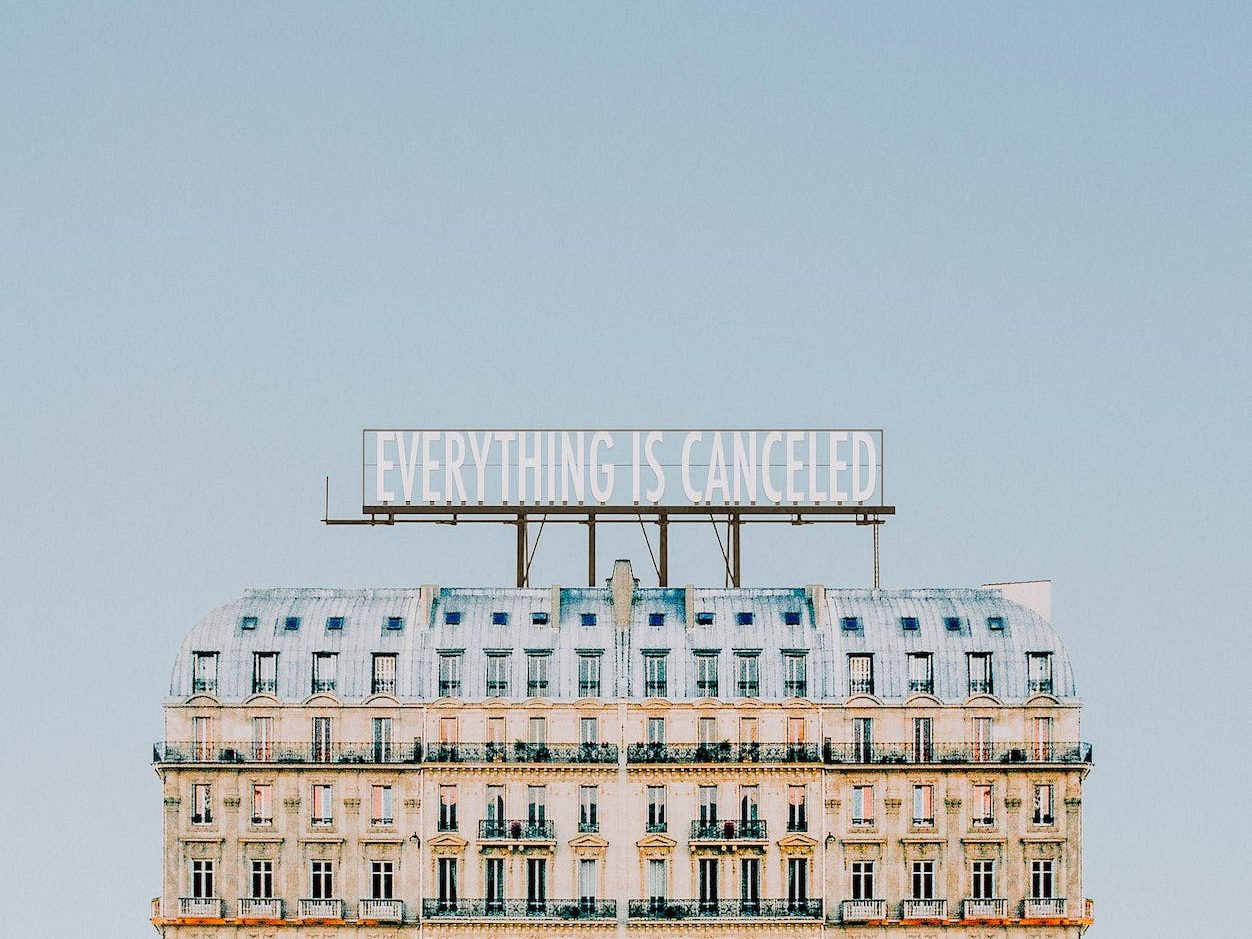
Everything is canceled image

Some terminologies have been rightfully canceled. Words that do more harm than good. To use phrases like “I have OCD” when the person has not been medically diagnosed, or to call anyone “retarded” as a form of insult, is being inconsiderate toward people who are experiencing distress or discomfort from such conditions.

This post is not about the usage of problematic terms. It is about everything getting canceled nowadays based on subjective viewpoints. Social media encourages you to cancel someone if you disagree with them. The internet is so vast that you will always find someone who can cancel the same things along with you.

For example, nowadays, I see people calling someone “woke” if they don’t agree with the person. I have seen two sets of people use “woke” in two different contexts. One set calls feminists, activists, and anyone who smashes conventional norms as woke. The other set (which includes feminists) uses it for argumentative and politically correct people. The article “What Woke Means to Liberals and Conservatives” explains how the left and right decode the term.

Now imagine these two sets of people in the same room. They most probably would cancel each other out.

The cancel culture is mainly restricted to the online world. In the real world, people often exhibit greater acceptance and forgiveness. Rather than canceling, they are open to engaging in conversations and are willing to let go if someone holds a different perspective. They understand it is impossible to convince everyone to feel the way they do.

If you think about it, there are many concerns regarding endorsing this cancel culture: How much canceling is too much canceling? Where is the middle ground? Are we at risk of gradually negating each other’s voices to the point where our words become flavorless and self-righteous? Are we on the verge of losing the art of engaging and captivating conversations? Will the fear of offense diminish the essence of comedy, which often relies on pushing boundaries and challenging norms?

When we cancel people and force them to act our way, we unknowingly create a robotic world filled with yes-men. When this happens, we enter an emotional comfort zone devoid of growth. By avoiding conversations and explanations with individuals whose thoughts differ significantly from ours, we miss out on opportunities to engage in meaningful dialogue and expand each other’s perspectives. It is through such discussions that we can foster understanding, empathy, and potentially find common ground, even amidst differing opinions.

Change does not happen overnight, especially regarding principles and beliefs that have been drilled into us since childhood. It is only through increased exposure, experiences, and open-minded discussions that people can gradually become more receptive. Our willingness to engage with them, along with the assistance of others who share similar viewpoints, can play a role in encouraging them to take that important first step toward embracing different perspectives, if not now then later.

The beauty of life lies in the fact that there are many different personalities around us. If everyone acted the same way, how would we learn the art of acknowledging differences? If we don’t acknowledge differences, how do we stay sane? How do we practise empathy and kindness? The cancel culture makes people more intolerant, angry, polarized, and destructive. In my article, To Speak or Not To Speak, I voiced my concerns about the same.

It’s always better to leave room for disagreements, understand why someone feels a certain way (fear being almost always the root cause), and try to give your take on things using non-violent communication without any expectations. The result of such a discussion might not always be fruitful, but if the conversation is done right, you can expect your tolerance levels to improve and your mind to be more empathetic to people with a social conditioning that is different from yours. If each person felt this way, we could probably bring about the desired change more effectively without emotions playing a spoilsport.

***

Photo by Jeffrey Czum

I Created 3 Bank Accounts To Manage My Finances. Here’s How It Went.

Photo by Expect Best

I first read Monika Halan’s Let’s Talk Money a year back. In the book, she talked about the importance of having 3 bank accounts to manage finances.

  • Income Account – This account can be where you receive your salary, rental income, cash gift, etc.
  • Save-it Account – The second account is for saving/investing. Keep in mind not to transfer any amount from this account to your spend-it account later on. This account is for saving, not spending.
  • Spend-it Account – The final account is for managing your expenses.

Monika Halan instructs you to transfer a part of your income every month, without fail, to your spend-it and expense accounts. This enables you to have a hands-free approach to managing finances.

Previously, I had two bank accounts and felt it was more than enough – until it became difficult to track my expenses. I used to micromanage my finances through an Excel sheet. After much introspection, I realized it would be much easier to have a separate account for expenses alone. Another reason was that I realized I was being extra stingy because I couldn’t properly track and compartmentalize my money. That’s right. I did not know how much I was spending, so my solution was to spend less. I decided to start a new bank account to give myself a breather.

My first two accounts were in a public bank (my income and spend-it accounts). I decided to try a private bank next. I wanted a bank with good customer support and technology, and I ended up going for a digital-friendly bank. The account opening was entirely online. You have almost every bank in India with a digital onboarding process nowadays. You can open an account within hours. I sat through a video-KYC process, and that was it. The welcome kit, containing the debit card and checkbook, was mailed to my address in a week.

Now that my expense account was in place, I slowly started transferring my expenses to my account each month, which was 40-50% of my income. I wasn’t restricting myself from spending what I could anymore. I could see I had the budget for it in my expense account.

The thing with being in a perennially “saving” mode is that you forget to indulge and pamper yourself. So having a third account helps. My expense account is also connected to UPI, and I use it for all my POS transactions, ATM withdrawals, automatic subscriptions, etc. The funds are deliberately kept limited in this account to ensure I would not lose any part of my savings in case of any online/offline security breaches. Would I recommend the three-bank approach to managing your finances? Definitely, it has made my job easier.

Why I Stopped Buying Newspapers

I was the news explainer in my friend’s group.

I took it as a mission to understand current events, politics, issues, science, and other topics published in the dailies. I then took great joy in explaining to others what I learnt. It made me feel like a teacher. I felt like I was doing a service.

People do not have the time to read newspapers in detail or view online debates or discussions nowadays. They are not interested in digging deep because it takes a lot of time. But I was! I used to go through all news portals.

I hoped my explainers would aid busy friends in making better decisions and voicing better thoughts.

None of that happened.

It was a stark realization that no number of facts can change someone’s thinking if they are adamant on sticking to their beliefs.

Then I did the unimaginable. I stopped buying newspapers.

One fine day, after reading another mentally distressing news article, I knew it was time to let go. Why pay for something that mentally drains you? We pay therapists to help us, and then we pay to get our daily dose of pessimism from the papers.

A never-ending cycle.

Negativity sells. So you cannot really blame the papers. You will never see happy news printed in big, bold font types on the front page. That’s reserved for the shockers because that is the type of news that sells.

It is human psychology to drift towards things that are infuriating, depressing, triggering. Have you noticed how our mind suddenly decides it’s time to worry about something when we are in a state of bliss? It will rewind to the past and remind you of all the dreadful things. Or it will flash forward to the future and nudge you to start feeling concerned for yourself.

Our brain is just not wired to be in a state of joy 24/7.

Letting go of newspapers was hard. But I realized, if I paid for it, I would keep pushing myself to read it whether I wanted to or not – only because I did not want my money to go to waste.

I understood I wasn’t really reading the papers to enlighten myself of worldly matters, rather I was subjecting myself to it because I subscribed to it. It felt like a chore. It is like paying and getting a gym membership. Shelling out cash is a big motivator to get things done.

How did I feel when I stopped buying newspapers:

  • A bit lost at first and a lot of doubt “How am I going to survive without knowing everything in the world in-depth?
  • I slowly started getting used to it.
  • I realized I could live without reading every bit of news out there.
  • The important news always found its way to me – through social media, people around me, and google alerts set for the news type I wanted to receive.
  • Finally, a peace of mind.

I felt less cranky about things, less triggered when I let go of newspapers. The publishers send emails, messages with discount codes for annual subscriptions to lure me back in. I am not yet ready to make that commitment. I am not yet ready to sacrifice my uncluttered mind. I feel free, calm and composed.

Rape, deaths, racism, sexism are all important topics to cover. To read about them every day, though, is emotionally disturbing for someone sensitive like me. Speak up when you have to – your voice counts. But also know it is important to take breaks. If you find yourself getting agitated very often and it is affecting your relationships, it is time to cut off from the negatives. Your mental health should hold precedence over everything else including negative newspapers.

Breathe in the good shit.

Breathe out the bullshit.

An Ode to Celebrating Yourself in All Body Sizes

Photo by Anna Shvets

An Accredited Social Health Activist (ASHA) worker visited me today. She wanted to check if I took both my COVID-19 vaccination doses. I am incredibly thankful that activists in India are checking on us. A question she asked surprised me, however.

Did you lose weight?

A person whom I met once around 6 months ago remembered how I looked. It does not matter if you are plus-sized or a size zero; people remember your body size. It is a part of you.

She told me my face looked “fuller” before, hinting that she preferred my chubby cheeks.

Did you gain weight?

This question is what I got asked 6 months before by family, friends, relatives, even small kids. You would think kids do not care about body size, but there they are, commenting about how much weight you have gained.

They told me my face looked too “full,” hinting they preferred seeing me without my chubby cheeks.

Everywhere you go, people judge you for your body size. No one tells you, “You have the perfect body size.” So it is up to us to deem ourselves perfect in all sizes.

Being body positive means not to let “tags” define or trigger you. It means to accept yourself in all body sizes, whatever it chooses to evolve into tomorrow.

When people say I look thin, I say yes. When people say I have gained weight, I say yes. I am okay with both. They can pass their judgments or statements. It does not matter because I am comfortable with any form my body chooses to be.

Such open questions on weight are not going anywhere, unfortunately. I remember seeing a video by Supriya (@Supaarwoman) on Insta. She said when people call her fat, she tells them, “I am not going to take that as an insult because that’s my body type. You are just saying out loud what my body type is. Why should I be ashamed of my body type?” When you think of it that way, you realize that what she said makes a lot of sense.

When someone simply states your body type (aka “you are fat” or “you are thin”), why consider it as body shaming or an insult? When you take that power away from the perpetrator, and you truly embrace yourself for who you are, you become empowered.

Own your body type. When you do, you become body positive to the fullest degree.