
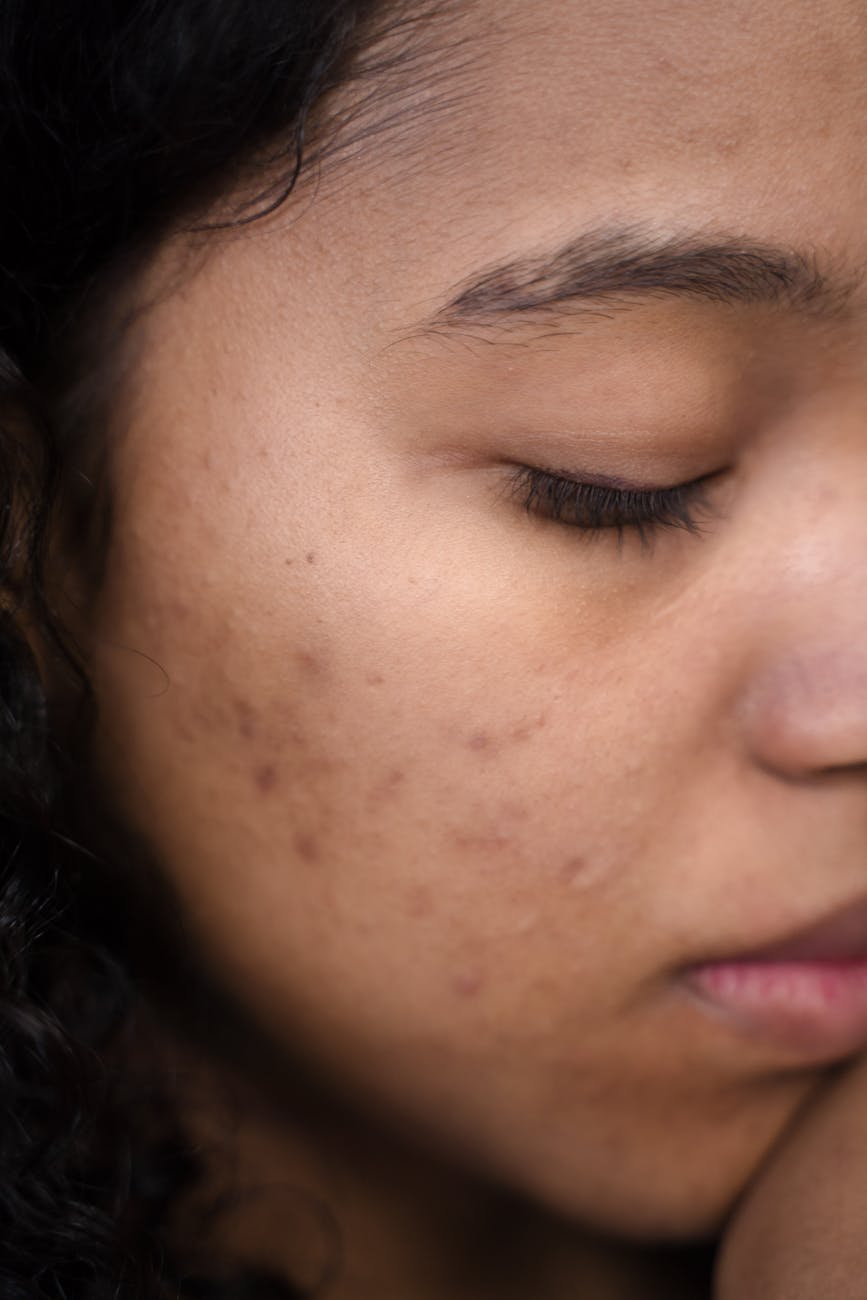
So today, I officially started my acne treatment journey after finally consulting a dermatologist. I do not have severe acne all the time, but I do get hormonal acne around my periods, and I also have some stubborn acne scars from older breakouts.
I am also considering adding my cleaning lady and aunt to my will because both confidently told me I did not need a dermatologist. To be fair, it could also be because they cannot actually see my acne scars without their glasses on. But I am ignoring that reality. Sometimes you need to be in a “delulu” space for mental peace and happiness.
Type of Acne
My acne usually shows up as white pimples on my cheeks every now and then. The bigger issue for me has always been the aftermath. Even a tiny breakout tends to leave behind deep brown or pink acne marks that take forever to fade. That is honestly what pushed me to finally visit a dermatology clinic instead of experimenting with random skincare products from the internet. I did not want to ruin my skin further (has happened before).
After my consultation, I was diagnosed with Acne Vulgaris (Grade 2). This mainly includes recurring pimples along with small, inflamed bumps called papules and pustules.
Acne is generally classified from Grade 1 to Grade 4:
- Grade 1: Mostly blackheads and whiteheads with very few pimples
- Grade 2: More pimples with mild inflammation and small bumps (papules/pustules)
- Grade 3: More widespread inflammation with larger painful bumps or nodules
- Grade 4: Severe cystic acne with deep painful lesions and a higher risk of permanent acne scarring
So, Grade 4 is considered the most severe type of common acne.
My Customized Acne Treatment Routine
I am not going to mention the exact prescription medicines because treatments like retinoids should only be used under a doctor’s guidance. Skincare is definitely not one-size-fits-all, and self-treating strong acne medications can do more harm than good. So the products recommended were:
- Facewash
- Moisturizer
- Sunscreen
- Retinoid (at night)
My dermatologist prescribed a simple skincare routine for me.
For cleansing, I was asked to use AHAglow Face Wash, which is available on quick delivery apps like Blinkit and Swiggy Instamart. After cleansing, I was told to use Olesoft Moisturizer followed by Acne-UV Sunscreen during the daytime.
At night, she prescribed me a retinoid cream. I am intentionally not sharing the name because prescription retinoids should never be used without proper medical advice. I was specifically instructed to use only a pea-sized amount across both cheeks, forehead, and chin, while avoiding sensitive areas such as the corners of the mouth, the sides of the nose, and the under-eye area. This shows how strong the cream is.
Honestly, the retinoid is the part that scares me the most because it is known to cause skin purging in some people during the initial weeks. But at the same time, it is also considered one of the most effective dermatologist-approved treatments for acne and acne scars when used correctly.
This is officially Day 1 of my skincare and acne healing journey, and I plan to document the process, including the good, bad, and dramatic moments. My dermatologist did say results take time, so I am trying to stay patient and trust the process. to see her again after 6 weeks, so I am guessing it takes 6 weeks to see a change.
I’ll know the treatment is working when my friends have to reduce their phone brightness after opening my selfies. Fingers crossed.
***
Photo by Ron Lach


You must be logged in to post a comment.