An Ode to A Hundred Little Flames

A Hundred Little Flames

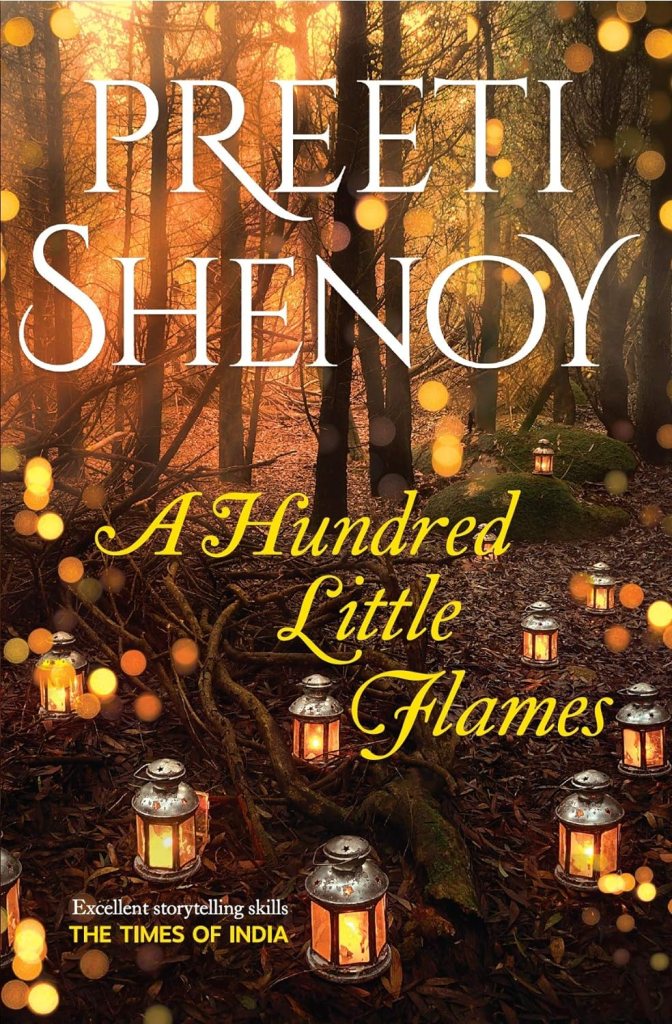
I recently finished reading A Hundred Little Flames by Preeti Shenoy. I bought the book assuming it would be a romantic novel (and I was proven right, but not in the way I expected). I had not taken the time to read the synopsis or reviews. I wanted the element of surprise, so I chose the book merely by looking at the title.

This is my first Preeti Shenoy book, so I was unsure what to expect. I was not looking for an ultra-cheesy romance but something wholesome and warm. I am happy to report that I got what I needed.

The main character, a young urban male residing in India, is pushed to leave his cozy job in a metro due to unprecedented situations and return to Kerala to visit his grandfather. As my base is in Kerala (Palakkad), this particular bit captured my attention. It played a major factor in my buying the book. How Preeti Shenoy beautifully narrated the ethereal, laidback beauty of a typical village in Kerala won my heart.  

There are many layers to this book. And many lessons. Here are some of my observations:

As most might know, Kerala is an aging state. The youngsters are leaving for better opportunities, while the parents and the elderly are choosing to stay behind. The many anxieties of an old person living a lonely life in Kerala are explained with much sensitivity in this book. It is something I witness whenever I visit home. Apart from my family, my elderly neighbors rush to me when they need help. There is always some mobile phone, gadget, or internet-related issue to be resolved. Their doubts could be as simple as “Will my WhatsApp DP appear to everyone on my contact list? Or only those whom I chat with?” These senior citizens often hesitate to call their children for help. “They will be busy,” they tell me. So they rely on youngsters around them to help with online work like booking vaccination slots during COVID-19, registering an online complaint, etc.

When they fall sick, they usually depend on neighbors to help them reach the hospital. Their children are able to arrive only a few days later, if at all they can. Their stay often does not last beyond a week. “We don’t have any leaves left,” they say. The fact that their children are out of reach might pinch the parents a bit during such pressing times. But they endure it, saying kids should enjoy themselves and life goes on.

As a silent observer, I often see the anxiety written on their faces and their mild helplessness. There’s concern regarding whom to ask for help. I guess, when we age, we all reach such a stage.

All these elements are captured well in Preeti Shenoy’s book – the problems of the elderly. I wonder if she has stayed with a senior citizen for an extended period, as only such people get to experience what an elderly goes through on a day-to-day basis.

Apart from this, I also immensely enjoyed the sweet, poetic love story depicted in the book. It caught me by surprise. The story was delicately told, and the characters were perfectly etched out. A warm romance with many layers, where the couple engages in a striking serenade of comforting words. The book shows how love is not always a straight, perfect line. It can be complex and unpredictable, hurtful even. Yet, love persists. The book captures this complexity brilliantly. It has an old-world charm to it. I am of the impression it would make a great movie.

I would definitely recommend buying the book. It is engaging from page one, and it will hook you into a world that is peaceful, and bright, yet somber and bittersweet all at the same time.
Korean Drama Spotlight: Our Beloved Summer

Our Beloved Summer Review

I finally decided to watch this series because I was missing Choi Woo-shik. It marked the first time I consciously focused on his screen presence and savored his performance. Although he played a significant role in Parasite, my level of interest in K-entertainment was not as profound back then, leading me to immerse solely in the storyline, rather than appreciating the actors.

Disclaimer: This post shouldn’t be treated as a review because I am far from qualified to give an objective and professional take on dramas. It should be treated as a subjective viewpoint of a cinephile who loves to watch movies and dramas purely for entertainment. I have only one criterion – I shouldn’t get bored. The film will be judged on that factor alone.

What’s It About?

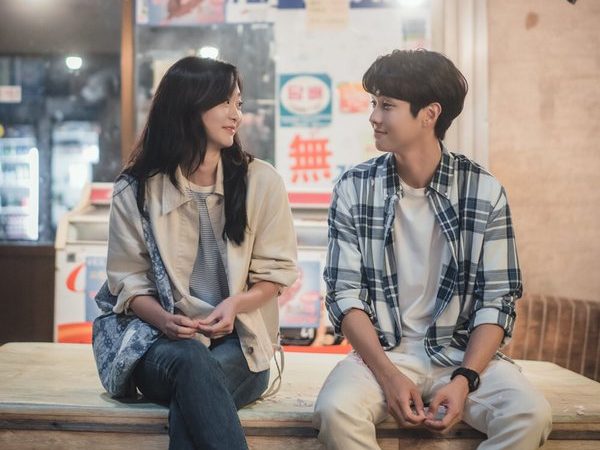
Our Beloved Summer chronicles the story of two childhood sweethearts whose first encounter occurs during a school assembly. As she walks determinedly towards the podium, a nostalgic Choi Woo-shik from the future whimsically describes the moment, saying, “I noticed her because she looked as if she was going to fight a war.”

They are eventually chosen for a documentary exploring the behavioral patterns of the top student (the girl) and the lowest-performing student (the boy). The narrative delves into their evolving love story, navigating the complexities of first love, eventual separation, and their paths crossing again years later as dedicated professionals.  

Thoughts

I loved Choi Woo-shik’s performance. You know he is a top-notch actor when the character he portrays on-screen is nothing like what he is in real life. Choi Woo-shik is a goofball who makes the most bizarre, sarcastic jokes in reality shows. He’s a laugh riot. On the other hand, this character (Woong) in Our Beloved Summer is aloof, serious, rarely smiles, and has an air of melancholy about him.

Personally, I found the story to be predictable and a bit dragging. The side characters appealed more to me than the main leads’ chemistry. It gave me a strong sense of second male/female lead syndrome. Woong’s manager and Yeon-soo’s friend injected much-needed humor into the otherwise “gray” storyline, providing a relieving touch to the narrative. They were outstanding.

Overall, the series did not feel like a light, breezy watch for the most part, as it focuses on the complexities of lost love. So, if you are looking for a meet-cute story where the characters gradually fall in love, Our Beloved Summer may probably not be for you. I recommend giving it a go if you are missing Choi Woo-shik, like me.

Our Beloved Summer is available on Netflix. It has 16 episodes, with each episode lasting almost an hour.

Korean Drama Spotlight: The Second Husband

The Second Husband Kdrama Review

I stumbled upon “The Second Husband” by chance. The show was being aired on an Indian television channel called “Atrangi” and was dubbed in Hindi. It was then that I realized that Korean dramas have truly made their mark in India.

Disclaimer: This post shouldn’t be treated as a review because I am far from qualified to give an objective and professional take on cinema. It should be treated as a subjective viewpoint of a cinephile who loves to watch movies and dramas purely for entertainment. I have only one criterion – I shouldn’t get bored. The film will be judged on that factor alone.

What’s It About?

A committed woman finds herself entangled in a web of lies and deceit. Her fiancé cheats on her with a wealthy, money-hungry businesswoman. An apt companion for the man, who himself is blinded by greed. They are ready to forsake everything for money – their integrity, conscience, and love.

Thoughts

The Second Husband is a story that focuses on power-hungry people and their never-ending thirst for wealth. Everyone holds a secret that the others should not know.

I recommend the series to people who like dramatic, frustrating, Indian-serial-type stories. It has the bad guys winning more than 90% of the time. Not pleasant to watch. However, it keeps your interest and is quite engaging. You will keep moving to the next episode, even after the mental turmoil.

All the actors gave a superlative performance. The main lead, Cha Seo Won, is adorable, charming, and playful. I am sure whoever watches the drama will fall for his charisma. Hopefully, after his military stint is over, we will get to see him in more dramas.

The villain, enacted by Oh Seung Ah, is top-notch. She’s as evil as evil can get, and brilliantly depicts the character’s anxiety and eccentricity without appearing caricaturish.

The drama is 150 episodes long, each lasting around 20-30 minutes.

Give it a go if you are in the mood for Indian-styled kdramas.

Korean Drama Spotlight: Happiness

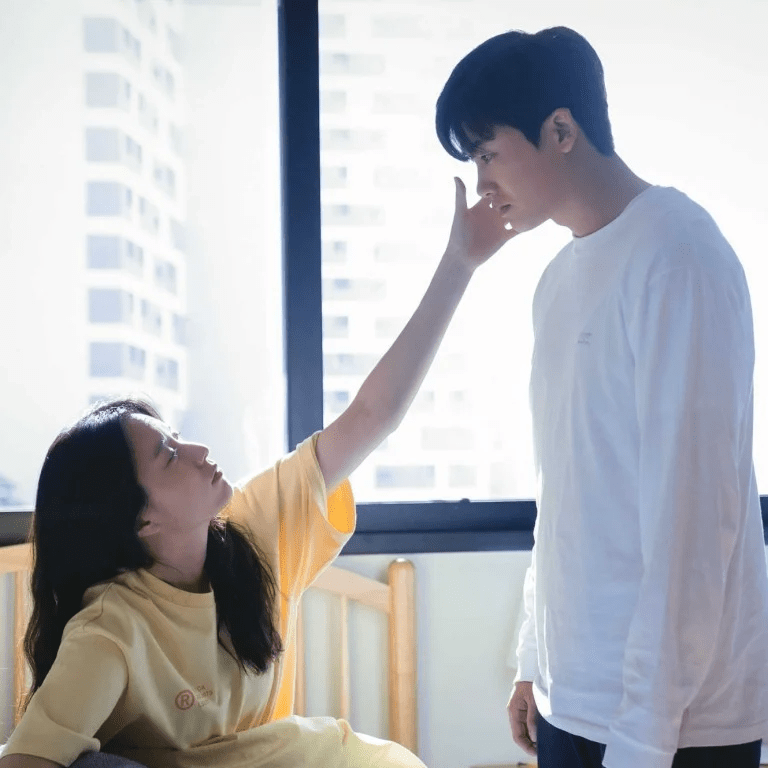
Happiness kdrama series

After a long stint with romantic Korean dramas, I watched two horror series back-to-back – one being The Revenant and the other one, Happiness. To be honest, I selected the latter because I had read wonderful things about the chemistry between the lead pair. I was not left disappointed!

Disclaimer: This post shouldn’t be treated as a review because I am far from qualified to give an objective and professional take on cinema. It should be treated as a subjective viewpoint of a cinephile who loves to watch movies and dramas purely for entertainment. I have only one criterion – I shouldn’t get bored. The film will be judged on that factor alone.

What’s It About?

Happiness is not a typical horror or zombie series, as the trailer might make you believe. It’s about a medical drug gone wrong, causing severe side effects, leading the infected to develop zombie-like symptoms.

Thoughts

“Happiness” is anything but happy. It is frightening, frustrating, and emotional. Either the makers were playing games with us by choosing that title or maybe there is a deeper meaning to it (“Be happy today, because tomorrow you might turn into a zombie”). Or, maybe, for them, zombies equate to happiness (who am I to judge?). The meaning is left to the viewer’s discretion.

Supernatural stories often feel artificial, but when the horror elements are scientific, you can’t help but sit back and ponder its possibility.

The series takes inspiration from the recent pandemic, especially the human psyche. I almost wanted to pull my hair out because of the irrational behavior of the residents who wanted to venture out when they were given explicit instructions not to. No one followed the rules. Sounds familiar?

When I set aside my annoyance, I realized this is precisely how people behaved during the pandemic. Many flaunted rules by avoiding masks and ventured out even if lockdowns were imposed in the country out of sheer frustration, ego, loneliness, and desperation. You saw people quick to call out, ostracize, and shame others infected with the virus but were notoriously silent when it concerned their own family members. You see glimpses of these traits (and more) in Happiness, and you can’t help but applaud the reality of it all.

The quiet romance between the leads is not the main plot, but it still makes a mark. Park Hyung Sik and Han Hyo Joo have fantastic chemistry, and I wish they act in a full-on romantic story in the future. The way they have their moments, with that beautiful melody playing in the background, makes it a wholesome treat overall.

I would definitely recommend the series. Streaming on Netflix.